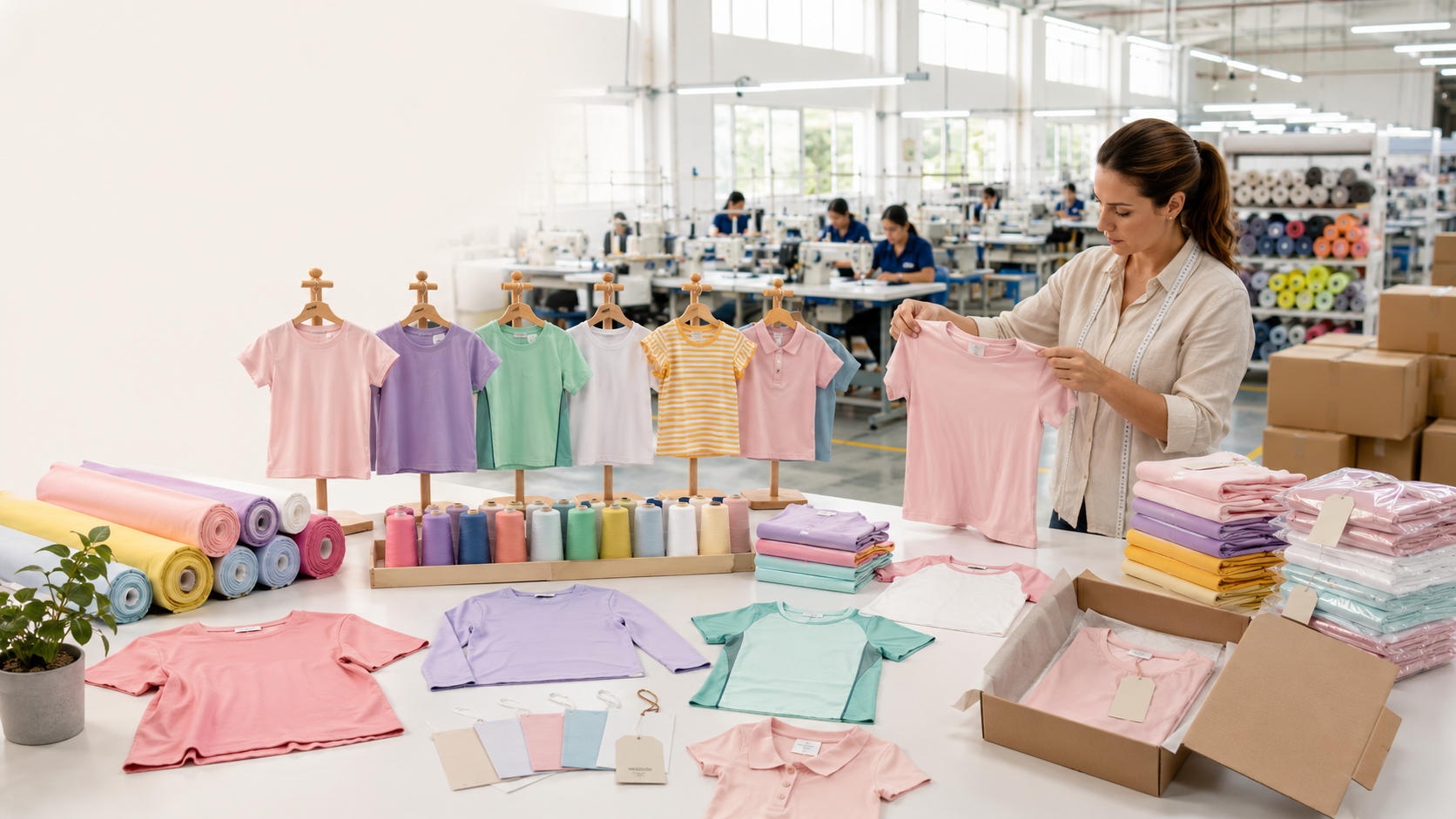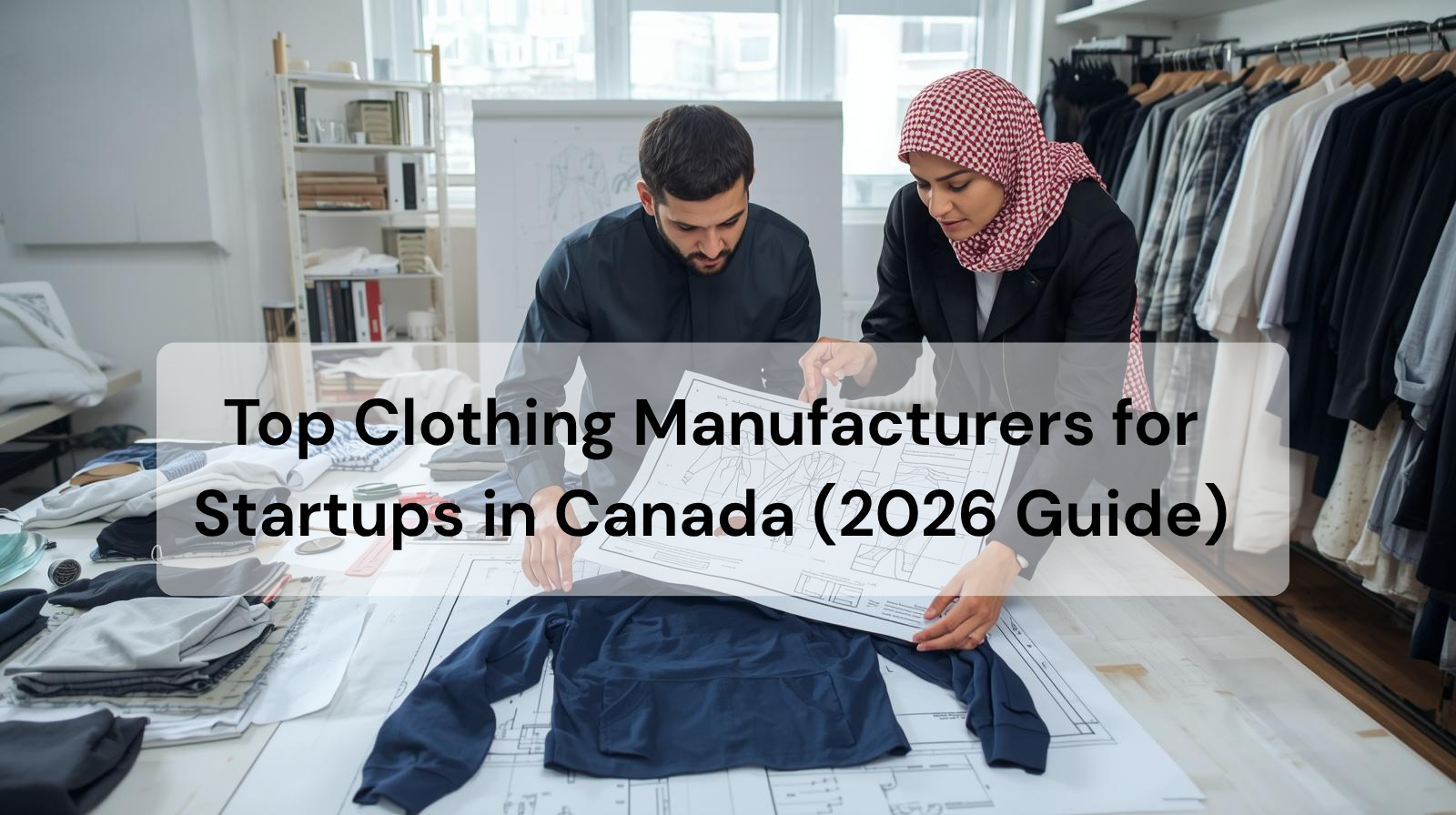
The top clothing manufacturers for startups in Canada include Gabe Clothing, WS & Company, Jerico, MVFA, and Fabriclore. These facilities specialize in low minimum order quantities (MOQs), eco-friendly materials, and complete design-to-shipment services, making them ideal partners for emerging fashion brands seeking ethical, high-quality production across North America.
Launching a fashion brand is an exhilarating experience, but it quickly brings you face-to-face with a massive logistical hurdle: manufacturing. For emerging streetwear lines, athleisure startups, and independent designers across the United States, Canada, and Europe, finding a production partner that balances premium quality with accessible entry points can feel nearly impossible.
Many new brands assume they have to head straight to massive overseas facilities. However, high minimum order quantities and long transit times frequently stall out new businesses before they even launch their first collection.
That is exactly why nearshoring to Canada has become a massive trend for fashion entrepreneurs. Canadian apparel factories offer exceptional craftsmanship, strict ethical labor standards, and flexible production volumes tailored specifically for small businesses. Whether you are a US-based designer trying to avoid massive supply chain delays or a Canadian startup looking to keep production local, selecting the right partner determines your brand’s financial health and product quality.
This comprehensive guide breaks down the absolute best clothing manufacturers for startups in Canada, explores the crucial differences in production styles, and outlines a step-by-step strategy to transition from a localized launch to global manufacturing.
Why Startups Choose Canadian Apparel Manufacturers
When you are starting small, your biggest enemies are dead stock and long lead times. If you order 2000 units of a single design from a giant overseas factory and the style does not land with your target audience, your capital is locked up in cardboard boxes sitting in a garage.
Manufacturing in Canada offers several distinct advantages that serve as a protective shield for new apparel labels:
- Low Minimum Order Quantities (MOQs): Unlike giant overseas operations that require thousands of units per style, many boutique Canadian facilities offer starting runs as low as 5 pieces for blanks or 50 pieces for custom cut-and-sew designs.
- Speed to Market: Instead of waiting months for ocean freight to clear customs, nearshored Canadian production can be shipped via ground or air across the US-Canada border within days.
- Ethical and Sustainable Practices: Canadian factories operate under strict environmental and labor laws. Offering garments produced under fair wages and clean conditions is an immediate selling point for modern consumers who demand brand transparency.
- Favorable Trade Agreements: Thanks to agreements like the United States-Mexico-Canada Agreement (USMCA), apparel moving between Canada and the US often benefits from duty-free treatment, significantly reducing hidden customs fees for American startups.
Deep Dive: Top Clothing Manufacturers for Startups in Canada
The Canadian apparel landscape features diverse facilities, ranging from traditional family-run knitting mills to high-tech digital design studios. Below is a curated breakdown of the top manufacturing operations built to support emerging fashion businesses.
1. Gabe Clothing
Based in Toronto, Gabe Clothing is a highly regarded, family-owned apparel factory that has been operating since 1999. They are an exceptional choice for startups because they run a dual-model system: an in-stock blank apparel program and a fully custom cut-and-sew operation.
Gabe Clothing stands out for its extreme flexibility. For their premium blanks collection (which includes heavy-fleece hoodies, basic tees, and loungewear), wholesale business-to-business (B2B) ordering thresholds start at just 5 pieces. This allows independent labels to run limited graphic print or embroidery drops with virtually zero upfront inventory risk. For fully customized styles, their traditional cut-and-sew floor places a strong emphasis on ethical labor and premium garment finishing.
2. WS & Company
If your startup aims for the premium or luxury tier, WS & Company is an essential name to know. Operating out of Ontario, this boutique manufacturer has earned a stellar reputation for producing top-tier knit apparel for some of North America’s most recognizable luxury streetwear brands.
They offer an exclusive “Boutique Program” meticulously designed for emerging designers who cannot commit to massive production runs but still require flawless stitching and premium fabric milling. WS & Company provides in-stock fabrications, custom garment dyeing, and an extensive catalog of traditional techniques to ensure your designs feel luxurious to the touch.
3. Jerico
Founded in 1987, Jerico is a socially conscious, family-run manufacturer deeply committed to sustainable fashion. If your brand identity revolves around eco-friendly materials, Jerico is a premier option in Canada.
They specialize in manufacturing blank and custom apparel using sustainable textiles like organic cotton, bamboo rayon, and recycled polyester blends. Because they knit, dye, cut, and sew their garments domestically, they maintain a highly transparent production process with fast turnaround times, providing startups with a clean, verifiable supply chain.
4. MVFA (Canadian Apparel Manufacturing)
MVFA operates a highly functional hybrid model that is perfect for startups planning to scale over time. Based in Toronto, MVFA works with local, full cut-and-sew facilities to deliver domestic production with low minimums starting at roughly 50 units per style and colorway.
What makes MVFA unique is its dual footprint: they handle low-volume, quick-turnaround production natively in Canada, but they also maintain vetted strategic partnerships with import factories in countries such as India, Bangladesh, and Turkey. This allows an emerging brand to develop patterns, test samples, and run low-volume launches in Canada, and then seamlessly shift high-volume reorders overseas when demand spikes.
5. Fabriclore
Fabriclore bridges the gap between textile sourcing and modern tech-enabled garment manufacturing. They specialize in helping small-batch fashion startups, independent designers, and direct-to-consumer (DTC) brands build customized apparel lines without massive budgets.
Their production minimums start at 50 pieces per size and include complete private-label support, including custom-woven labels, branded tags, and sustainable packaging. Fabriclore utilizes advanced tracking tools to provide transparent updates throughout the fabric sourcing, sample approval, and final manufacturing steps.
Choosing Your Production Model: CMT vs. FPP
When reaching out to Canadian factories, you need to understand the two main types of manufacturing contracts. Choosing the wrong one can lead to massive communication gaps or unexpected expenses.
Cut, Make, Trim (CMT)
In a CMT model, the manufacturer is strictly responsible for cutting the fabric, sewing the pieces together, and adding final trims like zippers, buttons, and labels.
As the brand owner, you must provide the factory with everything else: fabric yards, tech packs, patterns, and grading for different sizes. CMT is highly cost-effective, but it requires a deep understanding of textile sourcing and supply logistics. It is usually best for founders with experience in fashion production.
Full Package Production (FPP)
For the vast majority of apparel startups, Full Package Production (FPP) is the safest and most efficient path. Under an FPP arrangement, the factory handles the entire lifecycle of the garment.
They assist with design development, source fabrics, create initial samples, grade patterns across sizes, and execute the final bulk manufacturing run. While FPP features a higher per-unit cost than CMT, it drastically simplifies the process for new entrepreneurs, allowing you to focus heavily on marketing and community building. At the same time, the factory manages the complex supply chain.
| Manufacturer Name | Core Specialization | Starting Minimums (MOQs) | Best Suited For |
| Gabe Clothing | Heavyweight fleece, street blanks & custom cut-and-sew | From 5 pieces (blanks) | Streetwear & basic apparel lines |
| WS & Company | Premium luxury knits, custom dyeing & boutique apparel | Low thresholds via boutique track | High-end streetwear & premium basics |
| Jerico | Eco-friendly textiles, bamboo & organic cotton garments | Flexible / Stock available | Sustainable & conscious fashion brands |
| MVFA | Full cut-and-sew with international scaling pathways | From 50 units per style | Startups planning rapid volume growth |
| Fabriclore | Tech-enabled private label, extensive fabric catalog | From 50 pieces per size | DTC startups & capsule collections |
How to Evaluate a Canadian Clothing Manufacturer
Finding a manufacturer online is simple; vetting them to ensure they will not derail your timeline takes structure. A breakdown in your production line can easily wipe out your startup capital.
Follow this systematic procedure when selecting and onboarding a new Canadian manufacturing partner:
1. Verify Production Capabilities and Model Alignment:
Initial Outreach. Contact the factory to confirm whether they operate on a CMT or FPP model. Clearly state your intended aesthetic (e.g., activewear, finely tailored suits, or structured denim) and ensure that their production floor is equipped with the specialized machinery required for those fabrics.
2. Request a Comprehensive MOQ and Pricing Breakdown:
Financial Assessment. Secure written documentation detailing their minimum order volumes per style, colorway, and size breakdown. Request clear clarification on volume discounts, sample fees, and whether pattern-making and size-grading services are billed on separate lines.
3. Submit a Complete Tech Pack for Sample Development:
Sampling Phase. Provide the factory with a finalized technical packet detailing every measurement, seam style, and component. Commission an initial pre-production sample. Never approve a bulk manufacturing run based on digital files or sketches alone; you must hold and test the physical garment.
4. Review the Finished Sample for Structural Quality:
Quality Control. Examine the sample thoroughly. Put the garment through wash cycles to analyze shrinkage, check the stitching’s durability under tension, inspect the alignment of the branding elements, and verify that the fit matches your sizing chart exactly.
5. Finalize the Contract and Establish Lead Times:
Production Onboarding. Sign a formal production agreement that explicitly outlines acceptable quality tolerances, payment schedules (typically a 30% to 50% deposit with the balance due upon passing final inspection), and firm delivery windows to ensure you do not miss your marketing launch date.
The Essentials of an Apparel Tech Pack
Think of a tech pack as a structural blueprint for a house. If you do not give the builder exact dimensions, they will guess—and you will rarely like their interpretation. If you send a vague email to a clothing factory saying you want a “cozy, oversized hoodie,” you are setting yourself up for failure.
To get clean, accurate quotes and prevent costly production errors, your tech pack must include:
-
- Technical Drawings: Clear, flat black-and-white sketches showing both the front and back of the garment, highlighting advanced seam details or pocket placements.
- Bill of Materials (BOM): A thorough checklist of every component required to finish the piece, specifying the main body fabric weight, thread types, zipper types, lining materials, and inner neck labels.
- Measurement Specification Chart: The complete dimensions for every single part of the garment (chest width, sleeve length, shoulder drop, collar circumference) for your baseline size.
- Grading Rules: Clear mathematical instructions for how baseline measurements should scale up or down for sizes XS, S, M, L, and XL.
- Branding and Packaging Specs: Explicit placement blueprints for screen prints, custom embroidery, hang tags, and polybag packaging guidelines.
Scaling Past Local Borders with Minmax Textile
Nearshoring your early production runs to a domestic or Canadian facility is an incredibly smart, low-risk way to validate your apparel brand. It allows you to test your fits, gather customer feedback, and build a highly loyal audience without drowning in excessive warehouse inventory.
However, as your startup catches fire and your community grows from ordering tens of garments to thousands, your business will naturally hit a scaling wall. Domestic production costs can put a heavy squeeze on your profit margins, making it incredibly difficult to fund larger retail expansions, invest in paid advertising, or hire a team.
When your brand reaches this critical inflection point, transitioning to an elite global production partner such as Minmax Textile is your next logical step.
Minmax Textile specializes in providing world-class, end-to-end apparel manufacturing designed specifically to help growing international brands maximize their margins without compromising on structural quality. By combining institutional garment expertise with highly optimized supply chains, Minmax Textile delivers the production precision, advanced fabric development, and cost efficiency needed to scale your fashion label into a globally competitive brand.
Shifting your verified designs from low-volume boutique runs to high-efficiency global production ensures your business maintains healthy cash flow, unlocks scale-based volume discounts, and satisfies growing customer demand with absolute consistency.
Frequently Asked Questions
What is the average minimum order quantity (MOQ) for Canadian clothing manufacturers?
For custom cut-and-sew manufacturing, most Canadian apparel factories require an MOQ ranging from 50 to 150 pieces per style or colorway. However, for brands looking to print or embroider on pre-made blanks, manufacturers like Gabe Clothing offer wholesale ordering thresholds starting as low as 5 units.
Can US-based startups manufacture apparel in Canada duty-free?
Yes. Under the provisions of the USMCA trade agreement, clothing items manufactured in Canada and shipped to businesses in the United States often qualify for duty-free entry. To qualify, the garments must meet specific rules-of-origin criteria, verifying that the actual cutting and sewing assembly took place on North American soil.
What is the typical production turnaround time for factories in Canada?
Domestic manufacturing timelines are significantly shorter than overseas alternatives. While sample development generally takes two to three weeks, bulk manufacturing runs are typically completed within six to eight weeks from the date of final sample approval, depending on fabric availability.
Do I need a professional tech pack to contact Canadian manufacturers?
While some Full Package Production (FPP) facilities offer in-house design consultation to help you build a blueprint from a physical reference sample, having a complete, professional tech pack is highly recommended. It protects your business against manufacturing errors and ensures you receive fast, highly accurate production quotes.
Launching Safely and Scalability
Building a successful clothing brand is a multi-stage journey. In the early chapters, prioritize agility over rock-bottom unit costs. Partnering with top Canadian clothing manufacturers gives your startup a massive competitive edge: low upfront capital commitments, quick turnarounds for restocking best-sellers, and highly transparent, ethical production practices that resonate deeply with modern shoppers.
Focus heavily on getting your initial fits right, defining your brand’s unique aesthetic, and establishing a highly passionate customer base. Once your concept is fully proven and your sales volumes begin to climb, you can smoothly scale your operations by transitioning to global manufacturing powerhouses like Minmax Textile to supercharge your margins and expand your market reach.