
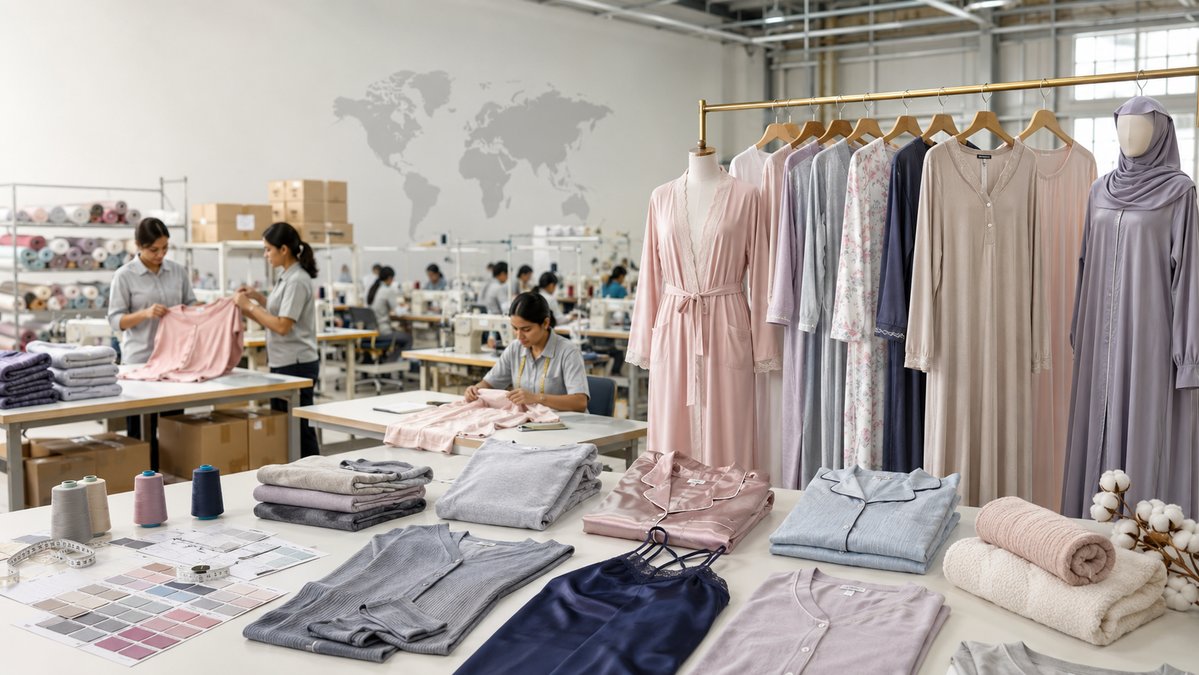
Choosing a ladies’ loungewear & nightwear manufacturer involves comparing fabric quality, sizing accuracy, private label options, MOQ, and export experience. Buyers across the USA, Europe, the Middle East, and beyond should review samples and production capacity before committing to bulk orders.
Why Sourcing the Right Loungewear Partner Matters
Loungewear and nightwear look simple on a hanger, but getting them right takes more work than most buyers expect. Soft fabrics, accurate sizing, comfortable seams, and consistent stitching all matter more here than in almost any other apparel category, since customers are literally wearing the product against their skin for hours.
Whether you’re a retailer in Toronto, a private label startup in Amsterdam, or a wholesaler in Riyadh, the goal is the same: find a ladies loungewear & nightwear manufacturer who can deliver comfort, consistency, and reliable production timelines.
This guide covers what buyers need to know before placing an order — from fabric selection to shipping realities across the USA, Australia, UK, UAE, Germany, Canada, Saudi Arabia, the Netherlands, South Africa, and Qatar.
Types of Ladies Loungewear and Nightwear
Manufacturers usually specialize in a few core categories rather than producing everything equally well, so it helps to know what you’re actually looking for.
Pajama Sets
Classic two-piece sets remain a steady seller across nearly every market. A dedicated ladies pajama manufacturer typically offers multiple fits, from relaxed boyfriend-style sets to fitted, tailored versions.
Nightgowns and Chemises
Popular for both everyday comfort and gifting occasions, especially in North American and European markets where seasonal nightwear collections are common.
Robes
A women’s robe manufacturer usually works with toweling, fleece, satin, or waffle-weave fabrics depending on whether the robe is designed for warmth, luxury, or lightweight comfort.
Loungewear Sets
Matching joggers-and-top or shorts-and-top sets have grown quickly as the line between loungewear and casualwear continues to blur, particularly among younger buyers in the USA, UK, and Australia.
Modest and Full-Coverage Nightwear
Longer-length gowns, higher necklines, and full-sleeve options are in steady demand across the UAE, Saudi Arabia, and Qatar, and increasingly requested by modest fashion buyers in South Africa and parts of Europe.
Seasonal and Occasion Nightwear
Lightweight sets for summer, thicker flannel or fleece styles for winter, and gift-ready sets for holiday seasons round out a well-balanced product line.
Popular Fabric and Material Options
Fabric is arguably the most important decision in this category, since comfort against the skin drives repeat purchases more than design does.
Cotton
Ladies’ cotton nightwear remains the most requested option globally. It’s breathable, easy to care for, and suitable for warm climates like the Gulf region as well as summer collections in cooler markets.
Satin
Women’s satin sleepwear appeals to buyers targeting a more premium or gift-oriented product line. Satin sets are common in North American and European markets around holiday seasons.
Modal and Viscose
Soft, drapey, and breathable, these fabrics have grown in popularity for loungewear sets due to their comfortable stretch and smooth handfeel.
Fleece and Flannel
Essential for winter-focused ranges, particularly for buyers in Canada, the UK, and Northern Europe where colder seasons drive demand for warmer sleepwear.
Bamboo and Sustainable Blends
Increasingly requested by buyers in Germany, the Netherlands, and the UK, where sustainable sourcing and low-impact fabric production influence purchasing decisions.
A reliable manufacturer should be upfront about fabric composition, weight, and care requirements rather than making broad claims without detail.
Custom Design and Private Label Services
Most brands want more than an off-the-shelf product — they want something that reflects their own identity on the label and in the details.
Custom Ladies Loungewear
This means working directly with the manufacturer on original silhouettes, trims, prints, and finishing details. It suits brands building a distinct aesthetic rather than using standard patterns.
Private Label Nightwear
The manufacturer produces using their existing patterns and production lines, while your branding, labels, and packaging go on the finished product. This route is usually faster and more budget-friendly than full custom development, which makes it popular with retailers launching their first in-house label.
OEM Women’s Sleepwear Manufacturer Services
An OEM arrangement means the factory produces strictly to your specifications — your tech pack, your fabric choices, your branding — with the manufacturer handling production only. This suits brands that already have design work finalized.
Manufacturers such as Minmax Textile offer both private label and custom development, giving buyers flexibility depending on whether they’re launching a new collection or scaling an existing one.
What to Prepare Before Reaching Out
- Tech pack or design references (if custom)
- Preferred fabric type and weight
- Size range and target measurements
- Target price point
- Expected order volume
- Branding details (labels, tags, packaging)
How to Choose a Reliable Manufacturer
This step determines whether your production process goes smoothly or turns into a headache. A few checks go a long way.
Review Their Product Focus
A manufacturer producing many unrelated garment categories may not have deep expertise in loungewear specifically. Look for a women’s loungewear manufacturer with clear specialization in sleepwear or comfortwear.
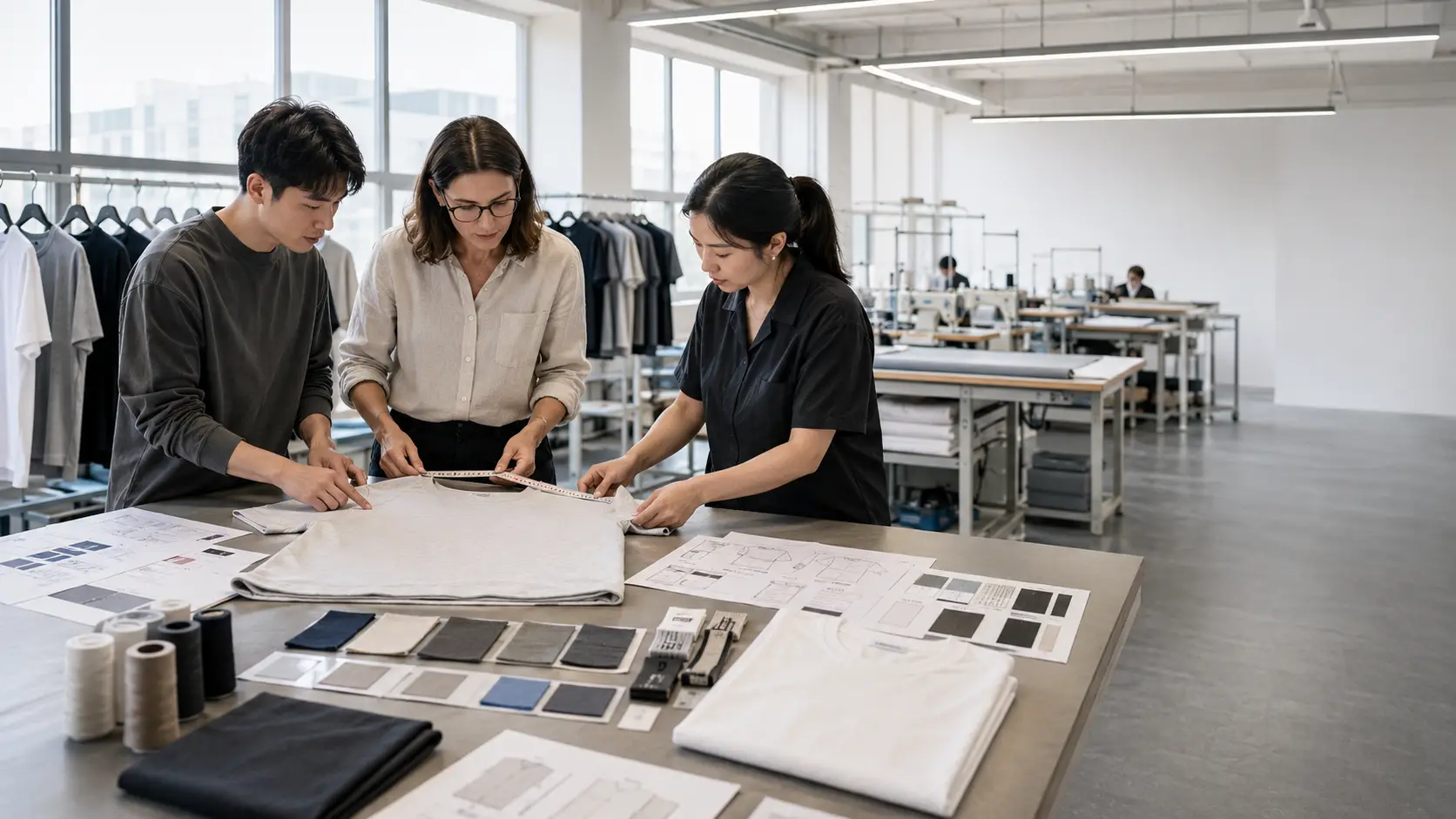
Examine Samples Closely
Don’t skip sampling. Check for:
- Fabric softness and weight against your spec
- Stitching consistency, especially at seams and hems
- Sizing accuracy compared to your measurement chart
- Color accuracy against your swatch or Pantone reference
- Trim quality (buttons, elastic, drawstrings, lace)
Confirm Factory Capacity
Make sure the manufacturer’s production capacity realistically matches your order size. A small workshop may struggle with a large wholesale order, while a large factory may not prioritize a very small trial run.
Ask About Export Experience
If you’re importing into the USA, UK, Australia, or the Gulf region, ask whether the manufacturer has handled shipments to your specific market before. Labeling rules, fabric content disclosures, and documentation requirements vary by country.
Check Reviews and Past Work
Manufacturers should be able to show relevant past production samples or portfolio work, even if they can’t share confidential client information.
Pay Attention to Communication
How clearly and quickly a manufacturer answers your questions during sampling is usually a good indicator of what production communication will look like.
Manufacturing and Quality Control Process
Understanding the production flow helps buyers set realistic expectations and know what to ask about.
Pattern Making and Grading
The manufacturer builds or adjusts the pattern, then grades it across your required size range, whether that’s US, UK, EU sizing, or a blended range for multiple markets.
Fabric Sourcing and Cutting
Fabric is sourced, tested for shrinkage and shade consistency, and cut according to the approved pattern. Ask how the factory checks for shade variation across fabric rolls before cutting begins.
Sewing and Assembly
Loungewear and nightwear require particularly careful seam finishing, since rough seams or exposed stitching are common complaints in this category. Flat-lock or French seams are often used for comfort against the skin.
In-Line and Final Quality Control
A dependable ladies’ nightwear manufacturer should inspect at multiple production stages rather than only at the end. Checks typically include:
- Measurement accuracy
- Seam and stitch quality
- Fabric defects or flaws
- Color consistency
- Trim and label placement
Packaging
Packaging needs vary — poly bags, folded presentation, branded boxes for gift sets, hang tags, and barcodes. Confirm packaging specs early, since changes late in production can delay delivery.
MOQ, Pricing, Sampling, and Lead Time
These four factors usually decide whether a manufacturer fits your order size and timeline.
Minimum Order Quantity (MOQ)
MOQs vary depending on the manufacturer, fabric type, and whether you’re ordering custom or private label styles. Private label orders using existing patterns often carry lower MOQs, while custom designs typically require higher minimums due to fabric procurement costs.
If you’re a bulk loungewear supplier buyer wanting to test a new market before scaling up, ask directly whether the factory offers trial or starter order options.
Pricing
Pricing depends on fabric choice, order volume, design complexity, and finishing details. Request itemized quotations rather than a single flat number, so you can compare manufacturers fairly and understand where the costs come from.
Sampling Process
Expect at least one or two rounds of sampling before bulk production begins. Confirm sample turnaround time, sample costs, and whether revision rounds are included.
Lead Time
Ask for a written timeline that separates:
- Sampling and approval time
- Bulk production time
- Quality inspection time
- Shipping time
Buyers planning seasonal collections — summer sets for Northern Hemisphere markets or flannel and fleece ranges for winter — should place orders well ahead of peak season to avoid delays.
International Shipping and Market Considerations
Shipping expectations and buyer priorities differ noticeably by region.
USA and Canada
Buyers generally look for competitive bulk pricing alongside consistent US or standard sizing. Sea freight handles most bulk orders, with air freight reserved for urgent restocks or smaller shipments.
UK and Europe (Germany, Netherlands)
European buyers, particularly in Germany and the Netherlands, tend to prioritize fabric quality, sustainable sourcing, and accurate EU sizing. Confirm compliance with EU import and labeling standards early in the process.
Australia
Because Australia’s seasons run opposite to the Northern Hemisphere, buyers often plan winter nightwear orders during what’s summer elsewhere, and vice versa. Timing production around this reversed calendar is worth discussing with your manufacturer.
UAE, Saudi Arabia, and Qatar
These markets combine demand for lightweight, breathable fabrics due to the climate with strong interest in modest, full-coverage nightwear styles. Import processes and GCC standards should be confirmed with the manufacturer in advance.
South Africa
Buyers here often balance cost-effective bulk sourcing with growing demand for both everyday cotton nightwear and higher-end loungewear sets for local and export resale markets.
General Shipping Tips
- Confirm Incoterms (FOB, CIF, EXW) clearly before ordering
- Ask about consolidated shipping for smaller orders
- Check the manufacturer’s experience shipping to your destination port
- Account for customs clearance time separately from transit time
Tips for Fashion Brands, Retailers, and Wholesalers
- Order a trial batch first before committing to full bulk quantities, even at a slightly higher per-unit cost.
- Get specifications in writing — fabric composition, measurements, pricing, and delivery dates.
- Request a size chart with tolerance levels, since even minor measurement differences can lead to fit complaints.
- Clarify labeling and compliance requirements for your target country, including fabric content and care labels.
- Approve colors and fabrics against a physical swatch, not just a digital image, since screen colors can be misleading.
- Build a long-term relationship with one or two trusted manufacturers rather than switching frequently, which often leads to inconsistent quality across seasons.
Frequently Asked Questions
What is the average MOQ for a ladies loungewear & nightwear manufacturer? MOQs vary by manufacturer and order type. Private label orders using existing patterns often have lower MOQs than fully custom designs, which usually require higher minimums due to fabric sourcing.
How long does sampling typically take? Sampling timelines depend on design complexity and fabric availability. Confirm exact sample lead times directly with the manufacturer before committing to bulk production.
Can one manufacturer handle both custom and private label nightwear? Yes. Many manufacturers, including Minmax Textile, offer both services, giving buyers the flexibility to choose fully custom development or faster private label production based on their needs.
What should I check before approving bulk production? Compare the approved sample against your original specifications, confirm measurements, check fabric feel and color accuracy, and get written confirmation of the production timeline.
Do manufacturers manage international shipping? Many coordinate with freight forwarders and can advise on Incoterms, but it’s important to clarify upfront who handles customs documentation and final delivery responsibility.
Finding the Right Manufacturing Partner
Choosing the right ladies loungewear & nightwear manufacturer comes down to matching your specific needs — fabric, sizing, order volume, and target market — with a factory that genuinely understands sleepwear production. Rushing the sampling stage or skipping factory checks tends to cause the most costly problems later.
Whether you’re sourcing cotton pajama sets for everyday retail, satin sleepwear for a premium gift collection, or modest full-coverage nightwear for Gulf markets, take the time to properly vet manufacturers before scaling your order.
If you’re exploring custom or private label production, Minmax Textile is one example of a manufacturer offering both OEM and private label services for buyers developing their own loungewear and nightwear collection.
Ready to move forward? Reach out with clear specifications, request samples before committing, and build your production timeline around a process that gives quality control the attention it deserves.

1 thought on “Ladies Loungewear & Nightwear Manufacturer: A Sourcing Guide for Global Buyers”
Well written! a good explanation covers a similar angle that complements your post nicely.