A hoodie jersey manufacturer produces customized hooded sports and casual apparel for teams, brands, retailers, and wholesale buyers. The right supplier should be able to meet your requirements for fabric, fit, decoration, branding, quantity, and packaging, and provide samples and clear production specifications before bulk manufacturing begins.
What Buyers Should Know Before Ordering Hoodie Jerseys
Choosing a hoodie jersey manufacturer involves more than finding a factory that can sew a hood onto a sports garment. Buyers need to consider fabric performance, garment construction, sizing, customization, print compatibility, quality control, packaging, and communication.
A hoodie jersey may be designed for a football club, basketball program, streetwear label, school, fan merchandise collection, corporate promotion, or private-label sportswear range. Each use has different requirements.
For example, a lightweight performance hoodie designed for training has different fabric needs from a heavier fashion hoodie inspired by team jerseys.
Buyers who are still comparing broader apparel options can also explore a manufacturer’s hoodies and sweatshirts range or its wider jersey manufacturing categories before preparing a specification.
The goal is to define the product first and then find a manufacturer capable of producing it consistently.
What Is a Hoodie Jersey?
A hoodie jersey combines features of a hooded garment with the styling, branding, or performance characteristics commonly associated with sports jerseys.
Depending on the design, it can include:
- A pullover or zip-front construction
- An attached hood
- Team colors and graphics
- Player names or numbers
- Printed or embroidered logos
- Ribbed cuffs or hems
- Kangaroo or side pockets
- Lightweight jersey fabric
- Polyester performance fabric
- Cotton or blended fabric
- Fleece or French terry for added warmth
- Custom labels and packaging
The term can describe several products. One buyer may want a football-style jersey with a hood, while another may want a sweatshirt with sports-inspired graphics.
That is why drawings, reference images, measurements, and fabric specifications are important when requesting a quotation.
Who Typically Orders Custom Hoodie Jerseys?
Custom hoodie jerseys are suitable for organizations that need coordinated apparel with distinctive colors, logos, names, or graphics.
Common buyers include sports teams, schools, universities, fashion labels, retailers, wholesalers, fan merchandise companies, gyms, clubs, promotional businesses, and online brands.
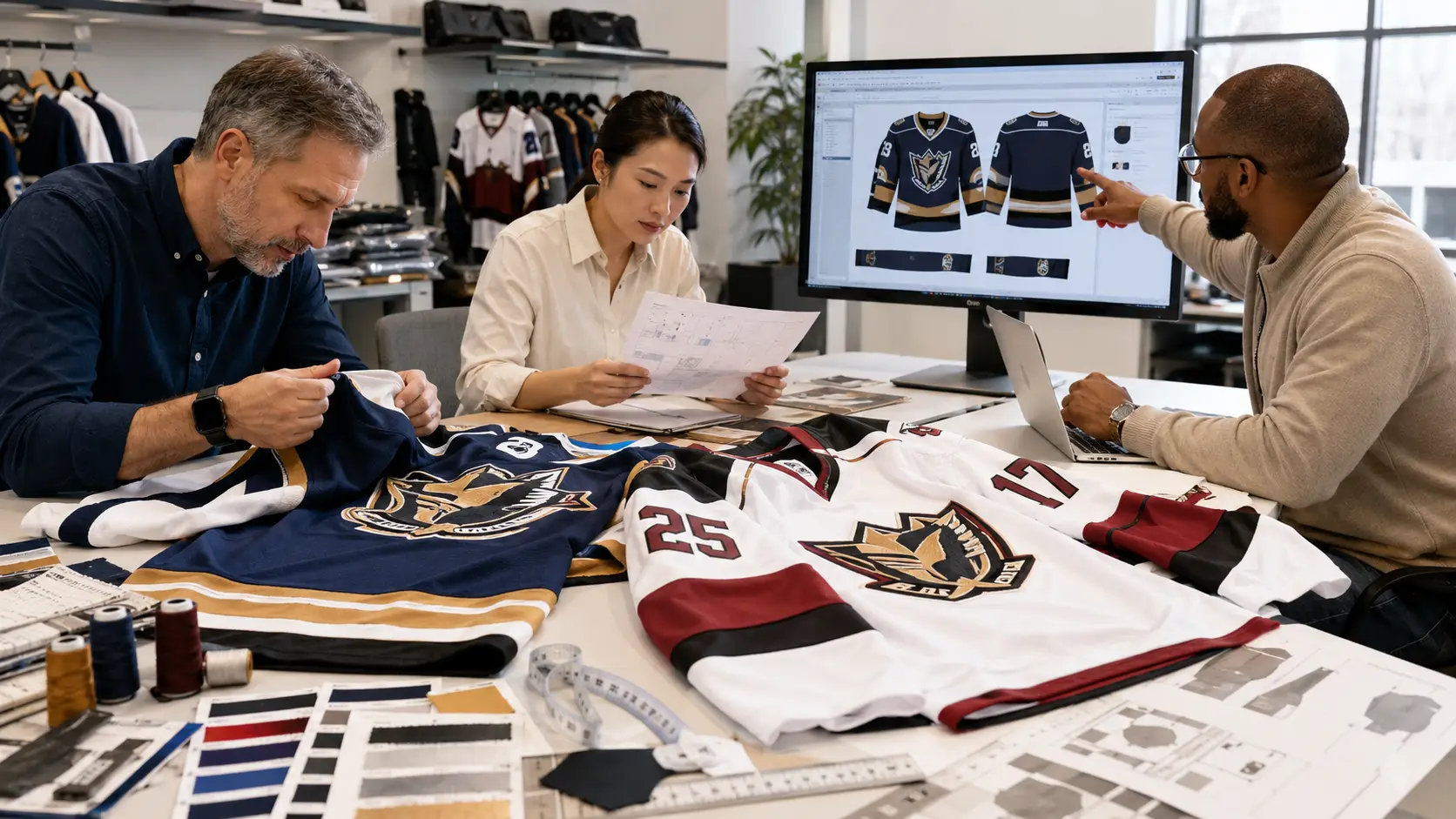
A sports club may order hoodies that coordinate with its football jersey collection. A basketball organization may want warm-up apparel that complements its basketball jerseys.
Retail and streetwear buyers may use jersey-inspired design elements without creating a competition uniform at all.
The manufacturer’s job is to translate those different concepts into a garment specification suitable for sampling and production.
Important Fabric Choices for Hoodie Jerseys
Fabric affects comfort, appearance, decoration, durability, weight, and production cost. Buyers should therefore confirm the material before approving a sample.
Polyester Performance Fabrics
Polyester is widely associated with sportswear because it is used in lightweight, performance-focused garments.
It can also work well with sublimation printing when the fabric and printing process are compatible.
For teamwear, buyers may prefer polyester when they want:
- Lightweight construction
- Large printed graphics
- Sports-oriented styling
- Easy-care garments
- Consistent team colors
Exact fabric composition and performance characteristics should always be confirmed with the manufacturer.
Cotton and Cotton Blends
Cotton-based fabrics are commonly considered for casual, lifestyle, merchandise, and streetwear hoodies.
Cotton-polyester blends can combine characteristics of both fibers and may be suitable for buyers seeking a balance between casual comfort and practical durability.
Fleece and French Terry
Fleece and French terry are useful when the hoodie needs more structure or warmth.
They are often more appropriate for warm-up apparel, supporter merchandise, casual collections, and cooler weather than for lightweight match apparel.
Why GSM Matters
GSM means grams per square meter and is a measure of fabric weight.
A higher GSM does not automatically mean better quality. It generally means the fabric is heavier per square meter.
Your ideal GSM depends on the season, climate, garment design, target retail price, and intended activity.
Ask the supplier to specify the proposed fabric composition and GSM in the quotation or sample specification, rather than relying on descriptions such as “lightweight” or “heavy.”
Hoodie Jersey Customization Options
Customization is often a major reason for working directly with a manufacturer.
A custom hoodie jersey can potentially include different fabric colors, panel designs, logos, numbers, names, drawcords, labels, trims, pockets, zipper styles, packaging, and size ranges.
The available choices will depend on the factory, fabric, order quantity, and manufacturing method.
Buyers developing related apparel can compare the construction of products such as baseball jerseys and hockey jerseys to determine which sportswear details fit their collection.
Sublimation Printing
Sublimation is commonly used for compatible polyester sportswear because it can reproduce detailed graphics across larger areas of the garment.
It can be useful for:
- Team patterns
- Player numbers
- Sponsor graphics
- Gradient designs
- Repeating prints
- Multi-color artwork
Not every garment or fabric is suitable for sublimation, so buyers should confirm compatibility before finalizing artwork.
Screen Printing
Screen printing can be suitable for logos, lettering, and graphic designs, depending on the fabric and artwork.
The number of print colors, placement, print dimensions, and garment quantity can affect production planning.
Embroidery
Embroidery can give logos and badges a textured appearance.
It is often used for chest logos, team crests, brand marks, or small decorative elements. Very large embroidered areas may alter a garment’s weight or flexibility, so placement should be evaluated during sampling.
Hoodie Jersey Manufacturer Comparison
| Factor | What to Check | Why It Matters |
| Fabric | Composition, GSM, finish | Affects comfort, weight, appearance, and decoration |
| Sizing | Measurement chart and tolerances | Helps reduce inconsistent fit |
| Printing | Method and artwork requirements | Determines graphic appearance and compatibility |
| Embroidery | Placement and dimensions | Influences appearance and garment feel |
| Sample | Fabric, measurements, colors, branding | Provides a reference before bulk production |
| MOQ | Minimum quantity by design or color | Affects inventory and purchasing plans |
| Packaging | Folding, bags, labels, cartons | Important for retail and distribution |
| Quality control | Inspection process | Helps identify production defects |
| Lead time | Sampling and production schedule | Supports launch and delivery planning |
| Communication | Specification and approval process | Reduces misunderstandings |
Do not select a factory based only on the lowest quotation. Compare exactly what each supplier has included.
One quotation may include custom labels and packaging while another does not. One may use a different fabric composition or decoration technique.
Without a consistent specification, two prices may not represent the same product.
How to Order Custom Hoodie Jerseys From a Manufacturer
A structured sourcing process makes it easier to compare suppliers and control product quality.
1. Define the Product
Start by deciding what you want to manufacture.
Identify the intended customer, use, season, style, fabric preference, approximate quantity, sizes, colors, and customization.
Do not send only a photograph and ask, “How much?”
The manufacturer needs enough information to understand the garment.
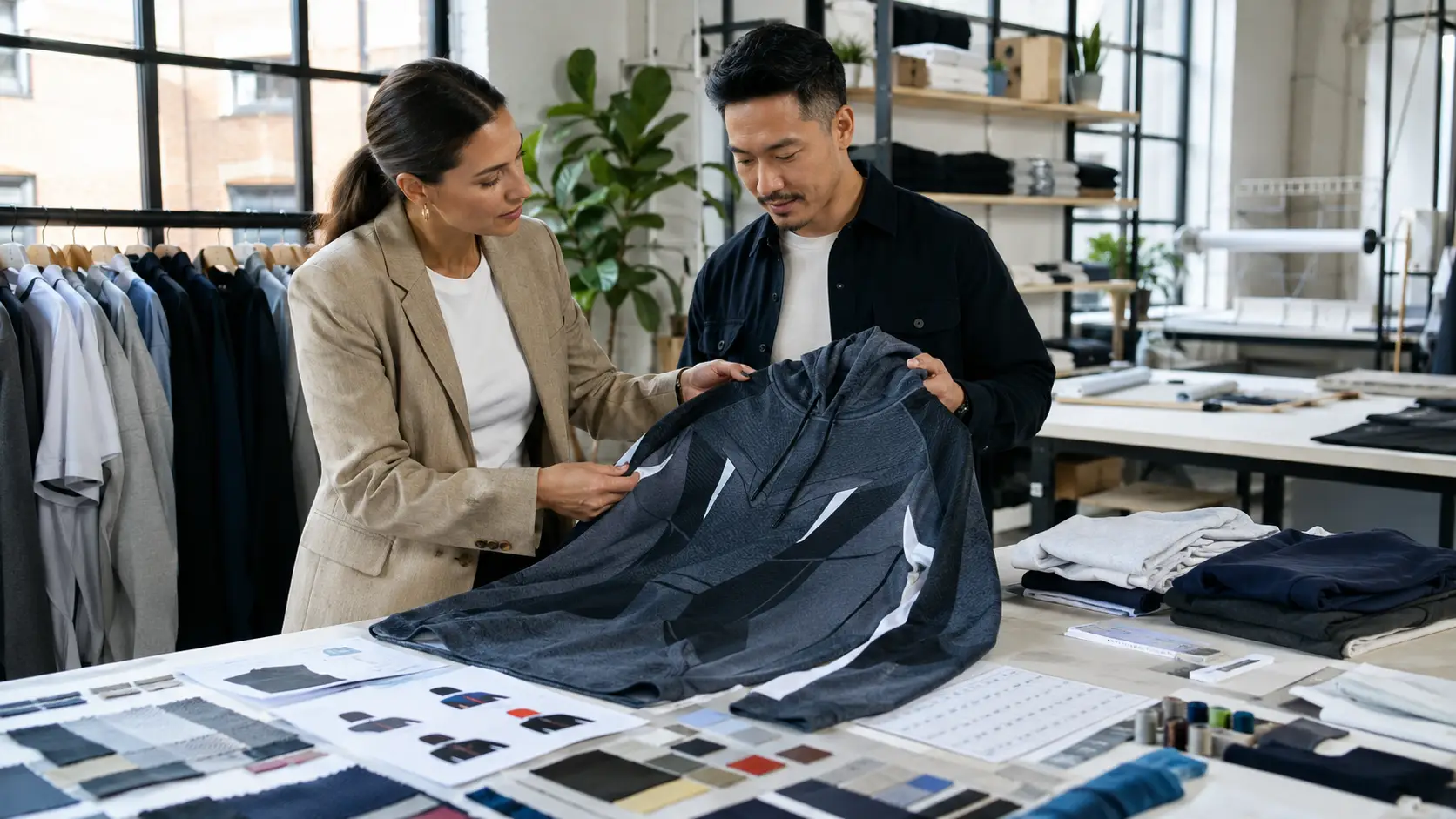
2. Prepare Your Tech Pack or Specification
A tech pack is a document that communicates how a garment should be made.
It can include:
- Front and back drawings
- Measurements
- Size chart
- Fabric composition
- GSM
- Color references
- Print locations
- Embroidery locations
- Label requirements
- Trim details
- Packaging instructions
Small businesses that do not yet have a complete tech pack can provide reference images and written specifications, then discuss what additional information the factory needs.
A supplier that also produces custom T-shirts may support broader private-label collections, but buyers should confirm the supplier’s capabilities for their specific hoodie jersey design.
3. Request a Detailed Quotation
Ask suppliers to base their quotation on the same specifications.
Important pricing factors may include:
- Fabric
- Fabric weight
- Quantity
- Number of colors
- Size range
- Printing method
- Embroidery
- Labels
- Trims
- Packaging
- Sampling
- Shipping requirements
Avoid assuming that a quoted garment price includes every development, packaging, or logistics cost.
4. Develop and Review a Sample
Sampling is one of the most important stages in custom apparel manufacturing.
Evaluate the sample for:
- Overall appearance
- Measurements
- Fit
- Fabric feel
- Fabric weight
- Stitching
- Hood construction
- Pocket position
- Logo size
- Print quality
- Embroidery quality
- Label placement
- Color
- Trims
Record requested changes clearly.
5. Approve the Final Specification
Do not rely only on informal messages after sampling.
Confirm the approved details in writing. The final specification should make clear which fabric, measurements, artwork, colors, labels, trims, and packaging requirements apply to the production order.
6. Confirm Bulk Production Details
Before production begins, confirm the quantity by size and color, the status of the approved sample, artwork files, packaging, shipping marks, destination, and any agreed-upon inspection requirements.
7. Inspect the Finished Order
Quality inspection should verify that finished products meet the approved specifications.
Depending on the order, inspection can include artistry, measurements, labeling, decoration, quantities, packaging, and visual defects.
Questions to Ask a Hoodie Jersey Manufacturer
Before committing to a supplier, ask questions that reveal how the factory will handle your actual order.
Use this checklist:
- What hoodie jersey fabrics can you source or manufacture with?
- What GSM options are available for my design?
- What is the minimum order quantity?
- Does the MOQ apply per style, fabric, or color?
- Can you make a sample before bulk production?
- What artwork file format do you need?
- Which printing method is best for my fabric and design?
- Can you provide custom neck labels, care labels, hangtags, and packaging?
- Can you work from my tech pack?
- What size tolerance will apply?
- How will bulk products be inspected?
- What information is required for a quotation?
- What production stages require buyer approval?
- How are design revisions handled?
- What shipping information do you need from international buyers?
A company’s manufacturer profile can provide useful background, but buyers should still verify the capabilities relevant to their specific product.
Common Hoodie Jersey Sourcing Mistakes
Choosing on Price Alone
The cheapest quotation is not necessarily the best value if the product specifications differ.
Avoid it: Compare material, GSM, decoration, labels, packaging, quantity, and other included requirements before judging price.
Skipping the Sample
Going directly into bulk production gives the buyer fewer opportunities to evaluate fit, fabric, construction, and branding.
Avoid it: Develop and approve a representative sample whenever appropriate for the order.
Sending Incomplete Specifications
Terms such as “good quality polyester” or “standard size” can be interpreted differently.
Avoid it: Specify measurable details whenever possible.
Ignoring Decoration Compatibility
A design may look excellent on a computer but require adjustment for a particular fabric or printing process.
Avoid it: Discuss the artwork and garment construction with the supplier before approving production files.
Approving a Sample Without Checking Measurements
Visual approval alone can miss important fit problems.
Avoid it: Compare sample measurements against your approved size chart.
Leaving Packaging Until the End
Retail labels, barcodes, individual bags, carton markings, and folding instructions can affect production preparation.
Avoid it: Include packaging requirements in your original inquiry.
Understanding Hoodie Jersey Manufacturing Costs
There is no universal, reliable price for a custom hoodie jersey because manufacturing costs depend on the product specifications.
Major cost factors include fabric type, fabric weight, garment construction, order quantity, printing, embroidery, labels, trims, size range, packaging, and development requirements.
Complex multi-panel garments may require more manufacturing work than simple designs. Large embroidery areas can involve different requirements from a small chest logo. Custom packaging may also change the total order cost.
Instead of searching for a single “hoodie jersey price,” prepare a consistent specification and request comparable quotations.
This gives you a better basis for evaluating manufacturing options.
Hoodie Jersey Manufacturer vs. General Hoodie Supplier
A specialized sportswear supplier and a general hoodie manufacturer may both be able to produce a hoodie jersey, but their strengths can differ.
A sportswear-focused factory may be more familiar with team graphics, numbers, performance fabrics, and jersey construction.
A general hoodie manufacturer may offer more experience with fleece, French terry, fashion fits, casualwear construction, and streetwear detailing.
For hybrid products, the best choice is the manufacturer that can demonstrate the capabilities your specific design requires.
Buyers can review both sports jersey manufacturing options and hoodie and sweatshirt manufacturing options when deciding which production direction makes sense.
Supplier Trust and Verification for International Buyers
A professional website can help you research a supplier, but it should not be your only source of verification.
Look for clear business information, product categories, realistic manufacturing information, contact details, and a way to discuss specifications directly.
Useful checks can include:
- Reviewing the company’s product scope
- Checking business contact details
- Discussing sample development
- Requesting production specifications
- Confirming quotation details in writing
- Reviewing actual product or factory information when available
- Clarifying inspection procedures
- Confirming payment and shipping terms before ordering
For example, buyers researching Minmax Textile can review its company profile and use the contact page to provide project requirements directly. The company’s current website describes support for product development, fabric sourcing, sampling, sizing, printing, embroidery, labels, packaging, bulk production, inspection, and export preparation for B2B apparel buyers.
Treat these details as a starting point for discussion, then confirm the exact capabilities, specifications, quantities, terms, and production requirements that apply to your order.
Information to Send When Requesting a Quote
A detailed inquiry helps a hoodie jersey manufacturer understand your project and prepare a more relevant response.
Send:
- Product drawing or reference image
- Target quantity
- Size range
- Quantity by size if known
- Preferred fabric
- Target GSM if known
- Color requirements
- Logo or graphic files
- Printing requirements
- Embroidery requirements
- Labels and trims
- Packaging requirements
- Destination country
- Target schedule
- Tech pack or measurement chart if available
If some details are still undecided, identify them clearly instead of guessing.
A manufacturer can then tell you what needs to be finalized before sampling or production.
FAQ
What does a hoodie jersey manufacturer do?
A hoodie jersey manufacturer develops and produces hooded garments with sportswear, teamwear, or jersey-inspired features. Services may include fabric sourcing, sampling, custom sizing, printing, embroidery, labeling, packaging, and bulk production.
Can hoodie jerseys be customized with team names and numbers?
Yes, manufacturers may offer printing or embroidery for names, numbers, logos, and other graphics. The appropriate method depends on the fabric, artwork, garment design, and supplier capabilities.
What fabric is best for a custom hoodie jersey?
The best fabric depends on the product’s purpose. Performance polyester may suit lightweight sportswear, while cotton blends, French terry, or fleece may be more appropriate for casualwear, merchandise, or warmer hoodies.
How much does bulk hoodie jersey manufacturing cost?
The cost depends on fabric, GSM, quantity, construction, printing, embroidery, labels, trims, packaging, and other specifications. Buyers should request quotations based on the same detailed product requirements.
Should I order a sample before bulk production?
A sample is highly useful for custom manufacturing because it lets you review fabric, measurements, fit, construction, decoration, and branding before bulk production.
How do I choose a reliable hoodie jersey supplier?
Choose a supplier by comparing product capabilities, sample quality, specification accuracy, communication, production requirements, inspection procedures, and quotation details rather than relying on price alone.
Prepare a Clear Hoodie Jersey Specification Before You Buy
Finding the right hoodie jersey manufacturer starts with knowing exactly what you want produced.
Define your fabric, GSM, measurements, colors, artwork, branding, quantities, and packaging before comparing suppliers. Request a sample, check it against your specification, document any changes, and confirm the final details before bulk production.
For international buyers, clear communication is as important as garment design. Review the supplier’s relevant manufacturing experience, ask detailed questions, and obtain a quotation based on a consistent product specification.
A well-prepared sourcing process makes it easier to compare manufacturers fairly and choose a production partner that fits your hoodie jersey project.