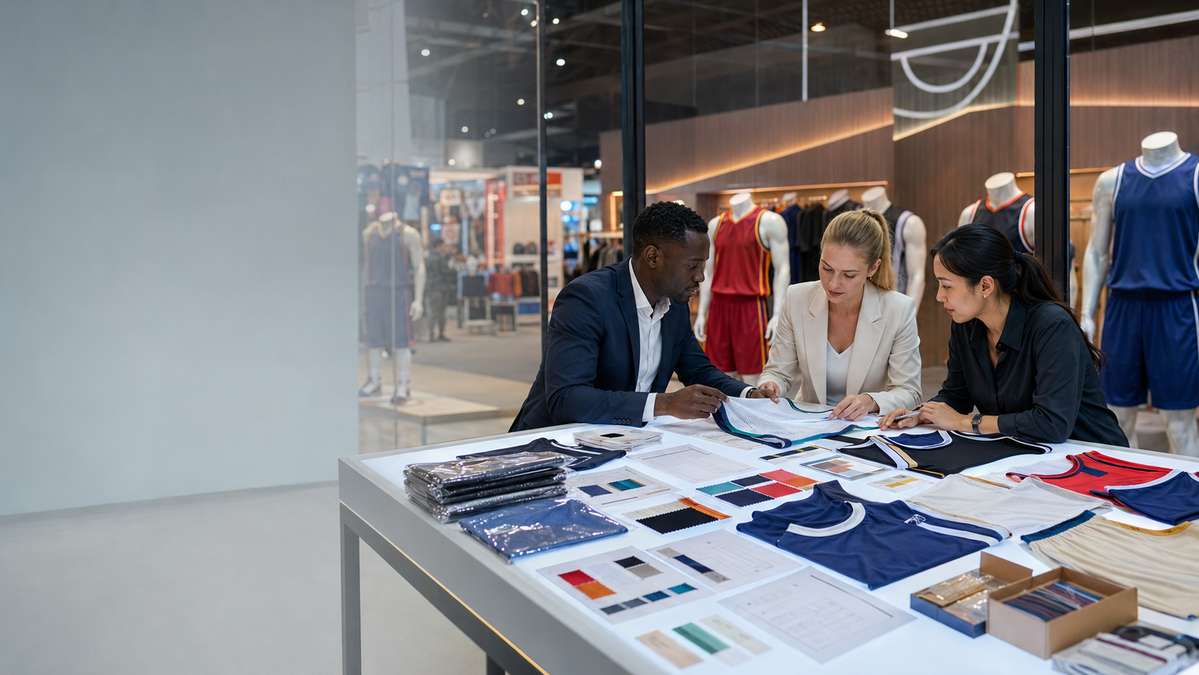
Basketball jersey manufacturers make custom team uniforms, reversible practice jerseys, youth kits, fashion tops, and private-label sportswear. The right factory should control fabric, armhole fit, artwork, player names, numbers, labels, and bulk quality. Buyers should approve a test sample, confirm logo rights, and lock in the roster before production starts.
A basketball order is a uniform system
A basketball jersey must support constant motion. Players reach, turn, jump, and sprint. The armholes need room, but they should not hang too low. The body should move well without twisting. The fabric should feel light without becoming see-through.
The top is also only one part of the order. Many buyers need matching shorts. Teams may want home and away colors. A school may need youth and adult sizes. A brand may sell the same design as both performance wear and streetwear.
That makes factory choice important. Good basketball jersey manufacturers help the buyer build a repeatable system. They do more than place a logo on a blank shirt.
Minmax Textile presents a custom basketball jersey manufacturing range from Bangladesh. The category includes mesh, plain, reversible, and youth options. It also states that buyers can request custom jerseys, shorts, trims, and prints. Every order still needs a clear product brief and written quote.
Start with the buyer type
The best construction depends on who will use or buy the uniform.
Competitive teams
Competitive players need free movement, light fabric, and clear numbers. The design should also stay stable through frequent washing.
Schools and youth leagues
These buyers may need broad size ranges, safe trims, and simple reorder steps. A reversible jersey can help one kit serve home and away use.
Recreational clubs and events
Comfort, quick setup, and roster accuracy often matter most. The order may include many player names but only a few units per size.
Retail and streetwear brands
Retail jerseys may feature a wider body, a heavier knit, large graphics, or special labels. Game performance may be less important than fit, hand feel, and style.
Wholesalers and decorators
Blank or lightly branded jerseys let local shops add player data later. These buyers need stable fabric and a clean print surface.
Brands that want a single source for multiple apparel types can also consider Minmax Textile as a custom clothing manufacturer. The supplier should demonstrate that it understands the specific product, not just general garment work.
Six decisions that define the jersey
Before requesting a sample, settle six key choices.
| Decision | Main options | Why it matters |
|---|---|---|
| Use | Game, practice, event or retail | Sets the needed fit and quality level |
| Body style | Standard, athletic, relaxed or fashion | Changes movement, size chart and fabric use |
| Construction | Single layer or reversible | Affects heat, weight, sewing and cost |
| Fabric | Interlock, mesh, birdseye or stretch knit | Controls airflow, print result and feel |
| Decoration | Sublimation, screen print, transfer or embroidery | Changes look, durability and unit cost |
| Order system | Stock sizes or player-specific roster | Changes data control and packing |
Put each answer in the tech pack. If one factory quotes a single-layer jersey and another quotes a reversible top, their prices cannot be compared.
Fabric should work during play
Polyester knits are common for basketball uniforms. They can dry fast, support bright prints, and feel light. Yet fiber content alone does not prove quality.
Ask for:
- the exact fiber content.
- fabric weight or GSM.
- knit structure.
- stretch and recovery.
- moisture-control finish, if claimed.
- opacity in light and dark colors.
- snag and pilling performance.
- shrinkage after care.
Smooth interlock can support sharp sublimation. Small-mesh or birdseye structures can increase airflow. Larger mesh can affect print detail and coverage. Stretch knits can improve close fits if recovery is strong.
Minmax Textile’s wider sports jersey manufacturing category covers several team sports. That may help a multi-sport buyer. Still, the approved basketball fabric should be tested for its own use and artwork.
Reversible jerseys need a separate plan
A reversible jersey gives a team two colors in one garment. It can be useful for practice, school leagues, and tournaments. It also creates more production risk.
The buyer should decide whether the jersey uses:
- two full fabric layers.
- a double-face fabric.
- two printed sides.
- separate names and numbers on each side.
- open or closed hems.
- reversible labels or removable tags.
Two full layers can add heat and weight. A lighter fabric may help, but it still needs enough coverage. The layers must not twist or show through each other. Neck and armhole binding should look clean from both sides.
Test the reversible sample during movement. Wash it several times. Check whether one side pulls, the hems roll, or the colors move onto each other.
Fit the armhole before judging the body
The armhole is one of the most important fit points. It must allow the player to raise both arms. At the same time, a very deep opening may expose too much of the body or base layer.
Check:
- shoulder width.
- front and back neck drop.
- armhole depth.
- chest width.
- body length.
- side-seam shape.
- hem width.
- binding tension.
Have the fit model reach overhead, pass a ball, and rotate the torso. Watch the neckline and side seams. The jersey should not pull upward or turn around the body.
Minmax Textile’s company profile lists sample development, technical teams and quality support. Buyers should use those steps to test the smallest, middle and largest sizes before bulk approval.
Youth sizing needs its own grade rules
An adult pattern should not simply be reduced for children. Youth players have different body shapes and movement needs.
Build a size chart around the target age range. Include garment measurements and the body data used to create them. Check neck openings, armholes, and body length with care.
If one team order includes youth and adults, use clear size codes. Do not rely on “small” without stating whether it means youth-small or adult-small. Packing labels should also make this clear.
For growing players, a little room may extend use. Too much room can affect play and appearance. Test the planned fit over any base layer the team will wear.
Buyers who prefer an open-knit can review a mesh basketball jersey as an example. The order should still define mesh size, fabric weight, fit, and testing.
Coordinate the jersey and shorts as one kit
When shorts are part of the order, treat the set as one uniform. Match:
- color standards.
- side-panel width.
- artwork scale.
- trim and binding.
- logo placement.
- fabric weight and sheen.
- size labels.
- packing method.
The jersey and shorts do not always need to be made of the same fabric. Shorts may need more strength or a different stretch level. The two fabrics should still look intentional together.
Check whether jersey side panels meet the short panels in a clean visual line. Ask for a full sample set, not separate pieces shown on different days.
Sublimation is useful, but artwork control is vital
Dye sublimation works well for polyester teamwear. It can cover the full garment without adding a heavy print layer. It also allows names, numbers, patterns, and sponsor marks to share one design.
Good results depend on more than the printer. The factory must control:
- color profiles.
- heat and pressure.
- panel placement.
- artwork scale by size.
- white areas near seams.
- front and back alignment.
- number and name data.
Approve a printed strike-off or sample under normal light. Compare it with the brand color standard. Screen colors alone are not reliable.
For dark designs, test whether dye transfers to white logos, labels, or packaging. Also check the color after washing and rubbing.
Screen print, transfer, embroidery, or appliqué
Sublimation is not the only choice.
Screen print
Screen print can suit simple logos and numbers. Test stretch, wash life, and hand feel. Large prints may feel warmer or stiffer.
Heat transfer
Transfers can work for names, numbers, and smaller runs. Check the film edge, stretch, and adhesion. Poor transfers may lift or crack.
Embroidery
Embroidery can add a premium look to retail jerseys. Dense stitches may pull on light fabric. Use suitable backing and placement.
Twill appliqué
Appliqué can create a classic team or varsity feel. It adds weight and sewing time. Check edge stitching and inside comfort.
The final choice should match the product. A light game jersey and a heavy fashion jersey may need different methods.
Lock artwork and logo rights before sampling
Basketball products often use team names, league marks, mascots, sponsor logos, and player details. The buyer must have the right to use every protected asset.
Do not ask a factory to copy a professional league jersey without a license. A familiar style does not grant legal rights. Buyers should supply original artwork or proof of permission. The same rule applies when reviewing Minmax Textile’s baseball jersey range or any other teamwear category.
Record:
- the artwork owner.
- the license holder, if any.
- approved products.
- approved sales markets.
- license dates.
- final color and logo files.
Use generic terms such as “pro-style cut” only to describe shape. Do not present an unlicensed item as official merchandise.
Roster control prevents the most painful mistakes
A perfect jersey with the wrong player number is still unusable. Treat roster data as production data.
Use one controlled sheet with these columns:
| Player ID | Printed name | Number | Jersey size | Shorts size | Quantity | Notes |
|---|---|---|---|---|---|---|
|
Example 01 |
Approved spelling |
00 |
Adult M | Adult M |
1 |
Captain, mark if approved |
The example is only a template. The buyer should use real approved data in the order file.
Follow this process:
- Collect all names and numbers.
- Check spelling with the team manager.
- Confirm youth or adult size codes.
- Remove duplicate player numbers if not allowed.
- Freeze the roster version.
- Approve a digital layout or sample.
- Record every later change.
The factory should print or pack from the same locked file. Verbal changes are risky.
Private-label basketball jerseys for retail
A private-label range may include game jerseys, fashion jerseys, shorts and warm-up pieces. Brand details can include:
- a woven main label.
- a size and care label.
- a heat-transfer neck mark.
- custom side labels.
- woven patches.
- branded hangtags.
- barcode and price stickers.
- retail bags or paper bands.
- custom carton marks.
Place labels where they will not rub the skin. Check that the dark label dye does not transfer to light fabric. For online sales, add a clear size chart and garment measurements.
Minmax Textile also publishes a basketball jersey sourcing guide. Buyers should treat any price, MOQ, or timing example as general content. The order-specific quotation and purchase agreement should control.
A sample test that feels like a short practice
Do not judge the sample only on a table. Put it through a simple movement check.
- Raise both arms fully.
- Rotate the torso left and right.
- Bend into a defensive stance.
- Jump and reach upward.
- Run a short distance.
- Sit and stand several times.
- Check the jersey and shorts again.
Look for pulled, twisted, or rolled hems and rough bindings. Check whether the jersey rises too high. Review the shorts waist and rise as well.
Then wash the set with the planned care method. Measure it again. Check color, print, shape and trim.
Quality control from first panel to final carton
Use four stages.
Fabric and trim control
Check weight, shade, stretch, surface faults and shrinkage. Confirm binding, labels and elastic against approved items.
Print and cutting control
Review color, artwork scale, panel direction and placement. Check every roster version before printing.
Sewing control
Inspect seams, necklines, armholes, side panels and hems. Reversible styles need checks on both sides.
Final random inspection
Check quantity, size, measurements, player data, artwork, labels, packing and carton marks. Set the inspection method before work begins.
Minmax Textile states that its wider controls include internal audits and third-party tests. Its profile also lists pre-final inspection at AQL 2.5. Buyers should confirm how those steps apply to the actual jersey order.
Useful performance and safety tests
The test plan depends on use, age group, and destination. It may cover:
- fiber-content accuracy.
- colorfastness to washing.
- colorfastness to rubbing and sweat.
- shrinkage and twisting.
- pilling and snag resistance.
- seam strength.
- print or transfer adhesion.
- restricted substances.
- label accuracy.
Youth products may have added legal duties. The buyer should confirm them with the importer or an approved lab. Claims such as “moisture-wicking” should also have a clear test method.
Local buying notes for ten markets
The best jersey brief reflects the local channel and buyer. Country names alone do not create useful local SEO.
| Market | Practical sourcing point |
|---|---|
| USA | School, travel, rec, and retail buyers may need different fits. Roster control, licensed art, and clear youth sizes are key. |
| Australia | Club and school programs may favor light fabrics. Plan delivery around Southern Hemisphere seasons and event dates. |
| UK | Basketball clubs and fashion buyers may need separate cuts. Reversible kits can support use at schools and events. |
| UAE | Light, breathable uniforms are well-suited to warm weather and indoor leagues. Confirm size, modesty, and sponsor-mark needs. |
| Germany | Product files and material data support buyer review. Confirm current EU chemical, safety, and label duties. |
| Canada | Youth and adult club programs may need English and French label review. Confirm provincial needs with the importer. |
| Saudi Arabia | Academies, schools, and events may need custom rosters. Confirm Arabic labels and import documents before production. |
| Netherlands | Clubs and lifestyle brands may value light, easy-care kits. Clear size charts help team and online orders. |
| South Africa | Climate and price needs vary by region. Team, school and retail styles may need different fabric levels. |
| Qatar | Lightweight kits can suit indoor leagues, schools and events. Confirm delivery dates, local labels and documents early. |
These notes support planning. They are not legal advice. Local importers should approve the final labels, tests and documents.
MOQ, price and lead time
Price changes with fabric, reversible layers, panels, artwork, player data, labels, shorts, tests and packing. Give each factory the same full request.
Include:
- quantity by design and color.
- size range and ratio.
- youth and adult breakdown.
- jersey-only or full-kit need.
- fabric and decoration.
- roster details.
- labels and packing.
- destination and shipping term.
- required delivery date.
Minmax Textile’s basketball category says it can handle varied order sizes, trims, and prints. Its company profile gives a general MOQ benchmark of 2,000 pieces per color and style. A separate site article describes much smaller team-order examples. These statements may refer to different order types. Buyers should use only the MOQ, price, and lead time that were confirmed in writing for their exact design.
Plan backward from the first game or launch date. Allow time for fabric, samples, roster approval, testing, bulk work, inspection, and freight.
Check the supplier before paying
Ask about fabric, youth and adult fits, reversible construction, roster control, MOQ, samples, and inspection. Review the business identity, address, and needed audit records. Reviews may add context about service and repeat quality. A consistent Google Business Profile and credible directories can support identity checks. They do not replace samples, tests, or a written contract.
Frequently asked questions
What types of basketball jerseys can manufacturers produce?
Common options include game jerseys, reversible uniforms, practice tops, youth kits, blank jerseys, and fashion styles. Many factories can also produce matching shorts and private-label packaging.
What fabric is best for basketball jerseys?
Polyester interlock, birdseye, and mesh are common. The best choice depends on airflow, opacity, print detail, stretch, use, and price. Buyers should approve and test the actual fabric.
Is sublimation good for basketball uniforms?
Yes. Sublimation can create light, full-color artwork on polyester. It works well for player names and numbers. Good results still depend on color control, heat, panel placement, and testing.
What is the MOQ for custom basketball jerseys?
MOQ varies by fabric, design, print method, and supplier. Reversible kits and unique player data may affect it. Use the order-specific MOQ shown in the written quote.
How can a buyer prevent roster mistakes?
Use one checked roster file with printed names, numbers, jersey sizes, shorts sizes, and quantities. Freeze the version before printing and record every approved change.
Build a kit your team can reorder
A strong basketball uniform gives players room to move and gives the team a clear identity. It also needs a repeat system for sizes, colors, artwork, and roster data. That system protects both the first order and the next season’s reorder.
Minmax Textile offers custom and wholesale basketball jersey production from Bangladesh. To request a useful quote, send the tech pack, fabric target, artwork, and quantity. Add the size ratio, roster, destination, and delivery date through the company’s contact page. A complete brief helps the supplier plan the sample, price, and schedule.