Boys’ jeans manufacturers develop and produce denim bottoms for children’s brands, retailers, schoolwear suppliers, and private labels. Strong suppliers combine child-friendly fit, durable construction, controlled washing, secure trims, consistent grading, clear quality standards, and export planning suited to the buyer’s destination, price point, and delivery season.
Why Boys’ Jeans Are Harder to Manufacture Than They Look
Jeans are familiar, but they are not simple. Fabric changes after washing, dark indigo can transfer color, and small fit adjustments affect comfort. Zippers, rivets, buttons, snaps, waist adjusters, and patches also require careful selection.
For children’s denim, boys need room to sit, run, and grow while the garment keeps a clean retail fit. Parents expect durability, and retailers expect consistent sizes, shades, labels, and packing.
Buyers can explore Minmax Textile as one Bangladesh-based apparel supplier and review its boys’ jeans manufacturing range for product ideas. That is a starting point, not the end of due diligence. Before ordering, verify the supplier’s current denim capability, sample quality, wash control, factory arrangements, compliance documents, capacity, commercial terms, and export experience.
This guide explains what to specify, what to test, how to compare factories, and how to adapt a boys’ jeans program for the USA, Australia, UK, UAE, Germany, Canada, Saudi Arabia, the Netherlands, South Africa, and Qatar.
Read the Garment Like a Manufacturer
Every pair of jeans is a system of connected decisions. Understanding the main components makes supplier conversations much clearer.
Denim fabric
The fabric determines weight, strength, stretch, drape, color, and much of the final cost. A technical brief should identify fiber content, fabric weight, weave, stretch percentage if applicable, color reference, and expected performance after washing.
Rigid denim gives a traditional feel. Stretch denim improves movement, but recovery must be tested so knees, seats, and waistbands do not bag out quickly.
Waistband and adjustment
Young customers within the same age can have very different waist measurements. An internal elastic adjuster can improve fit and reduce returns, but it adds components and construction steps. Specify buttonhole elastic quality, button position, internal finishing, and the full adjustment range.
Fly and closure
Depending on the age group and style, jeans may use a zipper fly, a mock fly, a snap, a tack button, a hook-and-bar, or a pull-on elastic waist. The closure should match the user’s age and ability to dress independently. Small components need secure attachment and product-specific risk review.
Pockets and reinforcement
Five-pocket styling is common, but pocket depth and position should be scaled for children. Stress points such as pocket openings, belt loops, fly base, and inseams may need bartacks or other reinforcement. Decorative stitching should not create rough or bulky areas against the skin.
Thread, trims, and branding
Contrast topstitching, metal hardware, jacron or fabric patches, labels, embroidery, and printed pocketing create the brand look. They must also work together in washing. Metal finish, thread shade, patch artwork, label readability, and attachment strength should all be approved before production.
The Denim Specification Worksheet
A quotation based on “500 boys’ blue jeans” will not be reliable. Use a worksheet that gives every factory the same information.
| Decision | Information to provide |
|---|---|
| Customer | Age range, sales channel, target retail price, and intended use |
| Fit | Skinny, slim, straight, relaxed, loose, tapered, cargo, or pull-on |
| Fabric | Fiber content, weight, weave, stretch, recovery, and color |
| Wash | Raw, rinse, enzyme, stone effect, vintage, black wash, or other finish |
| Construction | Rise, waistband, fly, pockets, yoke, seams, belt loops, and reinforcement |
| Trims | Button, snap, rivets, zipper, elastic adjuster, labels, patch, and thread |
| Artwork | Embroidery, print, grinding, whiskers, fading, or other placement details |
| Sizing | Base size, graded measurements, tolerances, and measuring method |
| Testing | Dimensional stability, colorfastness, strength, recovery, and trim checks |
| Packing | Folding, hangtags, barcodes, polybags, size ratio, and carton marks |
| Order | Quantity per color and size, destination, Incoterm, and delivery date |
The wider boys’ clothing category can help buyers plan shared age bands, labels, and packaging across a collection. However, denim should still have its own detailed specification because shrinkage, washing, shade, and hardware create category-specific risks.
Build the Fit Range Around Real Use
A brand does not need every fit. It needs the right fits for its customer and channel.
Slim and skinny jeans
These fits need enough stretch and recovery for movement. Pay close attention to knee, calf, ankle opening, front rise, and seat comfort. A style that looks sharp while standing may feel restrictive while sitting.
Straight jeans
Straight fits are versatile and easier to merchandise across casual, school, and weekend ranges. The line from knee to hem should remain balanced after washing, and the leg should not twist.
Relaxed and loose jeans
Relaxed fits offer more room through the hips, thighs, and legs. They work well for active use and current fashion directions. Control the rise and seat carefully so the garment looks intentional rather than oversized in the wrong places.
Pull-on and jogger jeans
Elastic-waist denim styles can help younger children dress independently. Drawcords and other adjustment features must be reviewed for the intended age and destination. A soft fabric and comfortable internal finish are especially important.
Cargo and fashion denim
Cargo pockets, carpenter loops, knee panels, contrast stitching, patches, and distressed effects add character. They also add sewing operations and inspection points. Every placement should be dimensioned in the tech pack rather than left to the sample room’s interpretation.
Fit approval should include movement. Ask the fit model to sit, bend, walk, and climb a step. Check waistband pressure, back rise coverage, pocket access, and fly comfort.
Wash Development Is Where the Product Comes Alive
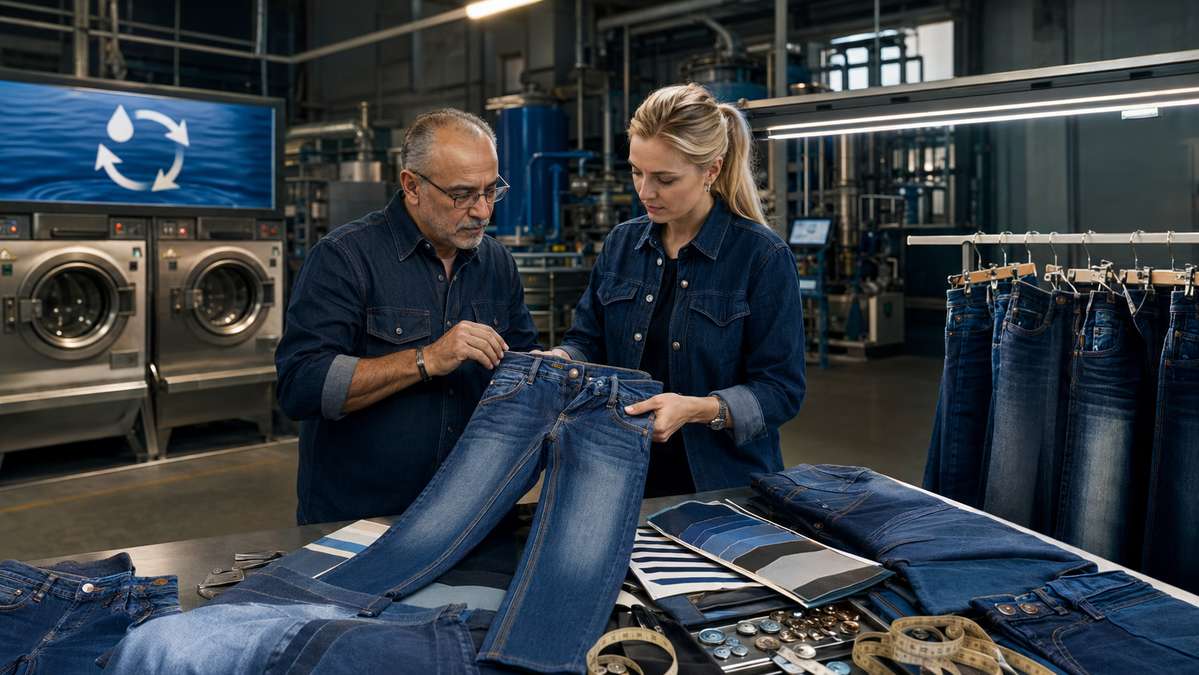
Denim washing changes color, softness, shrinkage, surface character, and garment measurements. A wash description alone cannot fully define the result.
Create a wash standard
Start with a reference garment, wash panel, or clear visual target. Approve a physical wash sample under suitable lighting. Keep the approved sample sealed and identified so it can be compared with bulk production.
Test the whole garment
Finished-garment tests show how sewing, trims, and washing interact. Check measurements, shade, seams, pocketing, labels, hardware, recovery, and decoration after washing.
Control shade bands
Indigo and garment washing can create natural variation. Define the acceptable shade range before bulk production. If several shade bands are accepted, agree on how garments will be sorted and packed so that no carton contains visibly mismatched pieces.
Review special effects carefully
Whiskers, fading, grinding, spray effects, abrasions, and destroyed areas should have approved placement and intensity. For children’s jeans, fashion effects must not weaken the garment or create rough, sharp, or unstable areas.
Ask how the wash is achieved
Buyers increasingly want to understand water, chemical, energy, and worker-safety practices. Ask the supplier for current, verifiable information about the wash facility, process controls, wastewater management, restricted substance procedures, and any claims used in marketing. Avoid unsupported environmental language.
Follow the Order Through Seven Production Gates
Instead of treating production as one long wait, divide it into approval gates.
- Technical review: Factory confirms construction, measurements, fabric, wash, trims, testing, price, MOQ, and timeline.
- Development sample: Buyer reviews the initial design interpretation and updates the tech pack.
- Fit and size approval: Base size and grading are tested before the full size range is produced.
- Wash and trim approval: Physical wash standard, thread, hardware, labels, pocketing, and branding are sealed.
- Pre-production meeting: The factory reviews every approved component and highlights risks before bulk work begins.
- In-line control: Early production is checked for construction, measurements, wash direction, and workmanship.
- Final inspection: Finished goods are assessed against the approved sample, tolerances, defect rules, packaging, and order quantities.
Photographs can support communication, but they do not replace samples, written approvals, testing, or inspection.
A Denim Defect Guide for Buyers
Knowing the likely defects helps a sourcing team set clear inspection standards.
| Defect | What it may indicate | What to control |
|---|---|---|
| Leg twisting | Fabric torque, cutting, sewing, or wash issues | Fabric testing, grain alignment, construction, and wash trials |
| Uneven shade | Lot mixing or inconsistent washing | Lot control, wash recipe, shade standards, and carton sorting |
| Waist growth | Poor stretch recovery or construction | Fabric recovery, waistband method, and after-wash measurements |
| Broken stitches | Wrong thread, tension, needle, or seam stress | Sewing setup, seam tests, and in-line inspection |
| Loose hardware | Incorrect attachment or weak material | Pull testing, setting controls, and final inspection |
| Pocket damage | Weak pocketing or harsh wash | Pocket fabric, seam method, reinforcement, and wash testing |
| Skewed labels | Poor placement control | Position measurements and finishing checks |
| Excess color transfer | Dye or wash performance issue | Colorfastness testing and clear care information |
| Size variation | Cutting, sewing, wash, or grading inconsistency | Size set, tolerances, in-line measurement, and final audit |
Defect classifications should be agreed before inspection. A cosmetic problem on an adult fashion item may be more serious on children’s clothing if it affects safety, dressing, comfort, or durability.
Market-by-Market Merchandising Across Ten Locations
Local relevance should shape the product plan, not simply add country names to the page.
USA
The US market supports many denim segments, from value basics to fashion-led fits. Climate varies widely, so fabric weight and seasonal timing should match the sales region. Confirm applicable children’s product, labeling, and testing duties with a qualified US compliance partner.
Canada
Layering, durable school styles, and year-round basics can be useful, while regional climate affects fabric weight. Buyers should verify English and French requirements and any province-specific needs for the intended sales channel.
UK
UK ranges often benefit from practical straight and slim fits, adjustable waists, dependable school-season delivery, and easy online size guidance. British shoppers still understand “jeans,” so the main localization work is in sizing, fit language, price, and delivery.
Australia
Southern Hemisphere seasons require a different buying calendar. Lightweight and stretch denim can suit warmer areas, while cooler regions still support heavier seasonal product. Sun, travel, school, and outdoor use can influence styling.
Germany
Precise specifications, consistent sizing, useful material information, and credible documentation can support buyer confidence. Product and sustainability claims should be specific and verifiable rather than broad.
Netherlands
Comfortable cycling-friendly movement, practical layering, and versatile washes may suit many consumers. Brands should also expect questions about materials, traceability, packaging, and responsible production.
UAE
Light to midweight denim, soft finishes, polished details, and comfortable stretch can work well for warm weather and air-conditioned spaces. School, travel, gifting, and family shopping periods may shape the calendar.
Saudi Arabia
Comfort, modest styling, durable everyday construction, and clean presentation can serve several channels. Regional temperatures and retail segments vary, so one fabric weight should not be assumed for the entire market.
Qatar
Breathable, flexible denim may be more practical than very heavy fabric. Premium finishes, travel-ready looks, school needs, and cooler-season capsules can create distinct product opportunities.
South Africa
The market includes varied climates, incomes, and retail formats. Durable basics, flexible assortments, clear value, and well-timed school- or seasonal-delivery can be important. Local sales evidence should guide fit and price decisions.
These insights are planning cues. Final choices should be tested against sales history, search data, competitor ranges, customer reviews, return reasons, local retailer feedback, and current legal advice.
Plan Tops and Bottoms as One Collection
Jeans rarely sell alone. A coordinated range can use common color stories, age breaks, branding, barcodes, and delivery windows. Casual outfits may pair denim with boys’ T-shirts, while smarter programs may connect jeans with boys’ polo shirts or boys’ shirts.
For colder collections, buyers can coordinate denim washes with boys’ sweaters and boys’ sweatshirt hoodies. Alternative bottoms, such as boys’ twill pants, can offer customers a non-denim option while maintaining the same fit logic.
The supplied T-shirt terms have separate search intent, so they belong only in this broader assortment context. A multi-category buyer may seek a Custom T-Shirt Manufacturer, OEM T-Shirt Manufacturer, Wholesale T-Shirt Manufacturer, Bulk T-Shirt Supplier, Private Label T-Shirts, Men’s T-Shirts, Men’s Cotton T-Shirts, Men’s Crew Neck T-Shirts, Men’s Oversized T-Shirts, Men’s Sports T-Shirts, Men’s Polo Shirts, Corporate Uniform T-Shirts, Custom Polo Shirt Manufacturer, or Custom Clothing Manufacturer. Those capabilities should be evaluated separately from denim production. Related categories, such as kids’ sweaters and men’s sweaters, may support broader family or adult collections without changing the jeans article’s main focus.
Calculate the Real Commercial Cost
The unit price changes with fabric, wash, construction, hardware, order volume, size range, and packing. Complex distressing, custom metal trims, embroidery, special labels, multiple wash shades, and small color quantities usually add cost.
MOQ may apply per fit, fabric, wash, color, or trim finish. Ask the supplier to state each minimum clearly. A 1,000-piece program can still be inefficient if it is divided across too many washes, hardware colors, and size groups.
Compare quotations line by line:
- Fabric specification and allowance
- Wash and special effects
- Sewing and reinforcement
- Hardware, zipper, elastic, labels, and patches
- Sampling and development charges
- Testing and inspection
- Packaging and carton requirements
- Freight term and shipment method
Confirm the Incoterm and what it includes. EXW, FOB, CIF, and DDP represent different responsibilities and costs. Freight, insurance, duties, taxes, customs clearance, and local delivery should be checked with a qualified freight forwarder or customs professional for each destination.
Interview the Manufacturer Before You Approve the Sample
A polished sample does not answer every operational question. Ask the supplier:
- Which children’s denim fabrics, fits, and washes do you produce regularly?
- Is sewing and washing completed in your own facilities, partner units, or both?
- How do you control fabric lots, wash recipes, shade bands, and after-wash measurements?
- What is the MOQ per fit, wash, and trim finish?
- Which sample stages do you recommend for this product?
- How do you test buttons, rivets, zippers, stretch recovery, strength, and colorfastness?
- How are restricted substances and chemical processes managed?
- What current audits or certifications apply to the actual production facilities?
- How do you handle in-line failures, late materials, and rejected bulk goods?
- What is included in the quote, and what shipment date can be committed in writing?
Review the Minmax company profile as one part of this due diligence. Then request current, order-specific evidence directly because capacity, audits, certifications, partners, and production schedules can change.
Show Trust Without Pretending to Be Local
Manufacturers serving international markets should make verification easy. Useful website signals include accurate business details, clear product capabilities, evidence of factory and processes, realistic lead-time explanations, inquiry requirements, and responsive contact information. Buyers can use the Minmax contact page to share a tech pack and request current denim details.
A Google Business Profile is appropriate only where a company has a genuine eligible presence. Business name, address, phone number, hours, photos, and website should remain consistent. Manufacturers should not create fake profiles or location pages for the USA, Canada, UK, Australia, Germany, the Netherlands, UAE, Saudi Arabia, Qatar, or South Africa if they do not operate there.
Relevant trade directories, chambers, sourcing platforms, and industry associations can improve discovery when listings are accurate. Reviews also help when they describe sampling, fit, wash consistency, communication, delivery, and problem resolution. Reviews should never be fabricated or written to make unsupported claims.
Frequently Asked Questions
What do boys’ jeans manufacturers offer?
Services may include pattern development, denim sourcing, sampling, cutting, sewing, washing, finishing, custom trims, private labels, testing coordination, inspection, packing, and export support. The exact scope should be confirmed before quoting.
What denim is best for boys’ jeans?
The best denim depends on fit, age, climate, price, and intended use. Stretch denim can improve comfort, while rigid denim gives a traditional look. Test the actual fabric and finished wash for recovery, shrinkage, strength, and color performance.
What is the usual MOQ for custom boys’ jeans?
There is no universal MOQ. It may apply per style, wash, color, fabric, or hardware finish. Ask for a written breakdown before creating a range with several options.
How can a buyer reduce the number of sizing returns?
Use a tested size chart, clear measuring instructions, fit trials across key sizes, an approved size set, adjustable waists where suitable, and accurate online product measurements. Review the return data after launch and improve the next-fit block.
How should bulk jeans be inspected?
Compare production with the sealed sample and written tolerances. Check shade, measurements, leg twist, seams, hardware, wash effects, labels, barcodes, packing, and order quantities. Independent inspection may be useful for higher-risk orders.
Turn a Denim Concept Into a Dependable Retail Product
The best boys’ jeans manufacturers make fit, fabric, wash, trims, quality, cost, and timing work together. They do not hide uncertainty behind a low quote. They ask useful questions, test the garment, document approvals, and control the details that shoppers notice after repeated wear.
Prepare a complete tech pack, size breakdown, wash target, order quantity, destination, testing needs, packaging details, and required delivery date. Then compare suppliers using samples, verified production capability, current evidence of compliance, total landed cost, and communication quality. For a product-specific discussion, send those details to Minmax Textile and request a current quotation, sample plan, and production timeline.