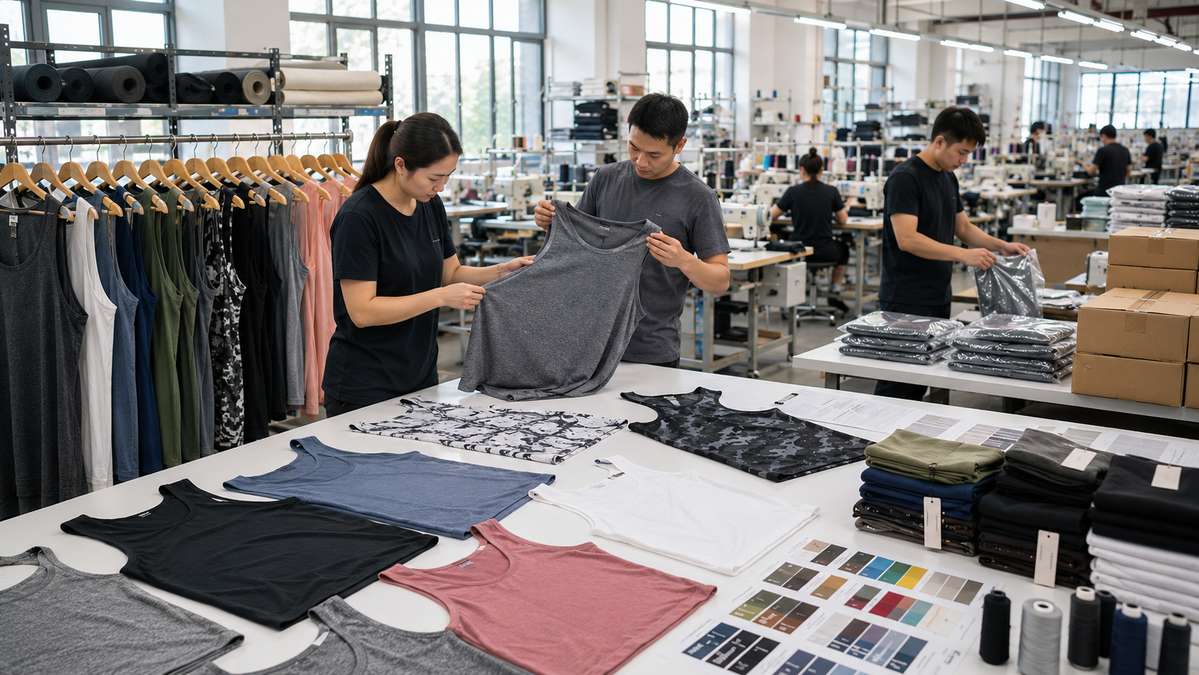
A tank top manufacturer produces sleeveless shirts to a buyer’s specifications, covering fabric choice (cotton, poly-blends, or performance knits), armhole and strap construction, and printing or embroidery. Reliable manufacturers support flexible order quantities, consistent stitching quality, and shipping to markets such as the USA, the UK, Australia, the UAE, Canada, Germany, Saudi Arabia, the Netherlands, South Africa, and Qatar.
Tank tops seem like one of the simplest garments to manufacture — no sleeves, no collar, minimal pattern pieces. That simplicity is exactly why so many buyers underestimate how much can go wrong. Armholes that gape or dig in, fabric that goes sheer under gym lighting, straps that stretch out after a few wears — these are the quiet quality failures that turn a decent product into a return request.
Whether you’re building a fitness apparel line, sourcing gym tank tops for a supplement brand’s merch drop, or ordering bulk tank tops for a summer event, the manufacturer you choose determines whether the product actually holds up to how people use it. This guide breaks down what to look for, what things cost, and how sourcing priorities shift depending on where you’re buying from and shipping to.
What Does a Tank Top Manufacturer Actually Do?
A tank top manufacturer typically manages:
- Fabric sourcing — cotton, cotton-poly blends, or performance synthetic knits
- Pattern cutting — body panels, armholes, and straps or shoulder panels
- Construction — binding the armholes and neckline, stitching side seams, and hemming
- Decoration — screen printing, DTG printing, embroidery, or heat transfer
- Finishing — pressing, tagging, folding, and private label packaging where needed
Some manufacturers focus purely on blank tank tops for decorators and print shops. Others operate as full-custom tank top manufacturers, managing the entire process from fabric through to finished, branded product. Knowing which service level fits your business helps you avoid wasting time requesting quotes from the wrong type of supplier.
OEM vs. Private Label Tank Top Manufacturing
OEM tank top manufacturers build a garment to your exact specifications — your fit, fabric, strap width, and armhole depth. This route makes sense for fitness or athletic brands where fit and performance fabric are core to the product experience.
Private-label tank tops use an existing, well-made base garment onto which you add your own neck labels, hang tags, and packaging. It’s typically faster and less expensive, and a common way for new brands to test demand before investing in fully custom development.
Why Manufacturer Choice Matters More Than It Looks
A tank top is worn close to the body, often during exercise or in hot weather, which makes fabric and construction quality more noticeable — and more likely to generate complaints — than with looser garments. Key issues to watch for:
- Armhole and strap comfort — poorly bound armholes chafe or dig in during movement, a common complaint with cheaply made athletic tank tops
- Fabric opacity — thin or low-GSM fabric can go sheer, especially in light colors, which is a frequent quality complaint in gym tank tops
- Stretch recovery — fabric that loses its shape after washing looks worn out fast, which matters for fitness apparel worn and washed frequently
- Colorfastness under sweat and sun exposure — relevant for sports tank tops used outdoors or in hot climates
Getting these details right at the sourcing stage prevents costly reprints and protects customer trust — especially important for fitness and athletic brands where product performance is part of the pitch.
Types of Tank Tops Manufacturers Typically Produce
Most manufacturers offer a fairly standard range, though quality and specialization differ:
- Men’s Tank Tops — the core product line across most catalogs
- Cotton Tank Tops — soft, breathable, suited to everyday and casual wear
- Gym Tank Tops — cut for freedom of movement, often with wider armholes
- Muscle Tank Tops — fitted through the body with dropped armholes, popular in fitness and streetwear
- Sports Tank Tops — built for performance, often in moisture-wicking fabric
- Athletic Tank Tops — similar to sports tank tops, typically lighter weight and quick-drying
- Printed Tank Tops — screen-printed or heat-transferred graphics, common for events and brand merchandise
- Embroidered Tank Tops — logo embroidery, generally on the chest, for a more premium finish
A manufacturer with real experience in this category should have sample garments and fabric options ready across these variations rather than treating each inquiry as a new development project.
How Much Does Tank Top Manufacturing Cost?
Cost depends on fabric, fit complexity, decoration, and destination. Here’s a general breakdown.
| Factor | Lower Cost Range | Higher Cost Range | Why It Varies |
|---|---|---|---|
| Fabric | Basic cotton-poly blend | Performance moisture-wicking knit | Fiber type, technical finishing |
| Decoration | Single-color screen print | Embroidery or all-over sublimation | Setup time, labor |
| Order size | 500+ units | Under 100 units | Setup cost distribution |
| Fit complexity | Standard drop-shoulder cut | Racerback or fitted athletic cut | Extra pattern development |
| Shipping destination | Regional | Cross-continental (e.g., to GCC or Australia) | Freight and customs duties |
Racerback and athletic-cut tank tops generally cost a bit more than basic drop-shoulder styles because the armhole and back panel shaping require more precise pattern work. If a quote seems unusually low, ask specifically about fabric GSM and whether the armholes are bound or simply hemmed — binding costs more but holds up significantly better.
Minimum Order Quantities
- Small-batch or on-demand producers: 1–50 units
- Standard wholesale tank top manufacturers: 100–500 units
- Large bulk tank top suppliers: 1,000+ units
New fitness brands or small businesses testing a design should look specifically for manufacturers offering low MOQ custom production, which has become far more common as more suppliers cater to startups rather than only large wholesale accounts.
Private Label, OEM, or Wholesale: Which Fits Your Business?
Choose private label tank tops if:
- You want your own branding without developing a garment pattern from scratch
- You’re testing a new product line before a bigger investment
- Speed to market matters more than an entirely custom fit
Choose OEM manufacturing if:
- You need a specific performance fabric, strap width, or armhole shape
- Fit and function are central to your fitness apparel brand’s identity
- Your order volume justifies development and tooling costs
Choose wholesale/bulk buying if:
- You need plain or lightly branded tank tops for events, gyms, or resale
- You’re a fitness apparel manufacturer client looking to outfit a large customer base cost-effectively
- Price efficiency matters more than exclusivity
Many brands start with private label to validate demand, then transition to OEM once volume supports it. Manufacturers such as Minmax Textile, which typically support both models, make that shift easier since buyers don’t need to find a new supplier mid-growth.
Step-by-Step: Choosing a Tank Top Manufacturer
Step 1: Define Fit and Fabric Before Requesting Quotes
Decide on:
- Fit style (drop-shoulder, racerback, fitted athletic cut)
- Fabric type (cotton, cotton-poly, or performance synthetic)
- Decoration method (print, embroidery, or both)
- Target quantity and expected reorder pattern
Step 2: Request Physical Samples, Not Just Photos
Fabric opacity, stretch recovery, and armhole comfort don’t come through in a product photo. A confident manufacturer should offer a sample, even for a small fee.
Step 3: Ask Specifically About Armhole and Strap Construction
This is where quality differences show up fastest. Ask:
- Are the armholes bound, or hemmed?
- What’s the strap or shoulder width, and is it reinforced at the stress points?
- Has the fabric been tested for stretch recovery after washing?
Step 4: Confirm Lead Times and Reorder Consistency
Ask how long production takes for your target quantity, and whether the manufacturer can reliably match color and sizing on future reorders — particularly important for fitness brands running recurring merch drops.
Step 5: Check Compliance for Your Target Market
- USA: Confirm CPSC and standard care labeling compliance
- UK/EU: Confirm fiber content labeling meets UK/EU textile regulations
- Australia: Confirm alignment with Australian Consumer Law product safety standards
- UAE/Saudi Arabia/Qatar: Confirm familiarity with GCC customs documentation for bulk shipments
- Canada: Confirm bilingual (English/French) labeling under the Textile Labeling Act
- South Africa: Confirm compliance with NRCS textile requirements
Step 6: Review Payment Terms and Documentation
Standard terms typically involve a deposit plus balance on completion. Be cautious of suppliers who request full payment upfront without a sample or a written agreement.
Local Insights: What Buyers in Different Markets Prioritize
United States
US fitness and activewear brands often prioritize performance fabric quality and fast domestic fulfillment, particularly for gym tank tops sold through e-commerce. Muscle tank tops and racerback styles remain strong sellers across both fitness and streetwear segments.
United Kingdom
UK buyers frequently ask about organic cotton or recycled fabric options as part of broader sustainability expectations in retail procurement. Post-Brexit import paperwork is worth confirming ahead of placing a bulk order.
Australia
Given the climate, lightweight, breathable tank tops are in year-round demand, and sports tank tops for running, gym use, and outdoor activities make up a significant share of orders. Because freight into Australia adds real cost, buyers often consolidate orders to reduce per-unit shipping expense.
UAE and Qatar
Fitness culture has grown quickly across the Gulf, and gyms, fitness studios, and sports retailers in Dubai, Abu Dhabi, and Doha are a steady source of demand for athletic tank tops. Breathable, quick-drying fabric suited to the climate is a common specification, alongside fast turnaround for bulk studio or event orders.
Germany
German buyers tend to prioritize certifications such as OEKO-TEX, as well as detailed information on fabric composition and manufacturing conditions. Consistent quality control across batches typically weighs more heavily than aggressive pricing.
Canada
Bilingual labeling is a practical requirement for nationwide retail distribution. Canadian buyers also tend to value manufacturers that can fulfill smaller reorder batches efficiently rather than requiring full MOQs each time.
Saudi Arabia
A growing fitness and wellness sector, tied in part to Vision 2030 lifestyle initiatives, has increased demand for gym and athletic apparel, including tank tops sold through local sportswear retailers and fitness chains.
Netherlands
Dutch buyers, like their German counterparts, often ask about recycled polyester or organic cotton blends as a standard part of the sourcing conversation rather than an optional add-on.
South Africa
Buyers frequently compare the cost and lead time of imported bulk tank tops with those of regional manufacturing, particularly for large-event, gym-chain, or corporate-wellness program orders.
Fabric and Construction Guide
- Cotton — breathable and soft, suited to casual and everyday tank tops
- Cotton-poly blends — more durable and shrink-resistant, common in mid-range fitness apparel
- Performance polyester or spandex blends — moisture-wicking and stretch-recovering, standard for sports tank tops and athletic tank tops
- Ribbed cotton — a textured option often used for a more fitted, casual look.
- Bound armholes — armholes finished with a fabric binding for comfort and durability, generally a sign of better construction than a simple folded hem
GSM matters here too — lighter fabrics (140–160gsm) suit hot climates like the UAE, Qatar, and Saudi Arabia, as well as intense workouts. At the same time, slightly heavier cotton blends (180gsm+) are often used for casual, everyday tank tops that need more structure.
Building Trust When Sourcing a Manufacturer
Because sourcing usually happens remotely, trust signals carry extra weight in the decision:
- Years in operation — manufacturers with a longer track record have generally already worked through common early production issues.
- Verified third-party reviews — check independent sourcing directories and platforms rather than relying solely on testimonials on the manufacturer’s own website.
- Google Business Profile — an active, verified profile with real reviews and facility photos is a simple but useful legitimacy signal.
- Relevant certifications — OEKO-TEX, GOTS, or ISO certifications, depending on your target market
- Willingness to discuss technical details — a manufacturer that can speak specifically about armhole binding, fabric stretch recovery, and colorfastness testing generally has more real production experience than one giving vague, generic answers
Manufacturers like Minmax Textile that maintain visible production capability, offer sample transparency, and communicate clearly through the sourcing process tend to build ongoing partnerships rather than single, one-off transactions — a useful consideration if your fitness or apparel brand plans repeat seasonal drops.
Common Mistakes to Avoid
- Choosing based on price alone — often means thinner fabric or poorly finished armholes that show up in returns
- Skipping the sample stage — a photo can’t tell you whether a fabric goes sheer or whether the strap digs in
- Overlooking fabric opacity testing — especially important for light-colored gym and athletic tank tops
- Ignoring reorder consistency — confirm the manufacturer can match colors and sizing on future batches, particularly for recurring fitness or event merch
- Missing compliance requirements — incorrect labeling can delay customs clearance in the USA, UK, EU, and Canada
Frequently Asked Questions
What fabric is best for gym tank tops? Performance polyester or poly-spandex blends are generally best for gym and athletic tank tops because they wick moisture and recover their shape after stretching. Cotton or cotton-poly blends work well for casual, everyday tank tops.
What’s the difference between OEM and private label tank top manufacturing? OEM manufacturing builds a tank top entirely to your custom specifications, including fit and fabric. Private label uses an existing base garment that you brand with your own tags and packaging, which is generally faster and less costly to launch.
What is the minimum order quantity for custom tank tops? MOQs vary, typically ranging from 1–50 units for small-batch producers to 500–1,000+ units for larger wholesale tank top manufacturers. Many manufacturers now offer low MOQ programs for startups and small businesses.
How can I tell if a tank top manufacturer uses quality construction? Ask specifically whether the armholes are bound rather than hemmed, request a fabric opacity check in your intended colors, and ask about stretch-recovery testing after washing. These details reveal more about quality than price alone.
Do tank top manufacturers offer private label services? Many established manufacturers offer private label services, allowing buyers to add their own branding to an existing, well-made base garment without developing a fully custom product from the ground up.
Choosing the Right Tank Top Manufacturer for Your Brand
A tank top might look simple on paper. Still, the manufacturer’s attention to armhole binding, fabric opacity, and stretch recovery is what separates a product customers keep wearing from one that ends up in a return box. Whether you’re outfitting a gym chain in Riyadh, launching a fitness apparel line in Los Angeles, or sourcing bulk tank tops for an event in Cape Town, the fundamentals stay consistent: define your fit and fabric requirements clearly, request real samples, and confirm compliance for your specific market before committing to a bulk order.
Manufacturers like Minmax Textile, offering both private label and OEM production, give growing fitness and apparel brands the flexibility to scale without switching suppliers as demand increases. If you’re ready to source your next order, start with a written quote and a physical sample — that one step catches most quality issues before they ever reach a customer.