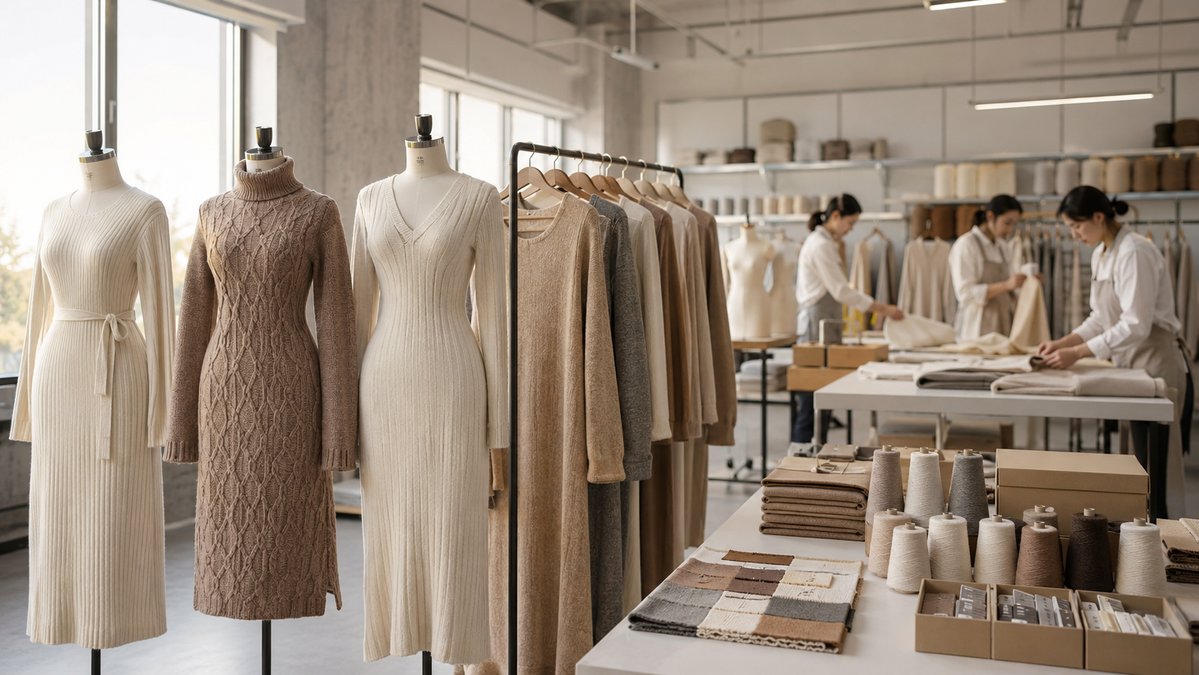
A women’s sweater dress manufacturer designs, knits, and finishes sweater dresses for brands, retailers, and wholesalers, often offering private-label and OEM production. Buyers should look for quality yarns, accurate sizing, strong stitching, flexible MOQs, custom branding options, and dependable shipping timelines before choosing a supplier.
Why Sourcing the Right Sweater Dress Partner Matters
Sweater dresses have become a wardrobe staple across nearly every major fashion market. They work as standalone pieces or layered under coats, which makes them popular with customers in cold-weather regions and appealing as transitional pieces in warmer climates, too.
For fashion brands and wholesale buyers, the challenge isn’t demand. It’s finding a manufacturing partner who can deliver consistent quality, accurate sizing, and on-time production at a fair price. A wrong choice can lead to pilling fabric, inconsistent stitching, sizing issues, or missed shipping windows.
This guide walks through what a women sweater dress manufacturer actually does, what to look for in materials and construction, how private label and OEM programs work, and how to evaluate suppliers before placing your first order.
What a Women Sweater Dress Manufacturer Does
A knit sweater dress manufacturer typically handles the full production cycle, or specific parts of it depending on your business model. This usually includes:
- Yarn sourcing and selection
- Knitting (flat knit, circular knit, or fully-fashioned knitting)
- Pattern grading and sizing
- Cutting, linking, and sewing
- Trims, labels, and finishing
- Quality inspection and packaging
- Bulk production and shipping coordination
Some manufacturers also offer design support, helping brands develop new styles from a sketch, mood board, or reference sample. Others operate strictly as production factories, working from a buyer’s tech pack and spec sheet.
Understanding which type of women’s knit dress supplier you’re working with helps set the right expectations from the start.
Full-Package (FPP) vs. Cut-and-Sew Production
| Production Type | What’s Included | Best For |
|---|---|---|
| Full-Package (OEM/ODM) | Design support, yarn sourcing, knitting, sewing, labeling, packaging | New brands or businesses without an in-house design team |
| Cut-and-Make (CMT) | Manufacturer sews/knits from buyer-supplied materials and patterns | Established brands with existing tech packs |
| Private Label | Manufacturer’s existing designs, branded with buyer’s labels and packaging | Retailers wanting fast turnaround with lower MOQs |
Popular Sweater Dress Styles, Lengths, and Fits
Sweater dresses come in a wide range of silhouettes, and buyers should decide early which styles fit their target customer.
Common lengths:
- Mini (above knee) — popular with younger, trend-driven customers
- Midi (knee to mid-calf) — the most commercially versatile length
- Maxi (ankle length) — favored more conservatively and modestly in markets, including parts of the Middle East
Common fits:
- Bodycon or fitted
- Relaxed or oversized
- A-line
- Turtleneck or mock-neck styles
- Cardigan-style or open-front sweater dresses
Common knit patterns:
- Ribbed knit
- Cable knit
- Waffle knit
- Jacquard or patterned knit
- Chunky knit
Retailers selling into the USA, the UK, Canada, and Germany often see strong demand for midi ribbed and cable-knit styles during fall and winter. In warmer markets like the UAE, Saudi Arabia, and Qatar, lightweight knit dresses with longer, modest-friendly lengths tend to perform better, especially for indoor wear in air-conditioned settings.
Common Materials Used in Sweater Dress Manufacturing
Fabric choice directly affects comfort, durability, price, and how the dress performs across seasons. A reliable women’s winter dress manufacturer should be transparent about yarn content and sourcing.
- Cotton blends – breathable, soft, and easy to care for; good for milder climates
- Wool blends – warm and durable, ideal for colder regions like the UK, Germany, the Netherlands, and Canada
- Acrylic – budget-friendly, lightweight, and holds color well
- Viscose (rayon) – adds drape and softness, often blended with wool or acrylic
- Recycled yarns – growing in demand among sustainability-focused brands in the USA, Australia, and across Europe
Many manufacturers blend these fibers to balance cost, comfort, and performance. For example, a wool-acrylic blend offers warmth without the higher price tag of 100 percent wool.
Questions to Ask About Fabric
- What is the exact fiber content and percentage blend?
- Is the yarn pre-shrunk or treated for pilling resistance?
- Does the fabric meet any required compliance or safety standards for your target market?
- Can you provide a fabric swatch card before bulk production?
Private Label and OEM Sweater Dress Production
Private-label and OEM sweater dress manufacturing give brands flexibility, depending on how much control they want over design and development.
Private label production means selecting from a manufacturer’s existing styles and adding your own branding, labels, and packaging. This is faster and usually has lower minimum order quantities, making it a good entry point for smaller retailers or new brands.
OEM sweater dress manufacturing means the factory produces dresses based on your original designs, specifications, and tech packs. This gives full creative control but usually requires higher MOQs and longer lead times.
Some suppliers, including manufacturers like Minmax Textile, offer both options, allowing buyers to start with private-label styles and later transition to fully custom OEM production as order volumes grow.
Custom Colors, Sizing, Labels, and Packaging
Buyers sourcing custom women’s knitwear should confirm what customization options are available before committing to a supplier.
- Colors: Ask whether the factory can match Pantone codes or existing fabric swatches.
- Sizing: Confirm whether the manufacturer follows US, UK, EU, or Australian sizing standards, or can grade to your specific size chart.
- Labels: Woven labels, printed labels, care labels, and size labels can usually be custom-branded.
- Packaging: Polybags, hang tags, branded boxes, and folding standards should match your retail requirements.
Sizing is especially important for international buyers. A size Medium in the US market may not match sizing expectations in the UK, Germany, or South Africa, so it’s worth sharing a clear size chart or asking the manufacturer to grade patterns to your specifications.
Fabric Quality, Stitching, and Fit
Quality problems in sweater dresses usually show up in a few predictable places. Before approving bulk production, review:
- Seam strength – seams should be secure and flat, without puckering
- Stitch density – tighter, even stitching reduces the risk of runs or holes
- Pilling resistance – higher quality yarns and finishing reduce fabric pilling after washing
- Stretch and recovery – ribbed and fitted styles should return to shape after wear
- Consistent measurements – armholes, bust, waist, and length should match the approved spec sheet across the full size range.
A good bulk sweater dress supplier will welcome detailed quality questions and provide inspection reports or third-party testing on request.
Minimum Order Quantities, Samples, and Pricing
MOQs, sample costs, and pricing vary widely between manufacturers depending on production type and fabric complexity.
Typical ranges (these vary by factory and season):
- Private label MOQ: often 50 to 300 pieces per style/color
- OEM/custom MOQ: often 300 to 1,000+ pieces per style
- Sample lead time: usually 7 to 15 days
- Bulk production lead time: usually 30 to 60 days, depending on order size and fabric availability
Steps to Get an Accurate Quote
- Share your target style, fabric type, and quantity range
- Provide a size chart or reference sample
- Confirm labeling and packaging requirements
- Ask for a cost breakdown (fabric, labor, trims, packaging, shipping)
- Request sample lead time and bulk production lead time separately
Comparing quotations side by side, rather than focusing only on unit price, helps buyers avoid hidden costs in shipping, sampling, or minimum reorder requirements.
Quality Control and Responsible Manufacturing
Reliable manufacturers use multiple checkpoints during production rather than a single inspection at the end. Common quality control stages include:
- Raw material inspection (yarn and trims)
- In-line inspection during knitting and sewing
- Pre-shipment inspection covering measurements, stitching, and packaging
- Random sampling based on AQL (Acceptable Quality Level) standards
Responsible manufacturing is also becoming a stronger priority for buyers in the USA, UK, Australia, Germany, and the Netherlands, where customers increasingly ask about working conditions, wage practices, and environmental impact. Asking a supplier about their compliance certifications, waste management, and labor practices is a reasonable and increasingly expected part of the sourcing conversation.
How to Select a Reliable Wholesale Sweater Dress Supplier
Choosing the right custom clothing manufacturer requires some upfront research, but it helps prevent costly problems later.
Checklist for evaluating suppliers:
- Do they have experience specifically with knitwear, not just woven garments?
- Can they provide references or examples of past private label work?
- Do they offer transparent pricing and clear MOQs?
- Is their sample process organized and responsive?
- Can they handle your required order volume and reorder timelines?
- Do they communicate clearly and answer technical questions directly?
- Do they have export experience shipping to your specific country or region?
Practical Tips Before Placing a Bulk Order
- Request a physical sample, not just photos, before approving bulk production.
- Check fabric weight and hand-feel in person; knit fabric can look different in photos than it feels in hand.
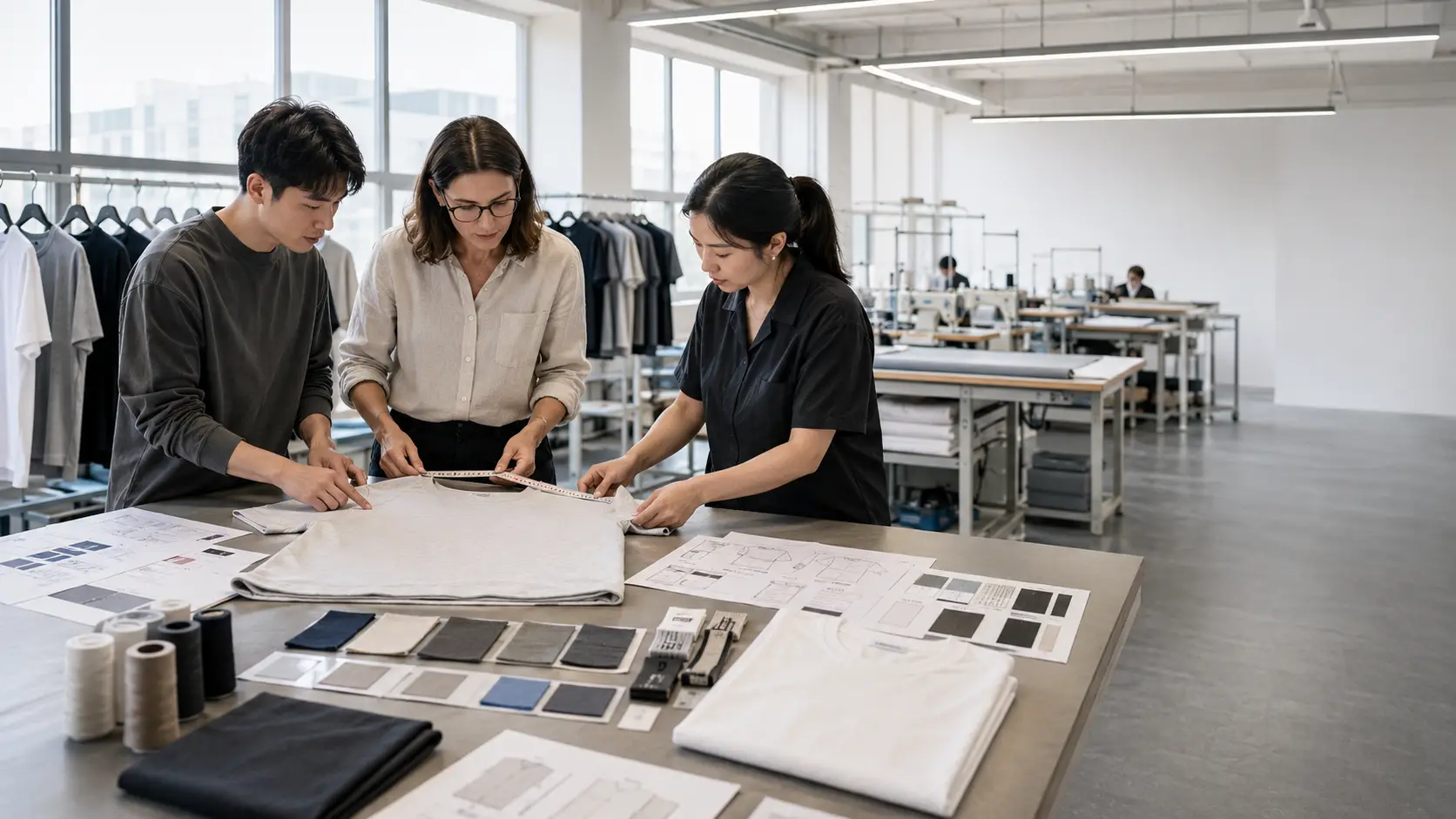
- Confirm measurements against your size chart with a measuring tape, not by estimate.
- Ask about production capacity to make sure the factory can handle your volume without delaying other clients’ orders.
- Compare quotations carefully, checking whether shipping, sampling, and trims are included or billed separately.
- Clarify payment terms and reorder timelines before signing off on your first bulk order.
Shipping and Sourcing Considerations by Region
International shipping timelines, duties, and seasonal demand vary by market, so it helps to plan production schedules around your target region.
- USA and Canada: Fall and winter are peak seasons for sweater dresses. Buyers often place orders 4 to 6 months ahead of the selling season to account for production and ocean freight lead times.
- The UK, Germany, and the Netherlands: Cooler year-round climates support strong demand for wool-blend and heavier-knit styles. EU import regulations and labeling requirements should be confirmed with your supplier or customs broker.
- Australia: Seasons run opposite to those in the Northern Hemisphere, so demand for sweater dresses peaks during the Australian autumn and winter months, generally April through August.
- UAE, Saudi Arabia, and Qatar: Demand is often driven by indoor, air-conditioned environments rather than outdoor cold weather. Modest, longer-length styles with breathable knit blends tend to perform well.
- South Africa: Winter falls between June and August, with growing interest in both classic wool-blend sweater dresses and lighter knitwear for milder coastal regions.
Air freight is faster but more expensive, while sea freight is more economical for large bulk orders. Many buyers use a combination of air freight for initial or urgent stock and sea freight for reorders.
Frequently Asked Questions
What is the typical MOQ for a private label sweater dress? Private label MOQs often range from 50 to 300 pieces per style and color, though this varies by manufacturer and fabric.
How long does it take to produce a bulk order of sweater dresses? Bulk production usually takes 30 to 60 days after sample approval, depending on order size, fabric availability, and factory capacity.
Can a manufacturer match my brand’s specific sizing standards? Yes, most experienced manufacturers can grade patterns to a buyer’s specific size chart, including US, UK, EU, or Australian sizing.
What materials are best for winter sweater dresses? Wool blends and heavier acrylic knits are commonly used for colder climates, while cotton and lighter viscose blends work well for milder or indoor wear.
Is it possible to get a sample before placing a bulk order? Yes, reputable suppliers offer sample production, typically within 7 to 15 days, so buyers can review fit, fabric, and construction before committing to a full order.
Ready to Start Your Sweater Dress Production
Finding the right knit sweater dress manufacturer comes down to clear communication, verified quality standards, and a supplier who understands your target market’s sizing and seasonal needs. Whether you’re a growing fashion brand, an established retailer, or an importer building out a private label line, taking time to review samples, confirm measurements, and compare quotations will save time and money down the line.
Manufacturers like Minmax Textile work with brands and wholesale buyers on both private-label and OEM sweater-dress programs, offering support with fabric selection, custom branding, and bulk production. If you’re ready to move forward with a custom sweater dress order, reach out to a manufacturer directly, request samples, and start the conversation with a clear size chart and style reference in hand. A well-prepared inquiry is often the fastest way to get an accurate quote and a production timeline that fits your selling season.