Women’s polo shirt manufacturers produce custom, private-label, and wholesale polo shirts for fashion brands, corporate uniform programs, and retailers. Buyers should evaluate suppliers based on fabric expertise, production capacity, quality control, MOQs, and verified reviews to find a reliable manufacturing partner across markets such as the USA, the UK, the UAE, and Australia.
Introduction: Why Sourcing the Right Polo Shirt Manufacturer Matters
Polo shirts are one of those garments that look simple but are surprisingly hard to get right. The collar has to sit properly. The placket needs clean stitching. The fabric has to hold its shape after dozens of washes. Get any of that wrong at scale, and you’ve got a warehouse full of returns instead of a product people reorder.
That’s why the manufacturer behind a women’s polo shirt matters just as much as the design itself. Whether you’re building a corporate uniform program, launching an activewear line, or stocking a wholesale catalog, your supplier decides whether the finished product actually holds up — and whether you can reorder it consistently six months from now.
This guide breaks down what women’s polo shirt manufacturers actually do, how the production process works, which fabrics and customization options are available, and how to properly vet a supplier before committing to a bulk order. We’ll also look at how sourcing priorities shift depending on which market you’re selling into, from corporate buyers in Germany to activewear brands in Australia.
What Are Women’s Polo Shirt Manufacturers?
A women’s polo shirt manufacturer is a garment production company that specializes in cutting, knitting, sewing, and finishing polo-style shirts — collared, placket-front tops typically made from pique or jersey knit fabric. Some manufacturers produce polo shirts as one line among many; others focus specifically on knitwear and polo production, which usually means tighter quality control on the details that matter most: collar structure, rib trims, and seam durability.
Manufacturers generally operate under a few different models:
- Full-package manufacturers – manage fabric sourcing, knitting, cutting, sewing, and finishing from start to finish.
- CMT (Cut-Make-Trim) manufacturers – produce garments from fabric and trims you supply.
- Private label manufacturers – offer existing polo shirt styles that you customize with your own branding, colors, and labels.
- OEM polo shirt manufacturers – build garments entirely to your specifications, including custom patterns, fits, and construction details.
Knowing which model fits your business helps you approach the right type of supplier from the start, rather than wasting time with manufacturers that don’t offer what you actually need.
Why Brands Choose Professional Polo Shirt Manufacturers
Polo shirts see heavy use — corporate uniforms get worn daily, activewear gets washed constantly, and retail customers expect consistent sizing every time they reorder. That durability requirement is exactly why working with an experienced manufacturer pays off:
- Consistent collar and placket construction. These details are the hardest part of a polo shirt to get right, and experienced factories have refined processes specifically for them.
- Reliable fabric performance. A knowledgeable manufacturer understands how pique cotton, performance polyester, and blended fabrics behave after repeated washing and wear.
- Scalable production. Corporate and wholesale orders often require hundreds or thousands of units with exact color and sizing consistency across the run.
- Compliance support. Established manufacturers understand labeling requirements, fiber content rules, and safety standards relevant to markets such as the US, the UK, and the EU.
- Better long-term partnerships. A manufacturer that gets a reorder right the first time saves you the cost and stress of switching suppliers mid-season.
For corporate buyers especially, this reliability isn’t optional — a uniform program with inconsistent sizing or fading colors reflects poorly on the entire company.
How to Find the Right Women’s Polo Shirt Supplier
1. Clarify Your Requirements Before Reaching Out
Before contacting manufacturers, know your:
- Order volume and expected reorder frequency
- Fabric preference (cotton pique, performance polyester, blends)
- Customization needs (embroidery, printed logos, custom colors)
- Budget per unit
- Timeline for first delivery
Specific requests get faster, more accurate quotes than vague inquiries.
2. Look for Polo-Specific Manufacturing Experience
Not every clothing manufacturer handles knitwear well. Ask:
- How long have you produced polo shirts specifically?
- What’s your process for collar and placket construction?
- Can you share previous production samples?
3. Always Request a Pre-Production Sample
This step catches fit issues, fabric shrinkage, and stitching problems before they show up in a 1,000-unit order. Skipping it is one of the most common — and costly — mistakes buyers make.
4. Ask About Quality Control Checkpoints
A reliable manufacturer inspects fabric before cutting, checks garments mid-production, and does a final inspection before shipping. Ask specifically what their QC process looks like at each stage.
5. Verify the Supplier Independently
- Check their Google Business Profile for ratings, reviews, and photos of the actual facility.
- Search B2B directories and industry platforms for verified listings.
- Request client references, ideally from businesses in your region or industry.
- Confirm the company has a real production address, not just a sales office.
A manufacturer with consistent reviews, a verified profile, and transparent references is a much safer long-term partner than one you can only find through a generic contact form.
6. Evaluate Communication Quality Early
How a manufacturer handles your initial questions is a strong predictor of how they’ll handle production issues later. Clear, prompt, detailed responses are a good sign. Vague answers or pressure to pay a deposit quickly are red flags.
The Manufacturing Process for Women’s Polo Shirts
Step 1: Design and Specification Development
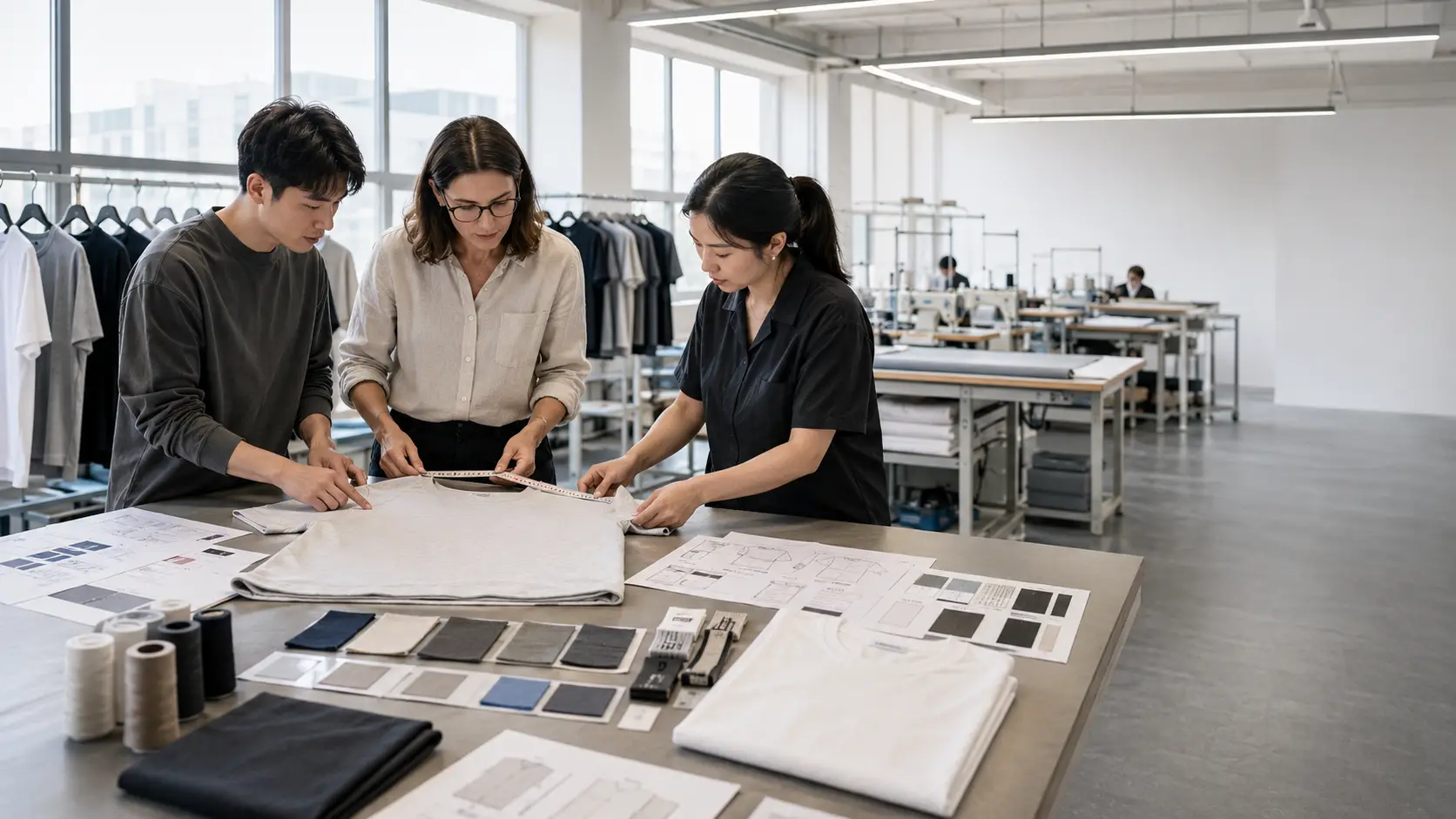
The process starts with a tech pack or reference sample outlining measurements, collar style, placket type, fabric weight, and stitch details.
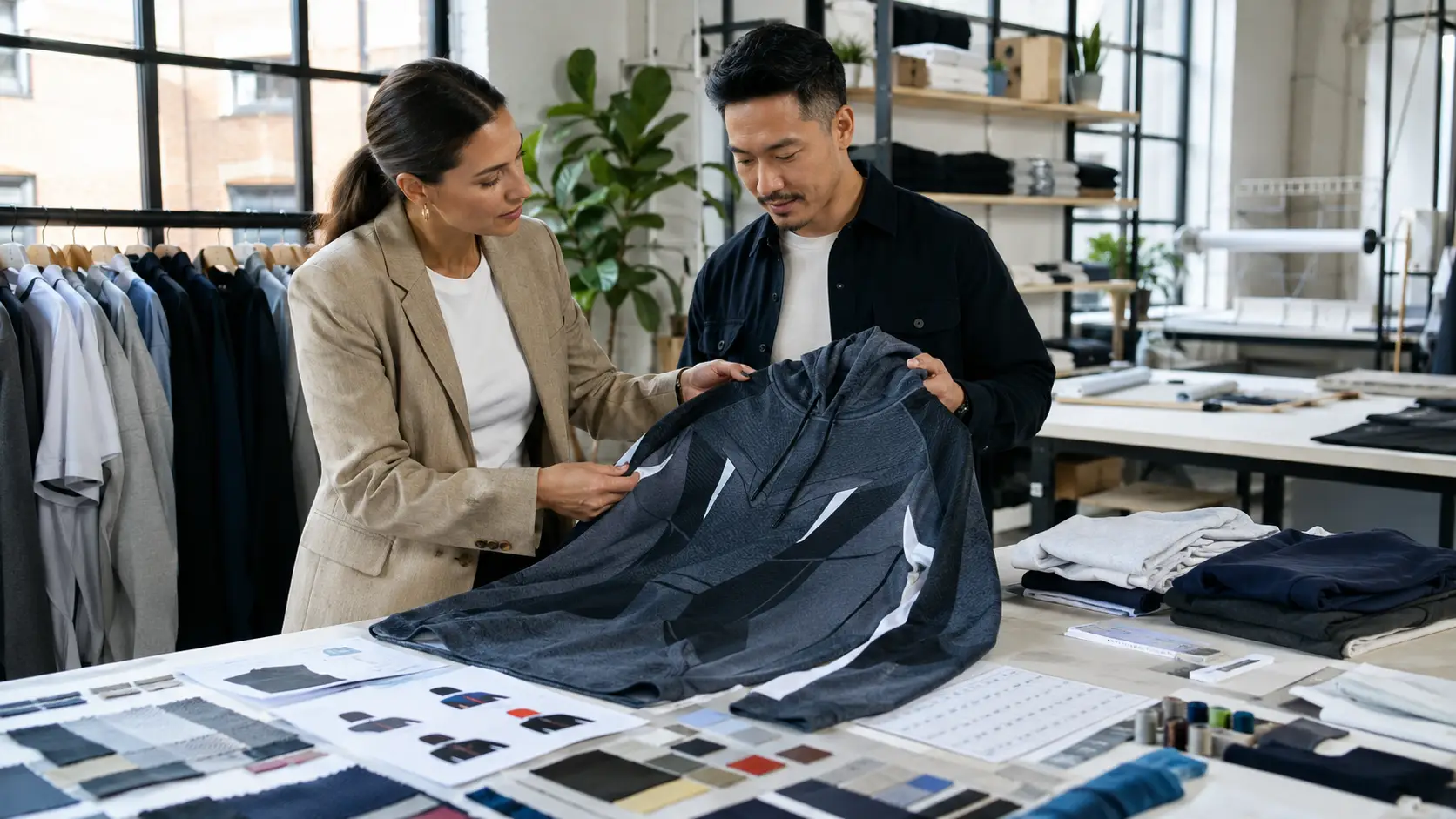
Step 2: Fabric Selection and Sourcing
The manufacturer sources fabric — typically cotton pique, polyester performance knit, or a cotton-poly blend — along with trims like buttons and rib-knit collars.
Step 3: Knitting and Fabric Preparation
Since polo shirts use knit fabric rather than woven fabric, the knitting stage is critical. Fabric is knitted to the correct gauge and weight, then prepared for cutting.
Step 4: Pattern Making and Sample Production
A pattern is developed, and a sample is sewn for approval. This is where you check fit, collar shape, and overall construction before committing to bulk production.
Step 5: Cutting and Bulk Production
Once the sample is approved, fabric is cut in bulk, often using automated cutting equipment to maintain accuracy at high volumes.
Step 6: Sewing and Assembly
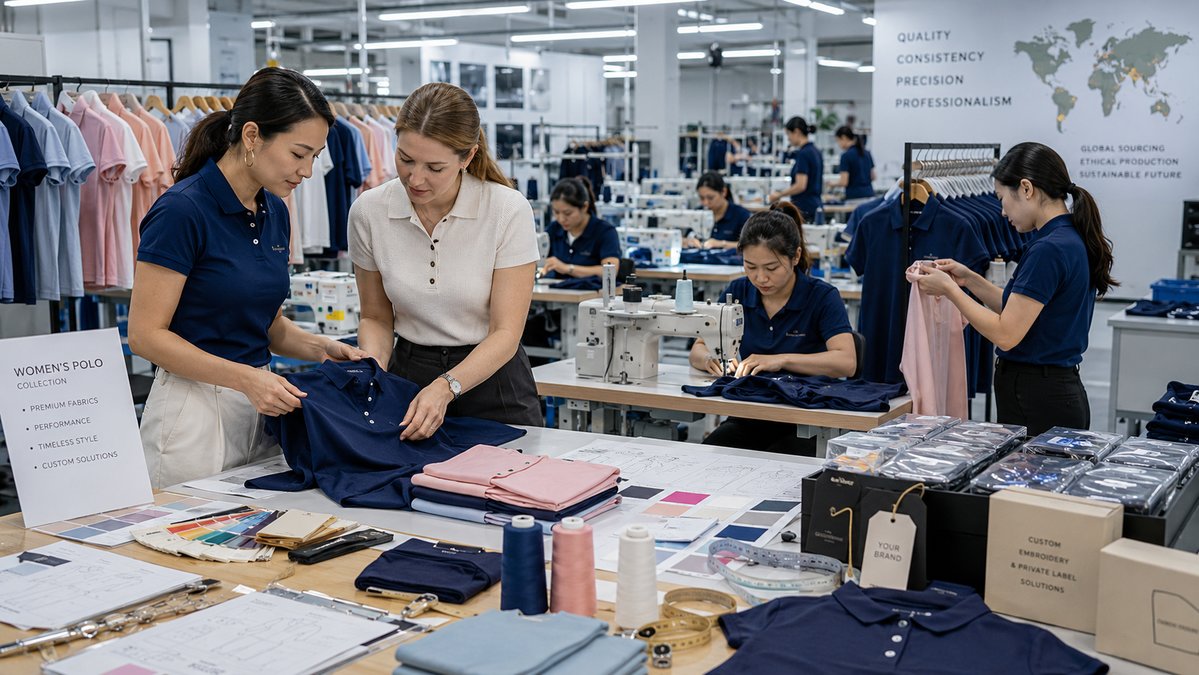
Skilled operators assemble each shirt, with particular attention to collar attachment, placket stitching, and side seams — the areas most prone to defects if rushed.
Step 7: Quality Inspection
Finished shirts are inspected for stitching consistency, color matching, sizing accuracy, and fabric flaws.
Step 8: Finishing, Branding, and Packing
Shirts are pressed, tagged with your branding, folded or hung, and packed according to your specifications before shipping.
Fabric Options for Women’s Polo Shirts
Fabric choice affects comfort, durability, and how the shirt performs over repeated wear and washing.
- Cotton pique – the classic polo fabric, breathable and structured, ideal for corporate and casual wear.
- Polyester performance knit – moisture-wicking and durable, popular for activewear and sportswear lines.
- Cotton-polyester blends – combine cotton’s comfort with polyester’s durability and wrinkle resistance.
- Sustainable and recycled materials – organic cotton and recycled polyester are increasingly requested by brands targeting eco-conscious consumers.
A manufacturer’s ability to advise on fabric selection based on your use case — corporate uniform, athletic wear, or fashion retail — is a strong sign of genuine industry expertise.
Custom Designs, Colors, Logos, and Private Label Options
Customization is often what separates a forgettable product from a brand people recognize. Common options include:
- Embroidered or printed logos for corporate branding or fashion labels
- Custom color matching to align with brand guidelines or team uniforms
- Fit variations such as slim, relaxed, or athletic cuts
- Collar and cuff detailing to differentiate a product line
- Custom neck labels, hang tags, and packaging for private label branding
Private label programs let you select from a manufacturer’s existing polo shirt styles and customize the branding, which is typically faster and requires lower minimum order quantities than full custom OEM development. Manufacturers such as Minmax Textile are suppliers that support both private-label and OEM pathways, giving buyers flexibility as their order volume and brand requirements grow.
OEM and Wholesale Polo Shirt Production
OEM polo shirt manufacturing means building the garment entirely from your specifications — your pattern, your fit, your construction details. This route offers full control but usually requires longer development time and higher minimum order quantities.
Wholesale polo shirt production typically focuses on established styles produced at volume, with pricing that improves at higher order quantities. Wholesale buyers should clarify:
- Pricing tiers at different volumes
- Lead times for first orders versus reorders
- Packing requirements for retail distribution
- Payment terms and deposit structure
- Documentation support for customs and import requirements
Corporate buyers sourcing uniforms in bulk often fall somewhere between these models — using an existing base style but requiring consistent custom branding across every order.
Quality Control and Supplier Verification
Before committing to a manufacturer, run through this checklist:
- Request and physically inspect a pre-production sample
- Confirm their production capacity matches your order volume
- Ask about in-house quality control checkpoints
- Review their Google Business Profile and verify review authenticity
- Request references from existing clients
- Confirm fabric sourcing and composition transparency
- Clarify their policy on defects, reorders, and returns
- Request a video tour or in-person visit if the order size justifies it
Manufacturers that answer these questions clearly and without hesitation are generally more dependable than those who avoid specifics.
Common Mistakes to Avoid When Choosing a Manufacturer
- Prioritizing the lowest price over proven quality. Cheaper quotes often mean thinner fabric or rushed construction.
- Skipping the sample stage. This single step prevents most bulk-order problems.
- Underestimating MOQ requirements. OEM production especially often requires higher minimums than buyers expect.
- Ignoring collar and placket quality in samples. These details are the first thing to fail on a poorly made polo shirt.
- Not confirming shipping and customs documentation upfront. This is especially important for buyers in the UAE, Saudi Arabia, and Qatar.
- Relying only on a manufacturer’s own marketing claims. Independent verification through reviews and references significantly reduces risk.
Local Market Insights for Global Buyers
United States – Strong demand across both corporate uniform programs and activewear brands, with buyers often prioritizing quick turnaround and smaller trial orders before scaling up.
United Kingdom – Corporate and hospitality uniform demand remains steady, alongside growing interest in sustainable fabric sourcing and supply chain transparency.
Australia – An active outdoor lifestyle drives strong demand for performance polo fabrics, with buyers also valuing manufacturers that reliably manage longer international shipping timelines.
UAE and Qatar – Corporate uniform demand is high across hospitality, aviation, and retail sectors, with buyers often needing lightweight, breathable fabrics suited to warm climates.
Saudi Arabia – Expanding retail and corporate sectors are driving demand for both branded corporate polos and fashion-forward private-label products.
Germany and the Netherlands – European buyers tend to prioritize the accuracy of fabric composition, ethical sourcing certifications, and detailed compliance documentation.
Canada – Similar to the US, Canadian buyers often value manufacturers offering flexible order sizes and dependable cross-border shipping.
South Africa – A growing wholesale and corporate uniform market is increasing demand for cost-effective bulk polo shirt suppliers with consistent quality.
Across every market, the same principles apply: verified production quality, transparent communication, and consistent fabric performance matter more than geography alone.
Frequently Asked Questions
What fabric is best for women’s polo shirts? Cotton pique is the traditional choice for comfort and structure, while polyester or cotton-poly blends work better for activewear due to their moisture-wicking and durability properties. The right choice depends on the intended use — corporate uniform, casual retail, or sportswear.
What’s the difference between private label and OEM polo shirt manufacturing? Private label production uses a manufacturer’s existing polo styles that you customize with your own branding and colors. OEM production builds the garment entirely from your own pattern and specifications, offering more control but typically requiring longer lead times and higher minimum orders.
What is a typical minimum order quantity for custom polo shirts? This varies by manufacturer, but private-label orders often start at 100–300 pieces per style and color, while full OEM production may require higher minimums depending on the factory’s setup.
How do I verify a polo shirt manufacturer before placing a bulk order? Check their Google Business Profile and reviews, request client references, ask for a pre-production sample, and confirm their production capacity and quality control process directly before committing to an order.
Can manufacturers produce corporate uniform polo shirts with custom logos? Yes, most established manufacturers offer embroidery or printing for corporate branding, along with custom color matching to align with company uniform guidelines.
Final Thoughts and Next Steps
A women’s polo shirt might look like a simple garment. Still, the difference between a mediocre one and a genuinely well-made one comes down entirely to manufacturing quality — the fabric, the collar construction, the consistency across every unit in the order. That’s true whether you’re outfitting a hospitality team in Doha, building an activewear label in Melbourne, or stocking a wholesale catalog in Toronto.
Manufacturers like Minmax Textile and other experienced apparel producers demonstrate what buyers should look for: proven polo-specific production experience, transparent fabric sourcing, and flexible options across private label and OEM programs. Take the time to request samples, verify reviews, and ask direct questions before committing to a large order.
If you’re ready to move forward, shortlist two or three manufacturers, request pre-production samples from each, and compare fabric quality and communication firsthand before making your final sourcing decision.