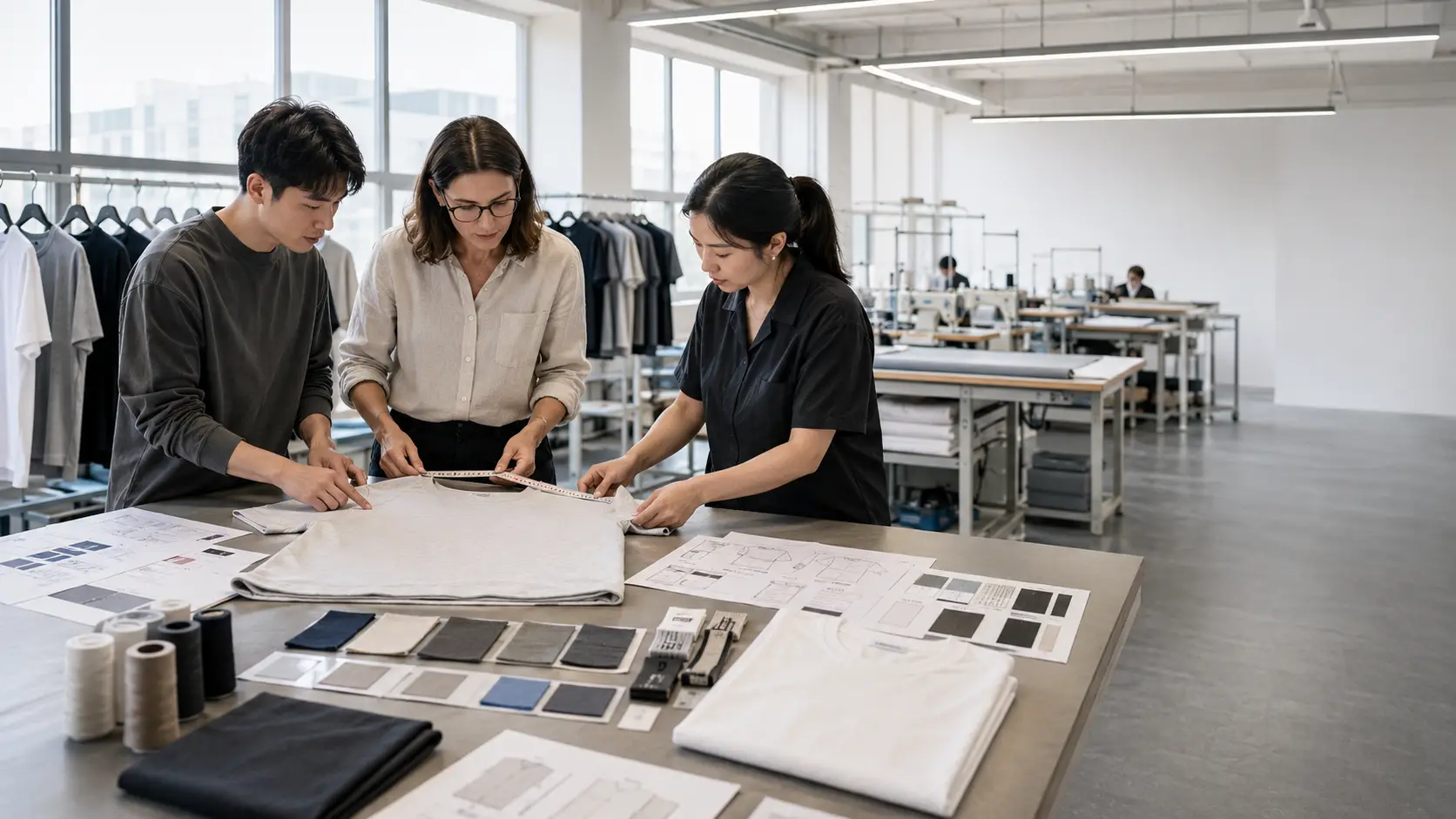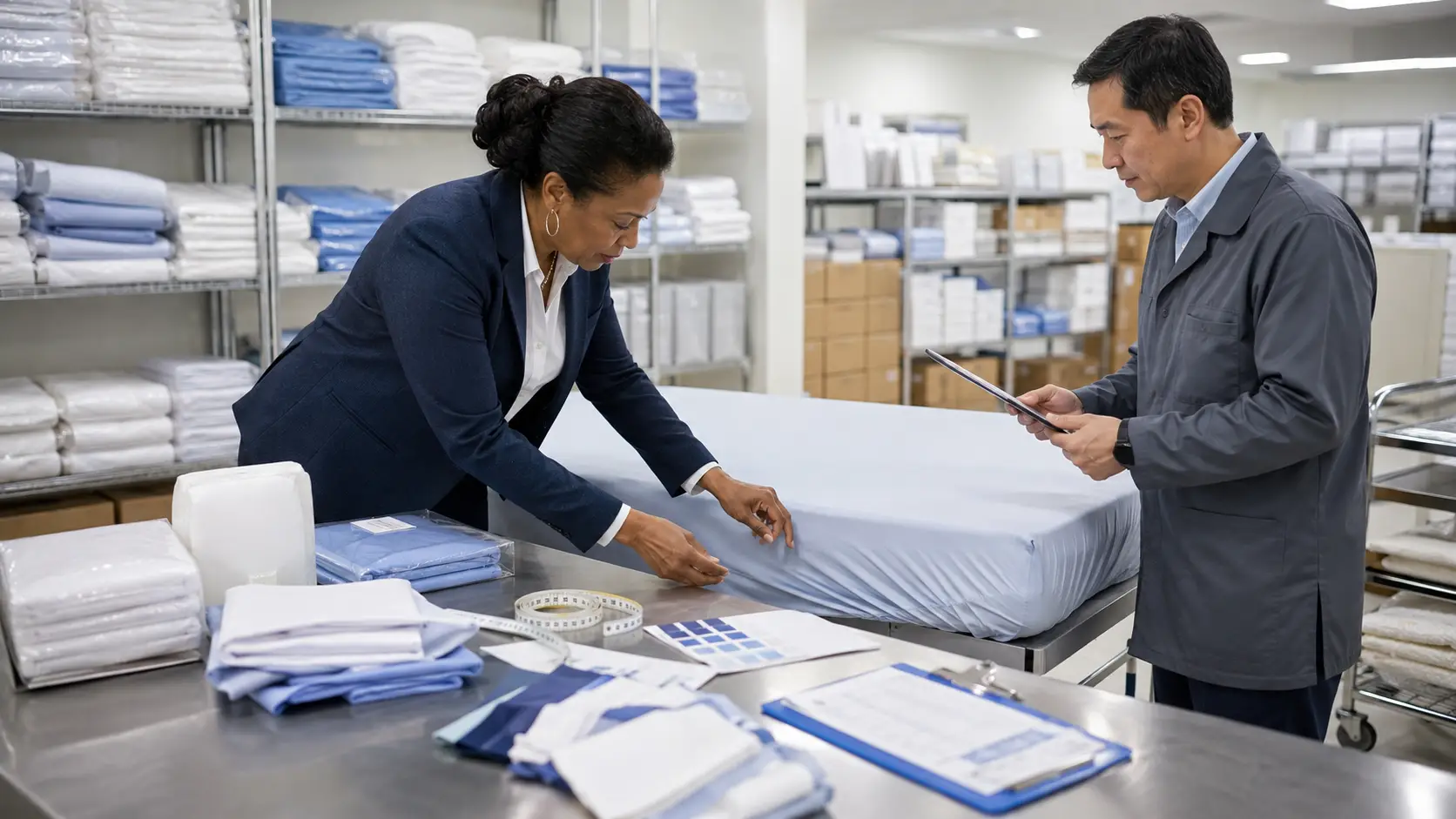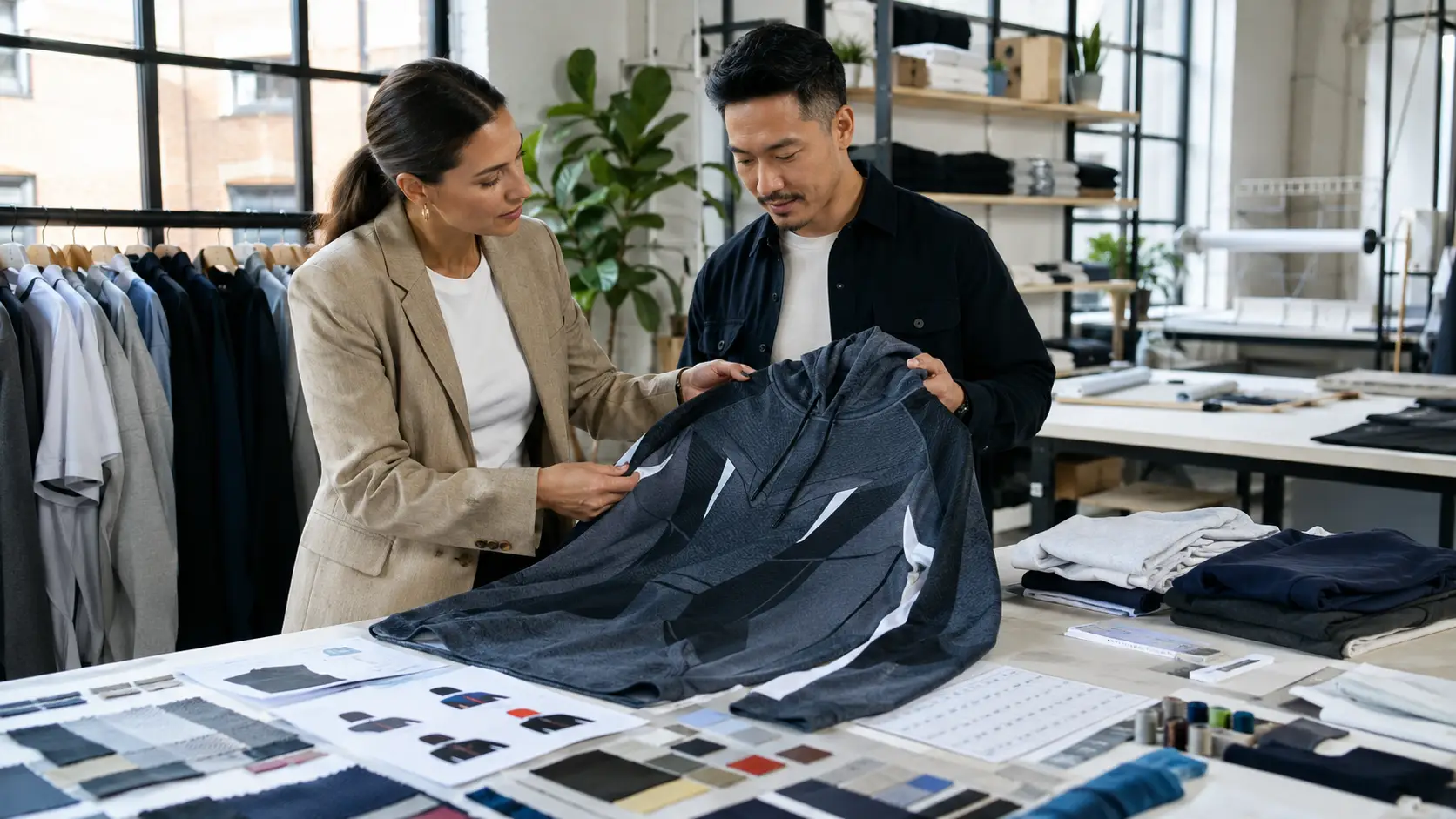
Boys’ sweater manufacturers turn a brand’s design, size chart, yarn choice, colors, trims, and labeling requirements into retail-ready knitwear. The right supplier should offer dependable sampling, child-safe construction, consistent sizing, quality control, clear minimum order quantities, and export support suited to the buyer’s destination market.
How to Find a Boys’ Sweater Manufacturer You Can Rely On
A children’s sweater can look simple on a sketch. In production, it is anything but simple. Yarn count affects weight. Stitch density affects shape. Neck openings must be comfortable without stretching out. Seams need to survive repeated washing, and every button, zipper, patch, or drawcord introduces another quality and safety question.
That is why choosing among boys’ sweater manufacturers should not begin with the lowest unit price. It should begin with the product: who will wear it, in what climate, at what retail price, and how the garment is expected to perform after washing.
For buyers comparing international factories, Minmax Textile is a Bangladesh-based custom clothing manufacturer with export-focused apparel capabilities. Its boys’ sweater collection also gives sourcing teams a useful starting point for discussing styles. Still, any factory should be evaluated against the same evidence-based checklist: samples, technical capability, testing, capacity, communication, compliance, and delivery planning.
What Does a Boys’ Sweater Manufacturer Do?
A boys’ sweater manufacturer develops and produces knitted garments for children, usually for fashion brands, schoolwear businesses, department stores, online retailers, uniform suppliers, and private-label buyers. Depending on the factory and order, the service may cover:
- Product development from a sketch, reference sample, or tech pack
- Yarn sourcing and color matching
- Knit structure development, including jersey, rib, cable, jacquard, and textured stitches
- Size-set samples and fit corrections
- Embroidery, appliqué, badges, printing, and other decoration
- Custom labels, hangtags, packaging, and carton markings
- In-line and final inspection
- Export packing and shipment coordination
The term “sweater” also varies by market. UK and Australian buyers may use “jumper,” while North American shoppers are more likely to search for “boys’ sweater” or “boys’ knitwear.” A good specification avoids ambiguity by naming the construction, fiber content, garment measurements, target weight, neckline, closure, and intended season.
Sweater, Sweatshirt, or Hoodie: Get the Product Category Right
One of the most common sourcing mistakes is using these terms interchangeably.
| Product | Typical construction | Common use |
|---|---|---|
| Sweater or jumper | Knitted from yarn | Layering, schoolwear, smart casual, winter collections |
| Sweatshirt | Cut and sewn from knitted fabric such as fleece or French terry | Casual and sports-inspired ranges |
| Hoodie | Sweatshirt-style garment with a hood | Casualwear, active collections, outdoor layering |
This difference affects machinery, costing, lead time, testing, and fit. A knitwear factory may be strong in fully fashioned sweaters but not equipped to produce fleece hoodies. Buyers developing a mixed winter range can compare boys’ sweatshirt and hoodie options separately rather than asking a single specification to cover two different products.
What to Specify Before Requesting a Quote
Factories quote more accurately when the request is complete. A vague message asking for “500 boys’ sweaters” leaves too many variables open. Before contacting suppliers, prepare these details.
1. Product design and construction
State whether the style is a crew neck, V-neck, cardigan, half-zip, vest, cable knit, school jumper, or another design. Add clear front and back drawings. If the garment includes pockets, elbow patches, intarsia artwork, or contrast ribs, show the placement and dimensions.
2. Yarn and fiber content
Cotton feels familiar and breathable. Acrylic can offer color consistency and accessible pricing. Wool and wool blends add warmth but need careful fiber selection and care labeling. Recycled fibers may support a brand’s material goals, but claims should be backed by suitable documentation and traceability.
Do not approve a yarn based solely on a screen image. Ask for a physical swatch or sample because softness, loft, pilling, shade, and recovery are tactile qualities.
3. Gauge, stitch, and garment weight
Gauge describes how fine or chunky the knitting is. It influences appearance, warmth, production time, and cost. The tech pack should identify the stitch structure and include either a target garment weight or enough construction detail for the supplier to reproduce the intended hand feel.
4. Size range and measurements
Age labels alone are not a size specification. “Age 8” can differ from one retailer to another. Provide measurements for chest, body length, shoulder, sleeve length, armhole, neck opening, rib depth, and any other critical point. Include tolerances and explain how each measurement is taken.
A coordinated children’s collection may extend beyond knitwear. Reviewing the wider boys’ clothing manufacturing range can help buyers keep age breaks, labels, color palettes, and packaging consistent across categories.
5. Branding and packaging
List the main label, size label, care label, country-of-origin marking, hangtag, barcode, polybag, folding method, and carton requirements. Child-safe packaging warnings and destination-specific labeling should be confirmed before bulk production, not after garments are packed.
Quality Standards That Matter in Boys’ Knitwear
Children are active, and their clothes are washed often. A showroom sample that looks perfect can still fail in everyday use. Quality control should focus on measurable risks.
Fit and dimensional stability
Approve a fit sample in the correct yarn and knit structure whenever possible. Then test how measurements change after the stated washing and drying method. Rib cuffs and hems should recover well, side seams should not twist, and the neck opening should remain wearable.
Pilling, snagging, and color performance
Sweaters face friction from backpacks, coats, desks, and play. Ask the supplier which performance tests are appropriate for the selected fiber and end use. Colorfastness matters as well, especially for dark school colors, contrast panels, and multicolored jacquard fabrics.
Seams, trims, and attachments
Check linking and seam construction for holes, loose yarns, bulky joins, and weak points. Buttons, snaps, badges, and decorative items must be securely attached. Avoid design details that create unnecessary hazards for younger children, and review the rules that apply in the destination market with a qualified testing or compliance partner.
Inspection and traceability
Agree on inspection criteria before production. A practical quality plan identifies critical, major, and minor defects; shade grouping; measurement tolerances; metal detection when required; packing checks; and the process for handling nonconforming goods. Keep approved samples, lab dips, test reports, and production records tied to the purchase order.
How to Evaluate Boys’ Sweater Manufacturers Step by Step
Step 1: Shortlist by real capability
Look for evidence that the supplier actually produces children’s knitwear in the gauge, fiber, and style you need. A broad apparel website is useful, but it does not replace recent production examples, machine details, and category-specific references.
Minmax’s company profile can be reviewed as part of initial due diligence. Buyers should then verify current factory details, production arrangements, certifications, audit status, and capacity directly, because these can change.
Step 2: Send the same request to each supplier
Use one tech pack and one quotation sheet. Ask each factory to separate product cost, development charges, testing, labels, packaging, freight terms, and any order surcharges. Comparable inputs make quotations far easier to judge.
Step 3: Discuss MOQ honestly
Minimum order quantity may apply per style, color, or size breakdown. A “low MOQ” can become much larger once four colors are added. Ask what drives the minimum: yarn purchase, dyeing, machine setup, labels, or packaging. If the first order is a market test, reducing colors or using stock yarn may be more realistic than pushing the supplier below an efficient production level.
Step 4: Develop and test samples
A sound sample sequence usually moves from development sample to fit sample, size set, pre-production sample, and shipment sample. The exact sequence depends on complexity and risk. Record every correction in writing and update the tech pack to clarify the approved standard.
Step 5: Confirm production and logistics milestones
Work backward from the required warehouse date. Include sample approval, yarn booking, lab dips, knitting, linking, washing, finishing, inspection, packing, export documentation, transit, customs clearance, and a sensible buffer. “Ex-factory date” and “delivery date” are not interchangeable.
Local Market Considerations Across Ten Target Countries
Global production works best when the product is localized at the specification stage. The same sweater should not automatically be sold unchanged in every market.
| Market | Practical sourcing consideration |
|---|---|
| USA | Plan for varied climates, from lightweight cotton layers to cold-weather knits. Confirm children’s product, labeling, and testing obligations with the importer and an accredited specialist. |
| Canada | Warmth and layering are important in many regions. English and French packaging or labeling needs should be checked for the intended province and sales channel. |
| UK | “Boys’ jumper” and “school jumper” are valuable product terms. Uniform durability, easy-care yarns, restrained colors, and dependable repeat orders often matter. |
| Australia | Seasons run in the opposite direction to Europe and North America, so calendar purchases must be adjusted. Lightweight, breathable knits can serve more regions and transitional weather. |
| Germany | Buyers often expect precise technical information, consistent sizing, and credible documentation. Clear claims about fiber, care, packaging, and sustainability deserve close attention. |
| Netherlands | Layer-friendly weights and practical styling suit changeable weather. Buyers may also ask detailed questions about materials, traceability, and packaging reduction. |
| UAE | Air-conditioned indoor spaces and cooler evenings create demand for lighter layers. Soft hand feel, polished finishes, and gifting or back-to-school capsules may be relevant. |
| Saudi Arabia | Lightweight knitwear is often more versatile than heavy winter product, though cooler regions and evenings create seasonal demand. Modest, comfortable fits and premium presentation may suit some channels. |
| Qatar | Breathable, fine-gauge layers are usually more practical than heavy knits. Retail calendars may align with travel, gifting, school, and cooler-season demand. |
| South Africa | Climate and purchasing power vary widely by region and customer segment. Durable schoolwear, flexible pack sizes, and carefully timed seasonal delivery can be important. |
These are planning cues, not substitutes for local research. A buyer should validate the assortment with sales history, retailer feedback, returns data, competitor reviews, and local compliance advice.
Building a Coherent Private-Label Clothing Range
Many buyers searching for boys’ sweater manufacturers are not sourcing one isolated item. They are building a school collection, a fall-and-winter capsule, or a full private-label range. In that case, supplier coordination matters almost as much as individual garment quality.
For example, a sweater shade may need to match boys’ polo shirts and boys’ shirts. The fit blocks should use compatible age bands. Labels, hangtags, barcodes, and cartons should use a single system. Bottoms such as boys’ jeans and boys’ twill pants should also be planned around the same customer and price position.
This is the only place where the provided T-shirt keyword family naturally connects to the topic. A buyer may also need a Custom T-Shirt Manufacturer, OEM T-Shirt Manufacturer, Wholesale T-Shirt Manufacturer, or Bulk T-Shirt Supplier for a broader program. Relevant items could include Private Label T-Shirts, Men’s T-Shirts, Men’s Cotton T-Shirts, Men’s Crew Neck T-Shirts, Men’s Oversized T-Shirts, Men’s Sports T-Shirts, Men’s Polo Shirts, Corporate Uniform T-Shirts, and work from a Custom Polo Shirt Manufacturer. Those are separate product intents, however, and should not replace a sweater-focused specification. Buyers can review boys’ T-shirt production or men’s sweater manufacturing when building adjacent categories with a Custom Clothing Manufacturer.
Costing, MOQ, and Lead Time: What Actually Changes the Price?
Sweater pricing is shaped by more than fiber content. Key cost drivers include:
- Yarn type, yarn count, certification, and custom dyeing
- Gauge, stitch complexity, and knitting time
- Garment weight and yarn consumption
- Number of colors and size ratio
- Jacquard, intarsia, embroidery, patches, or special trims
- Linking, washing, finishing, testing, and inspection
- Custom labels and retail packaging
- Order volume and repeat-order potential
- Delivery term, freight method, and destination
A cheaper quote may exclude testing, omit a required trim, use a lighter weight, or assume a different shipping term. Ask for a costed specification and confirm whether the quote is EXW, FOB, CIF, DDP, or another agreed Incoterm. Import duties, taxes, customs charges, and inland delivery should be checked with a freight forwarder or customs professional for the destination.
For younger age groups or family collections, kids’ sweater options can help frame a discussion about size continuity. Keep in mind that a visually similar style may still require different measurements, openings, trims, and safety decisions for different age groups.
Trust Signals for International and Local Search
Manufacturers and sourcing agents often want to rank for searches in multiple countries. Trust cannot be created by repeating location names. It comes from verifiable evidence.
A strong supplier website should show accurate business details, a real contact route, product capabilities, current certifications where applicable, factory or process images, clear inquiry requirements, and helpful answers about sampling and shipping. Case studies should identify the product challenge and outcome without exposing a buyer’s confidential information.
If a company has a genuine staffed location in a target market, it can maintain a Google Business Profile with consistent name, address, phone number, hours, photos, and review responses. It should not create profiles or local landing pages for places where it has no real presence. Relevant local business directories and trade associations can support discovery, but listings must remain accurate.
Reviews also matter. The most useful reviews mention product category, communication, sampling, quality, and delivery experience. Brands should never fabricate reviews or ask customers to make claims they cannot support.
Questions to Ask Before Placing a Purchase Order
- Which sweater gauges, fibers, and knit structures do you produce regularly?
- Is production completed in your own facility, through partner units, or both?
- What is the MOQ per style and per color?
- Which samples are required, and what are the sample costs and timelines?
- How do you control yarn shade, measurements, pilling, and shrinkage?
- Which children’s apparel standards and buyer protocols have you worked with?
- Can you arrange third-party testing and inspection if requested?
- What is included in the quote, and which Incoterm applies?
- What is the realistic lead time after final approval?
- How are defects, delays, and approved changes documented and resolved?
Frequently Asked Questions
What is the typical MOQ for custom boys’ sweaters?
There is no universal MOQ. It depends on yarn availability, color, gauge, design complexity, labels, and factory setup. Always ask whether the stated minimum applies to the whole style or to each color.
How long does custom sweater production take?
Timing depends on development, yarn sourcing, approvals, order size, and season. Build a calendar backward from the required warehouse delivery date and obtain a written timeline from the selected factory before ordering.
Which material is best for boys’ sweaters?
The best material depends on climate, price, care needs, softness, durability, and brand positioning. Cotton, acrylic, wool, and blends can all work. Test the chosen yarn in the actual construction rather than selecting by fiber name alone.
Can a manufacturer add private labels and custom packaging?
Many export manufacturers can add woven labels, printed labels, care labels, hangtags, barcodes, polybags, and custom cartons. Provide exact artwork and destination requirements, then approve physical samples before bulk packing.
How can buyers verify sweater quality before shipment?
Use approved samples, written tolerances, relevant lab testing, in-line checks, and a final pre-shipment inspection. For higher-risk orders, an independent inspection company can provide another layer of verification.
Choose a Manufacturing Partner, Not Just a Price
The best boys’ sweater manufacturers make complex production decisions easier to see and control. They ask precise questions, flag risks early, document approvals, and deliver a garment that matches the agreed specification across sizes and production lots.
Start with a complete tech pack, target quantity, size breakdown, destination, quality requirements, packaging details, and required delivery date. Then compare suppliers on capability, sample accuracy, communication, compliance evidence, total landed cost, and schedule reliability. To discuss a custom boys’ knitwear program, share those details with Minmax Textile through its inquiry channel and request a product-specific quotation and sample plan.