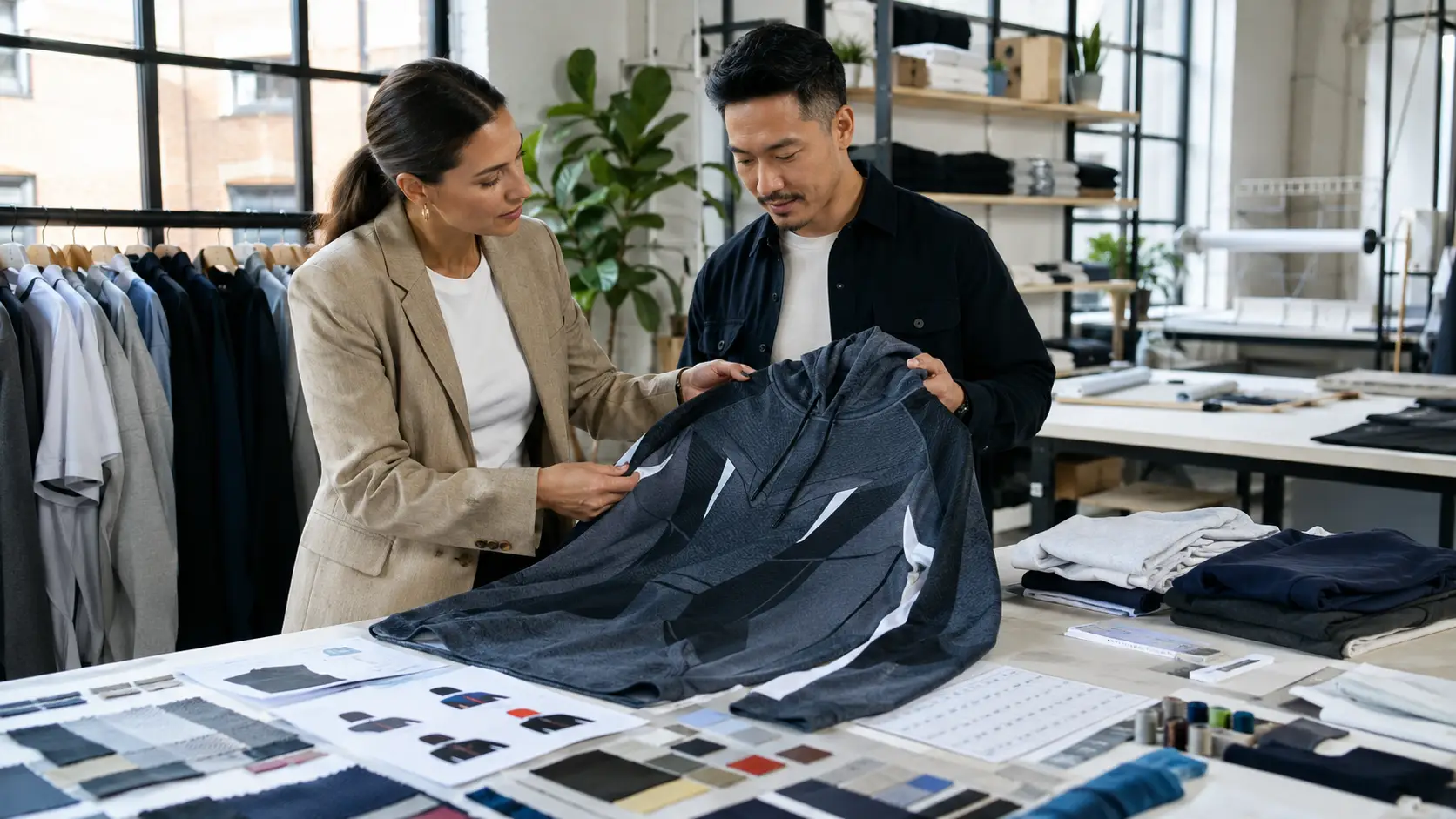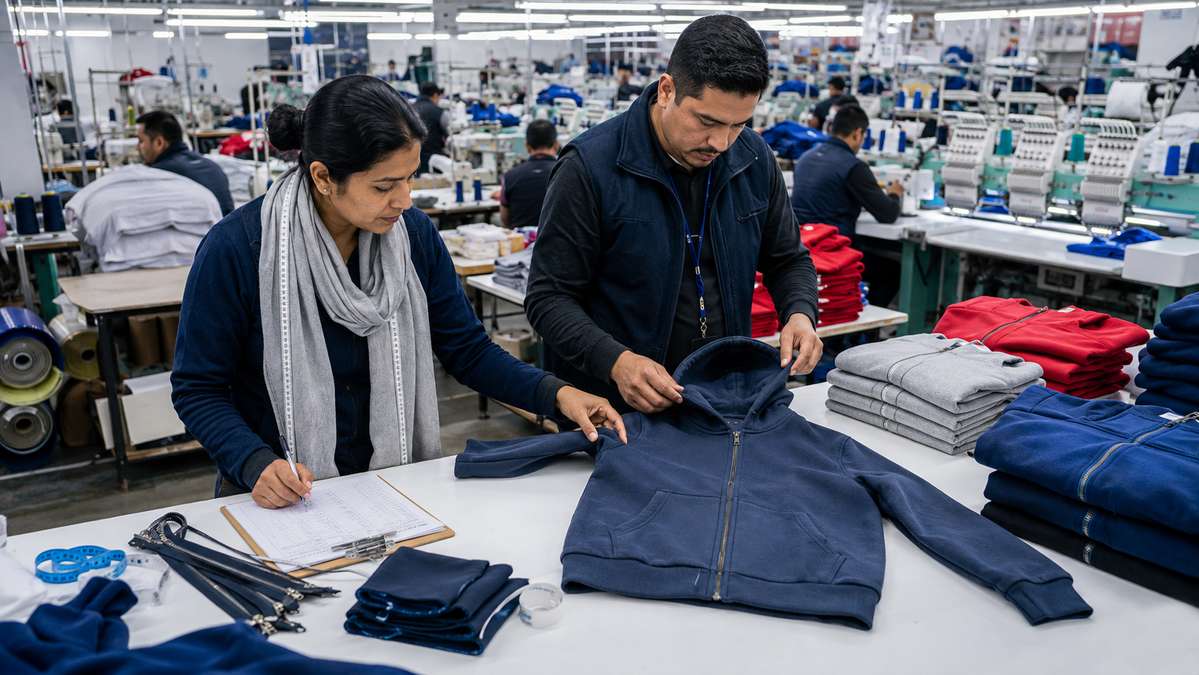
Boys’ sweatshirt hoodie manufacturers produce custom hooded tops for children’s brands, retailers, schools, sports programs, and private labels. A reliable partner should match the required fabric, fit, decoration, safety details, labeling, order volume, and delivery market while controlling shrinkage, color, seam strength, and bulk consistency.
The Short Answer for Buyers
The best boys’ hoodie supplier is not simply the factory with the lowest quote. It is the one that understands children’s sizing, can reproduce an approved sample at scale, documents quality checks, and plans production around the buyer’s actual delivery date.
Before asking for prices, define five essentials:
- Hoodie style and intended age group
- Fabric composition, weight, and finish
- Size chart and measurement tolerances
- Artwork, trims, labels, and packaging
- Quantity, destination, and required delivery date
That short brief prevents most early misunderstandings. It also helps factories price the same product, making quotations easier to compare.
Buyers exploring Bangladesh-based production can review Minmax Textile and its range of boys’ sweatshirt hoodies. These pages are useful for initial product discovery, but a purchase decision should always be based on current samples, verified factory details, production capability, testing needs, commercial terms, and references relevant to the order.
Start With the Hoodie, Not the Factory List
Searching for “boys’ sweatshirt hoodies manufacturers” often produces hundreds of suppliers that appear similar. A better process begins by defining the garment. Once the product is clear, it becomes much easier to remove unsuitable suppliers.
Pullover hoodie
The classic pullover has a hood, long sleeves, rib cuffs, a rib hem, and often a kangaroo pocket. It suits casual, school, sports, and lifestyle collections. Buyers should pay close attention to neck opening comfort, hood shape, pocket strength, and rib recovery.
Zip-up hoodie
A full-zip hoodie is easy to layer, but the zipper adds cost and quality risks. The zipper length must match the garment, the tape should lie flat, and the slider should operate smoothly. For children’s products, the zipper pull and any small components need careful review.
Lightweight hooded top
French terry, jersey, or lighter loopback fabrics can work for transitional weather and warmer markets. This type is useful where shoppers want coverage and air-conditioned comfort rather than heavy insulation.
Fleece hoodie
Brushed-back fleece provides warmth and a soft inner surface. It is popular for winter, outdoor, and school programs. The buyer should specify finished fabric weight, brushing level, pilling expectations, shrinkage limits, and whether the garment will be washed before packing.
Fashion or performance hoodie
Dropped shoulders, oversized bodies, color blocking, bonded pockets, reflective details, technical fabrics, and sport-inspired panels can set a range apart. They also increase development work. Every added feature needs a clear drawing, measurement, material reference, and approval point.
A Practical Product Brief for Custom Production
A strong product brief can be short, but it cannot be vague. Include the following information before requesting a sample or quotation.
| Specification area | What the factory needs |
|---|---|
| Customer | Age group, sales channel, price position, and intended use |
| Silhouette | Pullover, zip-up, regular fit, relaxed fit, or oversized fit |
| Fabric | Fiber content, finished weight, knit structure, stretch, and surface finish |
| Construction | Hood type, pockets, seams, rib, zipper, and reinforcement details |
| Color | Color reference, contrast panels, artwork colors, and shade tolerance |
| Decoration | Screen print, embroidery, appliqué, patch, transfer, or other method |
| Sizing | Full measurement chart, grading rules, tolerances, and measuring method |
| Branding | Main label, size label, care label, hangtag, and packaging artwork |
| Order | Quantity by color and size, destination, and required delivery date |
If the hoodie is part of a larger childrenswear launch, review the wider boys’ clothing range early. Shared size breaks, label layouts, color standards, carton markings, and packaging can then be planned across the whole program instead of being corrected style by style.
Fabric Choices That Change Comfort, Cost, and Performance
Fabric is the biggest driver of how a sweatshirt hoodie feels and performs. “Cotton hoodie” is not enough detail for production.
Cotton and cotton-rich blends
Cotton offers softness, breathability, and a familiar hand feel. Cotton-rich blends can improve shape retention or drying time, depending on the added fiber. Buyers should confirm whether the percentage refers to the face, backing, or total fabric composition when a complex material is used.
Cotton-polyester blends
These blends are common in casual and schoolwear because they can balance comfort, durability, stability, and cost. Results vary with yarn, fabric structure, dyeing, finishing, and blend ratio. A physical sample is more useful than a fiber description alone.
French terry and loopback
French terry has loops on the inside and a smooth outer face. It often feels lighter and more breathable than brushed fleece. It works well for mild climates, travel, indoor use, and year-round layering.
Brushed fleece
Fleece is brushed to create a warmer, softer inner surface. Ask how the fabric performs after repeated washing. Excess fiber shedding, pilling, shrinkage, and loss of softness can turn an attractive sample into a poor retail product.
Recycled and certified materials
Recycled polyester, responsibly sourced cotton, and other preferred materials may support a brand’s sourcing goals. Any certification or environmental claim should be supported by current, applicable documentation. Buyers should also confirm whether transaction-level records are required for their own claims.
Child-Friendly Design Requires More Than a Smaller Adult Hoodie
Children’s garments need their own fit, construction, and risk review. Shrinking an adult pattern is not enough.
First, the hood and neck opening must be comfortable. Second, pockets and seams must handle active use. Third, cords, toggles, zipper pulls, badges, sequins, and other attachments require age-appropriate decisions. Requirements differ by product, age group, and destination, so the buyer should confirm applicable rules with a qualified compliance specialist or testing laboratory.
A useful pre-production review covers:
- Hood fit, depth, and visibility
- Neck opening and ease of dressing
- Sleeve length and cuff recovery
- Pocket placement and reinforcement
- Drawcord, toggle, and trim risks
- Zipper function and attachment
- Print or embroidery backing against the skin
- Label comfort and legibility
- Fiber content, care, size, and origin information
- Packaging warnings and barcode accuracy
The key point is simple: safety and comfort must be designed into the product before bulk cutting and sewing.
The Manufacturer Scorecard: Eight Areas to Compare
Instead of choosing a supplier from a price list, score each candidate against the same evidence.
1. Category experience
Ask for recent examples of boys’ hoodies made in a similar fabric weight, size range, and construction. A supplier that produces basic T-shirts may not automatically be strong in zip hoodies, brushed fleece, complex panels, or children’s fit.
2. Development support
Good development teams identify missing measurements, impractical details, artwork risks, and fabric concerns before sampling. They do not simply copy unclear instructions and wait for a rejection.
3. Sampling accuracy
The sample process should have defined stages. Depending on the style, these may include a development sample, a fit sample, a size set, artwork or strike-off approval, a pre-production sample, and a shipment sample. Every approved correction should be added to the latest tech pack.
4. Fabric and trim control
Ask how the supplier manages color matching, shrinkage, fabric weight, zipper lots, rib shade, and replacement trims. The body, rib, zipper tape, and embroidery thread may all react differently under store lighting and after washing.
5. Production quality
Request the factory’s process for incoming material inspection, cutting control, sewing checks, measurement review, finishing, metal detection when required, final inspection, and packing verification.
6. Capacity and timing
Quoted lead time should reflect current capacity, material booking, approvals, and order complexity. Confirm whether any part of production will be subcontracted and how those units are controlled.
7. Compliance evidence
Review relevant certifications, audits, test capabilities, and expiration dates. Verify the scope and current status rather than relying on a logo in a brochure. Minmax’s company profile can form one part of initial research, followed by direct document checks and product-specific questions.
8. Communication and problem handling
Fast replies are useful, but clear replies are better. A dependable partner records changes, flags delays early, assigns responsibility, and proposes workable solutions.
Quality Control From Fabric Booking to Final Carton
Quality is not a final inspection event. It is a series of controls built into the production calendar.
Before production
Approve the tech pack, bill of materials, color references, fabric, trims, artwork, labels, size chart, tolerances, packaging, and pre-production sample. Confirm testing and inspection responsibilities in writing.
During production
Check fabric shade and weight, panel measurements, print or embroidery placement, seam quality, zipper installation, pocket symmetry, and workmanship. Early checks are valuable because the factory can correct the process before the whole order is complete.
After finishing
Review finished measurements, appearance, stains, loose threads, needle damage, pressing, folding, assortments, labels, barcodes, polybags, and carton marks. Compare production with the sealed approval sample.
Before shipment
A final inspection should use an agreed sampling method and defect standard. For higher-risk programs, an independent inspection can add another layer of control. Test reports, inspection findings, approvals, and corrective actions should remain linked to the purchase order.
Global Range Planning for Ten Target Markets
One hoodie specification will not serve every region equally well. Climate, school calendars, sizing, retail price points, language, and delivery seasons all affect the range.
USA and Canada
North American ranges may need lightweight indoor layers, midweight back-to-school styles, and warm fleece for colder regions. Buyers should validate children’s product rules, labeling, and testing for the exact market. In Canada, confirm language needs and any province-specific considerations with local experts.
UK, Germany, and the Netherlands
The UK has strong demand for practical school, sports, and everyday layers. Germany and the Netherlands often reward precise specifications, consistent sizing, useful material information, and credible sourcing claims. Easy-care construction, stable color, and reliable repeat production can matter more than novelty for core programs.
Australia and South Africa
Southern Hemisphere seasons require a different buying calendar from Europe and North America. Australia also spans warm and cool climates, making French terry and lighter layering useful in many regions. South African buyers may need to balance regional climate, schoolwear durability, price sensitivity, and the need for flexible assortment planning.
UAE, Saudi Arabia, and Qatar
In Gulf markets, heavy fleece is not the only opportunity. Lightweight hoodies can work for air-conditioned interiors, travel, outdoor evenings, school, and cooler months. Soft finishes, clean styling, modest comfort, premium presentation, and carefully timed holiday or gifting ranges may suit different retail channels.
Local insight should come from real evidence: sales history, search behavior, returns, retailer feedback, competitor reviews, and local legal advice. Country names should never be added to pages merely to create the appearance of local relevance.
Build a Coordinated Apparel Program Without Mixing Search Intent
A hoodie may sit beside sweaters, polos, shirts, T-shirts, and bottoms in a full collection. Cross-category planning can improve color consistency, size continuity, packaging, and delivery. Buyers can compare adjacent boys’ sweaters, boys’ polo shirts, and boys’ shirts when designing the top half of the range.
For outfits, boys’ jeans and boys’ twill pants can be planned around the same size breaks and customer profile. Younger-age coverage may also require a separate review of kids’ sweaters, since fit and trim decisions vary by age.
The supplied T-shirt keyword set belongs to a different search intent, so it should be used only in this relevant range-planning context. A broader supplier search might include Custom T-Shirt Manufacturer, OEM T-Shirt Manufacturer, Wholesale T-Shirt Manufacturer, Bulk T-Shirt Supplier, Private Label T-Shirts, Men’s T-Shirts, Men’s Cotton T-Shirts, Men’s Crew Neck T-Shirts, Men’s Oversized T-Shirts, Men’s Sports T-Shirts, Men’s Polo Shirts, Corporate Uniform T-Shirts, Custom Polo Shirt Manufacturer, and Custom Clothing Manufacturer. Buyers can assess boys’ T-shirt production and men’s sweater manufacturing separately rather than forcing unrelated terms into a hoodie specification.
MOQ and Cost: Read the Quote Behind the Number
MOQ may be stated per order, style, color, fabric, or print. That distinction matters. An offer of 500 pieces may mean 500 per color, not 500 divided across five colors.
Ask what creates the minimum. Common causes include fabric dyeing, rib production, zipper color, screen setup, embroidery, labels, and packaging. A smaller launch may become workable by using stock fabric, reducing color choices, sharing fabric across styles, or simplifying decoration.
Unit cost is influenced by:
- Fabric composition, weight, finish, and order volume
- Pullover or zip construction
- Hood lining and panel count
- Rib quality and consumption
- Printing, embroidery, appliqué, or patches
- Custom zippers, eyelets, labels, and hangtags
- Testing, inspection, finishing, and packaging
- Delivery term and freight method
Compare total landed cost, not just the factory price. Confirm whether the quote is EXW, FOB, CIF, DDP, or another agreed Incoterm. Freight, insurance, duties, taxes, customs clearance, and local delivery can change the commercial result. A customs professional or freight forwarder should confirm destination-specific charges.
Digital Trust Signals for Manufacturers Serving Multiple Countries
International buyers often begin online, so accurate digital information matters. A supplier website should show real capabilities, current business details, clear instructions for inquiries, useful product information, and verifiable evidence. The Minmax contact page provides a direct route for buyers to submit specifications and request current details.
If a manufacturer has a genuine, staffed location in a target country, a Google Business Profile can support local discovery. The business name, address, phone number, opening hours, photos, and website should remain consistent. A company should not create profiles, directory listings, or city pages for locations where it has no real presence.
Relevant trade directories, chambers, sourcing platforms, and industry associations can add visibility when listings are complete and accurate. Reviews are most helpful when they describe the product category, sampling, communication, quality, problem handling, and delivery. Fabricated or incentivized claims damage trust and may create platform or legal risks.
A Purchase-Order Readiness Checklist
Do not release bulk production until these points are clear:
- Final tech pack and revision number
- Approved fabric, color, rib, zipper, and trims
- Approved artwork and placement
- Approved size chart, grading, and tolerances
- Sealed pre-production sample
- Label and packaging approvals
- Testing plan and pass criteria
- Inspection standard and defect classification
- Quantity by size and color
- Price, payment terms, and Incoterm
- Production milestones and shipment date
- Process for changes, delays, and nonconforming goods
This checklist gives both parties one shared version of the order. It also makes later decisions easier to trace.
Frequently Asked Questions
What is a boys’ sweatshirt hoodie manufacturer?
It is a factory or production partner that develops and makes hooded sweatshirts for children’s brands, retailers, schools, teams, or private labels. Services may include fabric sourcing, sampling, cutting, sewing, decoration, labeling, packing, inspection, and export support.
What fabric weight is best for boys’ hoodies?
There is no single best weight. Lightweight loopback suits mild climates and indoor layering, while heavier brushed fleece offers more warmth. Select the weight after considering season, price, wash performance, and target market.
Can manufacturers produce private-label hoodies?
Many manufacturers can add custom main labels, size and care labels, hangtags, packaging, colors, prints, embroidery, and other brand details. Every component should be included in the tech pack and approved before bulk production.
How long does a bulk hoodie order take?
Lead time depends on fabric availability, sample approvals, decoration, quantity, capacity, testing, and shipping. Ask for a written calendar that separates development, production, inspection, and transit, rather than relying on a single broad estimate.
How should a buyer verify hoodie quality?
Use an approved sample, clear tolerances, fabric and garment testing, in-line checks, and a final inspection. Review shrinkage, colorfastness, pilling, measurements, seam strength, attachments, labeling, and packing according to the product and destination.
Turn a Clear Hoodie Brief Into a Reliable Bulk Order
Successful hoodie sourcing begins with a clearly defined product. Once the style, fabric, size chart, decoration, order quantity, destination, and delivery date are set, buyers can compare factories based on evidence rather than promises.
Minmax Textile may be considered alongside other qualified manufacturers of boys’ sweatshirt hoodies. Send a complete brief, request a product-specific quotation, verify current capabilities and compliance documents, carefully approve samples, and agree on quality and delivery checkpoints before bulk production begins.