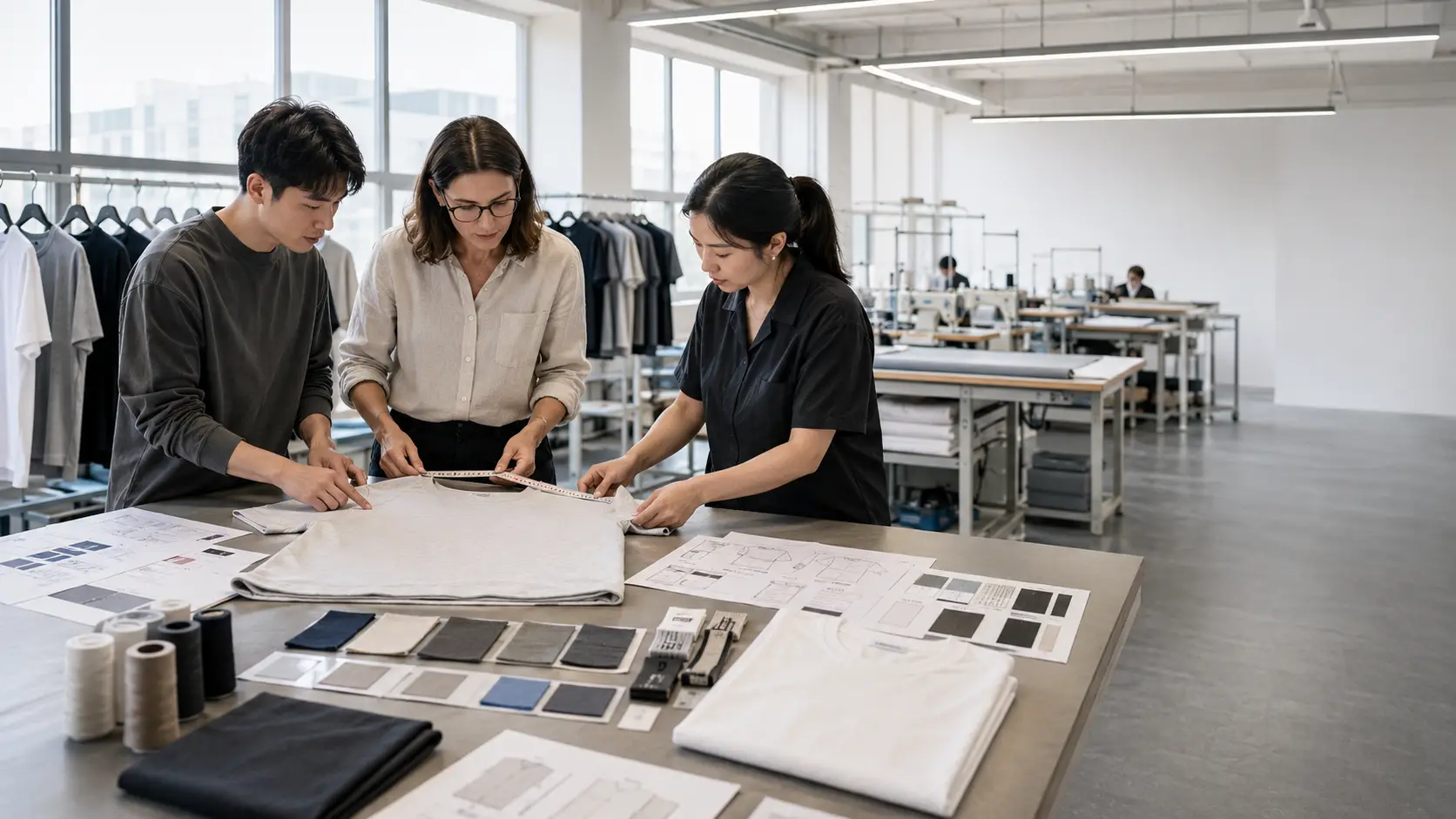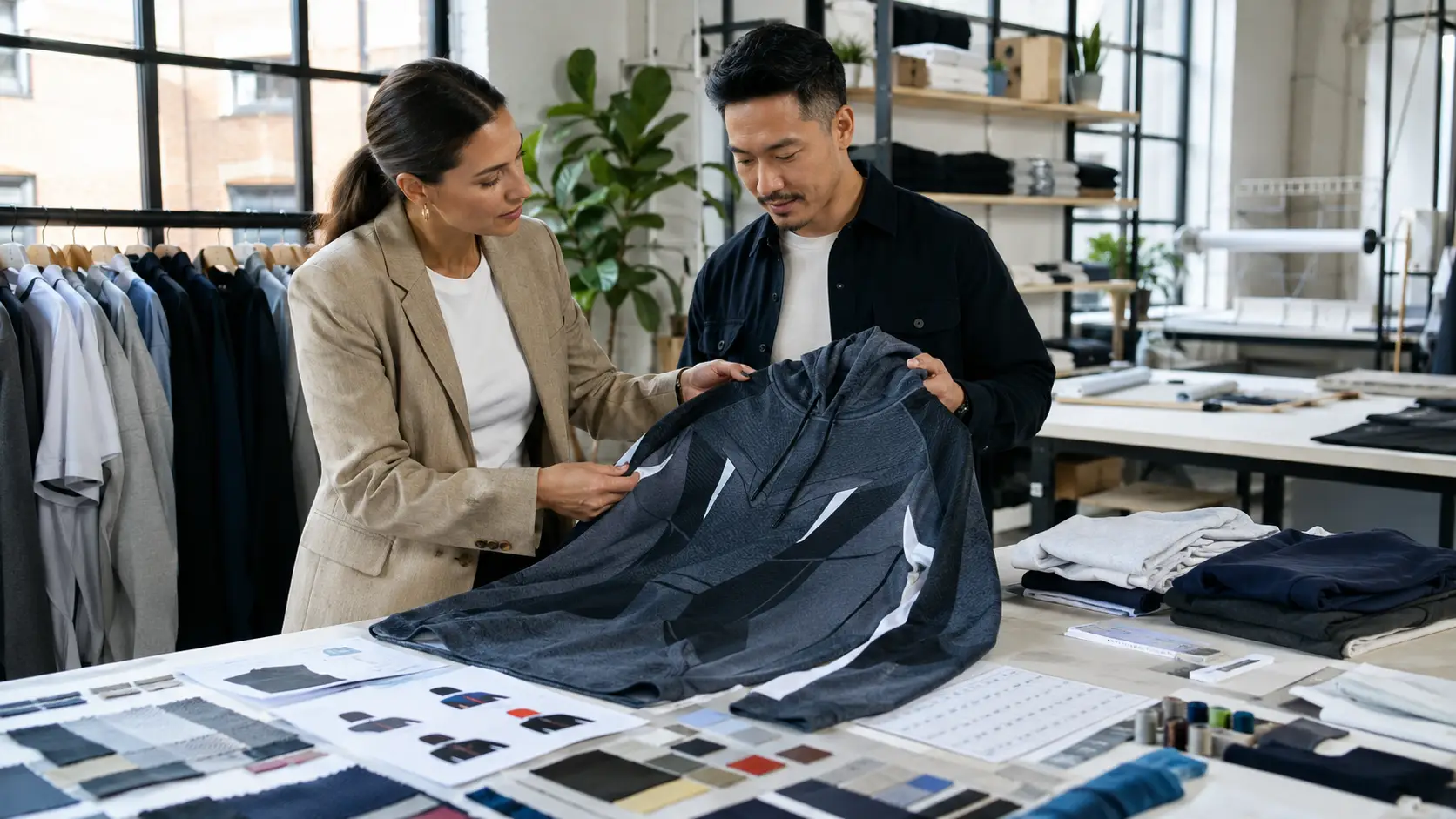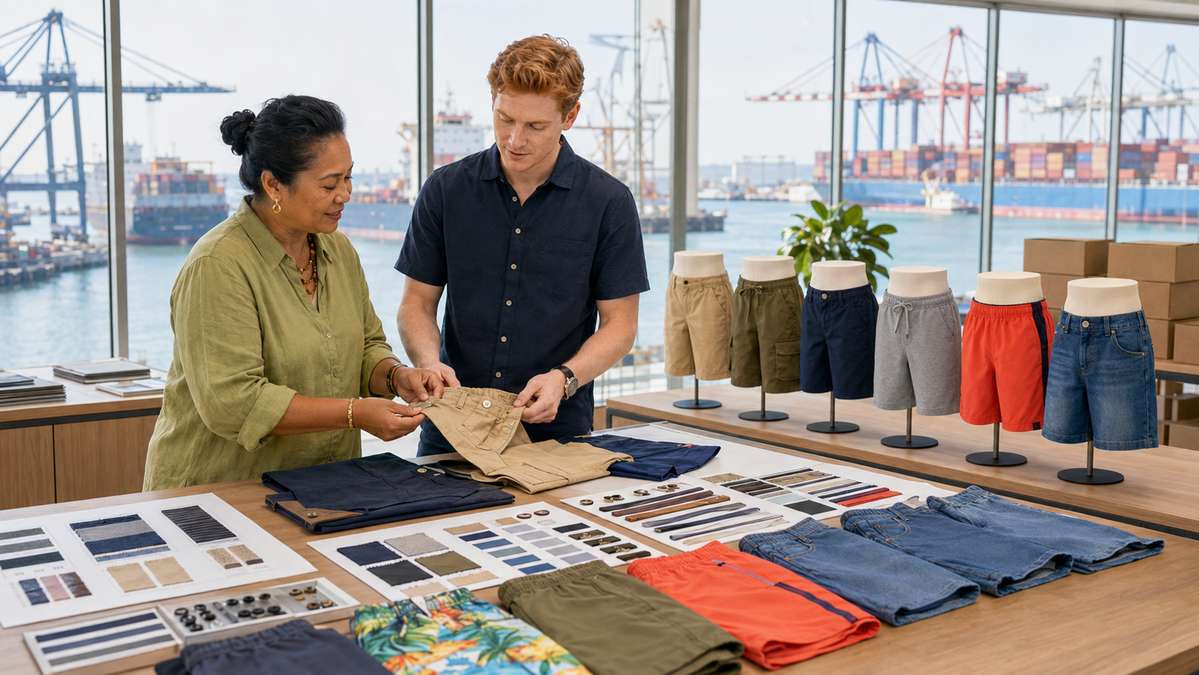
A boys’ short pants manufacturer makes custom shorts for children’s brands, retailers, schools, sports programs, and private labels. The right partner should understand fabric performance, active fit, secure trims, age-appropriate design, consistent sizing, quality control, order quantities, labeling, and international delivery for the buyer’s intended market.
Picture the First Day of Sale
The shorts have arrived. They look good on the rail, the colors match the campaign, and the price feels right. Then customers begin trying them on.
Can children run and sit comfortably? Does the waistband stay in place? Are the pockets useful? Does the fabric feel cool? Will the color survive repeated washing? Can a younger child manage the closure without help?
Those questions should be answered before production, not after the first returns appear.
Brands comparing international suppliers can begin by reviewing Minmax Textile, a Bangladesh-based apparel business. Product discovery is useful, but the final decision should depend on current samples, verified capability, compliance evidence, clear terms, and performance against the buyer’s own specifications.
Its category for boys’ short pants manufacturing shows casual, swim, uniform, knit, denim, and other shorts styles. That variety is a useful reminder to define the intended product before requesting a quote.
Begin With One Question: What Are the Shorts For?
“Boys’ shorts” is a retail category, not a complete production brief. The intended activity should guide every decision that follows.
For everyday play
Casual shorts need comfort, useful pockets, a reliable waistband, and fabric that handles frequent washing. Cotton twill, jersey, fleece, denim, and blends can all work. The right choice depends on climate, price, styling, and care.
For school
Uniform shorts usually need stable color, durable seams, easy-care fabric, practical pocketing, and repeatable production. Adjustable waists can help a style serve more body shapes. Replenishment planning is just as important as the first order.
For sports and movement
Active shorts may need stretch, low weight, moisture control, quick-drying, mesh panels, or secure zippered pockets. The construction should follow the activity. A fashion short should not be marketed as technical sportswear without suitable fabric and testing.
For swimming
Swim shorts require quick-drying fabric, a suitable lining, a secure waist adjustment, and materials intended for pool or beach use. Buyers should test the performance of color, closures, drawcords, prints, and trim in the expected environment.
For smart casual wear
Chino shorts can pair a clean appearance with everyday comfort. Slanted front pockets, welt back pockets, restrained topstitching, a shaped waistband, and a neat hem create a more polished product.
Exploring the wider boys’ clothing range can help buyers align age bands and branding. Still, shorts need their own tech pack because length, rise, leg opening, and waistband comfort directly affect fit.
Choose a Style Without Building an Unfocused Range
More options do not always mean a stronger collection. A focused opening assortment is easier to buy, manufacture, market, and replenish.
| Style | Best suited to | Details that need attention |
|---|---|---|
| Chino shorts | School, smart casual, family occasions | Waist shape, pocket finish, crease recovery, and color stability |
| Cargo shorts | Outdoor and casual ranges | Pocket size, flap position, reinforcement, and trim security |
| Jersey shorts | Everyday play and leisure | Fabric recovery, seam strength, waistband, and pilling |
| Fleece shorts | Casual and sport-inspired collections | Weight, inner surface, shrinkage, and rib or waistband recovery |
| Denim shorts | Fashion and durable casualwear | Wash shade, hardware, abrasion, and after-wash measurements |
| Swim shorts | Beach, pool, resort, and travel | Drying, lining, waistband, colorfastness, and age-appropriate adjustment |
| Performance shorts | Sports, clubs, and active use | Movement, breathability, wicking claims, seams, and pocket security |
A good first order may use one reliable base fit with controlled fabric and color variations. That approach maintains consistency and provides the brand with cleaner sales data for the next season.
Fabric Is the Experience the Customer Feels
Shoppers may notice the print first, but they live with the fabric.
Cotton twill
Cotton twill is a familiar choice for chinos, uniforms, and cargo shorts. It can feel light and soft or firm and workwear-inspired. Specify finished weight, weave, color, surface finish, and expected care performance.
Stretch twill
Adding elastane can help slim and active fits move more comfortably. Stretch alone is not enough. Recovery should be tested so the seat, leg opening, and waistband do not lose shape.
Jersey and interlock
Knitted fabrics offer softness and freedom of movement. Check pilling, shrinkage, twisting, seam strength, and recovery. Lightweight jersey may need reinforcement at the pocket or waistband.
French terry and fleece
French terry suits lighter casual shorts, while brushed fleece offers a warmer feel. Buyers should approve the inner surface, weight, softness, shrinkage, and appearance after washing.
Woven polyester and performance fabrics
These fabrics can offer low weight and faster drying. Verify every performance claim using appropriate testing. Breathability, moisture management, stretch, and colorfastness vary by construction and finish.
Denim
Denim shorts need wash and shade control. The same base fabric can look different after rinse, enzyme, fade, black, or distressed finishes. Keep an approved physical wash standard for bulk comparison.
Brands planning both full-length and warm-weather woven bottoms can compare the shorts brief with boys’ twill pants production. Shared fabrics may improve color continuity and purchasing efficiency, but each style still needs separate fit approval.
A Fit Check That Takes Five Minutes and Prevents Returns
Do not approve shorts only while the model stands still. Ask the wearer to sit, squat, walk, raise a knee, and place hands in the pockets. Then review the garment from the front, side, and back.
Look for these signals:
- The waistband feels secure without pressure
- The back rise stays in place while sitting
- The front rise does not pull or create excess folds
- The thigh and leg opening allow movement
- Pocket openings do not flare
- The hem stays balanced
- The closure is easy to use
- Any internal elastic or label feels smooth
For younger sizes, pull-on waists may improve independence. Older boys may prefer zip flies, tack buttons, drawcord waists, or cleaner tailored finishes. The age label alone does not determine the right solution. Fit, use, and local customer expectations matter.
Where a summer range includes coordinated tops, boys’ polo shirts can share color standards and size names with chino or uniform shorts. Measurements should remain category-specific.
Write the Brief So Two Factories Quote the Same Product
A clear request should include:
- Flat sketches showing front, back, and important internal details
- Intended age group, use, sales channel, and target price position
- Fabric content, finished weight, color, stretch, and finish
- Base-size measurements, grading, tolerances, and measuring method
- Waistband, closure, pocket, seam, hem, and reinforcement details
- Artwork placement, size, colors, and decoration method
- Buttons, snaps, zippers, elastic, drawcords, thread, and labels
- Fiber, care, size, origin, and other required information
- Folding, hangtags, barcodes, polybags, and carton marks
- Quantity by style, color, and size
- Destination, delivery date, shipment method, and Incoterm
Avoid phrases such as “standard kids’ sizing” or “normal cotton fabric.” They leave the most important decisions open. If the factory must make an assumption, require it to be written into the quotation.
Casual sets may include boys’ T-shirts. Align visual branding and delivery dates, but assess the top and bottom as separate products with different measurement and construction risks.
Follow the Order Like a Story With Clear Chapters
Production becomes easier to manage when every stage has a purpose and an approval owner.
Chapter 1: The technical review
The manufacturer studies the tech pack, flags missing details, confirms feasibility, and prepares a complete quotation. Fabric, trims, MOQ, testing, lead time, and shipment terms should be discussed here.
Chapter 2: The first sample
The development sample shows how the factory interpreted the design. Review fit, proportion, construction, fabric, trims, and finish. Record corrections in one updated document.
Chapter 3: The size and color decision
Approve the graded measurements and key sizes. Confirm physical fabric quality and color standards. Screen-print strike-offs, embroidery samples, or other decoration trials may also be needed.
Chapter 4: The production standard
The pre-production sample should represent the approved bulk fabric, trims, labels, construction, and packing direction. This sample becomes the reference for the order.
The supplier’s company profile can support the initial review, but the production standard must be based on order-specific approvals and current evidence.
Chapter 5: The factory floor
In-line checks cover cutting, measurements, seams, waistband construction, pocket placement, decoration, and workmanship. Early findings should be corrected before they spread through the order.
Chapter 6: The packed shipment
Final inspection compares finished goods with the approved standard. It should also check labels, barcodes, folding, polybags, size ratios, carton marks, and quantities.
Small Details Carry the Biggest Risks
Children’s shorts may include buttons, snaps, zippers, toggles, drawcords, rivets, patches, or decorative attachments. Each detail must suit the age group and destination market.
The buyer and supplier should review:
- Security of buttons, snaps, and other small parts
- Zipper function and sharp edges
- Drawcord length, position, and construction
- Rough embroidery backing or internal seams
- Labels that irritate the skin
- Loose loops, broken needles, or metal contamination
- Packaging warnings and small components
- Accuracy and permanence of required labeling
Applicable rules vary by product, age, and country. Work with a qualified laboratory or compliance professional instead of copying requirements from an unrelated garment.
For a coordinated cooler-weather line, boys’ sweatshirt hoodies may use the same fleece or French terry family. Confirm fabric weight, shrinkage, and color separately for each garment.
What Quality Looks Like in a Finished Pair
Turn the shorts inside out. Good quality is often easier to see there.
Seams should be secure and appropriate for the fabric. Pockets should be even and reinforced. The waistband should lie correctly. Elastic should recover. Stitching should not break when the garment stretches. Labels should be readable and comfortable. The garment should match the approved measurements after any wash or finishing process.
Common reasons for rejection include:
- Uneven leg lengths or hems
- Twisted side seams
- Waist measurements outside tolerance
- Poor elastic recovery
- Uneven pockets or loose bartacks
- Shade variation between panels
- Print or embroidery placed incorrectly
- Broken stitches, needle damage, or stains
- Insecure trims
- Wrong labels, barcodes, assortments, or packaging
For fashion-led woven shorts, reviewing boys’ jeans manufacturing can help a buyer understand denim-specific wash and hardware considerations. Those controls should be added only when denim is actually used.
Sell the Right Shorts in the Right Market
Local optimization should change the product plan rather than simply repeat location names.
USA
The US offers school, casual, cargo, denim, swim, and sports shorts at many price points. Climate varies widely, so regional assortment and delivery timing matter. Confirm current children’s product, labeling, and testing duties with qualified specialists.
Canada
The selling season may be shorter in many regions, making timing and inventory control important. Summer camps, school, sports, and travel can create clear use cases. Verify language and provincial requirements for the chosen sales channel.
UK
School shorts, holiday styles, sports products, and practical casualwear can all be relevant. Buyers may prioritize adjustable waists, easy care, reliable color, online size guidance, and dependable seasonal delivery.
Australia
Shorts can have a longer selling window in many Australian regions. Lightweight, breathable, sun-season, school, swim, and active styles may be useful. The Southern Hemisphere calendar must be built into production planning.
Germany and the Netherlands
Buyers often value precise specifications, consistent sizing, useful material information, and credible documentation. Practical movement, durable finishing, and verifiable product claims can support trust. Dutch ranges may also consider cycling and active everyday use.
UAE, Saudi Arabia, and Qatar
Warm weather supports breathable casual shorts, swimwear, sporty styles, and polished holiday ranges. Local preferences, age groups, settings, and retail channels should guide length and styling. Treat each Gulf market separately rather than assuming one universal assortment.
South Africa
Different climates, income levels, school needs, and retail formats create varied demand. Durable basics, strong value, practical fits, and carefully timed seasonal stock may serve many buyers.
Local decisions should be checked against sales history, search data, return reasons, retailer input, competitor ranges, and customer reviews.
Where buyers serve younger age groups as well, kids’ shorts options can support range planning. Sizing, trims, closures, and safety choices still need separate review by age.
Do the Commercial Math Before Choosing the Cheapest Quote
Price changes with fabric, weight, pockets, lining, waistband, trims, decoration, testing, packaging, and order volume. Swim shorts, cargo shorts, chino shorts, and jersey basics should not be compared as though they are the same product.
Ask whether MOQ applies per style, fabric, color, print, or trim. Five colors can turn a manageable program into five production minimums. A smaller launch may work better with fewer colors, stock fabric, shared trims, or one proven fit.
Compare the total offer:
- Product price based on the exact specification
- Sample and development charges
- Testing and inspection costs
- Labels, hangtags, barcodes, and packaging
- Freight, insurance, duties, taxes, and clearance
- Payment terms and currency exposure
- Delivery schedule and delay risk
Confirm the agreed Incoterm. EXW, FOB, CIF, and DDP assign different costs and responsibilities. Destination charges should be checked with a qualified freight forwarder or customs professional.
Retailers expanding beyond boys’ sizes can treat men’s short-pant manufacturing as a separate program. Adult patterns, grading, styling, and compliance considerations should not be carried over to children’s production.
Keep T-Shirt Keywords in Their Proper Place
The supplied T-shirt keyword group represents a separate product intent. It belongs only in a multi-category sourcing discussion, not throughout an article about shorts.
A buyer looking to build a broader range may search for a Custom T-Shirt Manufacturer, OEM T-Shirt Manufacturer, Wholesale T-Shirt Manufacturer, Bulk T-Shirt Supplier, Custom Polo Shirt Manufacturer, or Custom Clothing Manufacturer. The assortment might include Private Label T-Shirts, Men’s T-Shirts, Men’s Cotton T-Shirts, Men’s Crew Neck T-Shirts, Men’s Oversized T-Shirts, Men’s Sports T-Shirts, Men’s Polo Shirts, and Corporate Uniform T-Shirts.
Those capabilities require their own fabric, fit, print, and quality review. They do not prove that a supplier can produce consistent boys’ shorts.
Trust Signals That Help Buyers Verify a Supplier
A useful supplier website should make verification easy. Accurate business details, clear capabilities, current product examples, realistic inquiry requirements, factory or process evidence, and responsive communication all help.
The Minmax contact page gives buyers a direct route to send specifications and request current details. A serious inquiry should include style, fabric, quantity, sizes, destination, and required delivery date.
Google Business Profiles should be created only for genuine eligible locations. A company should not claim offices in target countries where it has no real presence. Trade directories, chambers, associations, and sourcing platforms can support discovery when listings are accurate.
Reviews are most useful when they mention product category, sampling, communication, quality, delivery, and problem resolution. Reviews should never be fabricated or used to support claims that cannot be verified.
Frequently Asked Questions
What does a boys’ short pants manufacturer produce?
A manufacturer may produce casual, chino, cargo, denim, jersey, fleece, swim, school, and sports shorts. Services can include development, sampling, sourcing, cutting, sewing, decoration, labeling, packing, inspection, and export support.
Which fabric is best for boys’ shorts?
It depends on use and climate. Cotton twill works well for chinos; jersey offers softness; fleece suits casual styles; polyester suits swim or active products; and denim creates a durable fashion look. Test the finished garment.
What is the MOQ for custom boys’ shorts?
There is no universal MOQ. It may apply per style, fabric, color, print, or trim. Ask for a written breakdown before finalizing the range.
Can a manufacturer add private labels and custom packaging?
Many export suppliers can add main labels, size and care labels, hangtags, barcodes, polybags, and carton markings. Provide accurate artwork and approve physical samples before bulk packing.
How can buyers check shorts before shipment?
Use an approved sample, measurement tolerances, relevant testing, in-line checks, and final inspection. Review fit, seams, color, shrinkage, trims, decoration, labels, packing, and quantities.
Make the First Bulk Order Easier to Get Right
The strongest boys’ short-pants manufacturer is the one that understands the intended use and translates it into clear production choices. Fabric, fit, waist construction, pockets, trims, safety, quality, price, and timing must support the same customer.
Start with a focused range and a complete brief. Test movement, approve physical materials, document every correction, and compare total landed cost. Then send the specification to Minmax Textile and other qualified suppliers to request current samples, quotations, compliance information, and realistic delivery plans.