What Should Buyers Know About Boys’ Socks Manufacturing?
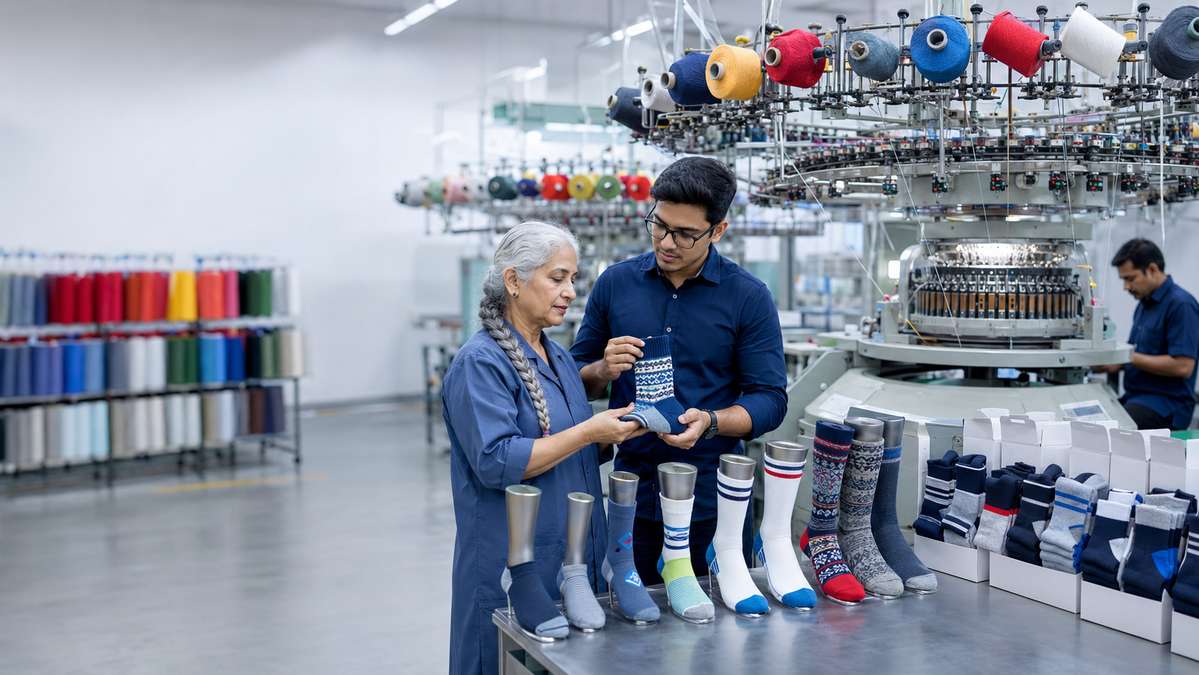
A boys’ socks manufacturer turns a brand’s size range, yarn choice, colors, artwork, performance needs, and retail-pack design into bulk production. The right supplier should provide accurate samples, comfortable fit, secure toe seams, firm cuffs, matched pairs, reliable testing, clear order terms, and export-ready packaging.
Custom Boys’ Socks From Concept to Bulk Order
Socks may be small, but customers notice every weak detail. A cuff that slips feels annoying. A rough toe seam can rub. Poor heel placement makes the sock bunch inside the shoe. Weak yarn may pill or wear through too soon.
For a brand or wholesaler, the task is not simply to find low-cost socks. It is to create a pair that fits well, survives regular washing, looks consistent, and reaches the right market on time.
Minmax Textile is a Bangladesh-based apparel supplier serving international buyers. Its public boys’ sock range includes ankle, crew, printed, knee-high, and wool socks, as well as private-label options.
Buyers should still confirm every detail for the proposed order. Yarn, machine setup, minimum quantity, sampling time, testing, price, and delivery can vary by design.
Minmax Textile Sock Capabilities at a Glance
The table below combines information published on Minmax Textile’s sock pages. It should be treated as a starting point for an inquiry, not a fixed quotation.
| Buying point | Published information to discuss |
|---|---|
| Product types | Ankle, crew, printed, knee-high, wool, sports, and private-label socks |
| Yarn options | Cotton, nylon, polyester, elastane, and spandex are listed on a custom sock example |
| Knitting options | A published example lists 168N, 200N, or customized needle options |
| Design methods | Jacquard, dots, stripes, plain designs, and other custom patterns are listed |
| Custom branding | Colors, sizing, designs, labels, and packaging can be discussed |
| Published MOQ example | 600 pairs per color on one custom sock product page |
| Published sample example | Seven days on that product example |
| Published packing example | Six pairs per polybag and 120 pairs per carton, with custom packing available |
These figures come from one published custom socks example. They may not apply to every boys’ style. Reconfirm them in writing before placing an order.
For a current quotation, send Minmax the sock type, size range, yarn target, artwork, colors, quantity, pack design, destination, and required delivery date.
Which Boys’ Sock Style Fits the Collection?
The right style depends on the shoe, climate, activity, and customer.
Everyday crew socks
Crew socks work with school shoes, sneakers, and boots. They offer enough leg coverage for daily use. The cuff needs a good balance. It should stay up without leaving deep marks.
Ankle and no-show socks
Shorter socks suit warm weather, casual shoes, and sports looks. The heel shape and elastic must stop the sock from sliding into the shoe.
School socks
School programs often need plain colors, stable sizing, easy care, and regular repeat orders. Crew and knee-high styles may both be useful. The factory must keep the shade consistent across production lots.
Sports socks
Sports pairs may use sole cushioning, arch support, mesh zones, or reinforced heels and toes. Any claim about moisture control, compression, or performance should align with the design and be supported by suitable test evidence.
Winter socks
Wool and wool-blend socks can add warmth. Cotton blends, acrylic, and other yarns may also be used in winter ranges. Buyers should check softness, bulk, care, drying time, and fit inside the intended footwear.
Fashion and jacquard socks
Stripes, logos, color blocks, and knitted patterns can give a collection a clear identity. Simple artwork often produces a cleaner result. Fine details may lose shape when converted into stitches.
Choose Yarn by Use, Not by Fiber Name Alone
Fiber content matters, but it does not tell the whole story. Yarn quality, knit structure, thickness, finish, and stretch also affect comfort and wear.
Cotton blends
Cotton offers a soft and familiar feel. Blending it with nylon, polyester, or elastane can improve strength, shape, and fit. Ask for the full fiber percentage rather than accepting “cotton-rich” without details.
Polyester and nylon blends
These fibers can support strength, faster drying, and shape. They are common in sports and everyday socks. The final feel depends on the yarn and construction, so approve a physical sample.
Elastane or spandex
Stretch fiber helps the sock hold the foot and recover after wear. Too little can cause slipping. Too much tension can feel tight. The factory should place and control elastic according to the sock type.
Wool blends
Wool can add warmth and help manage comfort in cold conditions. It may also change care needs and price. Check softness against the skin and test the finished blend after washing.
Certified or preferred yarns
If a brand wants recycled or certified material, it should request current documents tied to the actual yarn and order. Do not publish broad environmental claims without proof.
Give the Factory a Sock-Specific Product Brief
A standard clothing tech pack often misses key sock details. The factory needs a clear worksheet.
| Specification | What to provide |
|---|---|
| Customer | Age range, activity, footwear, sales channel, and market |
| Size | Foot-length or shoe-size range for each knitted size |
| Height | Ankle, quarter, crew, knee-high, or a measured custom height |
| Yarn | Full blend, color, thickness, and any required certification |
| Knit | Needle or gauge needs, cushioning, support zones, and ventilation |
| Fit | Foot length, leg length, cuff width, heel position, and stretch |
| Artwork | Grid, repeat, logo size, colors, and placement |
| Reinforcement | Heel, toe, sole, or other high-wear areas |
| Testing | Wash change, color, abrasion, pilling, recovery, and claim-related checks |
| Packing | Pair count, band or card, barcode, labels, polybag, and carton marks |
| Commercial | Quantity by size and design, destination, date, and Incoterm |
Define how every measurement will be taken. Socks stretch, so two people can record different results if they use different methods.
The broader boys’ clothing category can help with color and age-range planning. Sock sizes should still be based on feet and shoes, not only clothing ages.
Size Boys’ Socks by Foot Length
An age label such as “6–8 years” can help shoppers. It is not precise enough for production. Children of the same age may wear different shoe sizes.
Build the size chart around measured foot length and the retailer’s shoe-size system. Then test the smallest and largest foot in each size range.
Check five points during a fitting:
- The heel sits in the correct place.
- The toe is not pulled tight.
- Extra fabric does not bunch inside the shoe.
- The cuff stays up without strong pressure.
- The sock still fits after the approved wash method.
For online sales, publish a simple size chart showing foot length and the relevant local shoe sizes. State whether measurements use centimeters or inches. Do not copy a universal conversion chart without testing it against the actual product.
Convert Artwork Into Clean Knitted Patterns
A logo designed for print may not work as knitted artwork. Each stitch acts like a small pixel. Thin lines and tiny lettering can disappear.
Start with a grid that matches the available knitting setup. Limit colors where possible. Confirm the size, repeat, direction, and position. Ask for a physical sample before bulk production.
Inspect the inside as well as the outside. Long yarn floats can catch on toes when the child puts on the sock. Bulky artwork can also change stretch and comfort.
Printed socks need a separate review. Check how the image stretches on the foot and how the color performs during wear and washing.
How Boys’ Socks Move Through Production
Yarn approval
The buyer approves composition, shade, feel, and any required documents. The factory should keep yarn lots controlled to reduce color variation.
Knitting
The machine creates the cuff, leg, heel, foot, toe, cushioning, and artwork. Operators watch tension, dropped stitches, size, and pattern quality.
Toe closing
The toe is linked or seamed. This area must feel smooth and remain secure. A bulky closure can cause rubbing.
Boarding and setting
Socks may be placed on forms to set the shape and improve presentation. Heat and process settings must suit the yarn blend.
Pair matching
Each pair should match in size, shade, height, heel position, and artwork. Inspectors also check holes, loose yarn, stains, and toe quality.
Pai
Retail packing
rs are packed with the approved label, band, hook, header card, barcode, or polybag. The size, fiber information, care details, origin marking, pair count, and carton labels must match the order.
Buyers can review the Minmax company profile during supplier research. Before approval, verify which factory will knit, finish, inspect, and pack the order.
Quality Tests That Matter for Children’s Socks
The test plan should match the yarn, design, age group, claims, and destination. Common checks include:
- Size change after washing
- Colorfastness to washing, rubbing, and perspiration
- Abrasion resistance at the heel and toe
- Pilling and surface appearance
- Cuff stretch and recovery
- Toe-seam strength and comfort
- Fiber composition
- Grip-print or decoration attachment
- Restricted substances
- Any sports or performance claim
A qualified laboratory or compliance specialist should confirm the final program. Keep reports linked to the approved material, color, and purchase order.
Wear trials are also useful. Ask children in the intended size range to wear the socks with suitable shoes. Review slipping, heat, pressure, bunching, seam feel, and appearance after washing.
Inspect the Product and the Pair
Socks are sold in pairs, so matching is part of quality.
| Area | What to inspect |
|---|---|
| Cuff | Width, pressure, recovery, twist, and appearance |
| Leg | Height, pattern, shade, and loose yarn |
| Heel | Position, shape, reinforcement, and pair match |
| Foot | Length, width, cushioning, and stretch |
| Toe | Smoothness, alignment, strength, and holes |
| Artwork | Logo, repeat, scale, color, and placement |
| Pair | Same size, shade, height, and design |
| Pack | Pair count, size, barcode, language, and labels |
Agree on critical, major, and minor defects before production. A defect that causes discomfort or makes the product unsafe needs more attention than a small visual issue.
Plan the Retail Pack Before Bulk Packing
Decide whether the product will be sold as a single pair or a multipack. For multipacks, state the exact color and design mix. Show the order of the pairs and which artwork should face the shopper.
Approve a complete pack sample. Check:
- Pack count and size statement
- Fiber and care information
- Country-of-origin marking
- Barcode and product code
- Required language
- Hook, band, card, sticker, or polybag
- Folding and visible design
- Carton quantity and markings
For adult and family ranges, Minmax also publishes a separate category for men’s socks. Boys’ and adult products should use separate size charts and fit approvals.
Local Planning for Ten Target Markets
One global article cannot replace market research. Still, the product brief should account for the main size system, climate, and retail use in each destination.
| Market | Product and labeling considerations |
|---|---|
| USA | Use the retailer’s US shoe-size conversion. Plan by region for school, sports, winter, and everyday multipacks. Confirm current children’s product and labeling rules. |
| Canada | Confirm the retailer’s size chart, language needs, and provincial requirements. Cold-weather and school ranges may need different yarn weights. |
| UK | Use tested UK shoe-size conversions. School crews and knee-high socks may need stable colors and repeat supply. |
| Australia | Confirm whether the retailer uses Australian or UK-style shoe sizing. Lightweight school, sports, and ankle socks may suit longer warm seasons. |
| Germany | EU shoe sizing is common. Provide clear information on fiber, care, size, and product, supported by current documents. |
| Netherlands | EU sizing and movement-focused comfort are useful. Consider walking, cycling, school, and everyday footwear. |
| UAE | Retailers may use EU, UK, or US size references. Lightweight, breathable school, sports, and casual socks are well-suited to warm conditions. |
| Saudi Arabia | Confirm the sales channel’s size system. Review breathability, school needs, sports use, and pack presentation. |
| Qatar | Validate EU, UK, or US conversions with the retailer. Lightweight yarns and polished multipacks may serve different channels. |
| South Africa | Use the retailer’s tested size chart. School, sports, value packs, and climate differences should guide the range. |
Local claims should come from sales data, retailer input, return reasons, reviews, and current legal guidance. Do not imply that Minmax has a local office unless one can be verified.
MOQ, Sampling, and Total Landed Cost
MOQ may apply per size, color, yarn, design, or retail pack. Ask the supplier to separate each minimum. A large total order can still be difficult if it is divided among too many variations.
Price changes with:
- Yarn blend and quality
- Sock height and size
- Needle or gauge needs
- Cushioning and reinforcement
- Number of artwork colors
- Jacquard or print complexity
- Labels and retail packaging
- Testing and inspection
- Order quantity
- Freight term and destination
Compare total landed cost, not only price per pair. Confirm the Incoterm and responsibility for freight, insurance, duties, taxes, customs clearance, and local delivery.
The published 600-pair-per-color MOQ and seven-day sample time noted earlier are based on a single product example. Ask Minmax to confirm the actual minimum and schedule for the proposed boys’ sock design.
Questions to Ask Before Choosing a Sock Manufacturer
- Which boys’ sock styles and yarn blends do you make most often?
- Which knitting setup suits this design and artwork?
- Where will knitting, toe closing, boarding, inspection, and packing take place?
- How do you control yarn lots, size, heel position, and pair matching?
- What is the MOQ per size, color, design, and pack?
- Which samples and tests are required?
- How do you check toe seams, cuffs, grips, and decorations?
- Which current audits or certifications apply to the production site?
- What does the quotation include?
- What shipment date can be confirmed once approvals are in place?
Send these details through the Minmax contact page to request a current quotation and sample plan.
Why Trust and Verification Matter
A useful supplier page should show real product knowledge, accurate business details, current evidence of production, and clear contact information. Original photographs, videos, size charts, test examples, and packaging samples can help buyers evaluate a manufacturer.
Reviews are most valuable when they describe sampling, comfort, sizing, communication, quality, packing, and delivery. They should never be fabricated.
If Minmax publishes this article, it should add an accurate author or reviewer name linked to relevant manufacturing experience. Current factory photographs and a verified boys’ sock case study would make the page more useful and harder to copy.
Frequently Asked Questions
What boys’ socks can a manufacturer make?
Common styles include ankle, quarter, crew, knee-high, school, sports, winter, printed, jacquard, cushioned, and private-label socks. Available options depend on the factory’s machinery, yarn, and order requirements.
Which yarn is best for boys’ socks?
There is no single best yarn. Cotton blends suit many everyday styles. Polyester and nylon can add strength or faster drying. Elastane supports fit. Wool blends add warmth. Choose according to use, climate, care, and testing.
How should boys’ socks be sized?
Base production on foot length and tested shoe-size ranges. Check the smallest and largest foot in each size. Confirm heel placement, toe comfort, cuff pressure, and fit after washing.
What is the MOQ for custom boys’ socks?
MOQ depends on yarn, size, color, artwork, machine setup, and packaging. One Minmax product example lists 600 pairs per color, but buyers should request a current minimum for their exact design.
How can buyers check quality before shipment?
Use approved samples, agreed measurements, test reports, in-line checks, and final inspection. Review sizing, cuffs, heels, toes, artwork, pairing, labels, barcodes, pack counts, and cartons.
Build a Better Boys’ Sock Program With Clear Specifications
A strong boys’ socks manufacturer does more than knit a design. It controls yarn, fit, stretch, heel position, toe comfort, artwork, testing, pairing, and packing.
Begin with foot measurements and a focused product brief. Approve physical yarn colors and samples. Test wear and washing. Confirm MOQ, cost, and delivery in writing. Then compare Minmax Textile with other qualified suppliers based on verified capabilities, current compliance evidence, sample quality, total landed cost, and communication.
Ready to discuss a custom order? Send the style, sizes, yarn, artwork, quantity, pack format, destination, and delivery date to Minmax Textile for a product-specific quotation.