
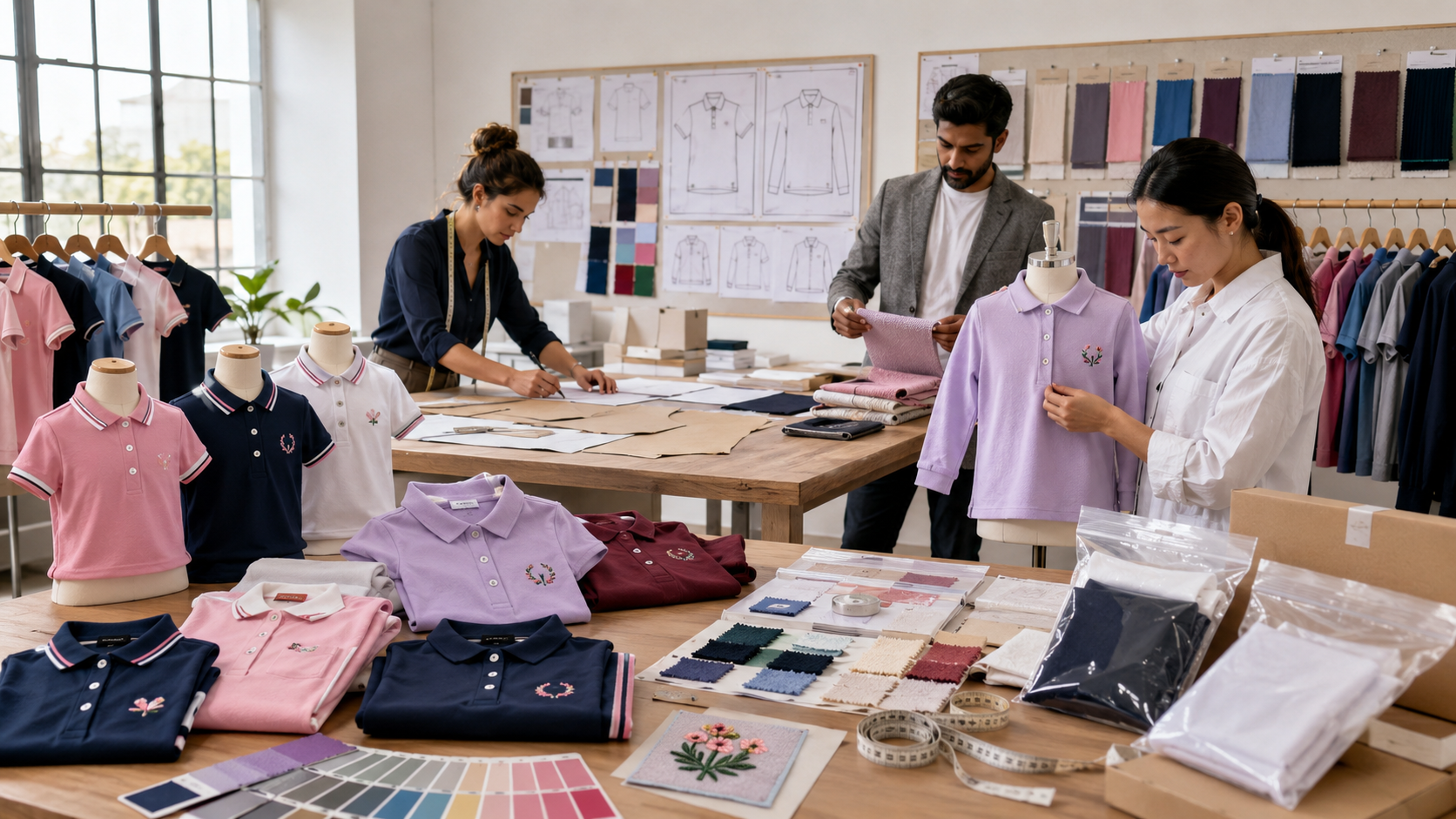
A girls’ polo shirts manufacturer designs, produces, and finishes polo shirts for schools, sports clubs, fashion brands, and retailers. This typically covers fabric sourcing, collar and placket construction, age-based size grading, embroidery or printing, labeling, quality control, and export-ready packaging for domestic or international buyers.
Why Sourcing Girls’ Polo Shirts Takes More Planning Than Expected
Polo shirts look simple, but they involve more construction detail than a basic tee. Collar shape, placket alignment, button quality, and fabric knit structure all affect how the finished garment fits, wears, and holds up over a school year or sports season.
Children’s polo shirts bring extra considerations on top of that: sizing needs to stay consistent across age groups, fabrics should feel comfortable against sensitive skin, and buyers often need small trial orders before committing to bulk production for a school year or retail season.
Regional differences add another layer. Warm-climate buyers usually want lightweight, breathable fabric, while cooler markets often need heavier weights or long-sleeve options. School uniform demand, modest-fit preferences, and sustainability expectations also vary by market.
This guide covers everything a buyer needs to source girls’ polo shirts with confidence — manufacturing models, fabric and construction choices, sizing standards, customization options, pricing factors, and a practical step-by-step ordering process.
What a Girls’ Polo Shirts Manufacturer Does
A girls’ polo shirts manufacturer handles the full production process: sourcing fabric, developing patterns, grading sizes by age group, constructing collars and plackets, cutting and sewing, applying embroidery or print branding, attaching labels, running quality checks, and preparing finished goods for shipment.
Manufacturers typically serve a wide range of buyers, including:
- Schools and uniform suppliers
- Fashion brands
- Sports clubs and academies
- Retailers
- Hospitality businesses
- Promotional companies
- Online stores
- Wholesalers
- Private-label buyers
Support usually extends beyond basic production. A capable manufacturer can guide fabric selection, advise on collar and placket construction, manage size grading across a full age range, and coordinate embroidery, printing, labeling, and packaging as part of one coordinated production run.
Custom, Wholesale, Private-Label, and OEM Manufacturing
These terms describe different working relationships with a manufacturer, and choosing the right one depends on your budget, branding needs, and order volume.
Custom manufacturing means the manufacturer builds the polo shirt from scratch to your specifications — your fabric, your collar and placket design, your branding. This suits buyers with specific technical requirements, such as a school with an established uniform design.
Wholesale manufacturing involves purchasing existing, ready-designed polo styles in bulk, often with limited customization such as color or basic logo placement. This suits retailers who want proven styles without development lead time.
Private-label production means the manufacturer supplies a base polo shirt that you rebrand with your own labels, tags, and packaging. This is a common starting point for new children’s clothing brands looking to reduce development cost.
OEM production means the manufacturer builds the garment to your exact specifications, sometimes producing exclusively under your brand. This suits established brands or uniform suppliers with defined technical standards.
Ready-made bulk supply refers to buying finished, unbranded stock polo shirts in bulk — often the fastest option for buyers who don’t need customization.
| Model | Best For | Customization Level | Typical Timeline Factor |
|---|---|---|---|
| Custom Manufacturing | Schools and brands with specific designs | High | Longer, due to development |
| Wholesale | Retailers restocking proven styles | Low to moderate | Shorter |
| Private Label | Startup brands building identity | Moderate | Moderate |
| OEM | Uniform suppliers and established brands | High | Depends on complexity |
| Ready-Made Bulk Supply | Buyers needing fast, low-cost stock | Minimal | Fastest |
A school uniform supplier often leans toward custom or OEM production for consistent, repeatable specifications. A startup brand may prefer private label to launch faster. A sports academy usually needs performance fabric with custom branding, which points toward custom manufacturing. A hospitality company or promotional company may only need wholesale or ready-made supply with a logo added.
Popular Girls’ Polo Shirt Styles
Style selection depends on age group, climate, intended use, and school or brand requirements. Common options include:
- Girls’ cotton polo shirts — a soft, breathable option for everyday and school wear
- Pique polo shirts — a textured knit that is the traditional polo fabric choice
- Jersey polo shirts — a smoother, lighter-weight knit alternative to pique
- Short sleeve polo shirts — the standard choice for most school and casual wear
- Long sleeve polo shirts — suited to cooler climates or layered uniform requirements
- School uniform polo shirts — built for durability and easy care across a full school year
- Sports polo shirts — designed with moisture-managing fabric for active use
- Performance polo shirts — engineered for stretch, breathability, and quick-dry performance
- Contrast collar polo shirts — a color-blocked collar detail for retail and team branding
- Tipped collar polo shirts — a subtle trim detail on the collar edge
- Color-block polo shirts — panel-based color design for retail or team identity
- Embroidered polo shirts — logo or crest detailing for schools, clubs, and brands
- Printed polo shirts — graphic branding applied through printing methods
- Slim-fit polo shirts — a closer-cut silhouette for older age groups
- Relaxed-fit polo shirts — a looser, more comfortable cut for younger children
- Modest-fit polo shirts — longer body length and higher coverage for modest-wear markets
- Sustainable polo shirts — made from organic cotton, recycled polyester, or blended eco fabrics
School and uniform buyers usually prioritize durability and easy care, sports clubs prioritize performance fabric, and retail or fashion buyers often prioritize fit and branding details.
Fabric Selection for Girls’ Polo Shirts
Fabric choice affects comfort, durability, and how the garment performs over repeated wear and washing. Common options include:
- Combed cotton — smooth and soft, with short fibers removed for a cleaner finish
- Organic cotton — grown without synthetic pesticides, appealing to environmentally conscious buyers
- Cotton pique — the classic textured polo fabric, breathable and structured
- Cotton-polyester blends — combine cotton comfort with added durability and shape retention
- Polyester performance fabric — lightweight and quick-drying, suited to sports use
- Jersey knit — a smooth, stretchy knit for a softer hand-feel
- Interlock fabric — a denser, smoother knit with strong shape retention
- Moisture-managing fabric — engineered to pull sweat away from the skin during activity
- Recycled polyester — made from recycled materials for sustainability-focused lines
- Bamboo blends — naturally soft and breathable
- Stretch fabrics with elastane — added flexibility for comfort and movement
Warmer climates generally favor lightweight cotton or pique blends, while cooler regions may benefit from heavier interlock or blended fabrics. Buyers should always request physical fabric swatches, since fabric feel and weight can be difficult to judge from photos alone. Any specific comfort, safety, or performance claims should be confirmed directly with the manufacturer.
GSM, Knit Structure, and Fabric Weight
GSM (grams per square meter) measures fabric weight. Lighter fabrics, generally in the 160–200 GSM range, suit warm climates and casual wear, while heavier fabrics above 220 GSM offer more structure and durability, often preferred for uniforms or cooler climates.
Pique versus jersey is a key knit-structure distinction. Pique fabric has a textured, slightly raised surface and holds its shape well, making it the traditional polo shirt fabric. Jersey fabric is smoother and lighter, offering a softer drape but generally less structure.
Knit structure affects both texture and appearance — pique tends to look more classic and structured, while jersey has a more relaxed, casual look. Fabric weight also affects opacity, durability, and how well the garment suits a particular climate or activity level.
Because GM needs vary by market and use case, there is no single correct weight for every buyer. Fabric swatches should always be reviewed and approved before bulk production begins.
Collar, Placket, Cuffs, and Construction Details
Construction details determine how a polo shirt looks, fits, and performs over time. Key elements include:
- Flat-knit collars — a classic, structured collar style
- Ribbed collars — a stretchier, softer collar option
- Self-fabric collars — collars made from the same fabric as the body for a uniform look
- Two-button and three-button plackets — common placket styles affecting closure and style
- Reinforced plackets — added stitching for durability at a high-stress area
- Button quality — securely attached, durable buttons that withstand repeated washing
- Sleeve cuffs — ribbed or hemmed finishing at the sleeve edge
- Side vents — small side openings that improve movement and comfort
- Shoulder taping — reinforcement at the shoulder seam for durability
- Neck binding — finishing that keeps the neckline from stretching out of shape
- Double-needle stitching — a durable stitch method used at hems and seams
- Reinforced seams — added strength at stress points like underarms and shoulders
- Hem finishing — clean, durable finishing at the bottom edge
- Side seam and tubular construction — different body construction methods affecting fit and durability
Higher-quality collar and placket construction generally adds to production cost. Still, it improves durability and appearance, which matters for uniforms and garments expected to last through a full school year or season.
Sizing and Fit for Girls’ Polo Shirts
Girls’ polo shirts are typically graded using:
- Age-based sizing
- Height-based sizing
- Chest and body length measurements
- Sleeve length
- Shoulder width
Common fit categories include relaxed, regular, slim, and modest fits, with modest fits generally offering longer body length and fuller coverage for markets where that is preferred.
Because children grow at different rates, manufacturers typically build measurement tolerances into each size rather than fixed exact numbers. Regional size standards can also differ, so buyers sourcing for multiple markets should confirm size charts match local expectations.
Fit testing through size-set samples — a full range of sizes produced and reviewed together — helps confirm that grading is accurate and consistent before bulk cutting begins. Clear, consistent, and age-appropriate sizing is especially important for school uniform buyers ordering across many grade levels at once.
Shrinkage, Shape Retention, and Color Fastness
Before approving bulk production, buyers should check for:
- Fabric shrinkage after washing
- Collar shape retention
- Placket stability
- Twisting or spirality in the fabric
- Pilling on the fabric surface
- Color bleeding
- Color fading
- Print durability
- Embroidery durability
- Seam strength
- Button attachment strength
These checks are typically confirmed through wash testing and review of approved pre-production samples. A polo shirt that shrinks unevenly, loses its collar shape, or fades quickly will not hold up well through a school year or regular use, so this stage should not be skipped.
Children’s Clothing Safety and Compliance
Safety and labeling requirements vary by country, age group, and intended use, so buyers should confirm specific standards with their manufacturer and relevant regulatory authorities for their target market. General considerations that responsible manufacturers account for include:
- Securely attached buttons
- Safe, securely fixed trims
- Avoiding sharp or small components
- Appropriate drawstring design where applicable
- Fabric and dye testing
- Chemical restrictions on dyes and prints
- Flammability requirements
- Clear fiber-content labels
- Accurate care instructions
- Country-of-origin labeling
- Age-appropriate design
- Traceable production information
Buyers sourcing for regulated markets such as the United States, the UK, Australia, Canada, and EU countries like Germany and the Netherlands should confirm which specific standards apply before placing a bulk order. Do not assume a manufacturer holds a particular certification unless it has been directly confirmed and documented.
Embroidery, Printing, and Branding Options
Branding brings a school or brand identity to a polo shirt. Common options include:
Embroidery:
- Chest logo embroidery
- Sleeve embroidery
- Back embroidery
- School crest embroidery
- Corporate logo placement
- Sports team branding
- Name and number customization
Printing:
- Screen printing
- Digital printing
- Heat-transfer printing
- Sublimation, suited to appropriate polyester fabrics
Other branding elements:
- Woven badges
- Printed badges
- Appliqué
When choosing branding methods, buyers should consider logo size, embroidery stitch count, backing material for comfort, fabric compatibility, artwork quality, and order quantity. Dense embroidery on lightweight fabric, for example, can feel stiff against a child’s skin, so backing material and placement matter for comfort.
Labels, Tags, and Packaging
Private-label buyers can choose from a range of labeling and packaging options, including:
- Woven brand labels
- Printed neck labels
- Heat-transfer labels
- Size labels
- Care labels
- Fiber-content labels
- Country-of-origin labels
- Hangtags
- Barcode stickers
- Price tags
- Custom poly bags
- Recyclable packaging
- Folded retail packaging
- Size stickers
- Carton markings
- E-commerce-ready packaging
Neck labels in particular should be chosen and placed carefully, since scratchy or poorly positioned labels are a common source of discomfort in children’s clothing. Heat-transfer or printed labels are often a more comfortable alternative to woven labels for younger children.
Custom Colors and Design Development
To reduce errors and delays, buyers typically provide:
- Pantone color references
- A complete tech pack
- Measurement charts by size
- Logo files
- Embroidery artwork
- Print artwork
- Collar design details
- Placket specifications
- Button specifications
- Packaging instructions
- Label designs
- Reference samples
Before bulk production, buyers should review and approve:
- Lab dips — dyed fabric samples matching requested colors
- Fabric swatches — physical samples of the actual fabric
- Embroidery samples — stitched samples confirming logo detail and thread color
- Print strike-offs — printed samples confirming color and clarity
- Collar samples — confirming shape and construction
- Size-set samples — a full range of sizes for fit verification
- Pre-production samples — the final approval sample before bulk cutting
Minimum Order Quantities, Samples, and Lead Times
Minimum order quantities vary by manufacturer and depend on fabric type, custom colors, embroidery complexity, and labeling requirements. There is no universal fixed MOQ — buyers should request specifics for their exact product and customization needs.
The typical sample development process includes:
- Prototype samples — an initial concept and fit sample
- Fit samples — used to confirm comfort and proportions
- Size-set samples — the full size range produced together
- Embroidery samples — confirming logo execution before bulk stitching
- Pre-production samples — the final sign-off sample before bulk cutting
Production lead times depend on order complexity, fabric availability, and factory workload, while repeat orders are typically faster since specifications are already established. School uniform buyers in particular should plan orders around the school-year calendar, and all buyers should account for peak-season delays and realistic shipping schedules when planning delivery dates.
Pricing Factors
Girls’ polo shirt pricing depends on several variables, so quotations should always be compared using identical specifications. Key factors include:
- Fabric type
- GSM (fabric weight)
- Knit structure
- Order quantity
- Size range
- Number of colors
- Collar construction
- Placket design
- Button quality
- Embroidery size and stitch count
- Printing method
- Labels and trims
- Packaging
- Testing requirements
- Shipping method
- Delivery destination
- Custom pattern development
Two quotations that look different on paper may reflect different fabric weights, collar construction, or embroidery complexity. Always request an itemized quote and confirm all suppliers are quoting against the same tech pack.
Quality-Control Checks Before Bulk Production
A structured quality-control process protects buyers from costly bulk-order errors. Key checkpoints include:
- Fabric composition matches specification
- Fabric weight (GSM) is correct
- Color matches approved lab dips
- Collar shape is correct and consistent
- Placket alignment is accurate
- Button placement is correct
- Buttons are securely attached
- Measurements match the size chart
- Size grading is consistent
- Stitching quality is even and secure
- Seams are strong
- Sleeve length is accurate
- Logo placement is correct
- Embroidery quality is clean and secure
- Print durability meets expectations
- No loose threads
- Shrinkage falls within acceptable range
- No visible pilling
- No color bleeding
- Labels and tags are correctly attached
- Packaging matches instructions
- Carton markings are accurate
- Final order quantity matches the purchase order
Quality checks generally happen through pre-production inspection, inline inspection during production, final inspection before shipment, plus random measurement checks and packing checks. Requesting inspection reports or photos at each stage helps buyers catch problems early.
How to Choose a Reliable Girls’ Polo Shirts Manufacturer
A dependable manufacturer should demonstrate:
- Experience with children’s apparel specifically
- Experience with polo shirt construction, including collars and plackets
- Schoolwear or uniform production knowledge, where relevant
- Reliable fabric sourcing across different weights and blends
- A structured sampling process with clear approval stages
- Accurate, consistent size grading
- Quality embroidery and printing execution
- Responsive, clear communication
- Transparent, itemized pricing
- Realistic, well-communicated production timelines
- Documented quality-control procedures
- Awareness of compliance and labeling requirements
- Experience shipping to your target region
- Willingness to share factory information and production transparency
- Available references or verifiable customer feedback
- Capacity to support repeat and scaling orders
Questions Buyers Should Ask
Before committing to an order, buyers should ask:
- Do you specialize in girls’ or children’s polo shirts?
- Which fabrics do you recommend for school, sports, or retail use?
- Can you produce custom collars, cuffs, and plackets?
- Can you work from a tech pack or reference sample?
- What is your minimum order quantity?
- Can different sizes and colors be combined in one order?
- Which samples will be provided before bulk production?
- How do you test shrinkage and color fastness?
- Can you embroider school crests or company logos?
- Can you produce custom labels and retail packaging?
- What is included in the quoted price?
- How do you handle quality issues?
- Can you support private-label and OEM production?
- What shipping terms and delivery options are available?
Common Sourcing Mistakes
Avoid these frequent missteps when sourcing girls’ polo shirts:
- Choosing a supplier based only on the lowest price
- Skipping fabric and fit samples
- Using an incomplete or vague tech pack
- Ignoring collar quality and construction
- Failing to check button attachment strength
- Overlooking age-based sizing differences
- Approving colors only from digital images instead of physical swatches
- Ignoring shrinkage and pilling risk
- Using uncomfortable or poorly placed labels
- Not checking embroidery backing material
- Failing to confirm packaging details in advance
- Placing bulk orders without written quality standards
- Ignoring local labeling or safety requirements
- Ordering too late to meet the school-year deadline
Step-by-Step Ordering Process
- Define the target age group and end use.
- Select the polo style, fit, and fabric.
- Choose collar, cuff, placket, and button details.
- Prepare artwork, measurements, and a complete tech pack.
- Request a quotation and MOQ details.
- Review fabric swatches and custom colors.
- Order and evaluate samples.
- Approve sizing, embroidery, printing, labels, and packaging.
- Confirm the purchase order and payment terms.
- Monitor production through inline inspections.
- Approve the final shipment before dispatch.
Practical Buyer Examples
- A school uniform supplier ordering girls’ cotton pique polo shirts typically prioritizes durable construction, consistent sizing across grade levels, and easy-care fabric for a full school year.
- A children’s fashion startup launching private-label polo shirts may start with a small size-set sample order and limited colorways before scaling production.
- A sports academy sourcing performance polo shirts usually focuses on moisture-managing fabric, stretch comfort, and durable team branding.
- A hotel ordering branded polo shirts for youth activity staff may prioritize comfortable fit, simple logo placement, and easy-care fabric.
- A retailer buying seasonal girls’ polo shirts often needs flexibility across colors and sizes to match seasonal retail demand.
- A promotional company ordering embroidered event polos typically needs moderate order quantities, fast turnaround, and clear branding guidelines.
- An online store launching contrast-collar polo shirts may focus on trend-driven design details and retail-ready packaging for direct shipping.
- A wholesaler sourcing mixed sizes and colors typically needs a manufacturer comfortable managing multiple SKUs within a single production run.
Local Market Needs
Sourcing requirements shift depending on climate, culture, and school or regulatory expectations. Buyers should generally consider:
- Lightweight, breathable polo shirts for warm-climate markets
- Long-sleeve or layered polo options for cooler regions
- Modest fits with fuller coverage for certain regions
- Strong school uniform demand in several English-speaking markets
- Growing demand for organic or recycled materials among environmentally aware buyers
- Clear, standardized age-based sizing for North American and European buyers
- Durable, easy-care fabric for school and sports club use
- Retail-ready packaging suited to online and physical retail
- Multilingual care labels where the target market requires them
- Reliable international shipping with accurate customs documentation
- Inclusive size ranges to match different regional body types
- Easy-care fabric that reduces ironing and maintenance for school buyers
Because product-safety, labeling, and import requirements differ by country, buyers should confirm specific regulations for their target market directly with relevant authorities before placing an order.
Local SEO and Trust for Apparel Manufacturers
Buyers increasingly research manufacturers online before making contact, so a manufacturer’s digital presence matters. Trust-building elements typically include:
- A complete and accurate Google Business Profile
- Listings on relevant local and industry directories
- Verified customer reviews
- Country- or region-specific service pages addressing local buyer needs
- Real factory and product photography
- Clear, accessible contact information
- Transparent production process details
- Clear shipping information
- A defined sample policy
- Clear MOQ details
- Realistic production timelines
- A helpful FAQ section
- Detailed, accurate product specifications
Reviews and transparent business information help buyers confirm that a manufacturer is reachable, experienced, and capable of delivering what was agreed — especially important for international buyers who may not visit a factory in person before ordering.
Minmax Textile is one example of a manufacturer offering custom, OEM, wholesale, and private-label girls’ polo shirt production for schools, brands, and wholesale buyers. As with any manufacturing partner, buyers should compare Minmax Textile against other qualified suppliers based on samples, fabric quality, collar construction, embroidery quality, pricing, communication, and lead times before making a final decision.
Frequently Asked Questions
What does a girls’ polo shirts manufacturer do?
A girls’ polo shirts manufacturer sources fabric, develops patterns, grades sizes by age group, constructs collars and plackets, applies embroidery or printing, attaches labels, and packages finished polo shirts for schools, brands, retailers, and wholesale buyers.
What is the difference between private-label and OEM girls’ polo shirts?
Private-label production uses a manufacturer’s existing base polo shirt rebranded with your labels and packaging. OEM production builds the garment to your specific design and construction requirements, often with more customization and technical development involved.
What is the usual minimum order quantity?
MOQ varies by manufacturer, fabric type, color, embroidery, labels, and overall customization level. There is no fixed industry-wide number, so buyers should request MOQ details directly for their specific product requirements.
How can buyers check quality before bulk production?
Buyers can request pre-production and size-set samples, review fabric swatches and lab dips, confirm collar and placket construction, verify measurements against a size chart, and ask for inline and final inspection reports before and during bulk production.
Which fabric is best for girls’ polo shirts?
The best fabric depends on climate and use case. Cotton pique is a classic choice for school and everyday wear, while performance or moisture-managing polyester blends suit sports use. Buyers should request swatches to evaluate weight and hand-feel before deciding.
Preparing to Source Your Next Girls’ Polo Shirt Order
Successful sourcing starts with clarity. Define the target age group and end use, select a fabric suited to your climate and activity level, and confirm collar, placket, and button quality before moving forward.
Prepare accurate measurements and a complete tech pack, review safety and labeling requirements for your target market, and request samples before committing to bulk quantities. Approve embroidery, colors, and prints carefully at each stage, and compare quotations using identical specifications.
Review a manufacturer’s quality-control process and confirm realistic lead times and shipping terms so your delivery schedule matches your school-year or seasonal timeline. With a clear product brief in hand, take time to request samples and compare qualified suppliers — including Minmax Textile or another experienced girls’ polo shirts manufacturer — to find the right long-term production partner.

2 thoughts on “Girls’ Polo Shirts Manufacturer: A Complete Sourcing Guide for Schools, Brands, and Bulk Buyers”
আমাদের পণ্য গুলো কোথায় পাওয়া যায়
Sir apni call korty paren amder WhatsApp number e: 01813282105