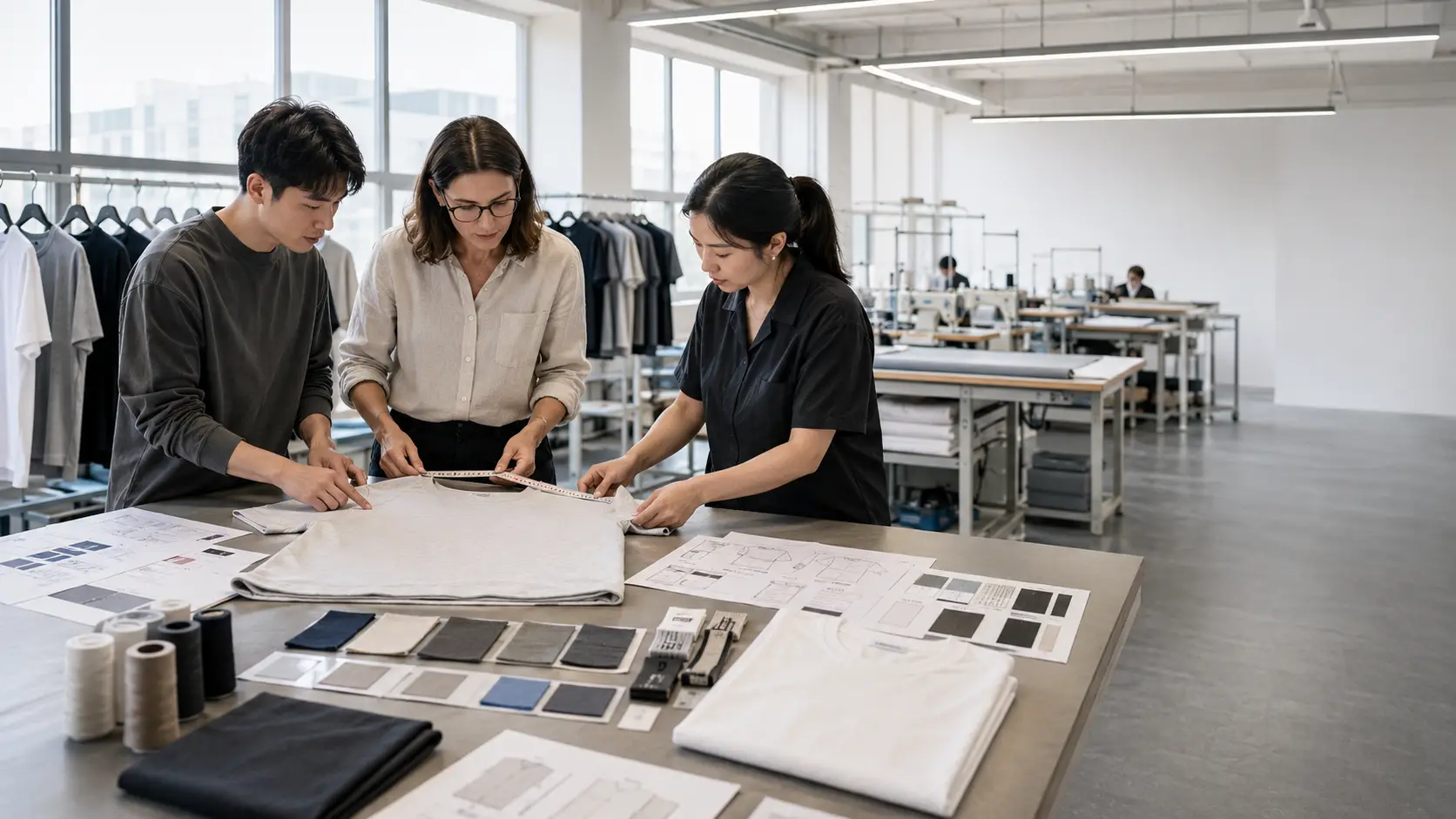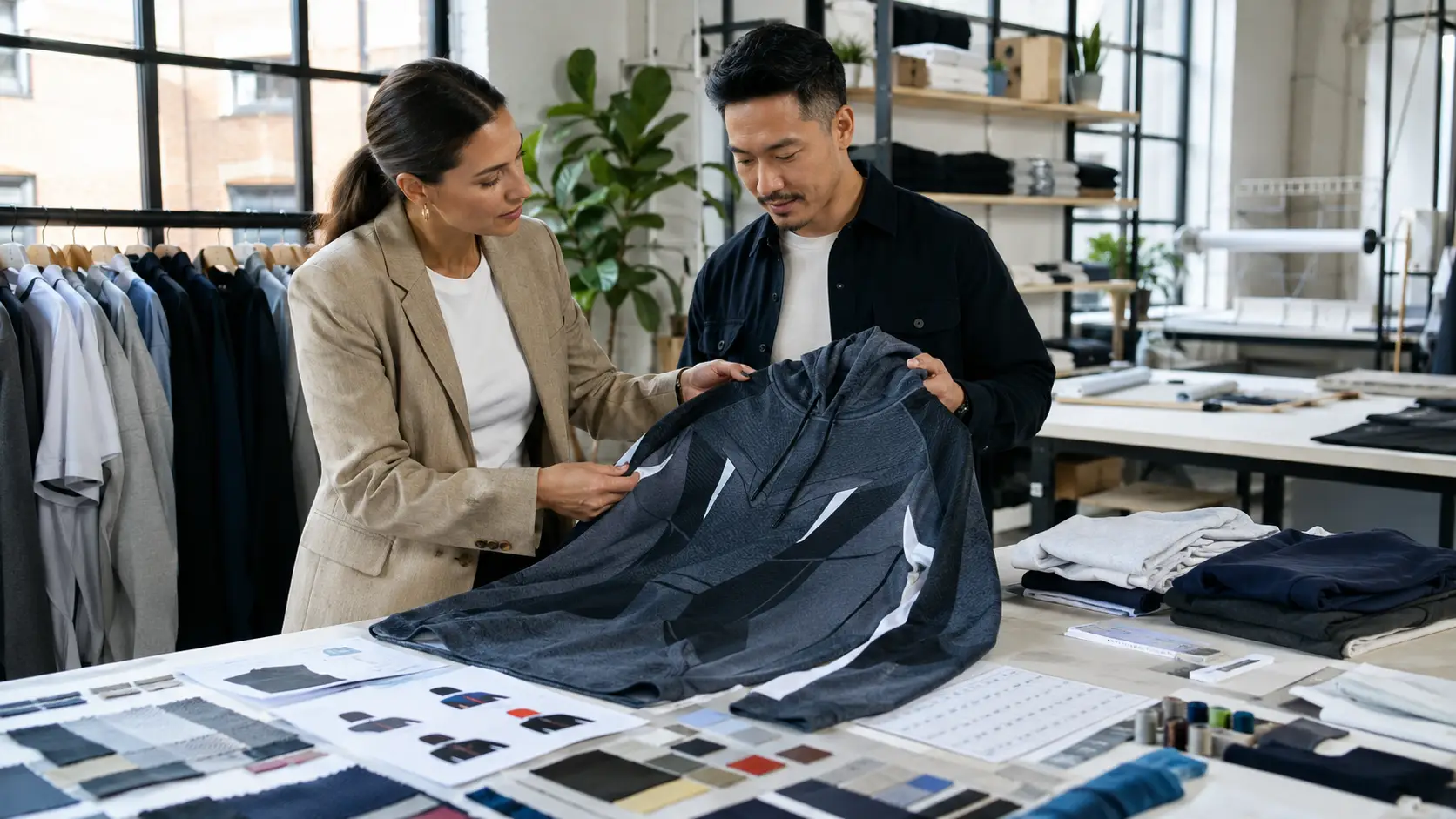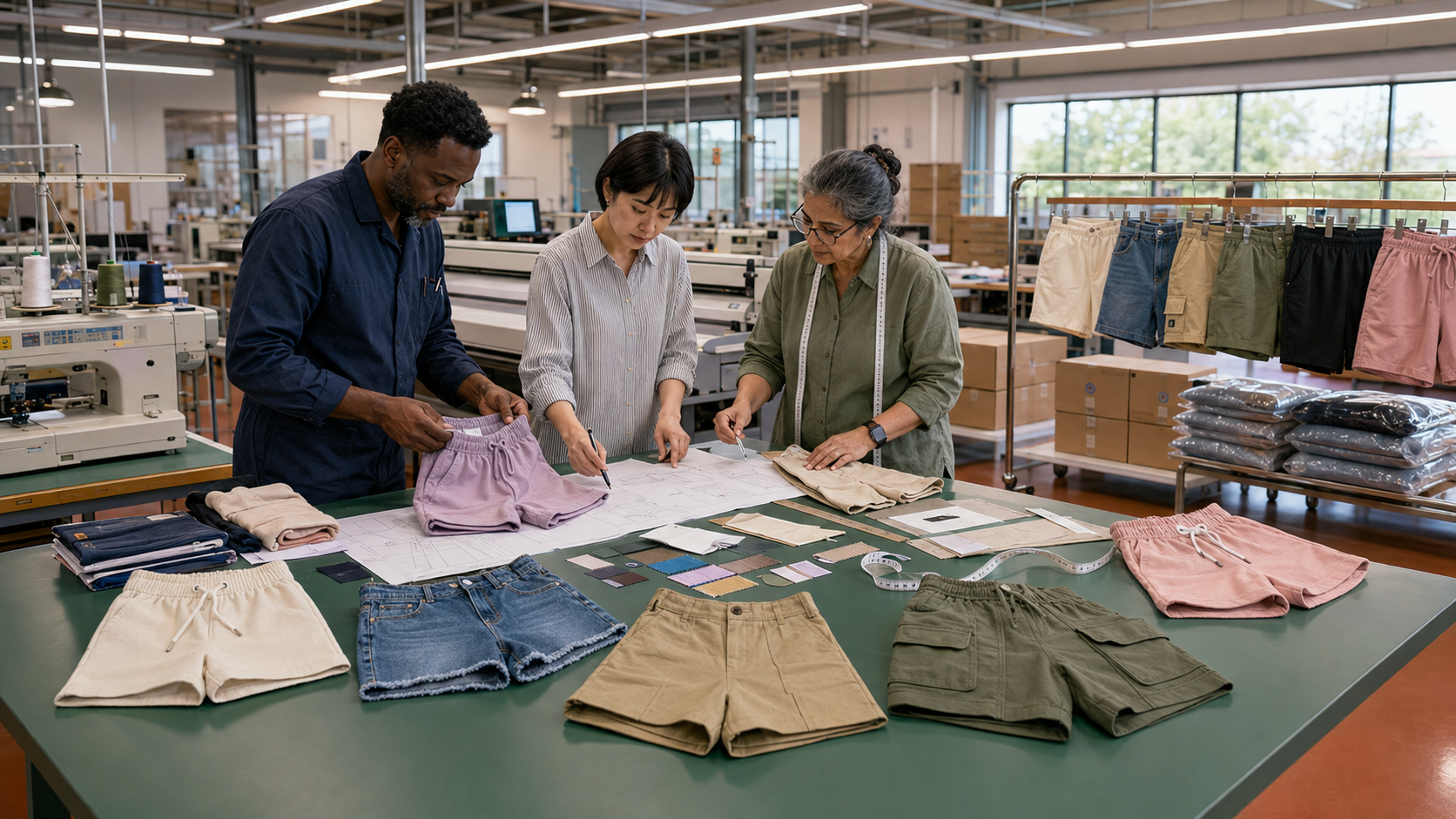
A girls’ short pants manufacturer produces custom, private-label, and wholesale shorts for fashion brands, retailers, importers, and distributors. Buyers should compare manufacturers based on fabric expertise, pattern development, size grading, customization, sample quality, production capacity, quality control, pricing, and delivery reliability. A complete technical pack and approved physical samples help prevent sizing, construction, and material problems during bulk production.
Understanding Girls’ Short Pants Manufacturing
Girls’ short pants include casual shorts, denim shorts, cargo styles, school uniform shorts, sports shorts, swim shorts, and fashion-led designs. Each product requires suitable fabric, fit, waistband construction, stitching, trims, and finishing.
A capable manufacturer should understand how production requirements change according to the style and intended use. Lightweight summer shorts require different materials and construction methods from structured denim or cargo designs.
Buyers can begin by reviewing a supplier’s custom clothing services to determine whether the business provides product development, private labeling, bulk manufacturing, or standard wholesale products.
Common styles include:
- Cotton shorts
- Denim shorts
- Twill shorts
- Cargo shorts
- Pull-on shorts
- School uniform shorts
- Sports shorts
- Cycling shorts
- Swim shorts
- Paper-bag waist shorts
- Pleated shorts
- Cuffed shorts
- Printed shorts
- Embroidered shorts
- Skort-style shorts
The appropriate design depends on the target age group, season, destination market, price level, and intended activity.
What Does a Girls’ Short Pants Manufacturer Provide?
A girls’ short pants manufacturer may manage the production process from initial design development through final packaging. Available services depend on the manufacturer’s facilities, workforce, sourcing network, and order requirements.
Typical services include:
- Fabric sourcing
- Pattern development
- Size grading
- Sample production
- Fabric cutting
- Sewing and assembly
- Printing
- Embroidery
- Garment washing
- Label production
- Quality inspection
- Folding and packaging
- Export preparation
Some manufacturers produce existing designs with limited changes. Others develop completely original shorts from technical packs, sketches, measurement charts, or physical reference samples.
Buyers reviewing a wholesale girls’ shorts collection should confirm whether the displayed products are ready-stock items, manufacturing examples, or customizable designs. Online images do not confirm available sizes, materials, colors, quantities, or branding options.
Choosing Suitable Fabrics for Girls’ Shorts
Fabric affects comfort, appearance, durability, movement, garment care, and manufacturing cost. Buyers should select materials according to the shorts’ intended use rather than choosing only on price or visual appeal.
Cotton and Cotton Blends
Cotton is widely used for casual and warm-weather shorts because it can provide softness, breathability, and comfort. Cotton blends may improve strength, wrinkle resistance, stretch, or drying performance.
Poplin is suitable for lightweight printed shorts, while cotton twill provides more structure for cargo, chino, and uniform designs. Buyers should define the fabric composition, weight, weave, shrinkage limits, and finishing requirements.
Twill
Twill has a visible diagonal weave and can provide a useful balance of structure, durability, and comfort. It works well for chino shorts, uniform shorts, utility styles, and designs with structured waistbands.
Stretch twill may improve movement, but the fabric should recover after wear. Poor recovery can cause the seat, waistband, and leg openings to lose their shape.
Denim
Denim supports structured designs, topstitching, pockets, belt loops, hardware, and garment washing. Its weight, stretch percentage, color, and wash treatment should suit the wearer’s age and the intended season.
A reference such as girls’ short jeans can help buyers communicate their preferred direction. Exact specifications for the rise, waistband, inseam, wash, hardware, and stitching must still be documented.
Jersey and French Terry
Knitted materials such as jersey and French terry can provide softness, flexibility, and easy movement. They are commonly used for pull-on, lounge, sports, and casual shorts.
The fabric should have suitable stretch and recovery. Buyers should also check shrinkage, pilling, colorfastness, and seam stability before approving bulk production.
Performance and Swim Fabrics
Sports and swim shorts may require polyester, nylon, elastane, mesh, or quick-drying performance materials. These fabrics should provide suitable stretch, recovery, opacity, and resistance to the expected conditions of use.
Product references such as girls’ swim shorts may help define the general design direction. Buyers must still specify the performance standards, lining, closures, and intended activity.
Important Design Specifications
A detailed product specification allows the manufacturer to calculate material consumption, labor requirements, sample costs, and production pricing accurately.
Silhouette and Length
Girls’ shorts may be fitted, relaxed, straight, wide-leg, flared, or shaped like a skirt. The technical pack should define the intended silhouette and provide measurements for every size.
Important length measurements include the rise, inseam, outseam, and finished leg opening. Proportions should be reviewed across the complete size range rather than enlarging every measurement by the same amount.
Waistband Construction
Possible waistband options include:
- Fully elastic waistbands
- Elastic-back waistbands
- Fixed waistbands
- Internal waist adjusters
- Drawcord waists
- Ribbed waistbands
- Paper-bag waistbands
- Shaped waistbands
Elastic width, stretch, recovery, and attachment method should be documented. The waistband should remain secure without creating unnecessary pressure or twisting during movement.
Pockets
Shorts may include side-seam pockets, front slant pockets, patch pockets, cargo pockets, welt pockets, or decorative pockets. The technical pack should define pocket dimensions, position, opening, reinforcement, and lining.
Pocket placement must remain balanced across sizes. Cargo and utility pockets may require additional reinforcement to maintain their shape and withstand regular use.
Closures
Buttons, snaps, zippers, hooks, drawcords, and pull-on waistbands are common closure options. Every closure should be functional, securely attached, and suitable for the target age group.
The buyer should specify the closure’s material, dimensions, color, placement, and branding requirements.
Cuffs, Pleats, and Decorative Features
Turn-up cuffs, pleats, embroidery, prints, appliqués, patches, bows, lace, and contrast stitching can create a distinctive appearance. These features can also increase labor, material consumption, and inspection requirements.
A product example such as fashion girls’ shorts can provide visual guidance. However, each decorative element should be supported by measurable placement instructions and approved artwork.
Sizing and Fit Development
Accurate size grading is essential because children’s body proportions change across age groups. A manufacturer should grade patterns according to the buyer’s approved size chart instead of increasing every dimension uniformly.
Important measurements include:
- Relaxed waist
- Extended waist
- Hip width
- Front rise
- Back rise
- Thigh width
- Leg opening
- Inseam
- Outseam
- Waistband height
- Pocket position
- Cuff depth
Fit testing should evaluate the garment while the wearer stands, sits, walks, bends, and moves naturally. Shorts should provide appropriate room through the waist, hip, rise, and thighs without appearing excessively loose.
Both relaxed and extended waist measurements are important for elastic-waist designs. Fixed-waist shorts need a suitable closure opening so the garment can be put on and removed comfortably.
Customization for Private-Label Brands
Custom manufacturing allows brands to develop girls’ shorts that reflect their design identity, target market, and price position. Available options depend on order volume, fabric availability, production equipment, and design complexity.
Customization may include:
- Original garment patterns
- Buyer-specific size charts
- Exclusive fabric colors
- Custom prints
- Embroidery
- Decorative patches
- Branded buttons and snaps
- Custom zippers
- Unique pocket shapes
- Contrast stitching
- Woven brand labels
- Printed care labels
- Hangtags
- Barcode stickers
- Individual packaging
- Custom carton markings
Buyers developing multiple clothing categories can review the supplier’s girls’ apparel range. However, each product should have separate fabric, measurement, construction, labeling, and packaging specifications.
Private-label details should be approved during sampling. The buyer should provide accurate artwork, colors, dimensions, label positions, folding instructions, and barcode information.
How to Source Girls’ Short Pants Step by Step
1. Define the Target Customer
Identify the wearer’s age range, intended activity, season, destination market, retail price, and expected product lifespan.
Casual cotton shorts, school uniform shorts, denim fashion shorts, and sports styles have different performance and construction requirements. The target customer should guide every material and design decision.
2. Prepare a Complete Technical Pack
The technical pack should include:
- Front and back garment drawings
- Detailed measurements
- Size grading rules
- Fabric composition and weight
- Color references
- Stitching instructions
- Waistband construction
- Pocket dimensions
- Closure specifications
- Print or embroidery artwork
- Labels and hangtags
- Packaging requirements
Reference photographs can clarify the intended appearance, but they should not replace written specifications and measurements.
3. Review Relevant Manufacturing Experience
Ask the manufacturer for examples of similar products. Experience with basic knitted shorts does not automatically demonstrate the ability to manufacture structured denim, cargo, swim, or uniform styles.
Examples such as wholesale girls’ shorts can support an initial discussion about product direction. Buyers should still evaluate physical samples and manufacturing capabilities before placing a large order.
4. Request Fabric Swatches
Review swatches for color, weight, texture, drape, stretch, recovery, opacity, and surface quality. The selected material should work with the waistband, pockets, closures, and decorative details.
When appropriate, request test results for shrinkage, colorfastness, pilling, seam strength, stretch recovery, or other required performance standards.
5. Develop the First Sample
The first development sample allows the buyer to inspect the garment’s overall shape, measurements, construction, and fabric behavior.
Every requested change should be clearly noted. Provide measurement revisions numerically, while photographs or diagrams can identify specific construction and appearance concerns.
6. Conduct Fit Testing
Fit-test the sample on an appropriate model or dress form. Evaluate waistband comfort, hip room, rise, thigh width, length, movement, pocket position, and overall balance.
The shorts should remain comfortable while sitting, walking, running, and bending. Buyers should also evaluate coverage and ensure that the leg openings do not restrict movement.
7. Approve a Preproduction Sample
The preproduction sample should use the final approved fabric, colors, trims, measurements, labels, artwork, construction, and finishing.
Bulk cutting should begin only after the buyer records approval and confirms the accepted measurement and workmanship tolerances.
8. Confirm Commercial Terms
Before placing a bulk order, confirm:
- Minimum order quantity
- Quantity per style and color
- Size ratio
- Sample charges
- Unit price
- Payment terms
- Production lead time
- Inspection arrangements
- Packaging requirements
- Shipping terms
- Delivery responsibilities
Written confirmation reduces the risk of disagreements about price, quality, timing, and included services.
Quality Control for Girls’ Shorts Production
Quality control should begin before fabric cutting and continue until finished cartons are approved for shipment.
Fabric Inspection
Fabric should be checked for holes, stains, shade variation, printing defects, width differences, and surface damage. Stretch fabrics should also be examined for stability and recovery.
Checks, stripes, directional prints, denim shades, and fabric pile may require special controls during spreading and cutting.
Cutting Inspection
Pattern pieces should be positioned and cut according to the approved marker and size requirements. Cutting errors can affect the rise, inseam, waistband, pocket placement, and overall balance.
Printed or patterned fabrics may require controlled artwork placement or pattern matching.
In-Line Sewing Inspection
In-line inspections identify construction problems while corrections are still manageable. Inspectors should check seam strength, stitch consistency, waistband attachment, pocket placement, closures, cuffs, and decorative elements.
A style such as girls’ cargo shorts may require additional checks for pocket alignment, reinforcement, and hardware security.
Measurement Inspection
Finished garments should be measured against the approved specification. The buyer and manufacturer should agree on acceptable tolerances for all important measurement points before production.
Measurements should be inspected across representative sizes and colors rather than checking only one garment.
Final Appearance Inspection
Finished shorts should be checked for:
- Incorrect measurements
- Uneven leg openings
- Twisted seams
- Puckering
- Loose threads
- Broken stitches
- Incorrect labels
- Stains or marks
- Shade differences
- Misaligned prints
- Damaged trims
- Poor pressing
- Incorrect folding
Packaging Inspection
Sizes, colors, quantities, labels, hangtags, barcodes, polybags, carton assortments, and shipping marks should match the purchase order.
Packaging should protect the garments during handling, storage, and transportation.
Comparing Common Girls’ Short Pants Styles
| Shorts Style | Typical Fabric | Main Fit Concern | Key Construction Requirement |
|---|---|---|---|
| Cotton shorts | Poplin or cotton blend | Waist and hip comfort | Secure waistband and smooth seams |
| Twill shorts | Cotton or stretch twill | Rise and thigh room | Structured waistband and reinforcement |
| Denim shorts | Rigid or stretch denim | Waist, hip, and movement | Secure hardware and durable topstitching |
| Cargo shorts | Twill, canvas, or ripstop | Hip room and mobility | Reinforced utility pockets |
| Sports shorts | Jersey or performance knit | Movement and leg opening | Stretch-compatible seams |
| Swim shorts | Polyester, nylon, or elastane | Secure fit and coverage | Quick-drying fabric and suitable lining |
| Uniform shorts | Twill or polyester blend | Consistent fit and length | Durable seams and controlled sizing |
| Paper-bag shorts | Lightweight woven fabric | Waist gathering and proportion | Even elastic and balanced fullness |
Every style requires its own measurements, fabric standards, construction instructions, and quality checks.
Factors That Affect Manufacturing Cost
There is no single standard price for girls’ short pants manufacturing. The final cost depends on the complete product specification.
Important pricing factors include:
- Fabric composition
- Fabric weight
- Fabric consumption
- Custom dyeing
- Printing
- Number of colors
- Order quantity
- Size range
- Pattern complexity
- Pockets
- Waistband construction
- Closures and hardware
- Embroidery
- Decorative trims
- Branded labels
- Garment washing
- Testing requirements
- Packaging
- Inspection
- Shipping terms
A basic elastic-waist cotton style usually requires different materials and labor from structured denim shorts with pockets, branded hardware, embroidery, and a custom wash.
Buyers should compare quotations based on identical specifications. A lower quotation may exclude trims, testing, packaging, inspection, or other services included in a competing offer.
Questions to Ask a Potential Manufacturer
Before choosing a girls’ short pants manufacturer, ask:
- Have you produced similar girls’ shorts?
- Which woven and knitted fabrics can you source?
- Can you develop original patterns from a technical pack?
- Do you provide size grading for different age groups?
- What is the minimum quantity per style and color?
- How are sample charges and revisions managed?
- Can you produce custom printing or embroidery?
- Which private-label services are available?
- How do you inspect fabric before cutting?
- Which quality checks take place during sewing?
- Can an independent inspection be arranged?
- What are the sampling and production lead times?
- What is included in the quotation?
- Which payment and shipping terms are available?
- How are delays, shortages, and defects handled?
Reviewing the manufacturer’s company profile can provide useful background information. Buyers should still verify production capabilities through physical samples, written specifications, quotations, and direct communication.
Common Sourcing Mistakes to Avoid
Choosing Fabric Based Only on Price
A low-cost fabric may not provide the required comfort, durability, opacity, stretch, or recovery. Buyers should evaluate physical swatches and performance requirements before approval.
Using Incomplete Measurements
Waist and length measurements alone are not sufficient. The rise, hip, thigh, inseam, leg opening, waistband height, and pocket position may also affect fit and appearance.
Skipping Physical Samples
Digital images cannot confirm fabric quality, fit, comfort, construction, or finishing. A physical sample allows the buyer to evaluate the actual garment before bulk production.
Ignoring Movement and Coverage
Girls’ shorts should be tested while sitting, walking, bending, and moving actively. The rise, inseam, leg opening, and fabric should provide suitable comfort and coverage.
Approving Unclear Artwork
Print and embroidery instructions should include dimensions, placement, colors, and approved artwork files. Vague requirements can lead to inconsistent results during production.
Overlooking Waistband Performance
Elastic that is too weak may fail to hold the garment securely, while excessive tension can cause discomfort. Waistband stretch, recovery, attachment, and finished measurements should be tested.
Changing Requirements After Approval
Late changes can affect fabric availability, production costs, lead times, and consistency. Buyers should finalize the specification before bulk fabric cutting whenever possible.
Comparing Unequal Quotations
Manufacturers should quote against the same fabric, construction, quantities, trims, labels, packaging, inspection, and shipping requirements. Otherwise, the prices do not represent equivalent products.
Building a Reliable Girls’ Short Pants Supply Program
A reliable girls’ short pants manufacturer should combine relevant product experience with accurate pattern development, fabric sourcing, size grading, quality control, and clear communication. The manufacturer should understand how different materials, silhouettes, waistbands, pockets, and closures affect the finished garment.
Buyers can reduce sourcing risks by preparing complete technical packs, reviewing physical fabric swatches, testing garment fit, approving preproduction samples, and documenting quality standards. Production schedules, packaging instructions, payment terms, inspection requirements, and shipping responsibilities should also be confirmed in writing.
Careful preparation helps brands and retailers produce girls’ shorts that remain consistent across sizes, colors, and repeat orders. Buyers with organized designs, quantities, materials, and delivery requirements can request a manufacturing quotation to begin the sampling and production process.