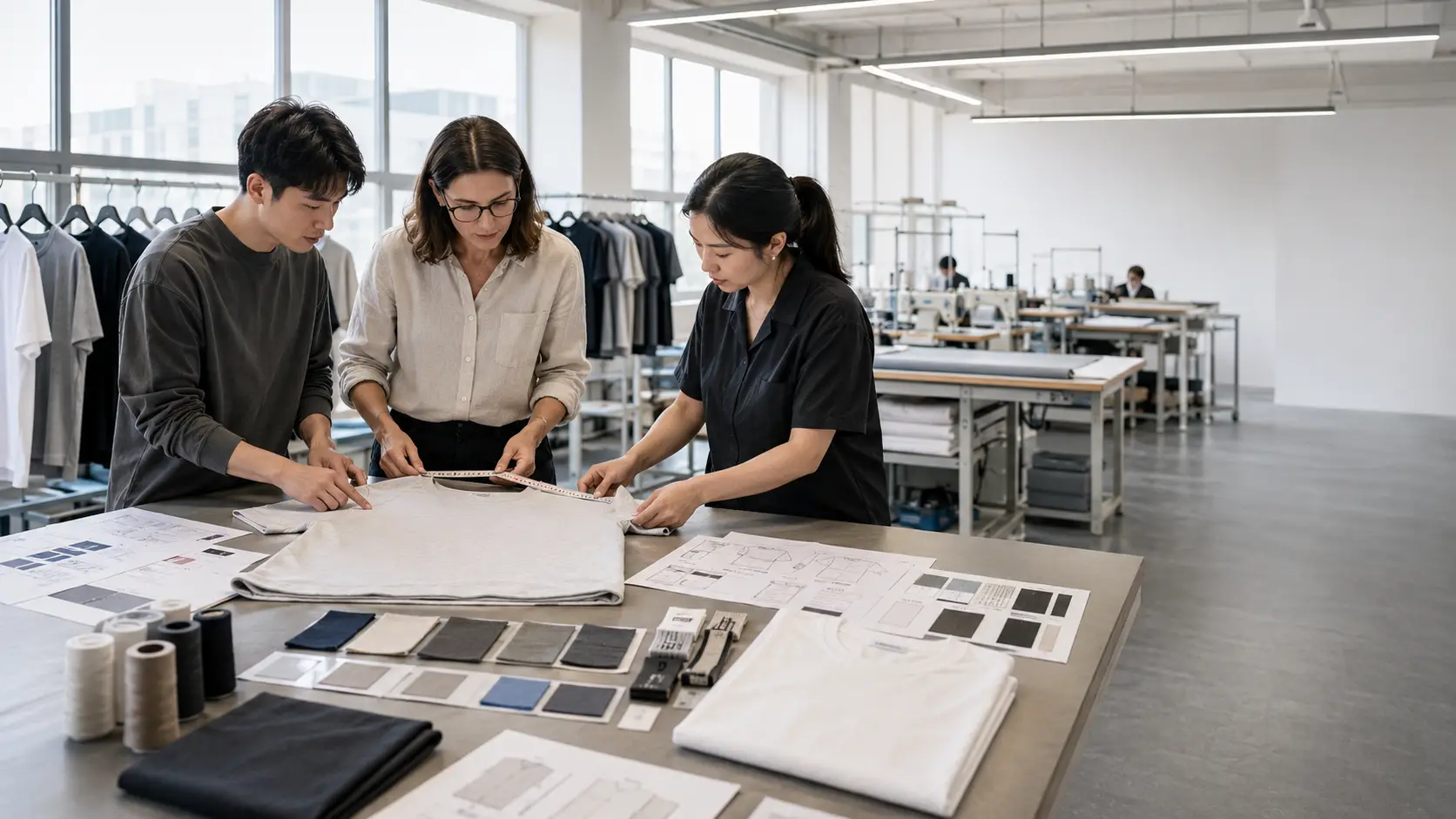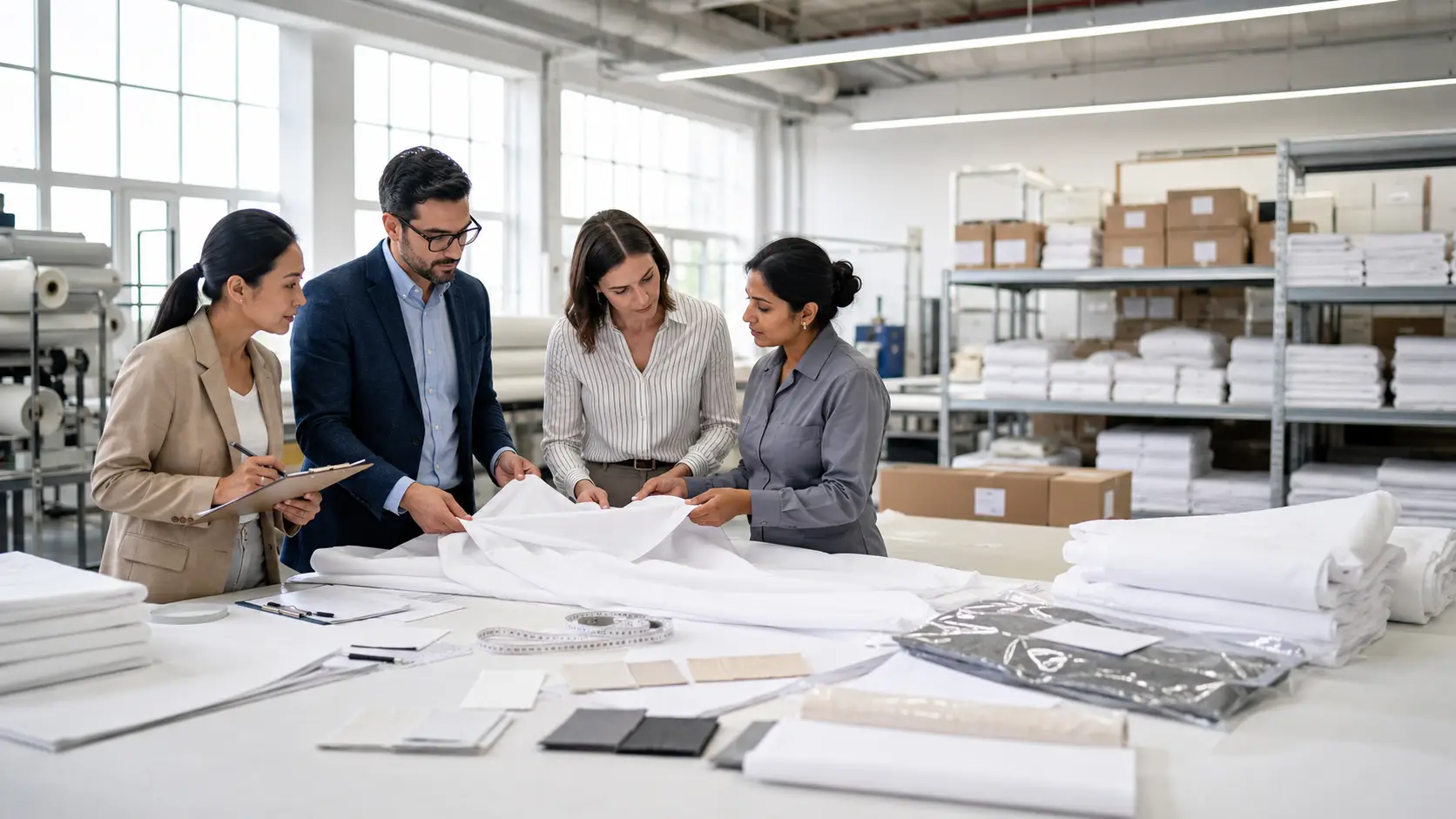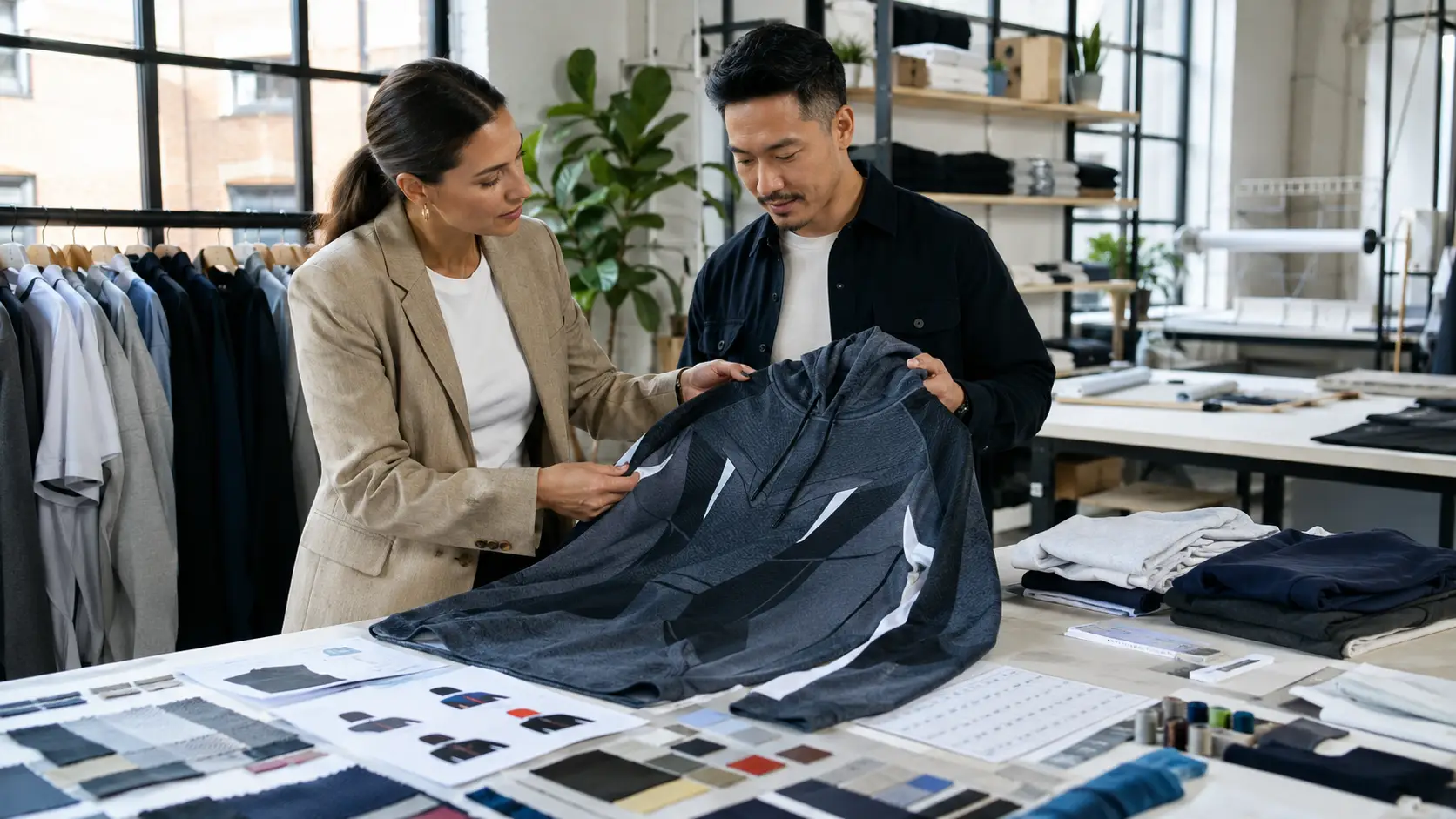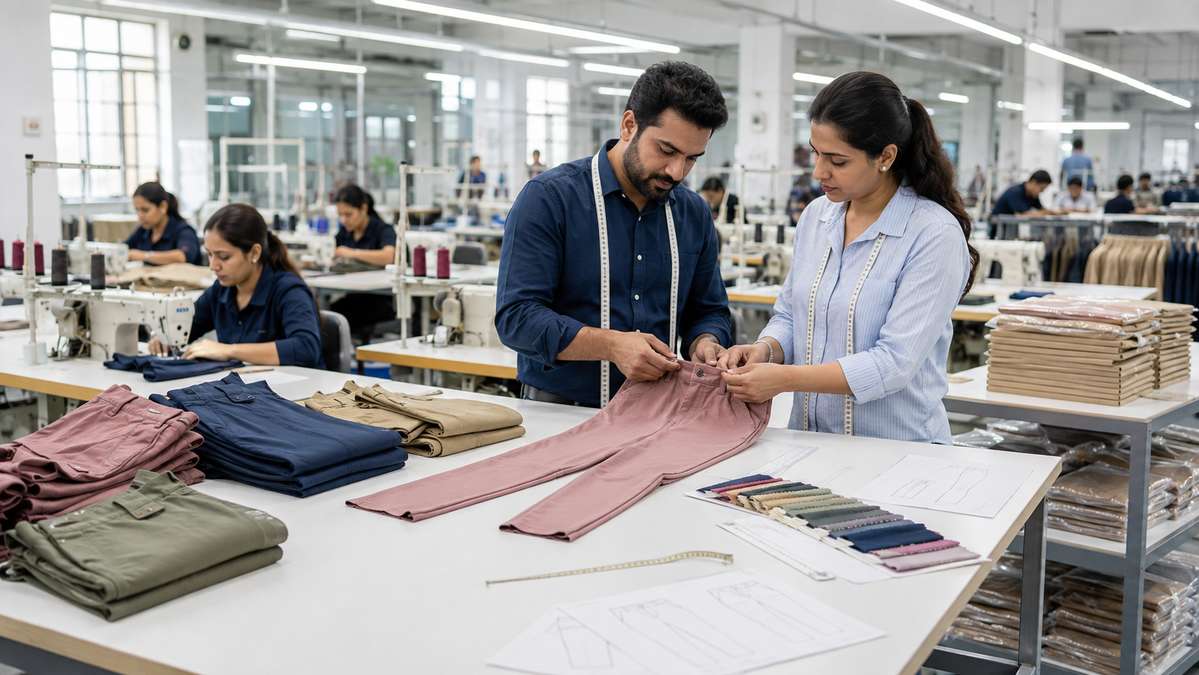
Girls’ twill pants manufacturers produce durable woven pants for fashion brands, retailers, uniform suppliers, and private-label buyers. A reliable manufacturer should provide suitable fabric options, accurate size grading, secure construction, customization, samples, documented quality checks, clear order terms, and realistic production schedules before beginning bulk manufacturing.
Why the Right Manufacturing Partner Matters
Choosing among girls’ twill pants manufacturers involves more than comparing unit prices. Buyers must evaluate fabric performance, garment construction, sizing, customization, quality control, production capacity, and delivery reliability.
Poor fabric selection can make pants uncomfortable or difficult to maintain. Inaccurate size grading may lead to inconsistent fits across age groups. Weak seams, unsuitable trims, and unclear production requirements can create quality problems after the order reaches stores.
A capable manufacturing partner should help the buyer turn an idea or technical specification into a consistent, market-ready garment. Buyers can begin by reviewing the supplier’s apparel manufacturing capabilities and determining whether its production services match the intended market.
This guide explains what buyers should examine before requesting samples, approving specifications, or placing a bulk order.
What Do Girls’ Twill Pants Manufacturers Provide?
Girls’ twill pants manufacturers develop woven pants according to a buyer’s designs, measurements, materials, colors, and branding requirements. Depending on their capabilities, they may handle fabric sourcing, pattern development, size grading, cutting, sewing, washing, finishing, inspection, labeling, packaging, and shipping preparation.
Some manufacturers focus on standard wholesale products. Others offer private-label or custom manufacturing based on technical packs and physical reference samples. Buyers reviewing wholesale girls’ clothing should confirm which items can be modified rather than assuming every displayed product supports full customization.
Common product options include:
- Straight-leg pants
- Slim-fit twill pants
- School or uniform trousers
- Stretch twill pants
- Cargo-inspired styles
- Pull-on pants
- Adjustable-waist trousers
- Five-pocket designs
- Chino-style pants
- Fashion pants with decorative trims
The right option depends on the age group, price level, sales channel, season, and intended use.
Why Twill Works Well for Girls’ Pants
Twill is a woven fabric identified by its diagonal surface pattern. Its structure can provide a useful balance of durability, flexibility, comfort, and appearance.
Cotton twill is common in casual pants, chinos, schoolwear, and uniform garments. Cotton-blend twill may include elastane for stretch or polyester for easier care and added durability. The exact composition affects comfort, recovery, shrinkage, colorfastness, and cost.
Twill fabric can be appropriate for girls’ pants because it:
- Holds its shape better than many lightweight knit fabrics
- Supports pockets, belt loops, and structured waistbands
- Works with casual, uniform, and semi-formal designs
- Accepts many garment colors and finishes
- Can provide good resistance to everyday wear
- Is available in different weights for seasonal collections
Buyers should not select twill based on appearance alone. Fabric weight, fiber content, surface finish, stretch, shrinkage, and care requirements must suit the intended garment.
Important Fabric and Construction Specifications
A clear product specification reduces confusion during sampling and bulk production. Each requirement should be documented before the manufacturer calculates a final quotation.
Fiber Content and Fabric Weight
The fiber composition influences softness, strength, breathability, stretch, and garment care. A buyer might choose cotton twill for natural comfort or a cotton-stretch blend when the design requires easier movement.
Fabric weight also matters. Lightweight twill may work for warm-weather fashion pants, while heavier material may be more suitable for schoolwear or cooler seasons. Buyers should request fabric swatches and test reports when appropriate.
Waistband Design
Girls’ pants may use fixed waistbands, elastic backs, full elastic waists, internal adjusters, drawcords, or combinations of these features. The waistband must suit the target age group and intended fit.
Adjustable features can help accommodate natural differences in children’s proportions. However, the components should be secure, comfortable, and appropriate for the wearer.
Stitching and Reinforcement
High-stress areas include pocket openings, belt loops, side seams, crotch seams, zippers, buttons, and waistband attachments. Construction specifications should define stitch type, seam allowance, reinforcement, and required finishing.
Loose threads, uneven topstitching, puckered seams, and poorly aligned pockets can reduce the perceived value of an otherwise good garment.
Trims and Closures
Buttons, snaps, zippers, elastic, drawcords, labels, and decorative elements should be suitable for children’s apparel and the destination market. Buyers are responsible for communicating applicable safety, testing, and labeling requirements to the manufacturer.
Comparing Popular Twill Pant Options
Different designs serve different customers. Reviewing several styles can help buyers create a balanced collection instead of depending on one silhouette.
| Style | Main Characteristics | Potential Use |
|---|---|---|
| Straight-leg pants | Consistent width and classic shape | Schoolwear, casual collections |
| Slim-fit pants | Narrower leg and fitted appearance | Fashion and smart-casual ranges |
| Pull-on pants | Elastic waist and simple dressing | Younger age groups, casualwear |
| Cargo-style pants | Utility pockets and relaxed details | Outdoor and trend-led collections |
| Chino-style pants | Clean front and structured finish | Uniforms and semi-formal wear |
| Stretch twill pants | Added flexibility and recovery | Active everyday use |
Product references such as fancy twill pant styles and attractive twill pants can help buyers communicate the general direction they want. Measurements, construction details, fabric requirements, and approved samples should still support a reference.
Customization Available for Private-Label Buyers
Customization allows brands to distinguish their products from standard wholesale garments. The available services vary by manufacturer, machinery, order size, and design complexity.
Potential customization options include:
- Custom colors
- Original patterns and size charts
- Printed or woven brand labels
- Care and size labels
- Branded buttons or snaps
- Embroidery and printed artwork
- Custom pocket shapes
- Decorative topstitching
- Garment washing or finishing
- Retail packaging
- Hangtags and barcode stickers
Buyers interested in girls’ twill trousers should identify which visual elements are references and which features are required in the final product. Images alone rarely communicate enough information for accurate production.
How to Source Girls’ Twill Pants Step by Step
1. Define the Customer and Product Use
Identify the target age range, sales market, season, price position, and expected use. School pants, fashion trousers, and casual playwear require different fabrics and construction details.
The intended customer should guide every later decision.
2. Prepare a Complete Technical Pack
Provide drawings, measurements, grading rules, fabric details, colors, trims, labels, stitching instructions, packaging requirements, and reference images.
An incomplete technical pack may lead the supplier to make assumptions that do not match the buyer’s expectations.
3. Shortlist Suitable Manufacturers
Compare manufacturers based on relevant product experience, equipment, quality processes, customization services, communication, capacity, and export experience.
Review the supplier background to understand the business before discussing a large order.
4. Request Fabric Swatches and Development Samples
Fabric swatches help buyers compare color, weight, texture, opacity, stretch, and recovery. The first development sample tests the design and construction.
Do not approve bulk production based only on digital photographs when a physical sample can be reviewed.
5. Conduct Fit Testing
Test the sample against the approved measurement chart. Review waist comfort, rise, hip room, leg shape, length, movement, and overall balance.
A sample may match flat measurements but still need changes when worn. Fit should be evaluated across representative sizes when possible.
6. Confirm the Preproduction Sample
The preproduction sample should reflect the final fabric, trims, measurements, branding, colors, construction, and finishing.
Document every approval and correction. Verbal approval can create uncertainty if a dispute occurs later.
7. Approve Quality Standards
Define acceptable tolerances for measurements, shade variation, stitching, artistry, packaging, and labeling. Agree on how inspections will be conducted and what happens if products do not meet the approved requirements.
8. Confirm Commercial and Delivery Terms
Review the minimum order quantity, payment schedule, quotation validity, sample charges, production lead time, packaging, shipping terms, and responsibilities of each party.
Buyers can request a production quote after organizing these specifications.
Quality Control Points Buyers Should Check
Quality control should occur throughout production, not only when finished cartons are ready to ship.
Fabric Inspection
Fabric should be checked for visible defects, shade differences, width variations, and other issues before cutting. Approved fabric standards should match the material used in the final sample.
Measurement Accuracy
Inspectors should compare finished garments with the approved measurement chart. The agreed tolerance should be clear for every important measurement point.
Sewing Quality
Inspections should evaluate seam strength, stitch consistency, reinforcement, thread trimming, pocket placement, waistband construction, and closure function.
Appearance and Finishing
Finished garments should be checked for stains, pressing marks, uneven washing, twisting, puckering, color variation, and incorrect labels.
Packaging Accuracy
Sizes, colors, quantities, labels, hangtags, barcodes, folding, polybags, and carton markings should match the purchase order.
Questions to Ask Before Choosing a Manufacturer
Ask potential girls’ twill pants manufacturers:
- Have you produced similar woven pants for the same age group?
- Can you work from a technical pack or physical sample?
- Which twill compositions and fabric weights can you source?
- Can you develop custom patterns and size grading?
- What is the minimum order quantity by style and color?
- How are sample charges and revisions handled?
- What is included in the quoted price?
- Which trims and branding options are available?
- How do you inspect fabric and finished garments?
- Can third-party inspection be arranged?
- What are the sample and production lead times?
- How are production delays communicated?
- Which shipping terms can you support?
- How are defects, shortages, or specification errors handled?
Clear answers help buyers compare suppliers on more than price.
Common Sourcing Mistakes to Avoid
Choosing the Lowest Price Without Comparing Specifications
Two quotations may cover different fabrics, trims, packaging, inspections, or shipping responsibilities. Buyers should compare equivalent specifications before choosing an offer.
Approving Fabric From a Screen
Color and texture can look different across cameras and displays. Request physical swatches or approved lab dips before bulk dyeing.
Skipping Fit Testing
Girls’ garments require thoughtful sizing across changing body proportions. Fit testing helps identify problems with the rise, waist, hip, length, and movement before production.
Using an Incomplete Size Chart
A chart with only waist and length measurements leaves too much room for interpretation. Include all construction-critical measurements and accepted tolerances.
Changing Requirements After Approval
Late changes can affect materials, costs, lead times, and product consistency. Finalize specifications before bulk cutting whenever possible.
Treating Twill and Denim as Identical
Both are woven fabrics, but they can differ in construction, finishing, appearance, and performance. Buyers comparing twill with denim should separately evaluate girls’ jeans pant manufacturers and their denim-specific capabilities.
Factors That Influence Manufacturing Cost
The cost of girls’ twill pants depends on the complete specification rather than one standard rate.
Important pricing factors include:
- Fiber composition
- Fabric weight
- Custom dyeing
- Order quantity
- Number of colors
- Pattern complexity
- Pocket construction
- Waistband design
- Branded trims
- Printing or embroidery
- Washing and finishing
- Testing requirements
- Packaging
- Inspection
- Shipping terms
A simple pull-on design will usually require different labor and materials than a structured trouser with a zipper, adjustable waistband, belt loops, and several pockets.
Buyers should request an itemized quotation that states what is included and excluded.
Supplier Transparency and Business Trust
A credible manufacturing business should provide clear and consistent information across its website, quotation documents, product pages, and direct communications.
Useful trust signals include:
- Verifiable contact information
- A clear company profile
- Relevant product examples
- Real facility, product, or production images
- Written order and payment terms
- Transparent quotation details
- Clear production and shipping information
- Consistent business details
- Responsive communication
- Sample and inspection procedures
The girls’ twill pants collection can provide an initial view of available product directions. However, buyers should still confirm materials, customization, minimum orders, lead times, and quality expectations directly.
Frequently Asked Questions
What do girls’ twill pants manufacturers do?
Girls’ twill pants manufacturers produce woven pants for brands, retailers, wholesalers, and private-label buyers. Services may include fabric sourcing, pattern development, size grading, sampling, sewing, finishing, labeling, inspection, and packaging.
What is the best fabric for girls’ twill pants?
The best fabric depends on the garment’s use, season, and target price. Cotton twill offers natural comfort, while cotton-stretch twill can provide added flexibility and easier movement.
Can girls’ twill pants be customized?
Yes, many manufacturers offer custom colors, fits, pockets, waistbands, labels, trims, embroidery, printing, and packaging. Availability may depend on order quantity and production capability.
How long does manufacturing take?
The timeline depends on fabric sourcing, sample revisions, order size, customization, factory capacity, testing, and shipping arrangements. Buyers should obtain separate estimates for development, sampling, bulk production, inspection, and delivery.
Should buyers order a sample before bulk production?
Yes, buyers should approve development, fit, and preproduction samples before bulk manufacturing. Physical samples help confirm fabric, measurements, construction, colors, trims, branding, and finishing.
How should buyers compare manufacturer quotations?
Buyers should compare quotations using identical specifications and commercial terms. Fabric, trims, packaging, testing, inspection, payment, minimum quantities, and shipping responsibilities should all be reviewed.
Building a Reliable Girls’ Twill Pants Supply Program
Reliable sourcing begins with a clear product brief, complete technical specifications, physical samples, documented approvals, and realistic delivery planning. Buyers should compare girls’ twill pants manufacturers by their relevant experience, fabric options, fit development, quality controls, communication, and commercial terms.
Before committing to bulk production, request fabric swatches, test the fit, approve a preproduction sample, and clarify inspection standards. Careful preparation gives brands and retailers a stronger foundation for consistent products and long-term supplier relationships.