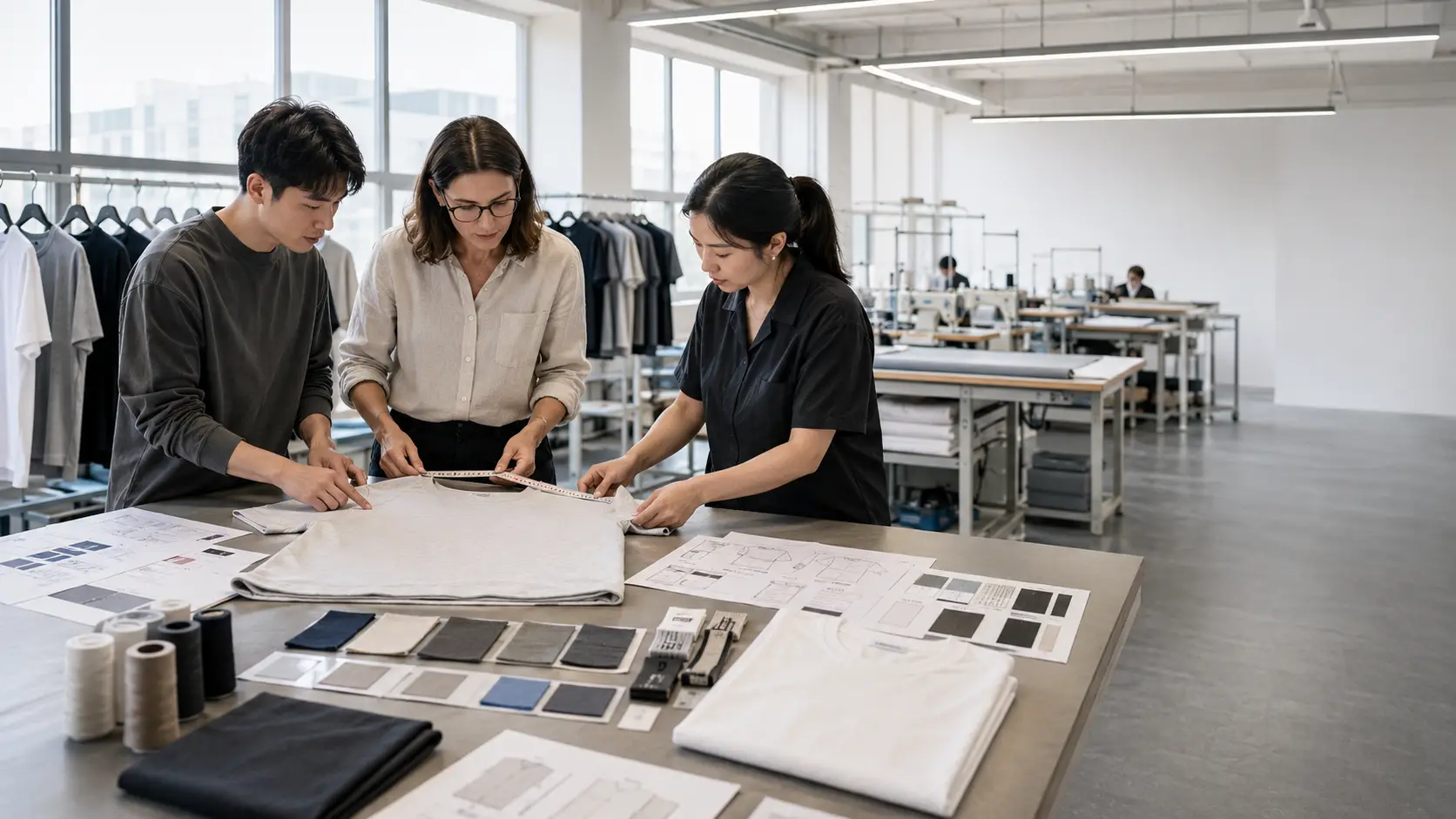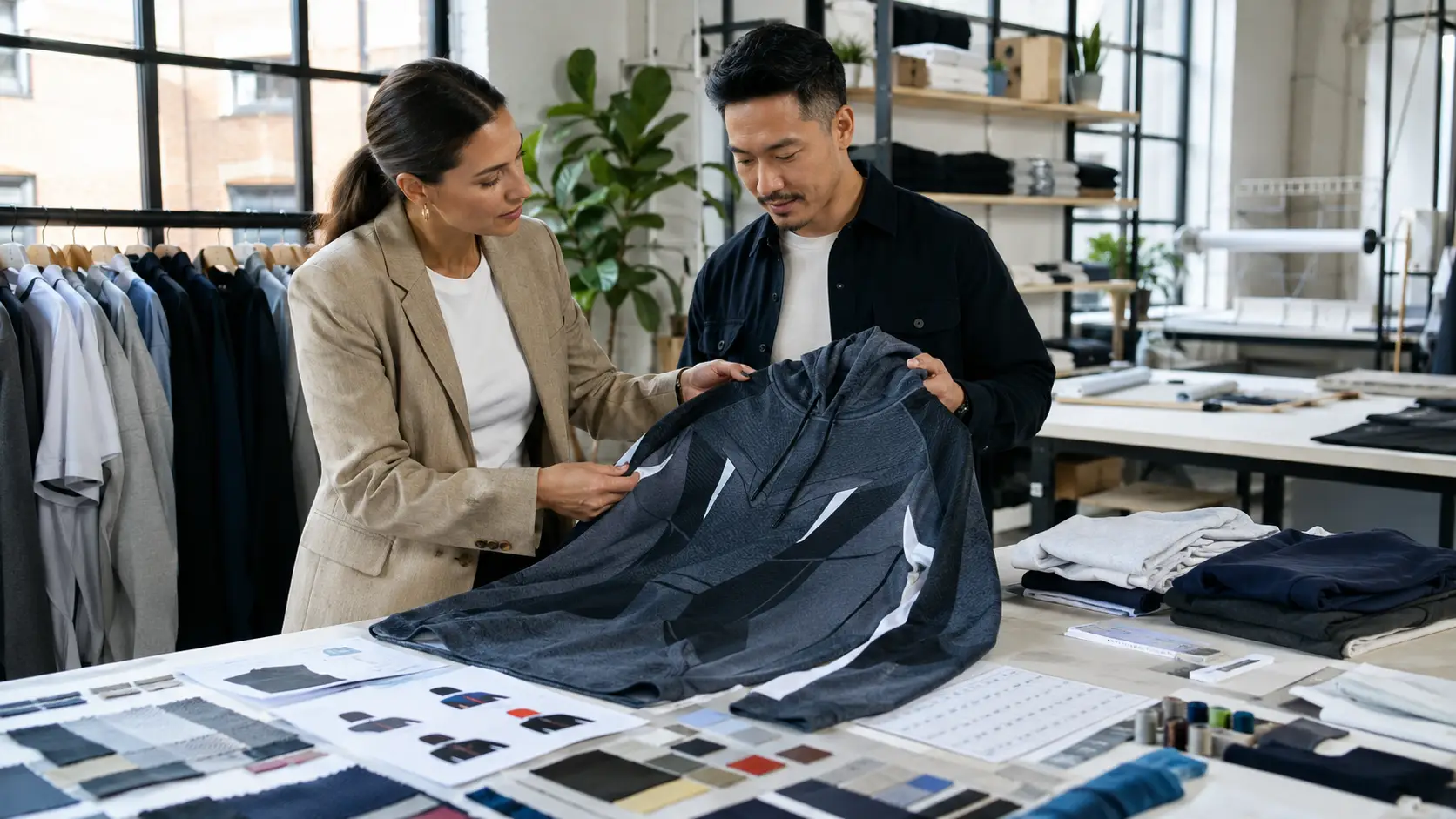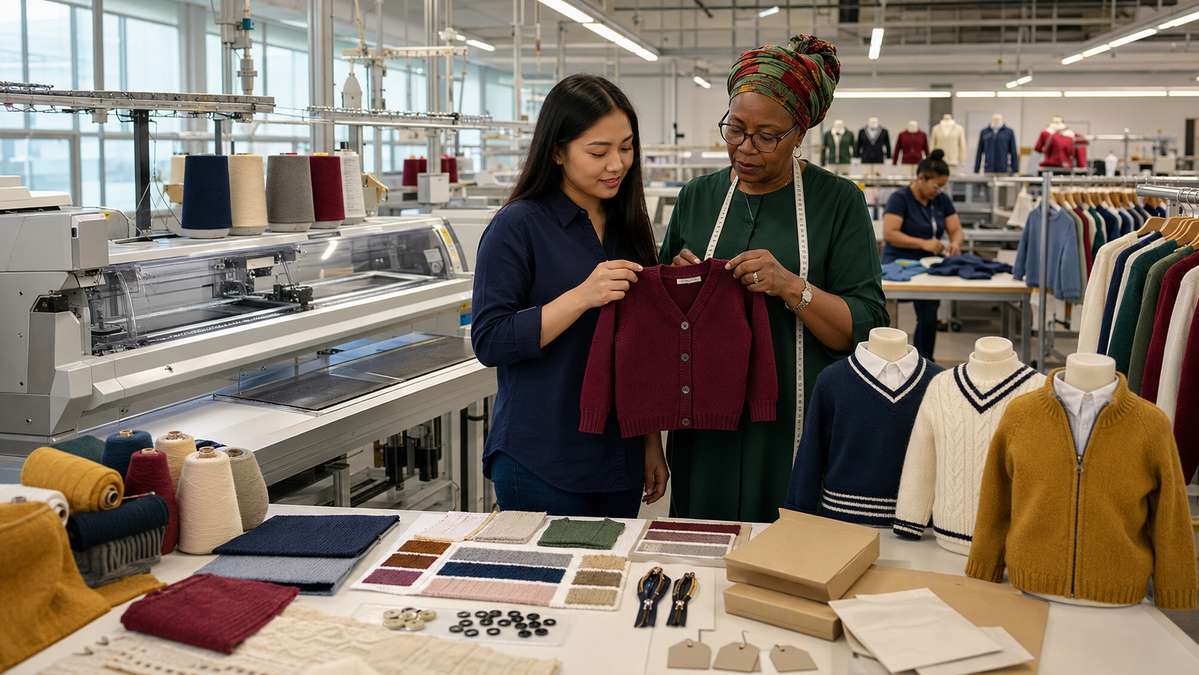
A kids’ sweater manufacturer develops and produces pullovers, cardigans, school sweaters and fashion knitwear for brands, retailers and uniform suppliers. The right partner should control yarn quality, sizing, color consistency, trims, labeling and bulk inspections—not simply offer a low unit price. Samples, wash tests and written specifications are essential before production.
Warm products, cool-headed sourcing
Children’s sweaters look simple on a line sheet. In production, they are anything but. A small change in yarn count can affect warmth and weight. A loose button can create a safety concern. Poor neck recovery turns a neat pullover into a tired-looking garment after a few wears. And inconsistent sizing can leave a retailer with stock that customers return instead of reorder.
That is why choosing a kids’ sweater manufacturer is a commercial decision, not just a purchasing task. You need a supplier that can translate an idea into a repeatable product, clearly explain the options, and protect the approved standard from the sample room to the final carton.
For buyers comparing styles, Minmax Textile’s range of kids’ sweater manufacturing provides a useful starting point. It covers classic pullovers, cardigans and fashion-led knits for everyday wear, school programs and special occasions. This guide explains how to turn those possibilities into a reliable bulk order.
What does a kids’ sweater manufacturer actually do?
A kids’ sweater manufacturer converts a buyer’s design and commercial requirements into production-ready garments. Depending on the construction, this may involve knitted panels linked together, cut-and-sew knit fabrics, or fleece garments designed to provide a sweater-like layer.
A capable supplier should be able to support:
- yarn and fabric recommendations;
- gauge, weight and hand-feel development;
- pattern making and size grading;
- custom colors and stripe layouts;
- neck, cuff and hem construction;
- embroidery, patches or other decoration;
- branded labels, hangtags and packaging;
- samples, bulk production and inspection; and
- export packing and shipping documents.
In short, the manufacturer should help manage the whole product—not leave the buyer to coordinate yarn mills, trim suppliers, sewing, finishing and packing separately.
Start with the customer, not the yarn card
The best sweater brief begins with how the child will wear the garment. A fine-gauge cardigan for a school uniform has different needs from a chunky retail pullover or an easy-care layer for preschool.
Before asking for a price, define three things:
- The wearer: age range, body measurements, fit preference, and any sensory comfort needs.
- The use: school, casual retail, outdoor layering, gifting, occasion wear, or a fashion capsule.
- The sales model: year-round replenishment, a seasonal drop, an online preorder, or a large institutional program.
This context helps a factory recommend a sensible construction instead of quoting the cheapest possible version. Buyers can also review the broader capabilities of a custom clothing manufacturer when planning coordinated collections rather than one isolated style.
Choose the right sweater construction
“Sweater” can describe several very different products. Include the construction on the specification sheet so every supplier quotes the same item.
Fully fashioned knitwear
Panels are knitted to shape and then linked. This method can create clean shoulders, refined silhouettes and less cutting waste. It is common for crew-necks, V-necks, cardigans and fashion knitwear.
Cut-and-sew knit
Garment pieces are cut from knitted fabric and sewn together. It can be efficient for straightforward shapes, but seam quality, edge control and fabric stability matter.
Sweatshirt-style layers
Fleece or French terry pullovers may sit in the same retail department, yet they behave differently from true knitted sweaters. They require different machinery, costing, and shrinkage controls. If this is the intended product, specify a sweatshirt rather than asking factories to interpret the word “sweater.”
Common styles worth considering
| Style | Typical use | Details to specify |
|---|---|---|
| Crew-neck pullover | Everyday retail, schoolwear | Neck opening, rib recovery, hem shape |
| V-neck sweater | Uniforms, layered outfits | V depth, neckline reinforcement, stripe placement |
| Cardigan | Schoolwear, smart casual | Button security, placket stability, pocket position |
| Zip cardigan | Active or contemporary ranges | Zip guard, puller size, zipper testing |
| Sleeveless sweater vest | Uniforms, transitional weather | Armhole shape, layering allowance |
| Fashion knit | Seasonal collections | Stitch pattern, yarn texture, motif placement |
Yarn selection: comfort is only the beginning
Yarn affects softness, warmth, care, pilling, appearance, and price. There is no universally “best” option. There is only the right balance for the intended product and market.
Cotton
Cotton can feel soft and breathable, making it attractive for mild climates and sensitive-skin positioning. It may be heavier than some alternatives and can change dimensions if yarn, stitch structure, and finishing are not controlled.
Acrylic
Acrylic is often selected for school sweaters and price-conscious ranges because it provides warmth, color clarity, and easy care. Quality varies, so buyers should judge the actual yarn and tested garment rather than the fiber name alone.
Wool and wool blends
Wool offers warmth and a premium story. Blending it with other fibers can improve price, care, or durability. For children’s products, assess skin feel carefully and give clear washing instructions.
Cotton-acrylic and other blends
Blends can balance softness, shape retention, warmth, and cost. Ask the manufacturer to state the exact fiber composition and keep it consistent across sampling and bulk production.
Minmax Textile describes cotton blends, acrylic, wool, and fleece among its children’s sweater options. Its company profile and production information also outline in-house development support, sampling, quality checks, and logistics coordination. Those capabilities are relevant, but buyers should still approve the exact yarn, construction, and test requirements for each purchase order.
Build a tech pack that prevents guesswork
A clear tech pack is one of the cheapest forms of quality control. It reduces assumptions before they become expensive bulk problems.
Include:
- a front and back technical drawing;
- product type and knitting or fabric construction;
- yarn composition, count, ply and color reference;
- knit gauge or fabric weight, where applicable;
- stitch structures and placement diagrams;
- measurements with tolerances for every size;
- neck, cuff, waistband and placket dimensions;
- buttons, zippers, patches and other trims;
- artwork files, logo dimensions and placement;
- label text, fiber content, care instructions and country-of-origin details;
- packing method, assortment ratio and carton marks; and
- required testing and inspection standard.
For stripes, jacquards or engineered motifs, include a measured layout. A phrase such as “navy stripe at chest” leaves room for several interpretations. A dimensioned drawing does not.
Children’s sizing needs its own logic
One of the most common mistakes is shrinking an adult pattern. Children’s proportions and movement needs differ, and the differences change as they grow.
A practical size chart should define, at minimum:
- half-chest;
- body length;
- shoulder width;
- sleeve length;
- armhole depth;
- neck opening;
- cuff and hem width; and
- button or zipper placement where relevant.
Measure samples on a flat surface using an agreed method. Also test the sweater over the layers it is designed to accompany. A uniform V-neck may need room for a shirt; a winter pullover may need space for a base layer.
If the range covers toddlers through older children, do not blindly apply a single-grade rule across all sizes. Review the smallest, middle, and largest sample sizes. The children’s clothing manufacturing category can help buyers consider complementary garments and a consistent age-group architecture across a broader collection.
Safety and compliance must be designed in
Children’s clothing requirements vary by destination, product and age group. Buyers should confirm the current rules with their importer, testing laboratory or compliance adviser before production. Do not rely on a generic statement that a garment is “export quality.”
Key risk areas include:
- small parts such as buttons, beads and decorative attachments;
- drawcords and functional cords;
- sharp points or rough internal components;
- restricted substances in yarns, dyes, prints and trims;
- flammability requirements where applicable;
- fiber-content, care and origin labeling;
- choking risks for younger age groups; and
- traceability and product documentation.
Ask the supplier which tests apply, which laboratory will perform them, who pays for retesting, and what happens if bulk materials differ from the approved sample. Requirements should be written into the purchase order, not left in an email thread.
Samples should answer business questions
A sample is not just for deciding whether the sweater looks attractive. Use each stage to close a specific risk.
Development sample
Check the overall concept: shape, yarn, stitch, color direction, and trim choice.
Fit or size-set sample
Confirm measurements, movement, layering room, and grading across selected sizes.
Pre-production sample
Approve the version that represents bulk production, including labels, decoration, and workmanship.
Testing sample
Use production-intent materials for wash, dimensional stability, colorfastness, pilling, seam or linking strength, and any destination-specific safety tests.
For school programs, repeatability matters as much as first-order quality. The Minmax Textile guide to wholesale kids’ polo shirts and sweaters gives additional context on coordinated uniform ranges. A schoolwear buyer should retain sealed approval samples and color standards for every replenishment cycle.
Quality checks that matter for kids’ knitwear
Sweater defects are often visible immediately, but some appear only after washing or wear. Inspect raw materials, in-line production and finished goods.
Yarn and panel checks
Confirm yarn lot, composition, shade, knitting tension, panel measurements and visible faults. Mixing yarn lots without approval can create subtle color differences within a single order.
Construction checks
Review linking, seam security, neck shape, rib recovery, shoulder stability, button attachment and zipper operation. Look for holes, skipped stitches, twisted panels and uneven hems.
Appearance and performance checks
Assess hand feel, pilling tendency, shrinkage, colorfastness and garment shape after the agreed care cycle. Measure before and after washing using the same method.
Final inspection
Set an agreed inspection plan before production. Check quantity, measurements, workmanship, labeling, assortment, packaging and carton marks. Minmax Textile states that it uses internal checks, third-party testing and pre-final inspection at AQL 2.5; buyers should confirm the inspection scope and acceptance criteria for their specific order.
Private label options that add real value
Private labeling is more than sewing a brand name into the neck. A coherent retail product may include:
- main brand and size labels;
- care and fiber-content labels;
- woven badges or embroidery;
- custom buttons, zipper pullers or patches;
- branded hangtags and barcode stickers;
- folded, boxed or hanging presentation; and
- market-specific price tickets or carton labels.
Keep decoration suitable for the knit structure. Dense embroidery can distort a lightweight panel; a heavy patch can pull on a soft cardigan. Ask for a decorated sample and inspect the reverse side for comfort against the skin.
Brands developing boys-specific capsules may also compare Minmax Textile’s boys’ sweater collection for additional styling direction. The core product rules—fit, attachment security, wash performance and accurate labeling—remain the same across gender-led ranges.
Market planning for ten target locations
Global production works best when the product brief reflects the selling environment. Country names alone do not create localization; practical product decisions do.
| Market | Useful sourcing consideration |
|---|---|
| USA | Plan by climate region and retail calendar. Confirm children’s product testing, tracking, and labeling duties with the importer before bulk production. |
| Australia | Lightweight cotton or blends can suit many regions, while cooler states need warmer seasonal options. Align launch dates with Southern Hemisphere seasons. |
| UK | Uniform-ready V-necks, cardigans, and easy-care yarns can support demand for schoolwear. Consistent navy, grey, black, and branded colors are commercially important. |
| UAE | Air-conditioned interiors can support lightweight layering even in a hot climate. Favor breathable hand feel and avoid assuming heavy winter weights will suit every buyer. |
| Germany | Clear material specifications, durable construction and careful documentation help buyers evaluate value. Review applicable EU product-safety and chemical requirements. |
| Canada | Cold-weather ranges may need greater warmth and layering room, while indoor schoolwear still benefits from manageable weight and easy care. |
| Saudi Arabia | Lightweight layers may work for indoor use and cooler months. Confirm Arabic or bilingual labeling needs with the local importer. |
| Netherlands | Versatile midweight knitwear with comfortable movement and durable care performance can suit school, cycling, and everyday family routines. |
| South Africa | Climate varies widely. Build assortments by region and season rather than offering one national weight profile. Price architecture also deserves early attention. |
| Qatar | Breathable, polished layers can suit air-conditioned settings, uniforms and cooler evenings. Confirm local labeling and import documentation before shipment. |
These are planning prompts, not substitutes for local legal advice or the buyer’s own sales data. A good manufacturer should be able to adapt fiber, weight, color, size range and packaging without pretending that every market wants the same sweater.
MOQ, price and lead time: compare like with like
The lowest quote is not always the lowest landed cost. Sweater pricing changes with yarn quality, gauge, stitch complexity, color count, size range, trims, testing, packaging and order volume.
When requesting a quotation, provide:
- quantity per style and color;
- destination and preferred shipping term;
- target delivery date;
- yarn composition and quality level;
- size range and ratio;
- artwork and branding details;
- testing requirements; and
- packing instructions.
Minmax Textile’s profile lists production benchmarks, including an MOQ of 2,000 pieces per color-per-style and longer lead times for imported fabrics. However, the kids’ sweater category page describes bulk-order support but does not publish a style-specific MOQ. Treat every figure as indicative until the factory confirms it in writing for your yarn, colors, sizes, and construction.
For a coordinated casual range, buyers may also review children’s sweatshirt and hoodie options. Combining categories may simplify vendor management, but never assume two product types share the same MOQ or production calendar.
A seven-step sourcing workflow
Use this process to move from idea to shipment with fewer surprises:
- Define the product. State wearer, use, target price, construction, and destination.
- Send a complete brief. Include tech pack, quantities, size ratio, artwork, and required date.
- Compare detailed quotations. Check what is included: labels, testing, packing, freight, and development charges.
- Approve materials and colors. Sign off yarn, shade, stitch structure, and trims before final sampling.
- Test and fit samples. Record comments in one controlled document and close every issue.
- Authorize bulk production. Use an approved pre-production sample and written purchase order.
- Inspect before shipment. Verify product, quantity, labeling, and packing against the agreed standard.
Leave room in the calendar for sample revisions, lab testing, production and freight. Seasonal products lose value quickly when they arrive after the sales window.
How to verify a manufacturer before ordering
Good websites help discovery; evidence builds trust. Ask a potential supplier for current business details, relevant production examples, sample capability, quality procedures and realistic capacity information. If certification or audit status matters, request valid documents and verify the issuing body and scope.
Reviews can add context, especially when they mention communication, consistency or issue resolution. Still, they should complement—not replace—samples, testing and commercial due diligence. A maintained Google Business Profile and credible local directory listings can also reinforce the supplier’s identity, address and contact details. Look for consistency across those sources.
Finally, speak with the merchandising team. Clear answers about yarn, sampling, bulk tolerances and corrective action are more valuable than vague promises of “best quality.”
Frequently asked questions
What products can a kids’ sweater manufacturer make?
Common options include crew-neck and V-neck pullovers, cardigans, zip cardigans, sweater vests, school sweaters and fashion knits. Capabilities depend on the factory’s machinery, yarn sourcing and sample team, so confirm the exact construction before ordering.
Which yarn is best for children’s sweaters?
It depends on use and price. Cotton can feel breathable, acrylic can be practical and easy-care, wool can add warmth, and blends can balance comfort, durability and cost. Approve a physical sample and test it under the intended care conditions.
Can I order private label kids’ sweaters?
Yes. Many manufacturers offer custom colors, measurements, embroidery, patches, labels, hangtags, and packaging. Provide artwork and label requirements early, as trims can affect cost, sampling, and production time.
What is the minimum order quantity for custom kids’ sweaters?
MOQ varies by yarn, color, gauge, style, and supplier. A mill may require enough yarn per shade to run efficiently. Ask for an MOQ broken down by style, color, and size, then confirm it in the quotation.
How do I check quality before a bulk shipment?
Approve a production-standard sample, define measurements and tolerances, require relevant performance or safety tests, and arrange an agreed final inspection. Keep signed samples and written specifications as the reference for acceptance.
Build a kids’ sweater range buyers can reorder
A successful sweater program is warm, wearable and commercially repeatable. That comes from disciplined choices: the right yarn, age-appropriate sizing, secure trims, tested performance, consistent color and a production calendar tied to the destination market.
Minmax Textile presents itself as a Bangladesh-based partner for custom, private label and wholesale children’s knitwear. To discuss a specific style, send your technical pack, quantity, color breakdown, size range, target market and delivery date through the company’s contact and quotation page. A detailed brief gives any manufacturer the best chance of returning an accurate, useful proposal.