What Should Buyers Know About Kids’ Polo Shirt Manufacturing?
A kids’ polo shirt manufacturer produces collared knit tops for schools, retailers, uniform suppliers, clubs, and private labels. Buyers should define the fabric, weight, fit, collar, placket, buttons, colors, decoration, labels, testing, order quantity, and delivery market before comparing suppliers or approving bulk production.
A Better Polo Starts With a Clear Use Case
Children wear polo shirts in a variety of settings. A school polo may need to survive weekly washing. A fashion polo may need a softer hand and a sharper fit. A sports club shirt may need to be fast-drying and offer ease of movement.
Those products may look similar in a catalog, but they should not share one vague specification.
Minmax Textile is a Bangladesh-based apparel supplier serving international buyers. Its public kids’ polo shirts category lists short-sleeve and long-sleeve styles for toddlers through teens. The page also discusses cotton and cotton-blend fabrics, custom colors, embroidery, private labels, and global supply.
These details make a useful starting point. Buyers should still confirm the final fabric, size chart, minimum order, sampling plan, tests, price, and delivery schedule for each project.
Minmax Textile Kids’ Polo Capabilities at a Glance
The following points are based on information published on Minmax Textile’s kids’ polo and schoolwear pages. They should be verified during the quotation process.
| Buying point | Published capability to discuss |
|---|---|
| Product use | School uniforms, casualwear, retail collections, and special occasions |
| Sleeve options | Short-sleeve and long-sleeve polo styles |
| Fabric options | Cotton and cotton-blend fabrics, including polo-focused knit structures |
| Age range | Product options are presented for toddlers through teens |
| Customization | Colors, sizes, designs, embroidery, and private labeling |
| Schoolwear range | Polo shirts can be planned with sweaters and other uniform layers |
| Buyer types | Retailers, schoolwear suppliers, brands, and wholesale buyers |
| Supply | The site presents international wholesale and shipping support |
Minmax also publishes a guide to wholesale kids’ polo shirts and schoolwear. Any example colors, minimums, fabrics, or timelines on that page should be reconfirmed for the actual order.
Choose the Right Polo for the Customer
School uniform polos
School polos need stable color, clear sizing, strong seams, dependable collars, and easy care. Repeat orders must match the first production lot as closely as possible. Buyers should plan core colors and replenishment before the school season begins.
Retail fashion polos
Retail styles may use contrast collars, tipping, badges, prints, textured fabric, shaped hems, or fashion fits. Added details increase the number of approvals. Each trim and placement should be shown in the tech pack.
Club and team polos
Clubs may need embroidered logos, sponsor marks, names, or numbers. The shirt should allow movement and suit the activity. Any claim about moisture control or sports performance needs suitable evidence.
Event and promotional polos
Promotional orders often focus on clear branding, a simple size range, and a fixed event date. Color matching and artwork approval are critical because the polo represents the organization.
Premium children’s polos
Premium products may use finer yarns, cleaner stitching, soft finishes, quality buttons, and detailed embroidery. A higher price only makes sense when the fabric and construction support it.
The broader kids’ clothing collection can help buyers plan matching bottoms, knitwear, and warm-weather items. Each product should still have its own measurements, tests, and approved sample.
Pique, Jersey, or Interlock: Which Fabric Works Best?
Fabric affects comfort, appearance, decoration, care, and price.
Cotton pique
Pique has a textured surface and a classic polo look. It can feel breathable and structured. Buyers should check weight, softness, shrinkage, pilling, and how the collar matches the body after washing.
Cotton jersey
Jersey is smoother and often softer than pique. It can suit casual or lightweight polos. Very light jersey may need extra care around the placket, shoulders, and embroidery.
Interlock
Interlock has a smooth, stable face and can feel more substantial. It may suit premium, school, or cooler-season products. The final weight and stretch should match the intended fit.
Cotton-polyester blends
Blends can improve shape, drying time, crease resistance, or durability. They are often considered for uniforms and daily wear. The fiber percentage alone does not define quality, so approve the actual finished fabric.
Stretch blends
Elastane can add movement and recovery. It may suit slim or fashion fits. Too much tension can reduce comfort, while poor recovery can cause the shirt to lose shape.
Performance fabrics
Synthetic or engineered knits may be suitable for use in sports and hot weather. Claims such as quick drying, moisture management, or UV protection should be verified through appropriate testing.
Get the Collar and Placket Right
The collar and placket define a polo shirt. They also create common quality problems.
Collar construction
Flat-knit rib collars are common. Self-fabric collars create a softer look. The collar should sit evenly, recover after washing, and match the body color. Contrast tipping needs careful yarn and shade approval.
Collar shape
Check collar length, point shape, stand, and how it sits when the top button is open or closed. A collar that curls or twists can make the whole shirt look poor.
Placket length
The placket must suit the child’s age and shirt size. It should open far enough for easy dressing without becoming too long. Reinforcement and neat corners help it keep its shape.
Buttons and buttonholes
Specify button size, color, material, position, and attachment. Buttonholes should be clean and easy to use. Spare buttons and placement may depend on the buyer’s standard.
Neck tape and labels
Internal finishing should feel smooth against the skin. Main labels, size labels, and neck tape must not create rough edges or excess bulk.
Build a Size Chart for Children, Not Small Adults
Children’s proportions change as they grow. Reducing an adult polo pattern does not create a reliable fit for kids.
Important measurements include:
- Chest width
- Body length
- Shoulder width
- Sleeve length
- Sleeve opening
- Armhole depth
- Neck opening
- Collar length and width
- Placket length and width
- Hem width
State how each point is measured. Include tolerances and a full graded size chart.
During the fitting, ask the child to raise both arms, sit, bend, and move. Check whether the hem lifts too far, the armhole pulls, or the collar presses on the neck. The shirt should look neat without limiting play.
For younger sizes, allow enough room for easy dressing. For older children and teens, the fit may become straighter or more shaped based on the brand. Avoid using one size ratio for every market without checking customer data.
Prepare a Polo Shirt Tech Pack
A complete tech pack helps factories quote the same garment.
| Specification | What to provide |
|---|---|
| Customer | Age range, use, sales channel, and target market |
| Style | Short or long sleeve, fit, hem shape, side vents, and pocket |
| Fabric | Knit type, full fiber blend, finished weight, stretch, color, and finish |
| Collar and cuffs | Construction, measurements, colors, tipping, and recovery needs |
| Placket | Length, width, layers, reinforcement, button count, and button spacing |
| Measurements | Base size, graded chart, tolerances, and measuring method |
| Artwork | Embroidery, print, badge, size, placement, and color references |
| Labels | Main, size, care, origin, and brand labels |
| Testing | Shrinkage, color, pilling, strength, and claim-related checks |
| Packing | Folding, hangtag, barcode, polybag, size ratio, and carton marks |
| Order | Quantity by size and color, destination, delivery date, and Incoterm |
Send the same pack to each shortlisted supplier. A quotation cannot be fairly compared if one factory uses lighter fabric, fewer buttons, or simpler packaging.
Embroidery, Printing, and Private Labels
Decoration should suit the fabric and end use.
Embroidery
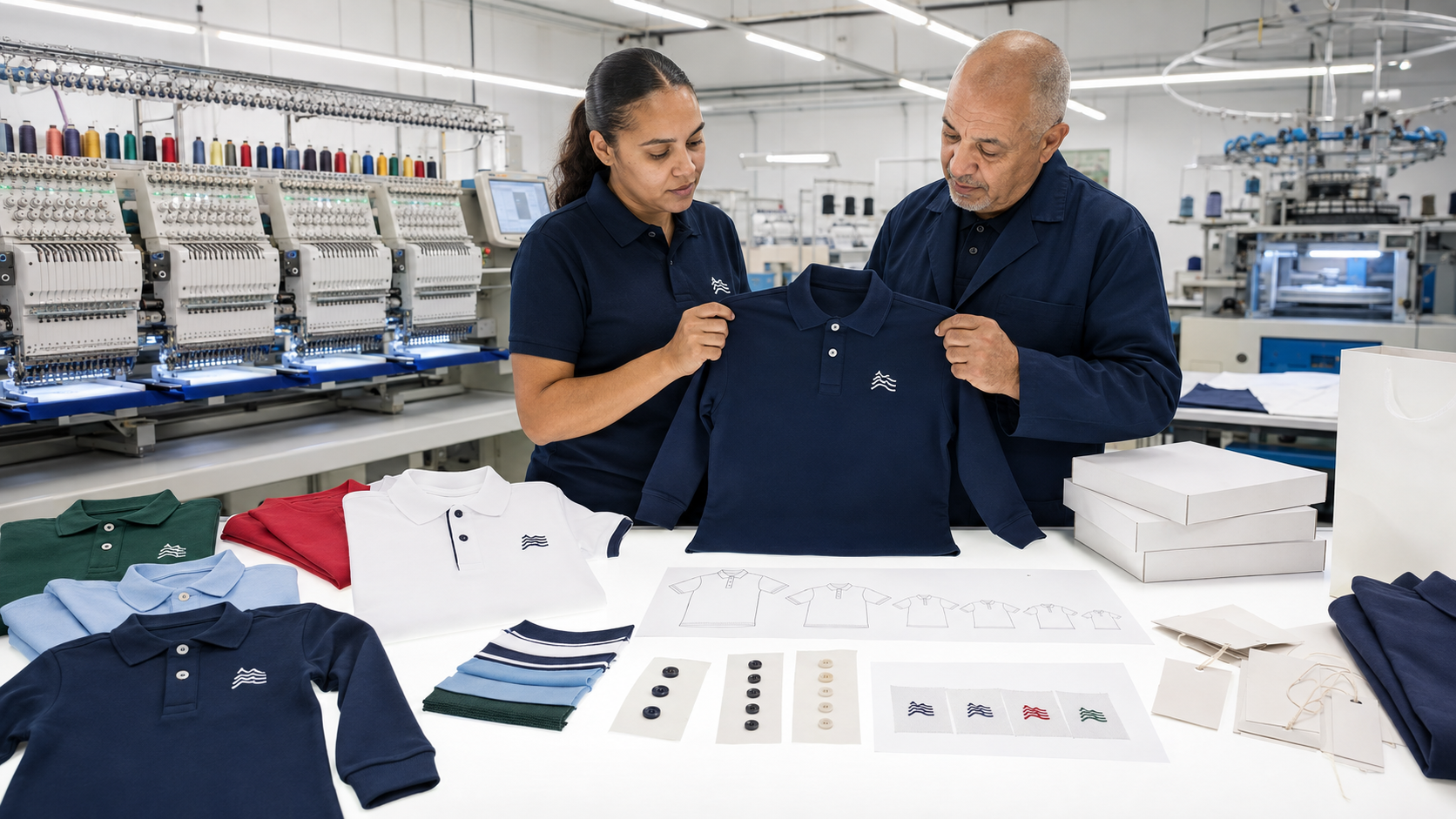
Embroidery is common for school crests and brand logos. Dense artwork can make lightweight fabric ripple or feel stiff. Approve the thread colors, backing, stitch density, size, and position on the actual fabric.
Screen printing
Screen printing can suit larger or simpler artwork. Check print feel, stretch, color, wash performance, and placement. Children’s products need inks and processes that meet the intended market’s requirements.
Heat transfers
Transfers can handle detailed or multi-color designs. Test adhesion and cracking after washing. The transfer should not create an uncomfortable area against the skin.
Woven badges and patches
Badges can create a premium uniform look. Corners, edges, backing, and attachment must feel smooth and stay secure.
Private-label packaging
Custom production may include main labels, size labels, care labels, hangtags, barcodes, polybags, and cartons. Approve every physical component before bulk packing.
Minmax also publishes a separate category for boys’ polo shirts. Buyers planning both kids’ and boys’ ranges should confirm whether the same size blocks, fabrics, and production terms apply to both.
How a Kids’ Polo Moves Through Production
Technical review
The factory checks the design, fabric, size chart, trims, artwork, order quantity, tests, and delivery needs. Questions should be resolved before sampling.
Pattern and sample development
The first sample shows the fit and construction. Review the collar, placket, shoulders, sleeves, length, hem, and movement. Record every correction in the latest tech pack.
Fabric and color approval
Approve physical fabric quality and color. If the collar and cuffs are knitted separately, confirm that they match the body after washing.
Size-set approval
Check key sizes across the range. This step can reveal grading problems that are not visible in the base size.
Pre-production sample
The pre-production sample should use approved bulk fabric, trims, decoration, labels, and construction. It becomes the main production reference.
Cutting, sewing, and finishing
In-line checks cover panel shape, placket position, collar attachment, seams, measurements, artwork, and artistry. Finished shirts are measured, pressed, inspected, and packed.
Buyers can review the Minmax company profile during supplier research. They should also verify which production facilities, audits, and documents apply to the proposed order.
Quality Tests and Inspection Points
The final test plan depends on the fabric, decoration, age group, claims, and destination. Common checks include:
- Dimensional change after washing
- Colorfastness to washing, rubbing, and perspiration
- Pilling and surface appearance
- Seam and button attachment strength
- Collar, cuff, and fabric recovery
- Fabric weight and fiber composition
- Print, transfer, badge, or embroidery durability
- Restricted substances
- Required product and labeling checks
Use a qualified laboratory or compliance specialist to confirm the program.
During final inspection, check:
- Measurements and size ratios
- Collar shape and shade
- Placket position and button spacing
- Shoulder and side-seam balance
- Sleeve and hem symmetry
- Artwork size and placement
- Loose threads, stains, holes, and needle damage
- Labels, barcodes, folding, polybags, and cartons
Define critical, major, and minor defects before production begins.
Schoolwear Requires Repeatable Quality
School uniform buyers often need the same colors and fits over several orders. That makes recordkeeping essential.
Keep approved fabric swatches, collar yarn, shade references, size charts, artwork files, labels, and sealed samples tied to each purchase order. When a repeat order begins, compare new materials with the original standards.
Plan the delivery calendar backward from the school season. Include sampling, color approval, embroidery, testing, production, inspection, freight, customs, and a buffer for corrections.
A cheap first order loses value if the next order arrives in a different shade or fit.
Local Planning for Ten Target Markets
One polo design should not be sent to every market without review.
| Market | Practical considerations |
|---|---|
| USA | Confirm the retailer’s size chart and children’s product rules. School, club, promotional, and casual polos may need different fabric weights across regions. |
| Canada | Review local sizing, language needs, and provincial requirements. Short- and long-sleeve styles can support seasonal layering. |
| UK | School uniform demand may favor stable colors, easy care, embroidered crests, and reliable replenishment. Use a tested UK-focused size chart. |
| Australia | Lightweight and breathable polos may suit longer warm seasons. The school calendar and Southern Hemisphere production cycle affect delivery planning. |
| Germany | Buyers may expect clear material information, exact measurements, consistent colors, and current evidence of compliance. |
| Netherlands | Comfortable movement, practical layering, and reliable sizing can support school, club, and casual ranges. |
| UAE | Breathable fabrics and clean finishes may suit school, retail, and event programs. Confirm the size system used by the sales channel. |
| Saudi Arabia | Review climate, school needs, styling, sleeve options, and pack presentation with local buyer data. |
| Qatar | Lightweight polos can suit school, sports, travel, and air-conditioned settings. Validate sizes and decoration needs locally. |
| South Africa | Schoolwear, clubs, retail price levels, and regional climates can shape fabric choices, colors, and order sizes. |
Use sales history, search data, returns, reviews, and retailer feedback to improve each market plan. Confirm current legal and labeling duties with qualified local professionals.
MOQ, Price, and Delivery Planning
MOQ may apply per style, fabric, color, collar design, embroidery, or label. Ask the factory to state each minimum in writing.
Price changes with:
- Fabric type, fiber blend, and finished weight
- Short or long sleeves
- Collar and cuff construction
- Number and type of buttons
- Embroidery, printing, badges, or transfers
- Custom labels and retail packaging
- Testing and inspection
- Order quantity and color count
- Freight term and destination
Compare total landed cost, not only the garment price. Confirm the Incoterm and responsibility for freight, insurance, duties, taxes, customs clearance, and local delivery.
Build the schedule from the required warehouse date. A factory completion date is not the same as the final delivery date.
Questions to Ask a Kids’ Polo Manufacturer
- Which kids’ polo styles and fabrics do you make regularly?
- Can you develop both short- and long-sleeve products?
- How do you control body, collar, and cuff shade matching?
- What is the MOQ per style and color?
- Which sample stages and tests do you recommend?
- How do you prevent collar curling, placket distortion, and shrinkage?
- Can you produce embroidery, badges, labels, and custom packaging?
- Which current audits or certifications cover the production site?
- What does the quotation include?
- What shipment date can be confirmed once approvals are in place?
Send the tech pack and order details through the Minmax contact page to request a current quotation and sample plan.
Trust Should Be Visible on the Page
A strong supplier page should include real production knowledge, clear business information, original factory images, accurate product examples, and useful contact details.
If Minmax publishes this article, it should add an accurate author or reviewer with relevant experience in apparel. Original polo samples, embroidery close-ups, collar tests, size charts, and a verified schoolwear case study would make the page more useful.
Reviews should describe real experiences with sampling, fit, fabric, color, communication, quality, delivery, and problem-solving. They should never be fabricated.
Frequently Asked Questions
What fabrics are used for kids’ polo shirts?
Common options include cotton pique, cotton jersey, interlock, cotton-polyester blends, stretch blends, and performance knits. The best choice depends on climate, use, care, price, and testing.
Can kids’ polo shirts include custom logos?
Yes. Common methods include embroidery, screen printing, heat transfers, and badges. Approve the artwork on the actual fabric, as weight and stitch density can affect the appearance.
What is the MOQ for private-label kids’ polos?
There is no universal MOQ. It may apply per style, fabric, color, collar, or decoration. Ask Minmax for the current written minimum for the exact design.
How should children’s polo shirts be sized?
Use a complete graded size chart instead of age labels alone. Test chest, shoulders, sleeves, neck, length, and movement across key sizes before bulk production.
How can buyers check the quality of polo before shipment?
Use approved samples, measurement tolerances, relevant tests, in-line checks, and final inspection. Review collars, plackets, buttons, seams, artwork, labels, packing, and quantities.
Build a Reliable Kids’ Polo Program
A strong kids’ polo shirt manufacturer manages fabric, fit, collars, plackets, decoration, testing, packaging, pricing, and delivery. Each decision should support the intended child and market.
Begin with a clear use case and complete tech pack. Approve physical fabric, color, trims, artwork, and samples. Confirm MOQ, testing, total cost, and timing in writing. Then compare Minmax Textile with other qualified suppliers based on verified capabilities, current evidence of compliance, sample quality, communication, and delivery planning.
Ready to request a quote? Send the style, fabric, size chart, colors, artwork, quantity, destination, packaging, and required delivery date to Minmax Textile.