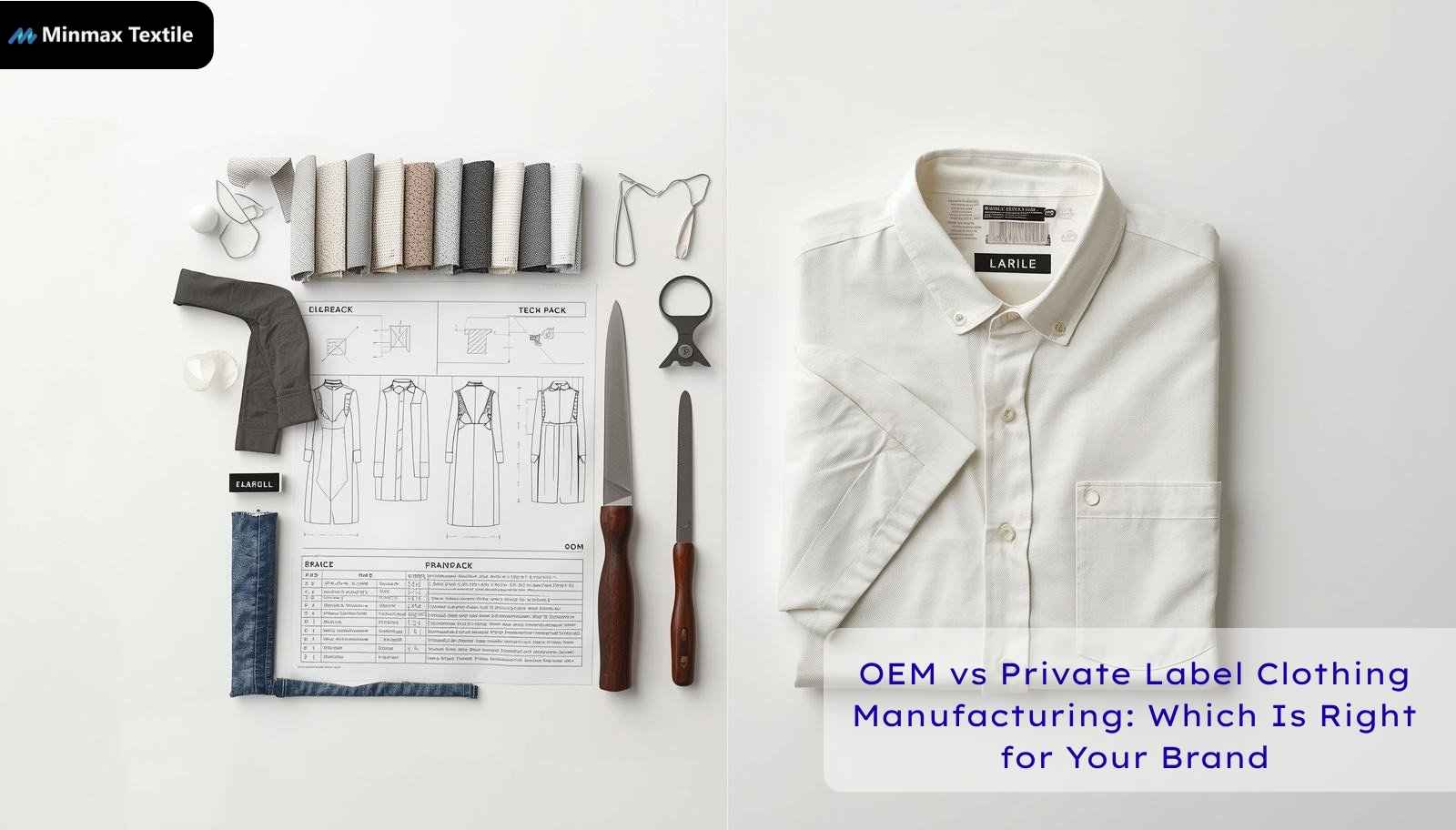
OEM (Original Equipment Manufacturer) clothing manufacturing means a factory produces garments based on your own custom designs and specifications. Private label clothing manufacturing means you sell pre-made, manufacturer-designed products under your own brand name. OEM offers full creative control; private label offers speed and lower risk. The right choice depends on your budget, timeline, and brand vision.
So You Want to Start a Clothing Brand — Now What?
Picture this: you have a killer brand concept, a niche audience in mind, and maybe a few sketches on a napkin. The next question almost every founder in New York, Los Angeles, Dallas, or Toronto hits pretty fast is: how do I actually get these clothes made?
That is where the debate over OEM vs. private-label clothing manufacturing comes in. These are two very different roads to the same destination — a physical product with your brand on it. But they come with very different rules, costs, timelines, and risks.
At Minmax Textile, we have worked with startup founders and scaling brands across the USA, UK, Canada, France, and Germany. And the number one mistake we see is people choosing a manufacturing path without fully understanding what they are signing up for. This article breaks it all down clearly so you can make the right call for your brand.
What Is OEM Clothing Manufacturing?
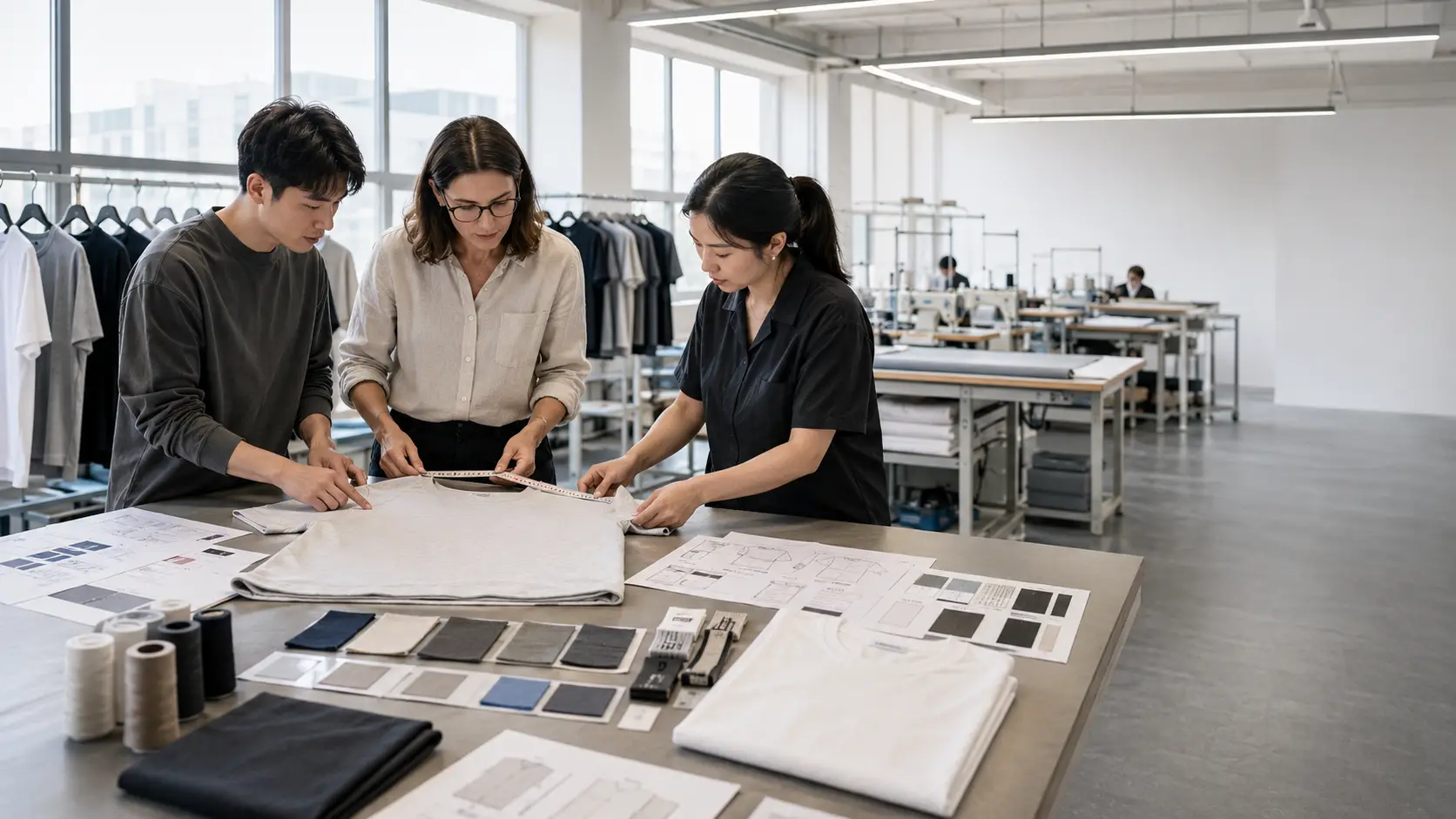
OEM stands for Original Equipment Manufacturer. In the apparel world, OEM manufacturing means you bring your own design to a factory, which produces the garment according to your exact specifications. You control everything: the fabric weight, the cut, the stitching, the trims, and the overall construction.
Think of it like commissioning a piece of art. The artist (the factory) provides the skill and the tools, but the vision and the blueprint come entirely from you.
What You Typically Control in an OEM Agreement
⦁ Fabric selection (cotton weight, stretch percentage, sustainable materials)
⦁ Pattern and technical design files (tech packs)
⦁ Colorways and print placement
⦁ Hardware, zippers, buttons, and trims
⦁ Labeling, packaging, and hangtags
⦁ Quality standards and inspection criteria
Brands like Nike, Patagonia, and countless direct-to-consumer labels in California and New York operate on OEM principles. The factories may be in Bangladesh, Vietnam, Portugal, or right here in the USA — but the creative direction is 100% the brand’s.
If you are searching for OEM clothing manufacturers near you in the USA, you will find options in Los Angeles (a hub for domestic production), New York City’s Garment District, and in states like North Carolina and Georgia that have strong textile manufacturing legacies.
What Is Private Label Clothing Manufacturing?
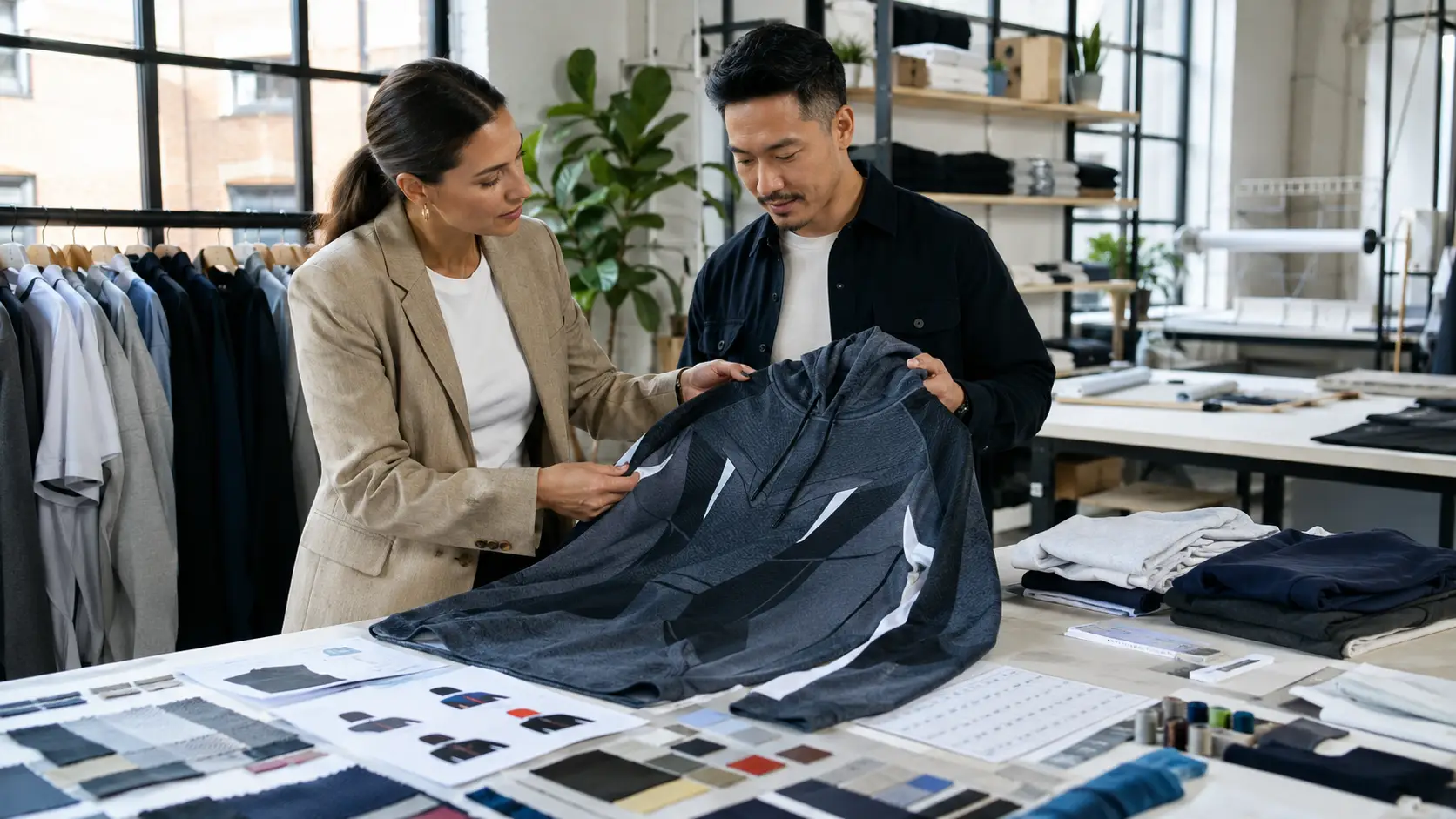
Private label clothing is different in a fundamental way. Here, a manufacturer already has a finished (or near-finished) product design. You choose from their existing catalog, make minor modifications, if allowed, such as adding your label, changing a color, or adjusting a hem, and then sell those products under your brand name.
A private-label arrangement is closer to buying a car off the lot than to having one custom-built. The base vehicle exists; you just put your badge on it.
Common Private Label Customization Options
⦁ Custom woven or printed labels
⦁ Hang tags and branded packaging
⦁ Color selection from available options
⦁ Minor sizing adjustments
⦁ Embroidery or heat transfer branding
Private-label clothing is extremely popular among e-commerce entrepreneurs in the USA, especially those launching on platforms like Shopify, Amazon FBA, or Etsy. Many boutique owners across Texas, Florida, and the Midwest rely on private-label suppliers to quickly fill their stores without the complexity of original design.
Minmax Textile works with private label clients who want quality basics — think premium-weight T-shirts, hoodies, joggers, and outerwear — with their branding applied professionally and shipped to the USA, UK, and Canada on reliable timelines.
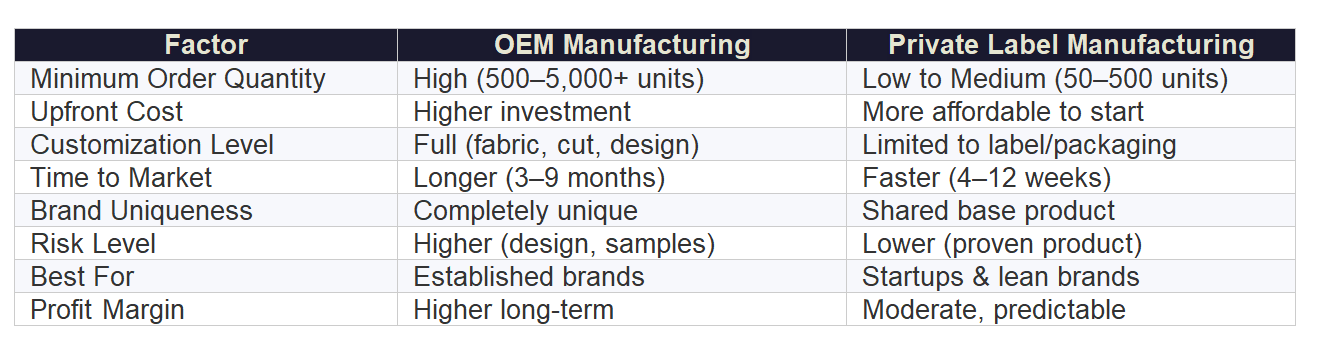
OEM vs Private Label Clothing Manufacturing: Side-by-Side Comparison
Here is a direct comparison to help you visualize the key differences at a glance.
The Real Cost Difference: What USA Brands Actually Pay
Let us talk numbers, because vague cost advice gets old fast.
OEM Manufacturing Costs
For OEM clothing production, a USA-based brand typically needs to budget for:
⦁ Tech pack development: $200 to $800 per style (or more with a professional designer)
⦁ Sampling fees: $100 to $500 per sample, sometimes more for complex garments
⦁ Minimum order quantities (MOQs): typically 300 to 1,000 units per style for offshore factories; domestic US factories may require 500 to 5,000 units
⦁ Unit cost: $8 to $35+ per piece, depending on complexity, fabric, and origin
According to the American Apparel and Footwear Association, the average cost of a domestically manufactured garment is 20 to 40 percent higher than that of an equivalent garment made offshore. That premium can be worth it — especially for brands marketing “Made in USA” as a value proposition.
Private Label Manufacturing Costs
Private label is generally more accessible for brands starting:
⦁ No tech pack required — the factory’s design is already done
⦁ Sampling costs are minimal or sometimes free
⦁ MOQs can be as low as 50 to 100 units per style
⦁ Unit cost: $5 to $25 per piece for standard styles
The trade-off is margin compression over time. Because you do not own the design, competitors can source the same base product from the same supplier. Differentiation becomes harder, and you end up competing mostly on price and marketing rather than product.
Which Manufacturing Model Fits Your Brand Stage?
Choose OEM If You Are…
⦁ An established brand ready to invest in product development
⦁ A founder with a clear and differentiated design vision
⦁ Building a product that requires proprietary fabrics or construction
⦁ Planning to scale to 1,000+ units per style in the next 12 months
⦁ Marketing your clothing as a premium or bespoke product
Choose Private Label If You Are…
⦁ A first-time brand founder is still validating their market
⦁ An influencer or content creator launching a merchandise line
⦁ A retailer or boutique owner who needs inventory fast
⦁ Running a dropshipping model or print-on-demand hybrid
⦁ Working with a limited startup budget of under $10,000
Many successful brands actually start with a private label to test product-market fit, then transition to OEM once they have revenue and customer data to back their design decisions. This is a smart, capital-efficient approach that more USA founders should consider.
USA-Specific Insights: Regulations, Trends, and Local Context
Labeling Laws You Cannot Ignore
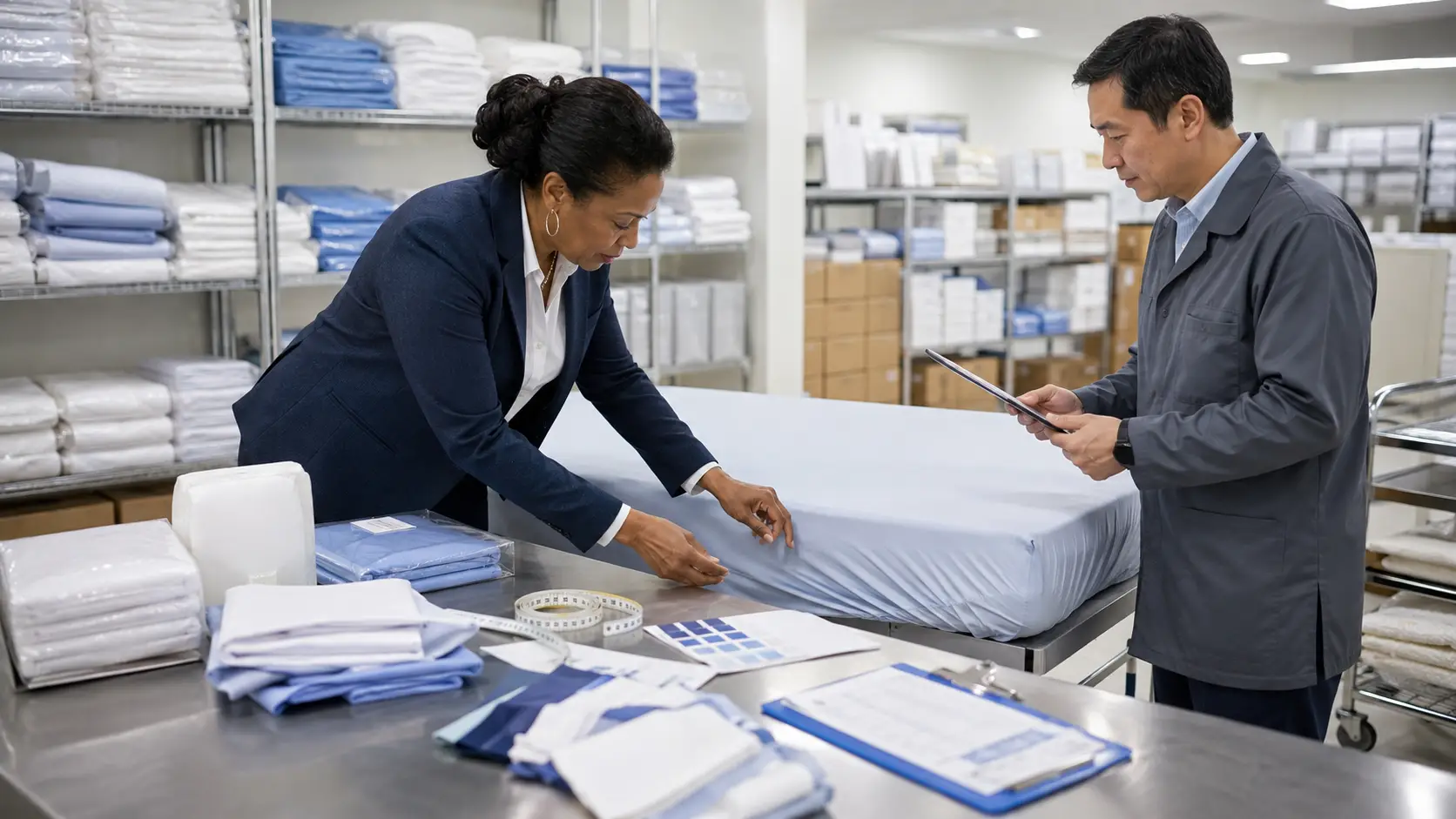
In the United States, the Federal Trade Commission (FTC) has specific requirements for clothing labels. All garments sold in the USA must include fiber content, country of origin, care instructions, and the manufacturer or dealer identity. This applies whether you are using OEM or private label production.
Working with a supplier like Minmax Textile means these compliance requirements are built into the production workflow — you do not have to chase down label certificates at the last minute.
The “Made in USA” Opportunity
There is a growing consumer preference in the USA for domestically produced clothing. A 2023 survey found that nearly 70 percent of American consumers say they prefer to buy products made in the USA when price and quality are comparable. Brands operating in cities like Los Angeles, Chicago, or New York that can credibly claim domestic manufacturing often command a significant price premium.
OEM manufacturing through US-based factories allows brands to authentically use Made in USA claims, which requires that all or virtually all of the product is made in the US.
Sustainability and Ethical Sourcing Trends
Whether you are targeting customers in California, New York, or internationally in the UK and Germany, sustainability is no longer a nice-to-have — it is a purchasing driver. OEM manufacturing gives you full control over your supply chain, making it easier to verify fair labor practices, organic material sourcing, and carbon footprint tracking.
Private label manufacturing can also be sourced ethically, but you have less visibility into the upstream supply chain. Brands selling in markets like France and Germany increasingly face regulatory scrutiny around supply chain transparency, so this matters beyond just marketing.
How to Choose: A Step-by-Step Decision Framework
If you are still on the fence, walk through these five questions before you commit to either path.
Step 1: What is your launch budget?
If you have less than $5,000 to spend on inventory, private label is almost certainly your starting point. OEM requires more upfront investment in design, sampling, and higher MOQs.
Step 2: How important is product uniqueness to your brand positioning?
If your competitive advantage is a product that no one else has, OEM is non-negotiable. If your strengths are marketing, community, and branding, private-labeling can work just fine.
Step 3: How fast do you need inventory?
Private label can get the product to your warehouse in 4 to 12 weeks. OEM, especially with sampling and revision cycles, often takes three to nine months from concept to delivery.
Step 4: Do you have technical design capabilities?
OEM requires tech packs and detailed specifications. If you do not have an in-house designer or a budget to hire one, starting with private-label products saves significant time and money.
Step 5: What is your long-term brand vision?
Think two to three years ahead. Brands that plan to be recognized for signature silhouettes, proprietary fabrics, or truly original design need to get comfortable with OEM manufacturing eventually.
Why Brands Choose Minmax Textile
Minmax Textile is a full-service clothing manufacturer serving brands across the USA, UK, Canada, France, and Germany. Whether you are looking to launch your first private-label T-shirt line or develop a complex OEM technical outerwear program, our team handles the process end-to-end.
From tech pack support and fabric sourcing to quality control and on-time delivery, Minmax Textile is built to be the manufacturing partner that grows with your brand. Brands near you in the USA trust us because we combine the craftsmanship of experienced production teams with the transparency modern brand owners demand.
Contact Minmax Textile today to discuss your manufacturing needs and request a free consultation.
Frequently Asked Questions
What is the main difference between OEM and private label clothing manufacturing?
OEM manufacturing means a factory produces garments built entirely from your original designs and specifications. Private label manufacturing means a factory’s existing product design is sold under your brand name. OEM gives you full creative control; private label gives you a faster, lower-risk path to market.
Which is better for a startup clothing brand in the USA?
For most first-time founders in the USA, a private label is the more practical starting point. It requires lower minimum order quantities, lower upfront investment, and a faster turnaround. Once you have validated your market and have consistent sales, transitioning to OEM gives you greater product differentiation and better long-term margins.
What is the minimum order quantity for OEM vs private label?
OEM manufacturing typically requires 300 to 1,000 units per style as a minimum, though domestic USA factories may require 500 to 5,000 units for economic viability. Private label suppliers often accept orders as low as 50 to 100 units per style, making them far more accessible for early-stage brands.
Can I switch from private label to OEM manufacturing later?
Absolutely. Many successful clothing brands start with a private label to build cash flow and customer insight, then invest in OEM development once they have proven product-market fit. The transition requires investment in design development and higher initial production runs, but the long-term brand equity and margin benefits are significant.
How do I find a reliable OEM or private label clothing manufacturer in the USA?
Look for manufacturers with verifiable production samples, clear MOQ and pricing structures, compliance documentation (especially FTC labeling compliance), and references from active clients. Trade shows like MAGIC in Las Vegas and Texworld USA in New York, and online platforms like Maker’s Row, are good starting points. Minmax Textile offers direct consultations for brands near you in the USA and internationally.
Final Thoughts: Make the Right Choice for Where You Are Right Now
The OEM vs. private-label clothing manufacturing debate does not have a single right answer — it has the right answer for your brand, at your stage, with your resources.
Private label is not a lesser option. It is a smart strategic tool for brands that need to move fast, test ideas, and conserve capital. OEM is not just for big brands. Any founder with a clear design vision and realistic budget can access it — and the brands that invest in original product development almost always build stronger long-term equity.
What matters most is that you go in with clear eyes. Know your budget. Know your timeline. Know what makes your brand different. And work with a manufacturing partner like Minmax Textile, who will be honest with you about which path actually fits your situation.
Because at the end of the day, the best manufacturing model is the one that gets your brand to market with a product your customers love — and keeps you profitable enough to do it again.
Ready to start your clothing manufacturing journey? Contact Minmax Textile for a free consultation — serving brands across the USA, UK, Canada, France, and Germany.