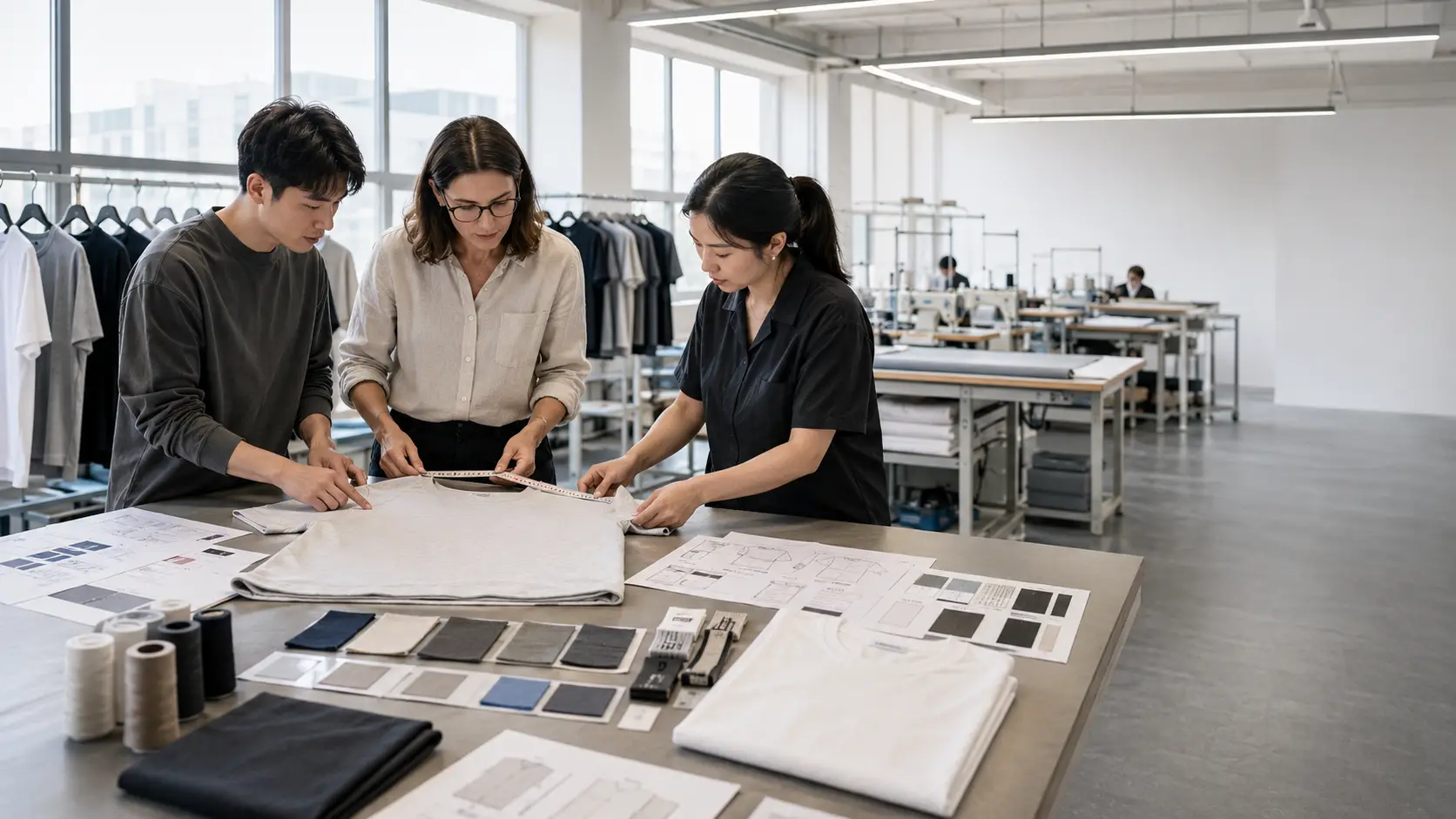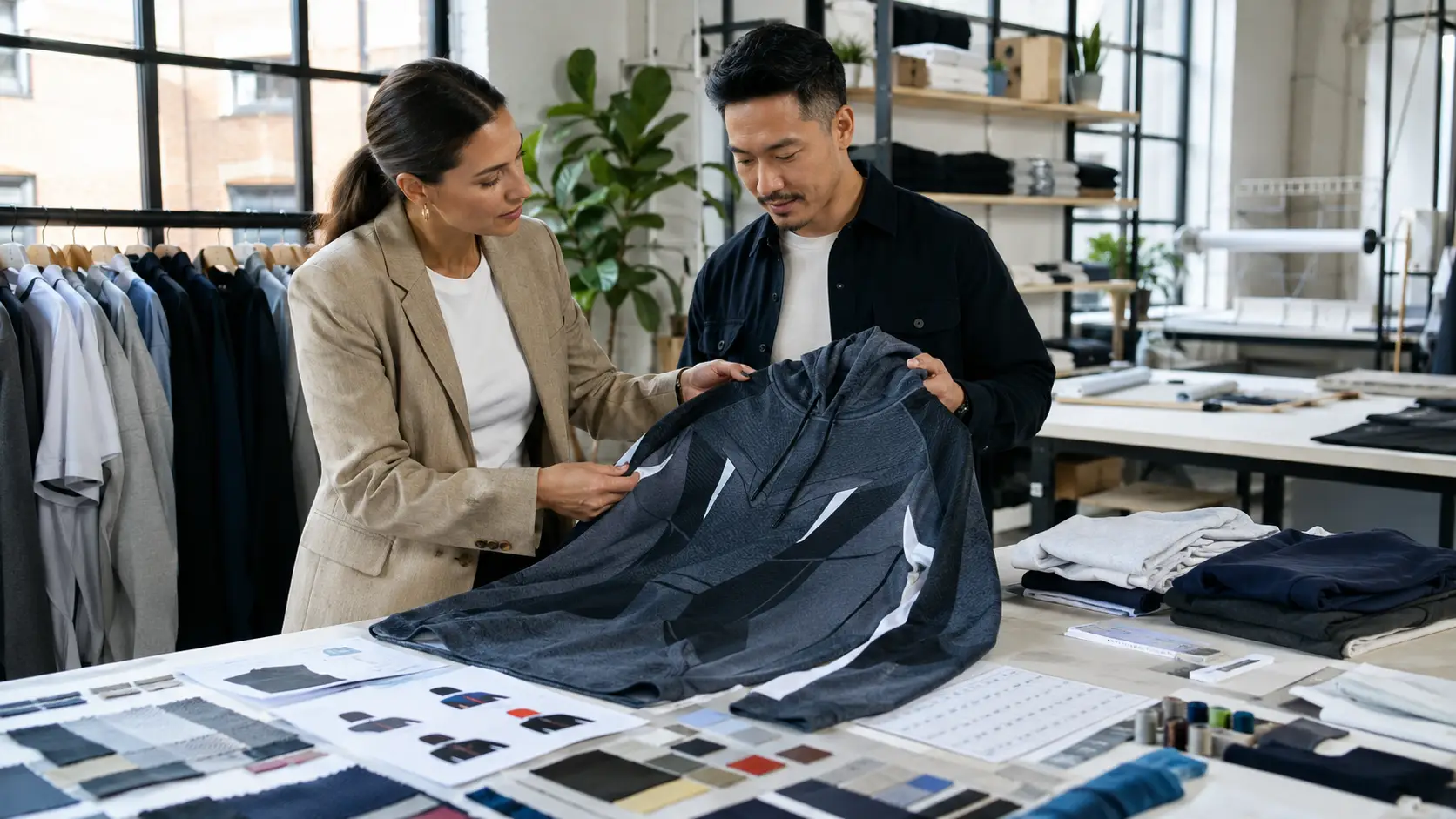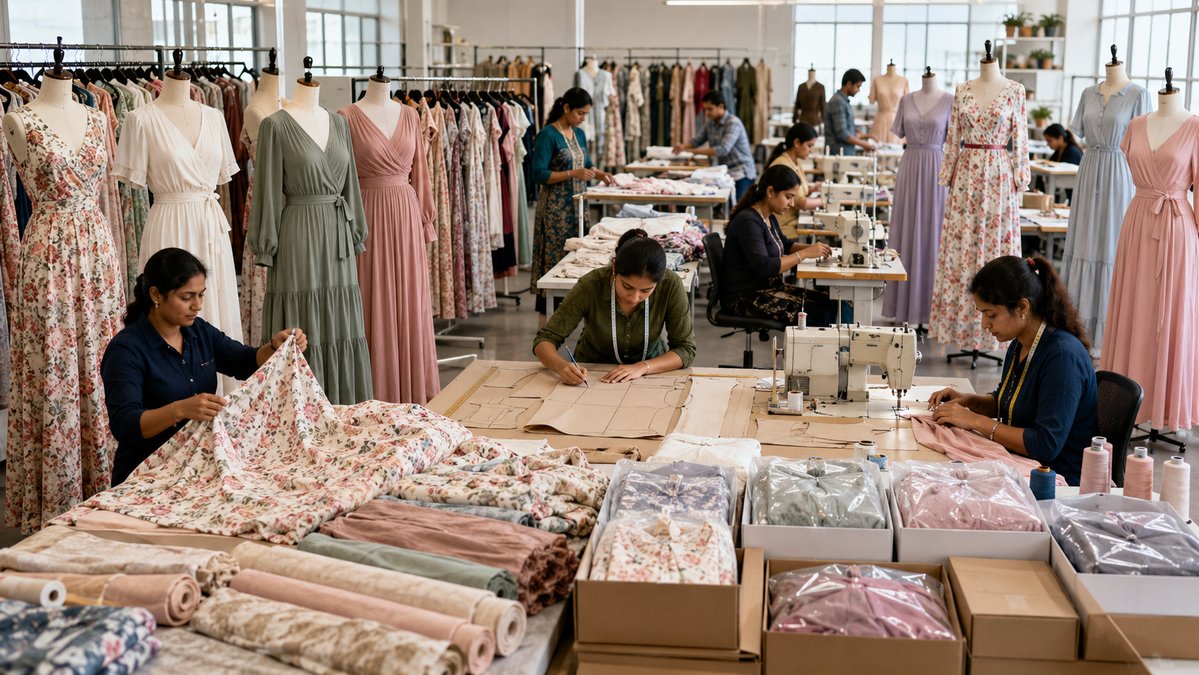
Women’s maxi dress manufacturers produce floor-length dresses in cotton, with floral prints and modest silhouettes for retailers and fashion labels, offering custom, private-label, and OEM production. Buyers should compare fabric quality, sizing range, MOQs, and certifications before choosing a wholesale or bulk manufacturing partner.
Why the Right Maxi Dress Manufacturer Makes the Difference
The maxi dress is one of those rare styles that never really goes out of rotation. It shows up in resort collections, everyday loungewear lines, modest fashion catalogs, and evening capsule collections, all at once.
That versatility is exactly why sourcing one well is harder than it looks. A maxi dress lives or dies on drape. Get the fabric weight wrong, and a floaty summer dress turns into something stiff and shapeless. Get the hem grading wrong across sizes, and a size 18 customer ends up with a dress that fits nothing like the size 8 sample.
Whether you’re a boutique buyer in Melbourne, a growing label in Amsterdam, or a retailer building a modest fashion line for the Gulf market, the manufacturer behind your maxi dresses shapes how the finished product actually performs on real bodies. This guide covers how maxi dress manufacturing works, what to look for, and how to source with confidence across markets.
What Do Women’s Maxi Dress Manufacturers Actually Do?
A women’s maxi dress manufacturer typically handles some or all of the following:
- Pattern making and size grading across a full size range
- Fabric sourcing, testing, and print development
- Cutting, sewing, and finishing
- Trim, lining, and closure selection
- Quality control and garment inspection
- Labeling, folding or hanging, and bulk shipping
Some factories specialize in dresses specifically, which often means better draping expertise and more consistent hemlines. Others produce dresses as part of a broader women’s apparel range. Both can work well, but it’s worth asking directly how much of a factory’s output is dedicated to dresses versus other garment types.
OEM vs. Cut-and-Sew Maxi Dress Production
Buyers generally choose between two production approaches:
OEM Maxi Dress Manufacturer (Full Package): The factory manages everything, from fabric sourcing to the finished, packaged dress, based on a design brief or reference sample. This is the most common starting point for brands without an in-house pattern-making team.
Cut-and-Sew (CMT): The brand supplies fabric and patterns, and the manufacturer only cuts, sews, and finishes the garments. This gives more control over fabric sourcing but demands more coordination on the buyer’s end.
Most brands start with OEM production and shift toward CMT once they’ve locked in preferred fabric mills and stable order volumes.
Popular Maxi Dress Styles Manufacturers Produce
A capable women’s dress manufacturer should be comfortable with a range of silhouettes, since most brands eventually diversify beyond a single style. Common categories include:
- Floral maxi dress manufacturer work — printed or embroidered dresses for spring and summer collections
- Cotton maxi dress manufacturer production — breathable, everyday styles suited to warm and humid climates
- Long sleeve maxi dress manufacturer capabilities — full-coverage styles for cooler seasons or modest fashion markets
- Plus size maxi dress manufacturer expertise — accurate grading and proportion adjustments across extended size ranges, not just simple scaling
- Summer maxi dress manufacturer styles — lightweight, often sleeveless or short-sleeve designs for resort and vacation wear
- Modest maxi dress manufacturer options — higher necklines, longer sleeves, and looser silhouettes for markets where modest fashion is in steady demand
If a manufacturer’s sample catalog shows only one silhouette, ask whether they can produce variations such as wrap styles, tiered skirts, or fitted-waist designs before committing to a bulk order.
Fabrics Commonly Used in Maxi Dress Manufacturing
Fabric choice affects drape, comfort, and how a dress performs across seasons. Common options include:
- Cotton and cotton-voile blends — breathable, lightweight, ideal for warm-climate and everyday wear
- Rayon and viscose — soft drape with good movement, widely used in printed maxi styles
- Linen and linen blends — textured, breathable, popular for resort and vacation collections
- Polyester and poly-blends — wrinkle-resistant and durable, common in mass-market retail
- Chiffon and georgette — lightweight, semi-sheer fabrics often layered for eveningwear maxi dresses
- Ponte and jersey knits — stretch fabrics used for fitted, travel-friendly maxi styles
- Crepe — structured drape with a matte finish, popular for occasion and workwear-adjacent maxi dresses
A manufacturer with in-house fabric testing can catch shrinkage or colorfastness issues before bulk cutting begins. This is a fair question to raise during your first sourcing conversation, especially for printed fabrics, where color consistency across dye lots can be a recurring issue.
Fits and Seasonal Collection Planning
Maxi dresses aren’t a single fit category. Buyers typically choose from:
- A-line and empire waist — forgiving through the midsection, popular across most body types
- Fitted or bodycon — requires precise grading and stretch fabric to maintain shape
- Wrap styles — adjustable fit, popular for both casual and semi-formal collections
- Tiered and flowy — relaxed silhouettes common in bohemian and resort-inspired lines
Seasonal planning also matters more for maxi dresses than for many other categories, since fabric weight needs to match climate demand:
- Warmer, year-round markets (the Gulf region, parts of Australia, and South Africa) tend to favor lightweight cotton, linen, and viscose styles.
- Markets with distinct seasons (much of the USA, Canada, UK, and parts of Europe) often need both lightweight summer fabrics and heavier, long-sleeve options for autumn and winter.
- Modest fashion markets frequently combine full-length coverage with breathable fabric, since longer sleeves and higher necklines still need to perform in warm weather.
A manufacturer familiar with these patterns can help buyers plan production calendars that align with actual seasonal demand rather than overordering the wrong fabric weight.
Sizing Considerations in Maxi Dress Manufacturing
Because maxi dresses are floor-length, sizing errors are more visible than they are in shorter garments. A dress that’s an inch too long or short reads very differently on the body than a similar error on a knee-length style. Buyers should confirm:
- Whether the manufacturer grades for height variation within a size, not just bust and waist measurements
- Whether plus-size grading adjusts proportions properly rather than simply scaling up a smaller pattern
- Which regional size standard the factory follows, since US, UK, and EU sizing can differ meaningfully
Requesting a size-run sample, meaning one sample in each size rather than a single medium, is especially useful for maxi dresses given how much hem length can vary.
Customization, Private Labeling, and OEM Options
Most retailers today want more than an off-the-shelf dress. Here’s how the main sourcing paths compare:
Custom Maxi Dress Manufacturer Services
Custom manufacturing means the factory builds the dress to your exact specifications, including fabric, print, and fit. This suits brands with a clear design direction and a technical pack ready to share.
Private Label Maxi Dresses
With private-label maxi dresses, the manufacturer offers existing base designs that you can brand with your own labels, tags, and packaging. This route is typically faster and offers lower MOQs than full-custom development.
OEM Maxi Dress Manufacturer Production
OEM production covers the entire process, from concept through finished, packaged goods, based on a design brief or reference images. It’s a practical option for brands scaling quickly without a large internal design team.
A reliable custom clothing manufacturer should walk you through all three paths and recommend the one that fits your budget, design readiness, and timeline.
Samples: Why They’re Worth the Investment
Skipping the sample stage is a common and costly mistake in dress sourcing. A pre-production sample lets you check:
- Fabric drape and how the dress moves on the body
- Hem length accuracy and consistency
- Print placement and pattern matching, especially for floral designs
- Seam finishing and lining quality
Sample development for maxi dresses typically takes two to four weeks, depending on fabric and print complexity. It’s a modest upfront cost that prevents far more expensive problems in a bulk production run.
Minimum Order Quantities: What to Expect
MOQs vary by manufacturer, fabric, and design complexity. General industry ranges look like this:
| Production Type | Typical MOQ Range | Best For |
|---|---|---|
| Private label (existing styles) | 50–300 pieces per style/color | New brands, small boutiques testing demand |
| Custom design, single fabric | 300–1,000 pieces per style | Growing brands with proven sales history |
| Full OEM, multiple SKUs | 1,000+ pieces per style | Established retailers and department stores |
| Sample-only orders | 1–10 pieces | Concept testing before bulk commitment |
These are general benchmarks rather than fixed rules. Some smaller workshops offer lower MOQs to support startup brands, while larger factories may require higher volumes to keep unit pricing competitive. Always confirm whether MOQs apply per style, per print or color, or per size range, since this varies by manufacturer.
Pricing: What Affects the Cost of Bulk Women’s Maxi Dresses
Buyers sourcing bulk women’s maxi dresses should expect pricing to depend on:
- Fabric type and quality (chiffon and crepe generally cost more than basic cotton)
- Print complexity, including custom prints versus stock patterns
- Design details like linings, embellishments, or fitted seaming
- Order volume and number of colorways
- Shipping method and destination
A lower unit price isn’t automatically the better deal if it comes with inconsistent hem lengths or fabric that doesn’t hold its drape after washing. Experienced buyers typically request a landed cost estimate, covering shipping, duties, and applicable import taxes, before comparing quotes across manufacturers.
Quality Control in Maxi Dress Manufacturing
Quality control should happen throughout production, not just at the final stage:
- Pre-production sample approval — confirming fit, drape, and construction before bulk cutting starts
- In-line inspection — checking hem consistency and seam quality as garments move through production
- Final random inspection (FRI) — sampling finished goods before shipment, often following AQL (Acceptable Quality Limit) standards
- Measurement audits — verifying hem length and proportions match the approved size chart across the full run
Ask potential manufacturers whether they allow third-party inspections. A factory confident in its own process usually welcomes outside verification.
Packaging and International Shipping Considerations
Packaging expectations differ by market, and getting this right helps avoid delays at customs. Key considerations include:
- Labeling requirements—fiber content, care instructions, and country of origin—are legally required in many markets, including the EU, the UK, and North America.
- Hanger-ready packaging — particularly important for maxi dresses, since folding can create deep creases that are hard to press out
- Garment bags — often used to protect longer dresses from wrinkling and snagging during transit.
- Retail barcoding — UPC or EAN barcodes speed up receiving for larger retail accounts
- Consolidated shipping — combining multiple styles or colorways into a single shipment to reduce freight costs
Buyers importing into the UAE, Saudi Arabia, or Qatar should confirm their manufacturer is familiar with GCC customs documentation, since incomplete paperwork is a frequent cause of shipment delays. Buyers in the EU and UK should confirm garment labeling meets local textile regulations before goods ship.
How to Choose a Reliable Maxi Dress Manufacturer
Here’s a practical checklist for evaluating potential partners:
- Ask for verifiable production history. A manufacturer with real experience should be able to share past work or connect you with references.
- Review communication speed and clarity. Slow or vague responses during sourcing usually predict the same during production.
- Confirm their sample process and turnaround time. Clear timelines are a strong signal of overall reliability.
- Check for relevant certifications. OEKO-TEX certification, which confirms fabrics are tested for harmful substances, is worth asking about, especially for dresses meant for sensitive skin or children’s lines.
- Look at their online presence. A maintained Google Business Profile, consistent customer reviews, and listings on recognized trade directories all point to an established, transparent business.
- Ask about fabric transparency. A manufacturer willing to share fabric composition and sourcing origin is easier to trust for long-term partnerships.
Manufacturers such as Minmax Textile work with fashion brands on custom and private label maxi dress production and represent the kind of communication-first, detail-oriented partner worth prioritizing in sourcing.
Local Sourcing Insights by Region
Sourcing patterns shift slightly depending on where a business is based:
- USA and Canada: Buyers often balance overseas manufacturing for cost efficiency with a growing interest in nearshoring to enable faster replenishment during peak seasons.
- UK and Germany: Textile labeling compliance and fiber content disclosure are closely tied to purchasing decisions, alongside rising interest in sustainable fabric sourcing.
- Australia: Longer shipping lead times from overseas factories make early seasonal planning especially important, particularly for summer resort collections.
- UAE, Saudi Arabia, and Qatar: Modest maxi dress styles, including long sleeves and higher necklines in breathable fabrics, remain in steady year-round demand.
- Netherlands: Buyers frequently prioritize manufacturers with clear, traceable supply chains and documented sustainability practices.
- South Africa: Import duties and currency fluctuation make transparent, all-in pricing especially useful when comparing manufacturer quotes.
These patterns are general tendencies rather than strict rules, and are worth factoring into sourcing timelines rather than treating as fixed requirements.
Working With a Broader Apparel Supplier
Many maxi dress buyers are also sourcing complementary pieces like matching kimonos, cover-ups, or coordinating separates. A women’s apparel supplier capable of producing related items alongside maxi dresses can simplify vendor management considerably, reducing the number of separate relationships a growing brand needs to maintain.
If you expect to expand your collection beyond maxi dresses, it’s worth asking potential manufacturers about their broader production capabilities early in the sourcing process.
Frequently Asked Questions
What is the typical MOQ for a wholesale maxi dress supplier? MOQs commonly range from 50 to 300 pieces per style for private-label orders, with higher minimums typically required for fully custom prints or designs.
How long does it take to develop a maxi dress sample? Sample development usually takes two to four weeks, depending on fabric sourcing, print development, and design complexity.
What fabric works best for maxi dresses sold across different climates? Cotton and viscose blends tend to perform well in most climates, while linen suits warmer regions, and heavier crepe or ponte knits work better in cooler seasons.
Can manufacturers accurately grade plus-size maxi dresses? Yes, though it requires proper proportion grading rather than simply scaling up a smaller pattern. It’s worth confirming a manufacturer’s plus-size experience specifically before ordering.
What certifications matter most when sourcing maxi dresses? OEKO-TEX certification is commonly requested because it confirms that fabrics have been tested for harmful substances, which matters for garments that come into direct, prolonged skin contact.
Finding a Maxi Dress Manufacturing Partner You Can Trust
Sourcing a women’s maxi dress manufacturer involves more than just comparing unit prices. It’s about finding a partner who understands drape, grades sizes accurately, and can produce consistent quality across the styles your customers actually want, whether that’s a breezy floral print for summer, a long-sleeve modest silhouette, or a fitted style built for travel.
Take time to request samples, ask direct questions about MOQs and fabric sourcing, and check reviews or references before placing a bulk order. A dependable manufacturing partner protects your margins and makes sure every dress reaching your customers looks and moves the way it did on the runway or in your lookbook.
If you’re ready to start sourcing, reach out to a manufacturer with proven experience in custom and private-label dress production, such as Minmax Textile, and request a sample quote to evaluate their communication and turnaround time before committing to a larger order.