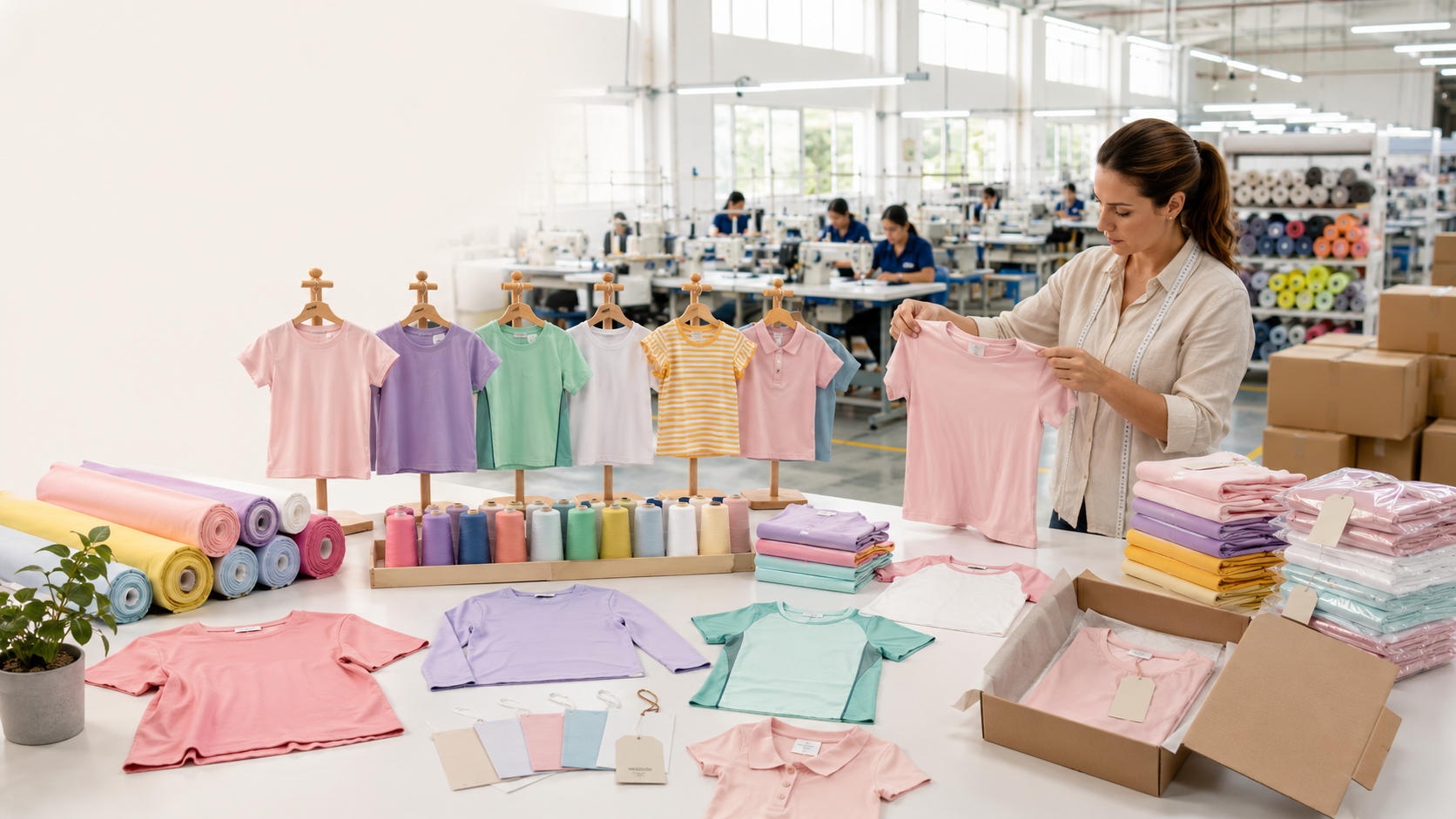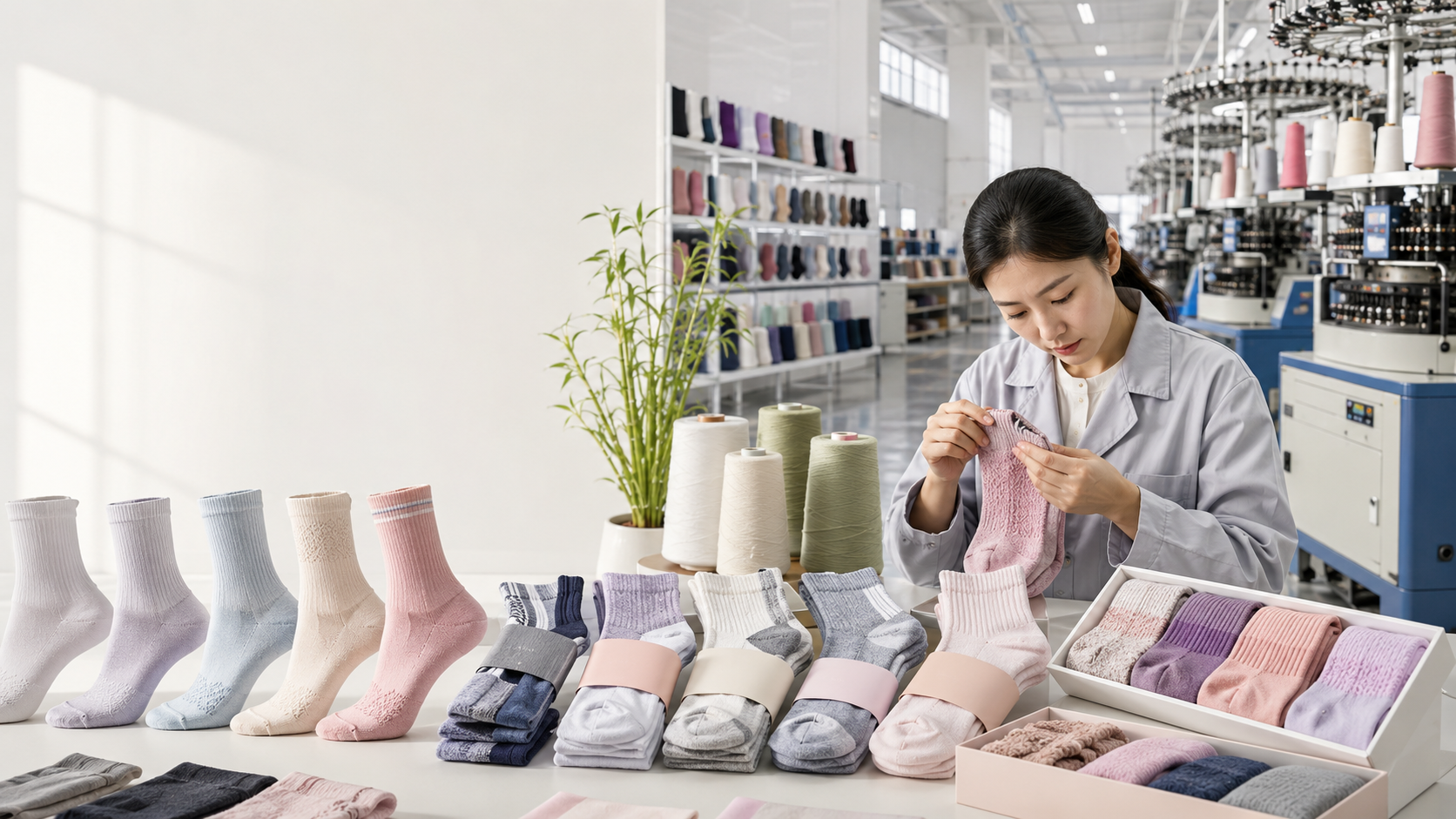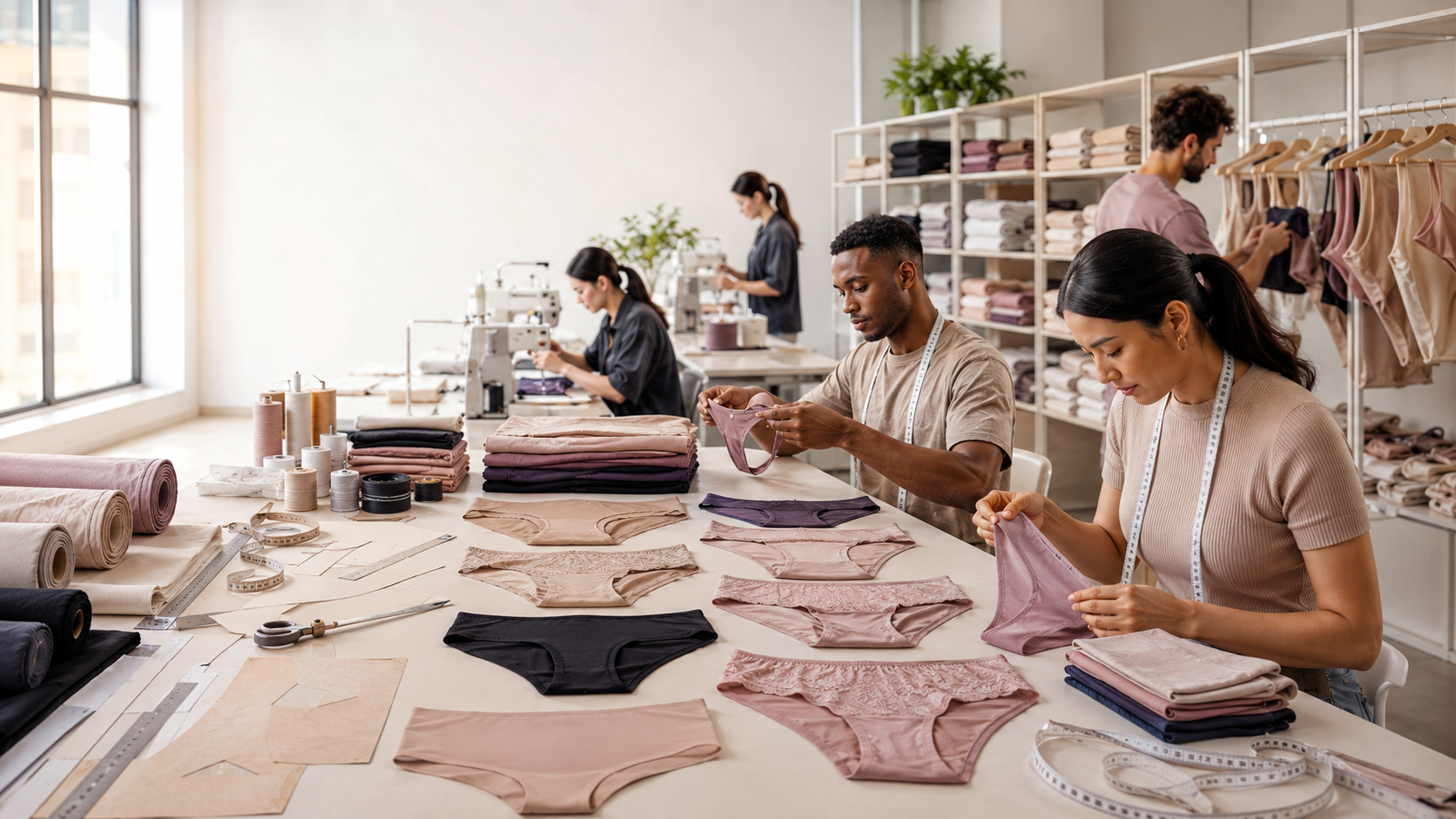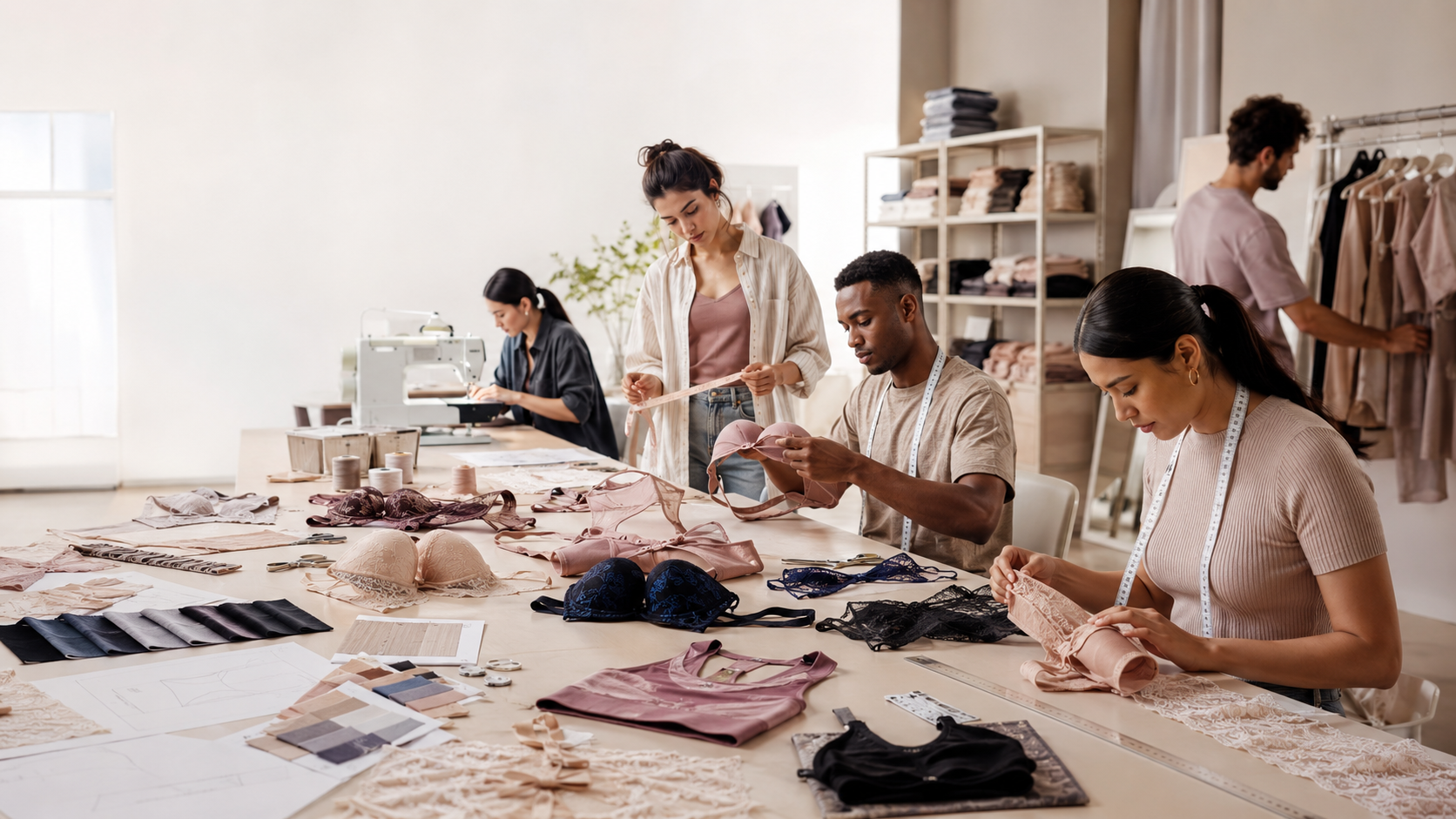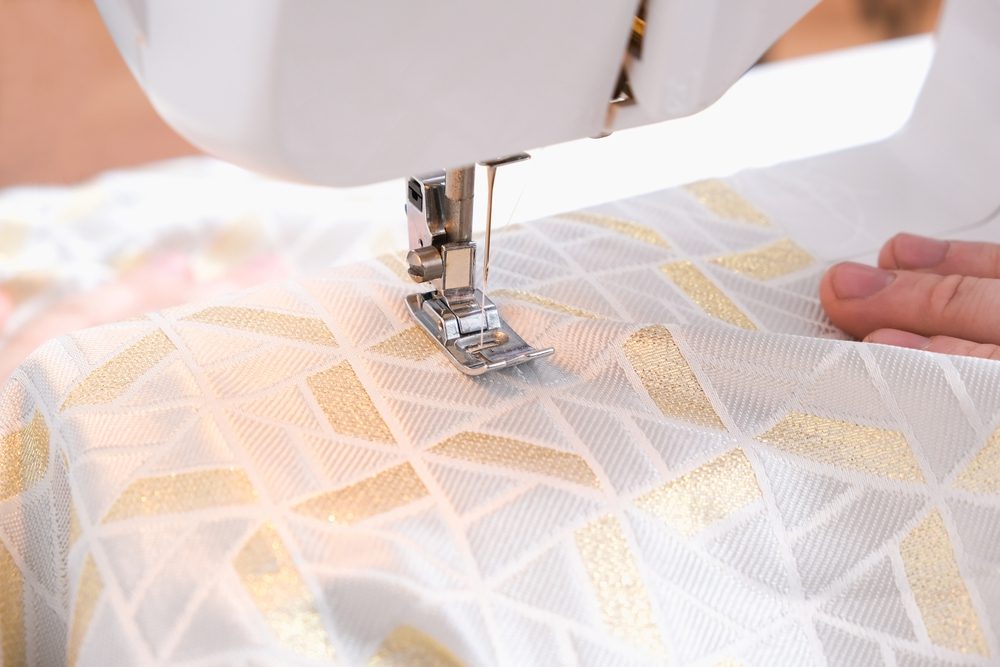
Finding the right clothing manufacturers for startups in the USA involves balancing low Minimum Order Quantities (MOQs), production quality, and lead times. Startups can choose between domestic USA factories for fast turnaround or trusted overseas partners like Minmax Textile for cost-effective, high-quality, and highly scalable apparel manufacturing.
Launching a fashion brand is an exhilarating journey. You have the sketches, the mood boards, and a clear vision of how your garments should look and feel. Whether you are aiming to disrupt the streetwear scene in Los Angeles, introduce premium athleisure to New York, or launch an eco-conscious line accessible to buyers across the UK, Canada, France, and Germany, one massive hurdle stands in your way: sourcing production.
The reality of the apparel industry is that a brilliant design is only as good as the factory executing it. For a startup, navigating the landscape of clothing manufacturers can feel like entering a maze blindfolded. If you partner with the wrong factory, you risk draining your capital on unwearable samples, missing crucial seasonal launch windows, or ending up with a basement full of inventory that fails quality standards.
This comprehensive guide breaks down everything you need to know to find, vet, and partner with clothing manufacturers for startups in the USA, helping you transition seamlessly from a passion project to a profitable commercial brand.
Why Choosing the Right Manufacturer Makes or Breaks a Startup
When you are a small brand, your capital is limited, and your margin for error is razor-thin. Established fashion houses can afford a botched production run; a startup usually cannot. The manufacturer you choose becomes an extension of your team. They control your product quality, your profit margins, and your delivery timelines.
For startups based in the US, UK, or Canada, the challenge is twofold: finding a manufacturer that accepts low Minimum Order Quantities (MOQs) while maintaining a unit cost that allows for healthy retail margins. If your cost of goods sold (COGS) is too high, you will struggle to make a profit after accounting for marketing, shipping, and operational costs. Conversely, if you sacrifice quality for a lower price, your return rates will skyrocket, ruining your brand reputation before it even takes off.
Domestic (USA) vs. Overseas Clothing Manufacturers
One of the first strategic decisions you must make is whether to manufacture your clothing domestically in the United States or to look to overseas manufacturing hubs. Both paths have distinct advantages and drawbacks, and the right choice depends heavily on your budget, values, and scaling strategy.
Domestic Manufacturing (USA)
Domestic manufacturing appeals heavily to startups prioritizing speed to market, premium branding, and localized oversight.
The Pros:
- Faster Turnaround Times: Shipping a pallet of clothes from a factory in Texas or California to your warehouse takes days, not weeks.
- Easier Communication: There are no time-zone hurdles or language barriers to navigate. You can jump on a phone call during normal business hours.
- Lower Shipping Costs: Domestic freight is significantly cheaper and less volatile than international ocean or air cargo.
- “Made in USA” Appeal: For certain market segments, domestic production carries a powerful marketing narrative that justifies a higher retail price point.
The Cons:
- Higher Production Costs: Labor costs in the United States are substantially higher than in developing nations, driving up your per-unit cost.
- Limited Factory Capabilities: Many domestic factories specialize in simple cut-and-sew operations. Finding specialized domestic facilities for technical sportswear, complex outerwear, or intricate embellishments can be incredibly difficult.
Overseas Manufacturing
Overseas manufacturing remains the backbone of the global fashion industry, offering unparalleled scale, cost efficiency, and technical capability.
The Pros:
- Massive Cost Efficiency: Lower labor and material costs enable startups to achieve sustainable profit margins, even after accounting for international shipping.
- Advanced Capabilities: Overseas apparel hubs possess highly specialized machinery and deep supply chains for custom fabric development, complex washes, and intricate hardware.
- All-in-One Sourcing: Overseas manufacturers often operate as Full Package Production (FPP) facilities, meaning they handle fabric sourcing, patternmaking, grading, labeling, and packaging under one roof.
The Cons:
- Longer Lead Times: Ocean freight can take several weeks, requiring meticulous inventory planning and earlier design deadlines.
- Higher MOQs: To justify international setup and shipping costs, many overseas factories require higher minimum order volumes, though some startup-friendly partners offer flexible solutions.
At-a-Glance Comparison
| Feature | Domestic Manufacturing (USA) | Overseas Manufacturing (e.g., Minmax Textile) |
| Production Cost | High | Low to Medium |
| Minimum Order Quantities (MOQs) | Often lower (but with higher unit cost) | Varied (Flexible options available for startups) |
| Shipping Time | 2 to 7 days | 3 to 6 weeks (Ocean) / 5 to 10 days (Air) |
| Technical Capabilities | Standard / Restricted | Advanced / Full Customization |
| Communication | Real-time, same time zone | Scheduled, requiring clear documentation |
How to Find and Vet Clothing Manufacturers for Startups in the USA
Finding a factory requires a blend of digital research, networking, and systematic verification. You cannot rely on a basic web search alone, as many of the best industrial clothing manufacturers have dated websites and do not invest heavily in search engine optimization.
1. Leverage Industrial and Fashion Directories
Instead of generic search engines, use specialized industry directories to find verified apparel suppliers.
- Maker’s Row: A dedicated platform for finding apparel manufacturers based entirely in the USA. It is excellent for sourcing domestic cut-and-sew factories, pattern makers, and material suppliers.
- ThomasNet: A massive industrial directory for North American manufacturers. While not exclusive to fashion, it lists large-scale textile mills and industrial garment producers.
- Squetch or ApparelTextileSourcing: Great directories for connecting with European, Canadian, and global apparel networks.
2. Attend Industry Trade Shows
Trade shows offer an invaluable opportunity to meet manufacturing representatives face-to-face, touch fabric samples, and evaluate their professionalism on the spot.
- Texworld NYC / Apparel Textile Sourcing Miami: These events bring hundreds of domestic and international apparel manufacturers, fabric mills, and trim suppliers to the United States twice a year.
- MAGIC Las Vegas: One of the largest fashion retail and supply chain events in the world, featuring dedicated sourcing zones for startups and established brands alike.
3. The Vetting Process: Questions Every Startup Must Ask
When you contact a potential manufacturing partner, you need to speak their language. Do not just send an email saying, “I want to start a t-shirt line, how much does it cost?” That flags you instantly as an inexperienced amateur, and busy factories may ignore your inquiry. Instead, approach them with a professional vetting script.
Essential Vetting Checklist:
- What is your Minimum Order Quantity (MOQ) per style, color, and size breakdown?
- Do you offer CMT (Cut, Make, Trim) or FPP (Full Package Production) services?
- Can you work from a standard Tech Pack, or do you require physical samples to duplicate?
- What is your standard lead time for prototype sampling versus bulk production?
- What ethical, environmental, and labor certifications does your facility hold (e.g., OEKO-TEX, WRAP, SEDEX)?
- Can you provide references or case studies from other startup brands you currently manufacture for?
Key Manufacturing Concepts Startups Must Understand
To communicate effectively with garment factories, you need a firm grasp of foundational manufacturing terminology.
Tech Packs: Your Blueprint for Success
A Tech Pack (Technical Packet) is the garment industry equivalent of an architectural blueprint. It is a comprehensive document that contains every single detail of your product. If you do not provide a precise tech pack, the factory is forced to guess, which inevitably leads to production errors.
A professional Tech Pack must include:
- Technical Drawings: Flat vector sketches (usually created in Adobe Illustrator) showing the garment’s front, back, and interior views, with detailed callouts.
- Bill of Materials (BOM): A comprehensive list detailing every single component required, including the primary shell fabric, lining, threads, zippers, buttons, care labels, and hangtags.
- Measurement Specification Sheet: A precise chart detailing the exact dimensions of the garment for the baseline size (usually a size Medium), along with specific tolerances for error.
- Grading Rules: Detailed mathematical rules explaining how the measurements should scale up or down for sizes like XS, S, L, XL, and XXL.
Understanding MOQs (Minimum Order Quantities)
Factories enforce MOQs because setting up an apparel production line incurs substantial fixed overhead costs. Preparing the cutting tables, calibrating specialized industrial sewing machines, and sourcing specific fabric dye lots takes time and labor. If a factory runs only 10 units of a garment, it will lose money on the setup labor.
Many domestic factories offer low MOQs (e.g., 50 to 100 units per style), but compensate by charging a much higher price per garment. International manufacturers may require higher minimums (e.g., 300 to 500 units), but offer vastly superior economies of scale, bringing your per-unit costs down to a level where your startup can actually run profitable digital ad campaigns and wholesale distributions.
The Step-by-Step Production Process
[Design & Tech Pack] ➔ [Sourcing Fabrics/Trims] ➔ [Sample Development] ➔ [Fit Correction] ➔ [Bulk Production] ➔ [Quality Assurance] ➔ [Logistics & Delivery]
Step 1: Design and Tech Pack Finalization
Convert your initial creative ideas into a production-ready, digital Tech Pack. If you do not have technical design training, hire a freelance apparel technical designer to build these files for you.
Step 2: Sourcing Materials
Before a single stitch is sewn, you must select and source your raw materials. This involves choosing the exact fabric weight (GSM – Grams per Square Meter), composition (e.g., 100% organic cotton, nylon-spandex blends), and matching trims.
Step 3: Sample Development (The Prototype Phase)
Never skip the sampling phase. The factory will create a physical prototype based on your Tech Pack. This sample allows you to evaluate the fabric drape, examine the stitching quality, and check the real-world fit on a fit model. Expect to go through at least two to three rounds of revisions before the sample is perfected.
Step 4: Bulk Production Setup
Once you officially approve the final sample (known as the Pre-Production or PP Sample), the factory begins cutting the bulk fabric lots, grading the patterns across your full size range, and moving the garments through the assembly lines.
Step 5: Quality Control (QC) and Inspection
A reliable manufacturer will conduct rigorous inline and final quality assurance checks. They look for uneven stitching, open seams, loose threads, fabric defects, and measurement deviations that fall outside your allowed tolerances.
Step 6: Packaging and Logistics
Finished garments are pressed, folded, tagged, packed into polybags, and boxed into heavy-duty cartons. From there, they clear customs and transport via air or ocean freight directly to your doorstep or fulfillment center.
Partnering globally with Minmax Textile
For startups in the USA, UK, Canada, and Europe looking to scale past the limitations of local boutique factories without losing control over quality, Minmax Textile provides an exceptional bridge.
As a premier global garment manufacturer, Minmax Textile specializes in assisting emerging apparel startups, independent designers, and growing e-commerce brands. They offer high-quality, comprehensive fashion production services that cover the entire supply chain from raw material sourcing and custom sample development to bulk manufacturing and worldwide shipping.
Why Minmax Textile Fits the Startup Model
- End-to-End FPP Expertise: Minmax Textile operates as a full-package production manufacturer. Startups do not need to spend months sourcing zippers from one vendor and fabric from another; their team handles the entire procurement, manufacturing, and quality management process under one roof.
- Startup-Friendly Scaling: They understand that a brand launching its first collection cannot commit to the massive order volumes demanded by massive industrial conglomerates. Minmax Textile provides flexible, scalable solutions designed to help small brands grow organically.
- Rigorous Quality Management: Operating in accordance with international standards, they ensure that your bulk production matches your approved prototypes, preserving your brand’s integrity and protecting you from costly consumer returns.
- Global Export Efficiency: With extensive experience shipping freight into major ports across the United States, United Kingdom, Canada, France, and Germany, Minmax Textile navigates international customs, documentation, and logistics smoothly, delivering your collections directly to your warehouse without hidden surprises.
Avoiding Common Mistakes That Tank Fashion Startups
The fashion industry has a steep learning curve. Steer clear of these three common operational pitfalls to protect your startup’s runway capital:
- Rushing Past the Sampling Phase: It is incredibly tempting to approve a suboptimal sample just to hit a specific launch date. Resist this urge completely. If a sample fits poorly or feels cheap, the bulk run will look the same. Fix every error before signing off on bulk production.
- Failing to Include a Defect Tolerance Clause: No manufacturing process is flawless; industrial machinery and human hands make mistakes. Standard apparel contracts include a “defect tolerance rate” (typically 1% to 3%). Ensure your manufacturing agreement clearly states what happens if the defect rate exceeds this threshold.
- Underestimating Shipping, Duties, and Taxes: When calculating your profit margins, do not rely solely on the factory’s FOB (Free on Board) price. You must calculate the fully landed cost, which includes international freight charges, marine insurance, customs brokerage fees, and import duties specific to your country’s tariff codes.
Frequently Asked Questions
How much does it cost to manufacture a clothing line for a startup?
The cost varies dramatically based on your garment complexity, fabric selection, and order volume. Launching a simple capsule collection of basic streetwear (t-shirts, hoodies) with an overseas manufacturer can cost between $2,500 and $5,000 for initial samples and low-minimum bulk runs. Complex lines like technical activewear, swimwear, or structured tailoring require higher initial investments due to advanced fabric sourcing and specialized construction techniques.
What is the average turnaround time for custom apparel manufacturing?
A typical production cycle takes anywhere from 60 to 90 days. The prototyping and sampling stage usually takes 2 to 4 weeks. Once samples are approved, bulk manufacturing takes 30 to 45 days, followed by 1 to 6 weeks for shipping, depending on whether you use express air freight or cost-effective ocean freight.
Can I start a fashion brand with no design experience?
Yes, absolutely. Many successful fashion entrepreneurs are founders and marketers rather than trained technical designers. However, you must partner with an apparel technical designer to convert your creative ideas, mood boards, and physical inspiration garments into professional, factory-ready Tech Packs. Alternatively, working with a full-service manufacturer like Minmax Textile can help streamline the technical development process.
How do I protect my apparel designs from being copied?
Before sharing proprietary Tech Packs or original design concepts with factories, request that they sign a formal Non-Disclosure Agreement (NDA). Additionally, protect your intellectual property in the long term by trademarking your brand name, logo, and distinctive design elements in your primary consumer markets.
Final Thoughts: Moving from Concept to Launch
Finding the right clothing manufacturer for your startup is not an overnight task. It requires patience, clear and concise communication, and an analytical approach to vetting potential partners. Whether you decide to start with a boutique domestic factory for quick testing or partner with an experienced, all-in-one global manufacturer like Minmax Textile to secure your long-term profit margins, focus consistently on building a collaborative, transparent relationship.
Treat your manufacturer as your most important business partner. Provide them with flawless, detailed Tech Packs, respect their production timelines, communicate openly about your quality expectations, and you will lay a solid foundation for a resilient, highly profitable fashion brand.