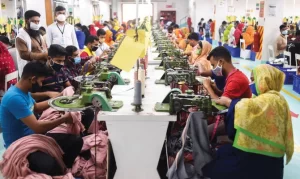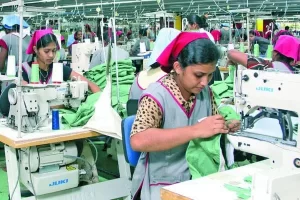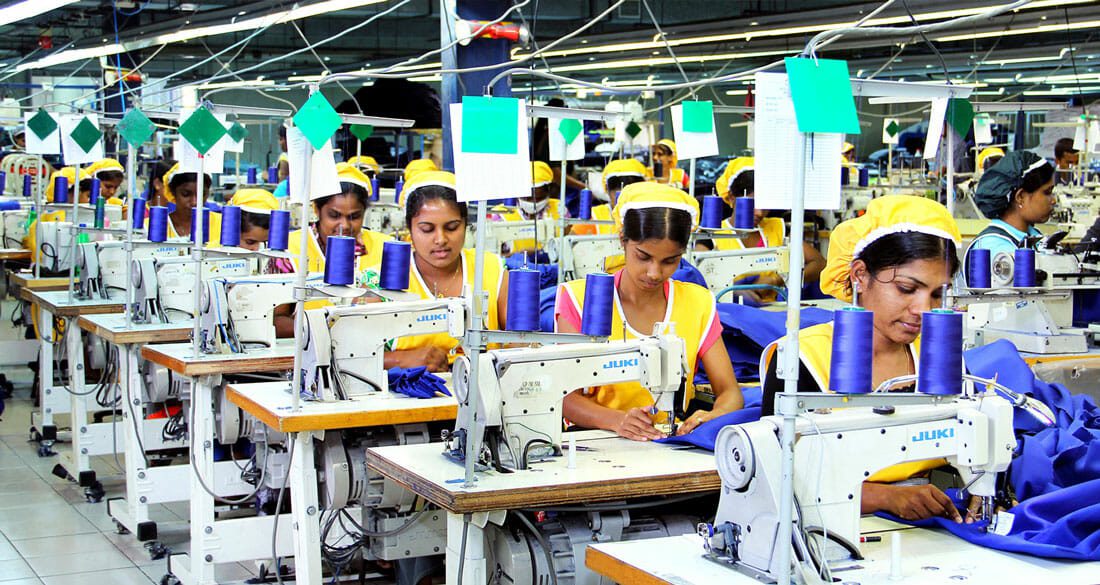
Bangladesh is one of the world’s leading garment export hubs, known for high-volume knitwear, woven apparel, trousers, T-shirts, sweaters, shirts, denim, underwear, and sportswear. For buyers in the USA, UK, Canada, France, and Germany, Bangladesh offers competitive pricing, large production capacity, improved compliance, and growing strength in sustainable garment manufacturing.
Why Bangladesh Matters in Global Apparel Sourcing
Walk into a mall in New York, Chicago, Toronto, London, Paris, or Berlin, and there is a good chance you will find a “Made in Bangladesh” label inside a T-shirt, hoodie, pair of jeans, sweater, or children’s outfit.
That small label tells a much bigger story.
Bangladesh has grown from a low-cost garment producer into a serious global manufacturing hub. Today, it serves mass retailers, private-label brands, fashion startups, corporate uniform suppliers, e-commerce clothing companies, and international wholesalers. For U.S. buyers especially, Bangladesh is often part of the sourcing conversation when price, volume, consistency, and supplier experience matter.
The primary reason is simple: Bangladesh understands garments at scale. The country’s apparel sector includes knitwear, woven garments, denim, sweaters, shirts, trousers, activewear, undergarments, and more. According to the Bangladesh Investment Development Authority, the country is currently the second-largest ready-made garment exporter globally, with the sector recording USD 38.48 billion in export earnings in 2024. Knitwear contributed USD 20.52 billion, while woven garments contributed USD 17.95 billion.
For a sourcing manager in Los Angeles, a boutique owner in Texas, or a private-label brand in New Jersey, Bangladesh is not just a “cheap manufacturing country.” It is a mature apparel ecosystem with factories, trim suppliers, washing units, printing facilities, compliance teams, experience in export documentation, and a deep understanding of Western buyer requirements.
That is why the topic Top Garment Exports from Bangladesh: A Global Manufacturing Hub matters for modern apparel sourcing.
What Are the Top Garment Exports from Bangladesh?
The top garment exports from Bangladesh include trousers, T-shirts, knitted shirts, sweaters, shirts and blouses, underwear, denim products, jackets, sportswear, children’s clothing, and woven fashion items.
BGMEA data compiled from Bangladesh’s Export Promotion Bureau shows that in FY 2024–25, Bangladesh’s major apparel items included trousers worth USD 12.98 billion, T-shirts and knitted shirts worth USD 8.55 billion, sweaters worth USD 5.12 billion, shirts and blouses worth USD 3.04 billion, and underwear worth USD 2.18 billion.
Here is a simple breakdown:
| Garment Category | Why Buyers Source It from Bangladesh |
|---|---|
| T-shirts and knitted shirts | High-volume production, competitive cost, cotton expertise |
| Trousers and pants | Strong woven manufacturing base |
| Sweaters | Seasonal demand in the USA, UK, Canada, France, Germany |
| Shirts and blouses | Suitable for casual, office, school, and private-label collections |
| Underwear | Reliable basic-wear manufacturing |
| Denim | Strong washing, finishing, and casualwear capabilities |
| Sportswear | Growing demand from fitness, lifestyle, and e-commerce brands |
| Jackets and outerwear | Expanding value-added product potential |
For Minmax Textile and other Bangladesh-based sourcing-focused brands, these categories are important because they match what global buyers already need: reliable basics, repeatable production, and scalable supply.
Why Bangladesh Became a Global Garment Manufacturing Hub
Bangladesh did not become a garment powerhouse overnight. The country grew by building an ecosystem around ready-made garments rather than relying on individual factories.
The Export Promotion Bureau’s market intelligence portal describes Bangladesh as one of the world’s largest ready-made garment exporters, with more than four thousand factories and leading products such as shirts, trousers, T-shirts, denim, jackets, sweaters, undergarments, and sportswear.
Several strengths explain Bangladesh’s position.
1. Large Manufacturing Capacity
Bangladesh can handle high-volume orders. That matters to U.S. retailers and wholesalers that need thousands, or even millions, of pieces across multiple sizes, colors, and delivery windows.
A small fashion startup may start with basic T-shirts. A national retailer may need full seasonal programs with tops, bottoms, fleece, and kids’ wear. Bangladesh has suppliers for both, although the right factory depends on order size, product type, compliance needs, and target price.
2. Strong Knitwear and Woven Apparel Base
Bangladesh is strong in both knitwear and woven garments. BGMEA data shows that FY 2024–25 RMG exports reached USD 39.35 billion, with woven exports at USD 18.19 billion and knitwear exports at USD 21.16 billion.
Knitwear includes T-shirts, polos, hoodies, sweatshirts, leggings, underwear, and casualwear. Woven apparel includes shirts, trousers, denim, jackets, uniforms, dresses, and structured garments.
This balance is important. A U.S. buyer can source a cotton T-shirt program, then add denim jeans, button-down shirts, or children’s pants from the same country.
3. Competitive Pricing for Core Apparel
Bangladesh is especially competitive in core apparel categories. That includes basics like T-shirts, trousers, sweaters, underwear, and shirts.
In real business terms, this helps brands protect margin. For example, a U.S. promotional apparel company selling blank T-shirts to schools, events, and businesses needs dependable pricing. Bangladesh can often compete well in that type of volume-driven category.
4. Growing Green and Ethical Manufacturing
Bangladesh has made major progress in factory safety, transparency, and green manufacturing. BIDA reports that the country has over 230 LEED-certified factories and highlights sustainability, green tax incentives, and value-added textile growth as part of the sector’s development.
This matters because buyers in the USA, UK, Canada, France, and Germany are no longer asking only, “What is the price?” They are also asking:
- Is the factory audited?
- Are workers protected?
- Is the production process traceable?
- Can the supplier support sustainable materials?
- Are certifications available?
- Can the manufacturer meet buyer compliance standards?
For Minmax Textile, these are the areas where trust signals should be communicated clearly: factory capabilities, compliance support, quality control processes, sample development, export experience, and transparent communication.
Top Garment Export Categories from Bangladesh
1. T-Shirts and Knitted Shirts
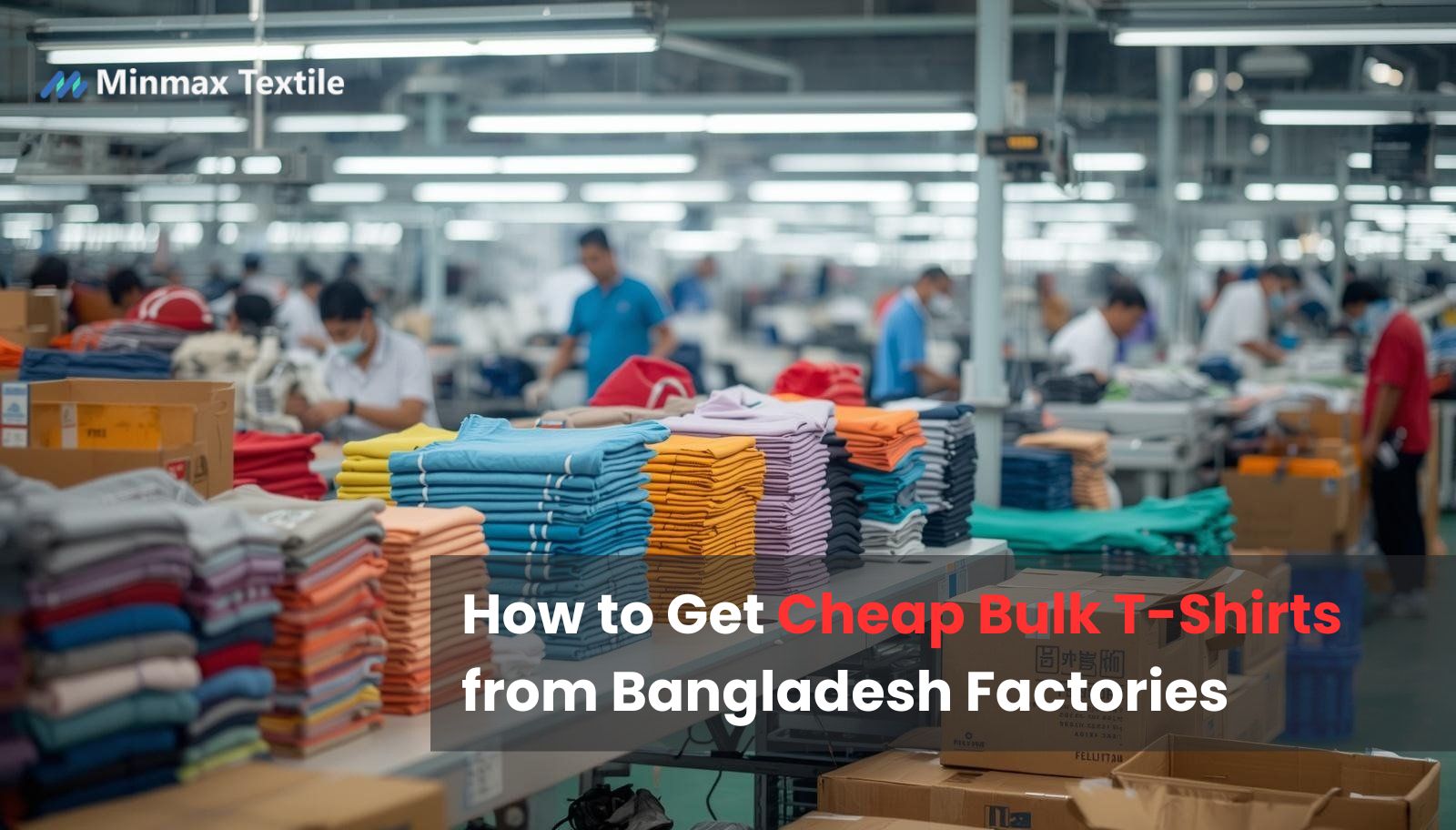
T-shirts are one of Bangladesh’s strongest export products. They are used by fashion brands, corporate merchandisers, sports clubs, schools, online stores, and retail chains.
For U.S. buyers, Bangladesh is attractive for:
- Basic crewneck T-shirts
- V-neck T-shirts
- Polo shirts
- Long-sleeve T-shirts
- Printed T-shirts
- Organic cotton T-shirts
- Private-label basics
A real-life example: a small e-commerce brand in Austin may launch with 5,000 graphic T-shirts. If the brand grows, it may need 50,000 pieces per season. Bangladesh is built for that kind of scaling.
2. Trousers and Pants
Trousers are the largest apparel export category in Bangladesh, according to BGMEA’s FY 2024–25 product data. This includes casual pants, chino pants, woven trousers, uniform pants, and fashion bottoms.
For buyers in the USA and Europe, trousers from Bangladesh are useful for:
- Men’s casualwear
- Women’s woven bottoms
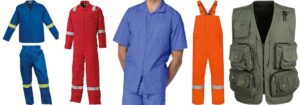
- School uniforms
- Corporate uniforms
- Workwear programs
- Retail private-label collections
The key buying factor is fit consistency. A good supplier should provide size-set samples, measurement charts, shrinkage testing, and pre-production approval before bulk production.
3. Sweaters
Sweaters are another major garment export from Bangladesh. They are especially relevant for colder markets such as the USA, Canada, the UK, France, and Germany.
Common sweater products include:
- Pullover sweaters
- Cardigans
- Knit tops
- Lightweight fashion sweaters
- Winter retail sweaters
- Kids’ sweaters
For Canadian and northern U.S. buyers, sweaters often sell well in fall and winter collections. The practical sourcing advice is to start early. Sweaters require yarn selection, lab dips, sample revisions, and seasonal production planning.
4. Shirts and Blouses
Bangladesh exports casual shirts, formal shirts, women’s blouses, school shirts, work shirts, and fashion tops.
This category is important for buyers who need woven apparel with clean stitching, consistent sizing, and a variety of fabrics. For example, a U.S. officewear brand may source cotton shirts from Bangladesh, while a UK retailer may source casual check shirts or women’s blouses.
The best suppliers usually understand:
- Collar construction
- Button quality
- Fusing quality
- Pattern accuracy
- Fabric shrinkage
- Packaging standards
5. Denim and Jeans
Denim is one of Bangladesh’s most recognized value-added garment segments. While Bangladesh is widely known for basics, it has also developed strong denim washing and finishing capabilities.
Popular denim exports include:
- Men’s jeans
- Women’s jeans
- Denim jackets
- Denim shirts
- Kids’ denim
- Stretch denim bottoms
- Washed and distressed denim
For U.S. buyers, denim sourcing should focus on wash approval, shade consistency, chemical compliance, and fabric performance. A minor shade issue in denim can create major returns, so quality control is critical.
6. Underwear and Innerwear
Underwear is a steady export category because demand is consistent year-round. Bangladesh exports men’s, women’s, and children’s innerwear, including cotton basics and stretch items.
This category works well for retailers that need repeat orders rather than one-time fashion drops. The main focus should be comfort, fabric recovery, stitching strength, elastic quality, and packaging.
7. Sportswear and Activewear
Sportswear is a growing opportunity for Bangladesh. Global demand for leggings, joggers, hoodies, training T-shirts, and athleisure wear continues to rise.
Bangladesh is increasingly investing in man-made fiber and higher-value apparel segments to match global demand shifts, according to BIDA.
For buyers, the main point is this: not every Bangladesh factory is equally strong in technical activewear. Buyers should check fabric sourcing, stretch recovery, moisture-wicking performance, seam strength, and testing capacity before placing orders.
Key Buyer Markets: USA, UK, Canada, France, and Germany
Bangladesh’s garment exports are highly relevant to the target markets in this article.
United States
The United States remains one of Bangladesh’s most important single-country apparel markets. BGMEA’s FY 2024–25 data shows Bangladesh exported USD 7.55 billion in apparel to the USA, up 13.79% from the previous fiscal year.
For U.S. buyers, Bangladesh is especially strong in:
- T-shirts
- Trousers
- Denim
- Hoodies
- Sweaters
- Children’s clothing
- Underwear
- Private-label basics
A U.S. buyer usually cares about landed cost, compliance, lead time, factory audits, and communication. Bangladesh can be a strong option when the order volume is realistic, and the product is matched with the right factory.
United Kingdom
The UK is another important market. BGMEA data shows Bangladesh exported USD 4.35 billion in apparel to the UK in FY 2024–25, with 3.68% growth.
UK buyers often source knitwear, casualwear, schoolwear, fashion basics, and seasonal sweaters from Bangladesh. For UK-focused brands, sustainability and ethical sourcing messaging are especially important.
Canada
Canada is smaller than the USA and the UK as markets, but it’s still valuable. Bangladesh exported USD 1.30 billion in apparel to Canada in FY 2024–25, growing 12.07%.
Canadian demand often includes winter-friendly products such as sweaters, hoodies, fleece, and layered basics, as well as everyday apparel.
France
France is a major European buyer market for Bangladesh. BGMEA data shows exports to France reached USD 2.16 billion in FY 2024–25, up 6.39%.
French buyers often care deeply about fashion presentation, compliance, sustainability, fabric feel, and brand story. For suppliers, this means that both product quality and documentation matter.
Germany
Germany is one of Bangladesh’s largest European markets for apparel. FY 2024–25 exports to Germany reached USD 4.95 billion, up 9.47%.
German buyers are often strict about compliance, testing, delivery discipline, and sustainability requirements. Suppliers targeting Germany should be prepared with certificates, audit reports, technical files, and clear production timelines.
Why USA Buyers Choose Bangladesh for Garment Manufacturing
U.S. buyers often compare Bangladesh with China, Vietnam, India, Pakistan, Cambodia, and Turkey. Bangladesh is usually attractive when the buyer seeks a balance of price, capacity, experience, and scalable basics.
Here are the main reasons:
- Strong value for high-volume apparel
- Experienced factories in knitwear and woven products
- Ability to produce private-label garments
- Improving safety and sustainability reputation
- Large workforce and mature export infrastructure
- Familiarity with U.S. buyer requirements
- Competitive production for core categories
The Office of Textiles and Apparel notes that its U.S. trade data tools are frequently updated and allow users to analyze textile and apparel imports by country, commodity, and year, which is useful for U.S. sourcing teams monitoring Bangladesh and competing supplier countries.
Practical Sourcing Tips for Buyers
Step 1: Choose the Right Product Category
Do not start by asking, “Who is the cheapest supplier?”
Start with the product.
A factory that is excellent at T-shirts may not be the best choice for denim. A sweater factory may not be right for activewear. A woven shirt factory may not be ideal for fleece hoodies.
Step 2: Ask for Factory Capability Details
Before placing an order, ask for:
- Product specialization
- Monthly capacity
- Minimum order quantity
- Audit status
- Certifications
- Export markets served
- Sample timeline
- Bulk production timeline
- Quality control process
- Packaging options
This is where Minmax Textile can position itself as a helpful sourcing partner by providing buyers with clear, practical answers rather than vague promises.
Step 3: Review Samples Carefully
Never skip sampling. For U.S. buyers, sample approval should include:
- Fabric quality
- GSM
- Stitching
- Measurements
- Shrinkage
- Color matching
- Print or embroidery quality
- Washing result
- Packaging presentation
A cheap sample that fails after one wash is not cheap. It is a warning sign.
Step 4: Confirm Compliance and Testing
Buyers in the USA, UK, Canada, France, and Germany should check product safety and compliance requirements before bulk production.
Depending on the product, this may include:
- Fabric testing
- Colorfastness testing
- Flammability rules
- Children’s wear requirements
- Restricted substances compliance
- Buyer-specific audit requirements
- Social compliance documentation
Step 5: Plan Lead Time Realistically
Bangladesh can be efficient, but apparel production still needs time. Fabric booking, lab dips, trim approval, sample comments, production, finishing, inspection, and shipping all affect delivery.
For seasonal products like sweaters, fleece, or holiday apparel, start early.
Local SEO and Trust Tips for Minmax Textile
If Minmax Textile wants to attract buyers from the USA, UK, Canada, France, and Germany, SEO should not only target general keywords like “garment manufacturer in Bangladesh.” It should also target buyer-intent searches.
Useful keyword examples include:
- Bangladesh garment exporter for USA buyers
- T-shirt manufacturer in Bangladesh
- Private label clothing manufacturer in Bangladesh
- Bangladesh denim supplier
- Bangladesh sweater exporter
- Wholesale clothing manufacturer in Bangladesh
- Sustainable garment factory in Bangladesh
- Apparel sourcing from Bangladesh
For local and international trust, Minmax Textile should also optimize:
Google Business Profile
A Google Business Profile helps businesses appear on Search and Maps, and Google states that customer reviews can provide helpful feedback, while replies show that the business values customers.
Minmax Textile should include:
- Correct business name, address, and phone number
- Product and service categories
- Factory or office photos
- Export market details
- Business hours
- Website link
- Buyer-focused service descriptions
- Real customer reviews
- Professional review responses
Local and B2B Directories
For international visibility, Minmax Textile can build profiles on:
- Bangladesh apparel directories
- Textile sourcing platforms
- B2B marketplaces
- Chamber of commerce listings
- Export association directories
- LinkedIn company page
- Industry event pages
The goal is not just backlinks. The goal is trust. Buyers want to see that the company exists beyond one website.
Reviews and Case Studies
Reviews are important, but case studies are even stronger for B2B garment sourcing.
A strong case study should include:
- Buyer location
- Product type
- Order quantity
- Problem solved
- Timeline
- Quality control steps
- Final result
- Buyer feedback
For example: “How Minmax Textile helped a U.S. startup source 20,000 private-label cotton T-shirts with size consistency and custom packaging.”
That kind of content builds E-E-A-T because it shows real experience, not just keyword writing.
Common Mistakes Buyers Should Avoid
Many first-time apparel buyers make the same mistakes.
They chose the lowest quote without checking the fabric quality. They approve samples too quickly. They ignore shrinkage. They do not confirm packaging. They forget about customs documents. They assume all factories can make all products. They do not leave enough time for production.
The safer approach is to slow down at the beginning so the bulk order goes smoothly later.
Before confirming a Bangladesh garment supplier, buyers should ask:
- Have you made this exact product before?
- Can I see similar product photos?
- What is your MOQ?
- Which markets do you export to?
- What certifications or audits do you have?
- What testing can you support?
- How do you handle a failed inspection?
- Who manages communication during production?
- Can you provide a production schedule?
Good suppliers welcome detailed questions. Weak suppliers avoid them.
Future of Bangladesh Garment Exports
Bangladesh’s next chapter will not be only about low-cost basics. The future is moving toward value-added apparel, sustainable production, man-made fiber, technical textiles, faster lead times, and market diversification.
LightCastle Partners notes that Bangladesh’s garment exports remain concentrated in five main product lines: trousers, T-shirts, sweaters, shirts, and jackets. The same analysis argues that diversification is important as global competition increases and buyer demand shifts.
This is important for Minmax Textile and similar exporters. The brands that win in the next decade will not only say, “We can make garments.” They will show:
- Better product development
- Better compliance
- Better communication
- Better fabric options
- Better sustainability proof
- Better quality control
- Better content and online trust
Bangladesh already has the foundation. The opportunity now is to move from basic manufacturing to smarter sourcing partnerships.
FAQ
What are the top garment exports from Bangladesh?
The top garment exports from Bangladesh include trousers, T-shirts, knitted shirts, sweaters, shirts and blouses, underwear, denim, jackets, sportswear, and children’s clothing.
Is Bangladesh a good country for sourcing USA apparel?
Yes. Bangladesh is a strong sourcing destination for U.S. buyers because it offers large-scale production, competitive pricing, experienced garment factories, and strong capabilities in knitwear and woven apparel.
Which countries buy the most garments from Bangladesh?
Major buyer markets include the USA, UK, Canada, Germany, France, Spain, the Netherlands, Japan, Australia, and other global markets. The USA is one of Bangladesh’s largest single-country apparel markets.
What makes Bangladesh different from other garment manufacturing countries?
Bangladesh is especially strong in high-volume basics, knitwear, trousers, sweaters, and woven apparel. It also has a growing number of green factories and a mature apparel export ecosystem.
How can buyers choose the right Bangladesh garment supplier?
Buyers should check product specialization, samples, factory capacity, certifications, compliance documents, quality control process, communication style, and export experience before placing bulk orders.
Conclusion
Bangladesh has earned its reputation as a global garment manufacturing hub it delivering what international buyers need: scale, competitive pricing, product variety, and growing compliance standards.
For buyers in the USA, UK, Canada, France, and Germany, the top garment exports from Bangladesh include T-shirts, trousers, sweaters, shirts, denim, underwear, sportswear, and jackets. These are not just export categories. They are the foundation of everyday fashion, retail basics, private-label collections, schoolwear, corporate apparel, and e-commerce clothing brands.
For Minmax Textile, the opportunity is clear: build trust, show real capabilities, publish helpful sourcing content, highlight compliance, collect genuine reviews, and make it easy for international buyers to understand why Bangladesh is the right sourcing destination.
Bangladesh is no longer just a low-cost garment producer. It is a serious apparel sourcing partner for the global market.