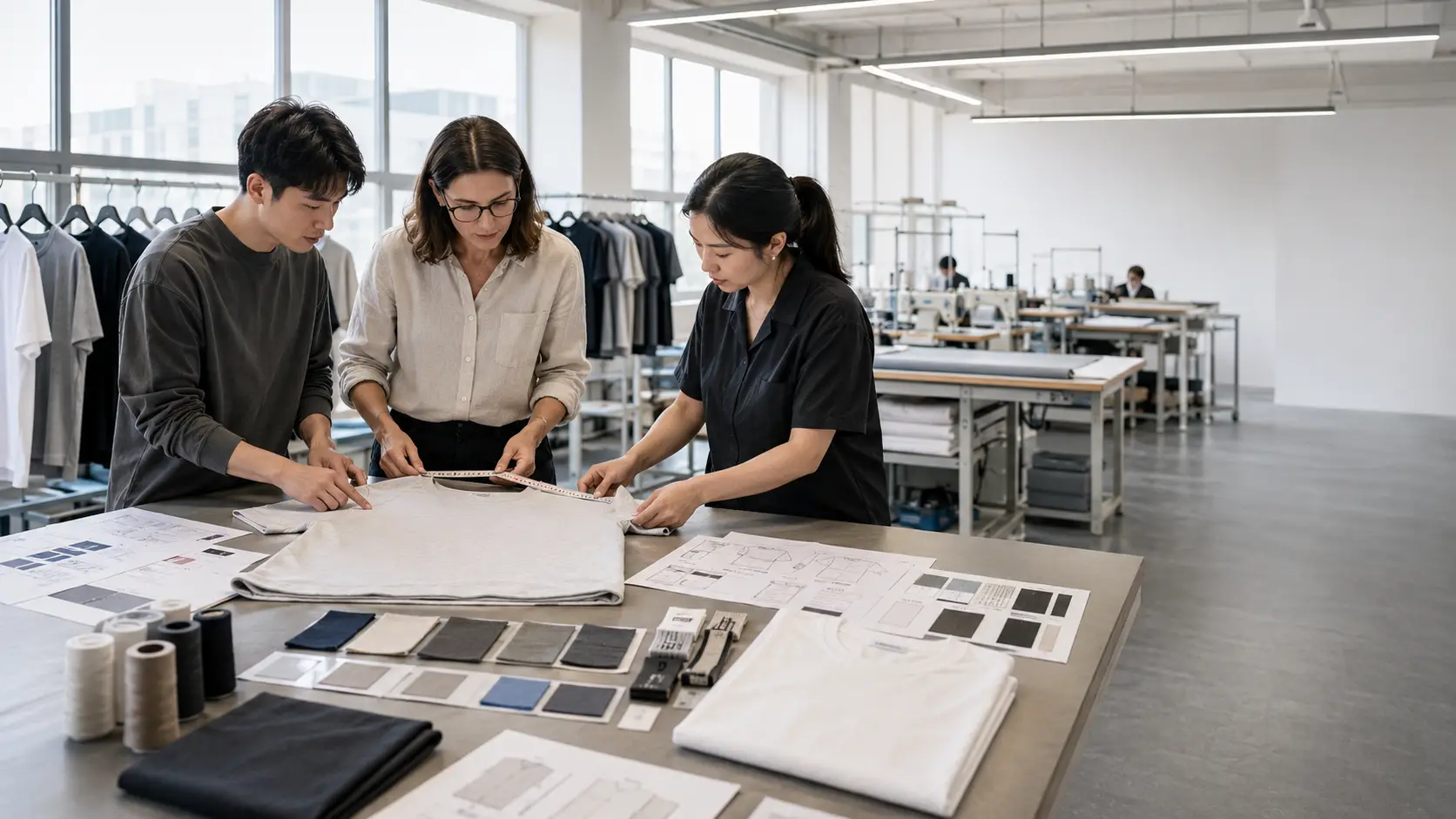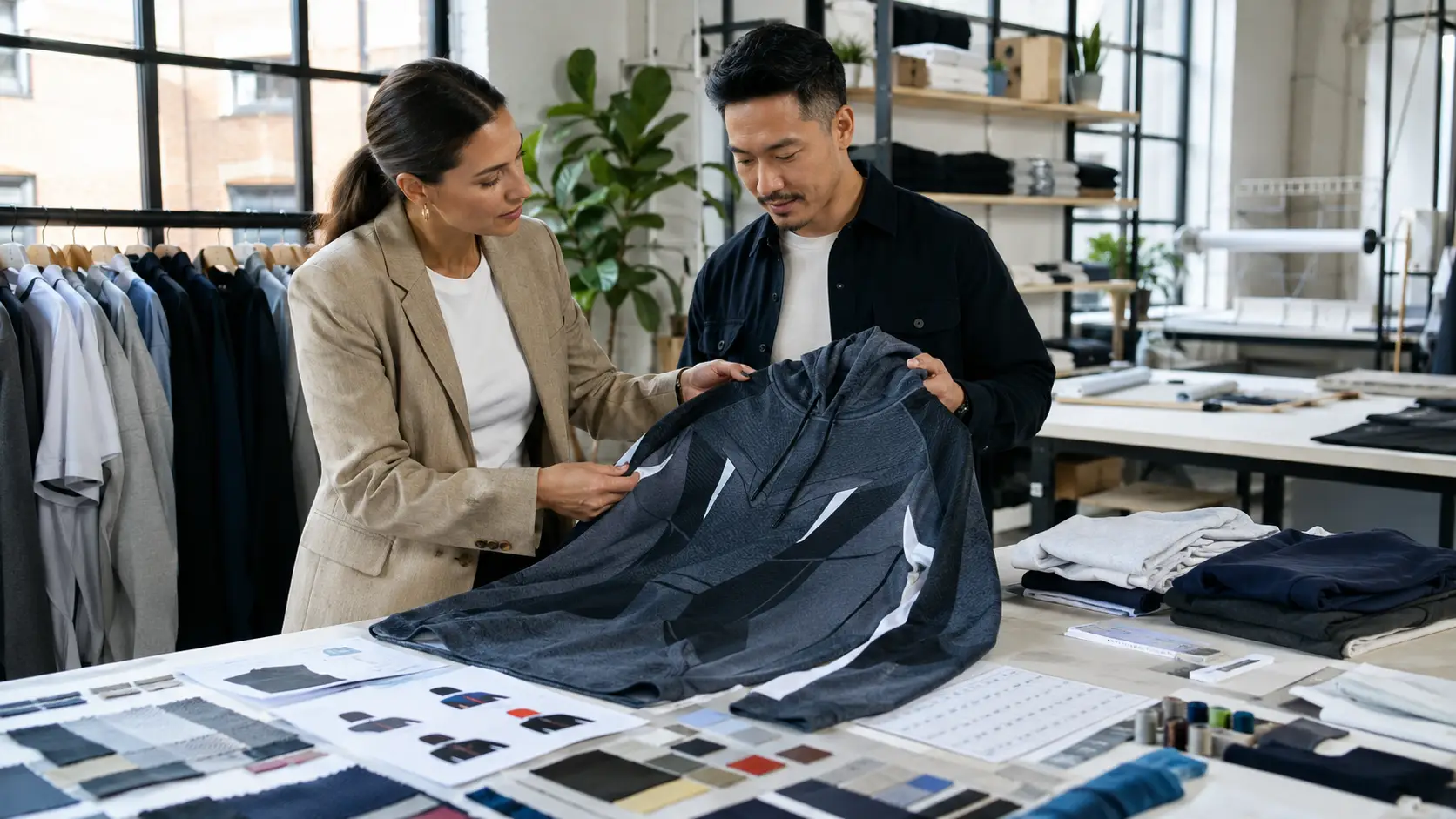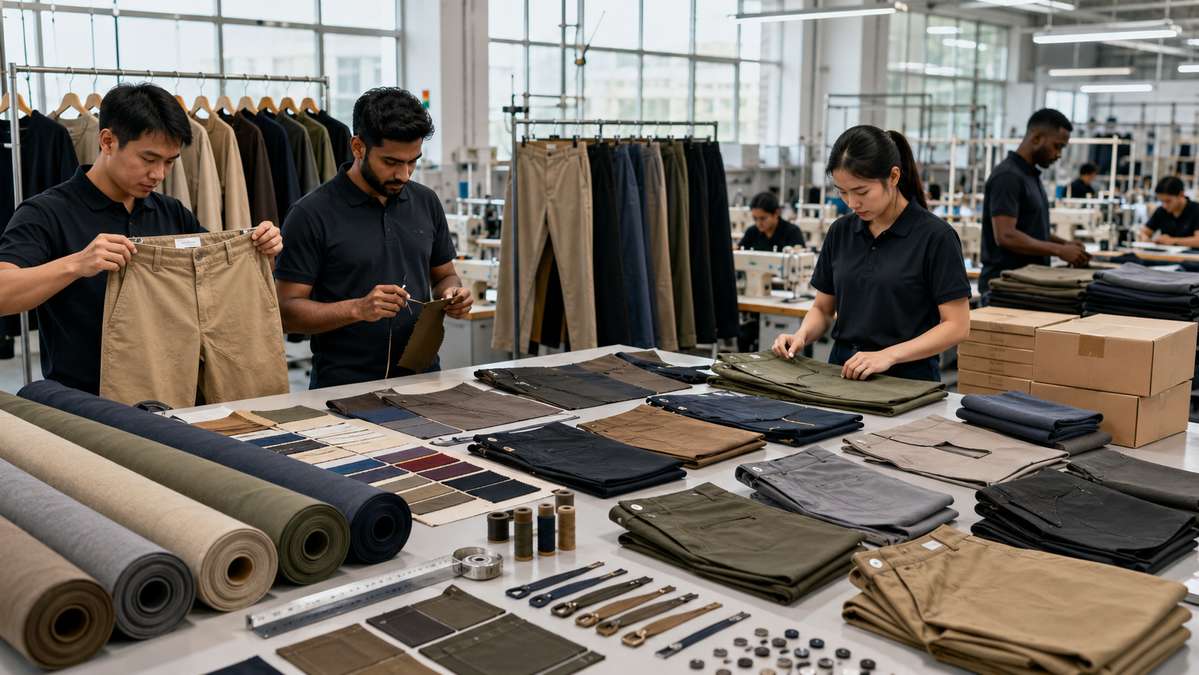
A twill pants manufacturer produces cotton or blended twill trousers to a buyer’s specifications, handling fabric sourcing, pattern cutting, waistband and pocket construction, stitching reinforcement, and finishing. Apparel brands, uniform suppliers, workwear companies, and retailers need one for custom fits, private label chinos, or bulk workwear pants. Buyers should check fabric weight, stitching strength, fit accuracy, and MOQ before ordering.
Twill pants don’t get talked about with the same excitement as denim or streetwear hoodies, but they’re among the most demanding garments a manufacturer produces in terms of functionality. A pair of chinos or workwear pants gets sat in, bent in, and washed repeatedly — often daily for uniform pants — which means stitching strength, seam placement, and fabric durability matter more here than in almost any other category. A weak bartack at the pocket corner or a waistband that stretches out after a month of wear is the kind of failure that shows up fast and costs a business real money in replacements and unhappy customers.
This guide is written for the people who actually place these orders — apparel brands developing a chino line, uniform suppliers sourcing workwear pants for client contracts, and retailers building a private-label pants program. It covers what distinguishes a dependable twill pants manufacturer from a risky one, as well as what buyers in different regions tend to prioritize when sourcing.
What a Twill Pants Manufacturer Actually Does
A twill pants manufacturer typically handles:
- Fabric sourcing — selecting twill weight, stretch content, and finish from fabric mills.
- Pattern cutting and construction — cutting panels for the specified fit, assembling the waistband, pockets, fly, and leg seams.
- Reinforcement stitching—bartacking at stress points like pocket corners and belt loops —matters far more for pants than for most upper-body garments.
- Finishing — pressing, garment washing if specified, and quality inspection before packing
- Labeling and packaging — attaching woven labels, care tags, and folding or hanging for shipment.
Some manufacturers focus narrowly on fashion-oriented chinos, while others specialize in heavy-duty workwear pants built for trades and industrial use. A buyer’s first real filter should be whether a manufacturer’s typical output matches the durability and fit standards their specific product actually needs — a chino factory and a true workwear pants factory aren’t always the same operation, even if both technically produce “twill pants.”
Why Twill Fabric Works So Well for Pants
Twill is a woven fabric defined by its diagonal rib pattern, and that structure gives it real practical advantages for trousers:
- Durability — the diagonal weave is inherently more resistant to wear than a plain weave, which is why it’s the standard fabric for workwear pants.
- Drape — twill holds its shape well without being stiff, giving chinos and casual pants a clean, structured look.
- Versatility — twill works across a wide range of weights, from lightweight summer chinos to heavyweight, abrasion-resistant workwear fabric.
- Finishing flexibility — twill takes garment washing, brushing, and dyeing well, allowing for a range of hand-feels and colors from the same base fabric.
This versatility is exactly why twill shows up across such different product categories — a slim-fit chino for smart-casual office wear and a reinforced workwear pant for a construction crew can both be made from twill, just at very different weights and with different construction priorities.
Fabric Options: What Actually Goes Into Twill Pants
- Cotton twill — breathable and durable, the standard base fabric for most twill pants
- Stretch twill — cotton blended with a small percentage of elastane for added mobility, popular in both fashion chinos and modern workwear.
- Brushed twill — given a soft, slightly napped finish for extra comfort, often used in cooler-weather casual pants.
- Lightweight twill — typically under 8 oz, suited to warm climates and casual summer pants.
- Heavyweight twill — typically 10 oz and above, chosen for workwear pants and durability-focused uniform programs.
- Blended twill — cotton combined with polyester or other fibers for added wrinkle resistance and easier care, common in corporate uniform pants.
Fabric weight is one of the first things to confirm in writing with a manufacturer, since “twill pants” alone doesn’t specify enough — a 7 oz chino and a 12 oz workwear pant are functionally different products, even though both fall under the same general category.
Fit Options for Twill Pants
- Slim fit — fitted through the thigh and leg, popular in fashion-forward chino lines.
- Straight fit — consistent leg width, a versatile option across both casual and workwear categories.
- Relaxed fit — extra room through the seat and thigh, common in workwear pants for ease of movement.
- Tapered fit — fuller through the thigh, narrowing toward the ankle.
- Regular fit — a balanced, middle-ground cut suited to broad audiences.
- Workwear fit — typically built with a slightly higher rise, reinforced knees, and extra room for movement and tool storage.
A manufacturer with genuine pants-making experience should have fit samples ready across these categories and be able to explain how each is graded across a size run — not just claim they can “make any fit you want” without evidence.
Construction Details That Actually Affect Durability
This is where twill pants manufacturing quality becomes obvious fast, especially for workwear and uniform buyers:
- Waistbands should be reinforced, often with an interior lining or an extra layer of stitching, to prevent stretching over time.
- Belt loops — need secure bartacking at both ends; loose belt loops are a common early failure point.
- Pockets — front, back, and cargo-style pockets each carry different stress points and require appropriate reinforcement.
- Seams — flat-felled or double-stitched seams hold up better under repeated movement than a single straight stitch.
- Zippers and buttons — zipper durability matters especially for workwear pants used daily; buttons should be securely anchored, not just surface-stitched.
- Bartacks — small, dense reinforcement stitches at stress points (pocket corners, belt loop ends, fly base) are one of the clearest signs of a manufacturer that understands pants. construction specifically, rather than treating pants like any other cut-and-sew garment.
- Reinforced stitching — double or triple-needle stitching at the inseam and outseam for pants expected to see heavy, repeated wear.
Ask a prospective manufacturer directly about their bartacking process and the seam type used at stress points. A vague answer here is one of the fastest ways to identify a factory without real pants-specific experience.
Customization Options Buyers Should Ask About
- Labels and patches — woven waistband labels, leather or faux-leather back patches, and printed care labels.
- Embroidery or printing — logos on pockets or waistbands, common for corporate and workwear branding.
- Trims — button and zipper finishes, including branded or custom-stamped hardware.
- Color choices — twill takes dye well, allowing for a broad color range across a single fabric base.
- Pocket styles — standard slash pockets, cargo pockets, or reinforced tool pockets depending on end use.
- Packaging — folded retail packaging or bulk carton packing for corporate and uniform orders.
Requesting a full list of customizations in writing before your first order helps avoid surprises around setup costs, particularly for custom-stamped hardware or embroidery digitizing fees.
OEM, Private Label, and Wholesale Twill Pants: Choosing the Right Model
| Model | What It Means | Best For |
|---|---|---|
| OEM pants manufacturer | Builds pants entirely to your custom fit, fabric, and construction specifications | Brands with a distinct fit or workwear feature set and volume to justify development |
| Private label pants | Uses an existing, well-developed base pant that you brand with your own labels and packaging | Brands launching a pants line quickly without full pattern development |
| Wholesale/bulk pants supplier | Supplies twill pants at volume, often with limited customization | Uniform suppliers, retailers, and resellers prioritizing cost and consistent supply |
Many uniform suppliers and retail brands start with private label pants to validate a product line before moving to OEM production once order volume supports custom fit and construction development. Manufacturers such as Minmax Textile, which typically support both private-label and OEM twill-pants production, make this transition easier by avoiding the need it switch suppliers as a buyer’s program scales.
Twill Pants Buyer Checklist
| Checklist Item | What to Confirm | Why It Matters |
|---|---|---|
| Fabric weight | Confirmed in ounces, matched to intended use | A lightweight chino and heavyweight workwear pant require different fabric entirely |
| Fit sampling | Is a physical fit sample provided before bulk production? | The only reliable way to confirm sizing and comfort before scaling |
| Bartack and seam quality | What reinforcement is used at stress points? | Directly affects how long the pants last under repeated wear |
| Shrinkage testing | What’s the expected shrinkage after washing? | Prevents sizing surprises after a customer’s first wash |
| Colorfastness | Has the fabric been tested for dye transfer or fading? | Especially relevant for dark or saturated colors |
| MOQ | What’s the minimum order, and does it vary by fabric or customization? | Impacts upfront investment and testing flexibility |
| Lead time | How long from sample approval to delivery? | Affects launch timing and reorder planning |
| Compliance | Does the product meet labeling requirements for my target market? | Avoids customs delays and retail compliance issues |
Quality Control: What Separates a Reliable Manufacturer
- Fabric weight accuracy — confirm the delivered fabric matches the agreed ounce weight, since lighter substitutions are a common cost-cutting shortcut.
- Stitching strength — inspect bartacks and seam stitching specifically at pocket corners, belt loops, and the fly base.
- Fit consistency — sizing shouldn’t drift noticeably across units within the same production batch.
- Shrinkage control — pants should be tested or pre-treated so the finished size holds after a customer’s first wash.
- Colorfastness — particularly important for darker colors and any garment-washed finishes, where dye transfer is a real risk.
- Finishing consistency — pressing, hem length, and any garment wash treatment should look uniform across a full batch and not vary noticeably from unit to unit.
A manufacturer that can speak specifically about how they test for these issues — documented QC checkpoints, lab testing, or a formal inspection process — is generally more reliable than one offering only a general assurance of “good quality.”
Local Insights: What Twill Pants Buyers Prioritize by Market
United States
US buyers span both fashion-forward chino brands and a large workwear and uniform market, with stretch twill increasingly popular across both segments for its added comfort during long wear.
United Kingdom
UK buyers often ask about sustainable cotton sourcing and increasingly request recycled or organic twill blends, particularly for retail and corporate uniform programs with sustainability commitments.
Australia
Lightweight twill suits the climate for much of the year. Because freight into Australia adds real cost to landed pricing, buyers commonly consolidate orders across chino and workwear lines to improve shipping efficiency.
UAE and Qatar
Corporate and hospitality uniform demand is a significant driver here, alongside genuine retail interest in casual chinos. Lightweight, breathable twill suited to the climate is a common specification, along with fast turnaround for large single-batch uniform orders.
Germany
German buyers tend to prioritize certifications and detailed fabric composition documentation, along with consistent sizing and stitching quality across production runs — often weighing quality control above unit price.
Canada
Canadian buyers, particularly in colder regions, often request heavier twill weights for workwear pants and bilingual (English/French) labeling for national retail distribution.
Saudi Arabia
The growing corporate and retail sectors have increased demand for both smart-casual chinos and workwear pants, tied to expanding industrial and services activity, with modest, climate-appropriate fits commonly specified.
Netherlands
Dutch buyers, like their UK and German counterparts, frequently ask about sustainable twill sourcing and recycled cotton content as part of a standard procurement checklist rather than as an optional add-on.
South Africa
Buyers often weigh the landed cost and lead time of imported bulk pants against regional manufacturing partnerships, particularly for large uniform contracts where consistent, on-time supply matters as much as unit price.
Why Location-Based Search Matters for Pants Buyers
A search for “twill pants manufacturer near me” or “workwear pants factory in [city]” typically signals a buyer ready to request quotes rather than someone still researching fabric basics. That makes local search visibility — an accurate Google Business Profile, presence in relevant sourcing directories, and genuine customer reviews — a real factor in which manufacturers get contacted first. On the buyer’s side, it’s worth confirming a manufacturer’s actual production location and shipping capabilities for your specific market, rather than assuming that strong local rankings automatically mean efficient international fulfillment.
Trust Signals Worth Verifying
- Pants-specific production experience — general apparel experience doesn’t always translate to strong bartacking, waistband construction, and pocket reinforcement.
- Verified reviews — check independent sourcing platforms and directories rather than relying solely on a manufacturer’s own website.
- Google Business Profile — an active, verified profile with real reviews and facility photos is a simple, useful legitimacy check.
- Fabric and fit samples — a manufacturer confident in their product should readily provide both before a bulk commitment.
- Shrinkage and colorfastness testing — ask whether this is tested and documented rather than assumed.
- Stitching inspection process — a manufacturer that can describe a real QC process for bartacks and seams generally has more genuine pants manufacturing experience.
- Certifications — OEKO-TEX or similar certifications relevant to your target market.
Manufacturers like Minmax Textile that maintain visible production capacity across private-label and OEM twill pants, along with transparent sampling and testing processes, tend to support more reliable long-term partnerships than suppliers set up only for one-off bulk orders.
Common Mistakes Pants Buyers Should Avoid
- Underestimating fabric weight differences — assuming all “twill pants” use the same fabric, when chino-weight and workwear-weight twill are functionally different products
- Skipping fit sampling — one of the most common and costly mistakes in bulk pants production
- Overlooking bartack and seam quality — weak reinforcement at pocket corners and belt loops is one of the fastest ways a pants order fails in real-world use
- Ignoring shrinkage data — pants that fit correctly off the line but shrink after the first wash create returns and complaints
- Choosing on price alone — often results in thinner fabric or weaker construction that shows up within the first few months of wear
Frequently Asked Questions
What does a twill pants manufacturer actually do? A twill pants manufacturer sources twill fabric and produces pants to a buyer’s specifications, covering pattern cutting, waistband and pocket construction, reinforcement stitching, and finishing, either as a fully custom OEM product or as a private-label version of an existing base pant.
What’s the difference between chino pants and workwear pants? Chinos are typically made from lighter-weight twill with a more tailored, fashion-focused fit. At the same time, workwear pants use heavier twill fabric with additional reinforcement at stress points to withstand daily, physically demanding wear.
What is the minimum order quantity for custom twill pants? MOQs vary by manufacturer and often by fabric weight or customization level, generally ranging from 100–300 units for smaller custom runs up to 1,000+ units for larger wholesale pants manufacturers.
How long does custom twill pants production take? Production timelines typically run 3 to 6 weeks depending on fabric sourcing, order size, and customization complexity, plus additional time for international shipping.
Why does bartack quality matter in twill pants manufacturing? Bartacks are small, dense reinforcement stitches placed at stress points, such as pocket corners and belt loop ends. Weak or missing bartacks are one of the most common causes of premature pants failure, particularly for workwear and uniform pants worn daily.
Sourcing Twill Pants That Perform as Well as They Look
The manufacturers that consistently deliver reliable twill pants share a few habits: they treat fabric weight as a functional decision rather than a marketing detail, they provide real fit samples before scaling production, and they can speak specifically about bartacking, seam construction, and shrinkage testing rather than offering vague quality assurances. Whether you’re building a chino line for a retail brand in the UK, sourcing reinforced workwear pants for a uniform contract in Canada, or developing a private-label pants collection out of the UAE, those fundamentals hold across every market.
Manufacturers like Minmax Textile, which supports both private-label and OEM twill-pants production, give buyers the flexibility to start with a small test order and scale into full custom development as demand grows. If you’re ready to move forward, request a fit sample and written confirmation of fabric weight and construction details before committing to volume — that step alone prevents most of the durability issues pants buyers run into after the fact.