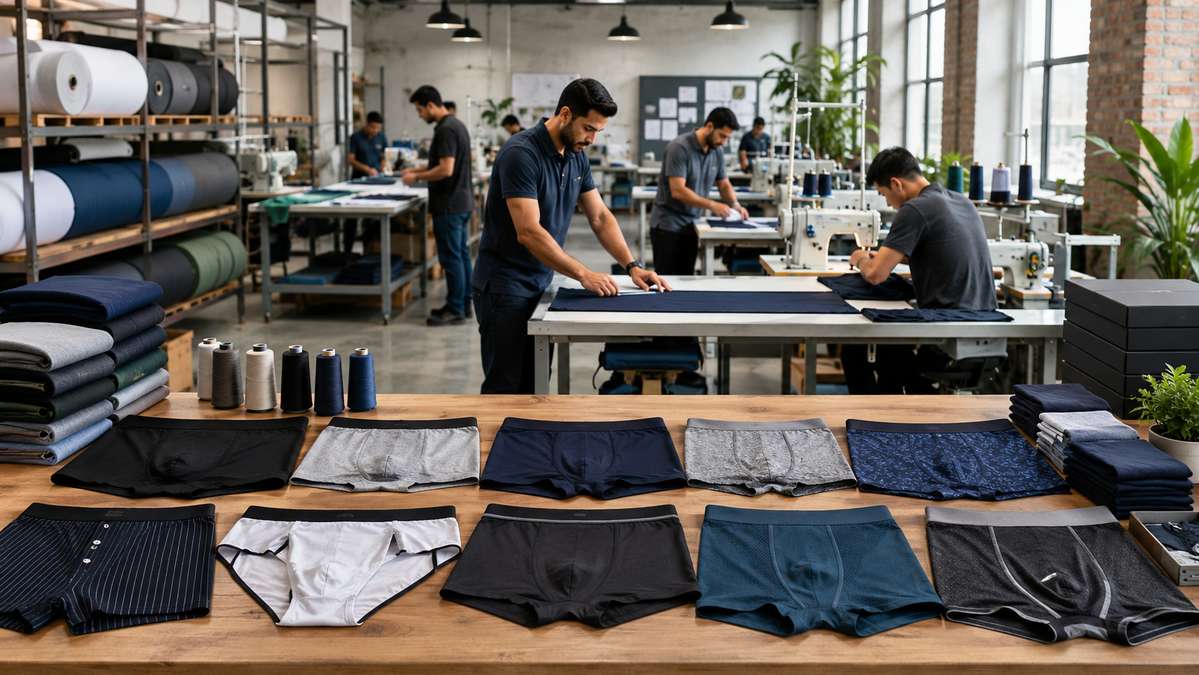
An underwear manufacturer produces men’s underwear in bulk for brands, retailers, and private label businesses, managing fabric sourcing, pattern construction, sewing, hygiene-focused quality control, and packaging. Buyers generally choose between OEM manufacturing (fully custom design) or ODM manufacturing (customizing an existing pattern), depending on their MOQ, fabric requirements, and target market.
Why Underwear Sourcing Is Trickier Than It Looks
Underwear seems like one of the simpler garments to source, until you actually try to do it. The fit has to be right, the fabric has to feel good against skin, the seams can’t rub, and the waistband has to hold up after dozens of washes without losing shape. Get any one of those wrong, and you’ll hear about it from customers fast.
This is exactly why so many apparel brands treat underwear sourcing differently from sourcing t-shirts or shorts. There’s less room for error, and buyers often don’t realize how many small construction details separate a comfortable, durable pair from one that ends up as a return.
This guide breaks down what an underwear manufacturer actually does, how production works from fabric to finished pack, and what to consider when sourcing for different markets, whether that’s breathable cotton basics for the Gulf region or moisture-wicking performance underwear for an athletic brand in Australia.
What an Underwear Manufacturer Does
An underwear manufacturer is a garment production facility that specializes in cutting, sewing, and finishing intimate apparel at scale. Because underwear sits directly against the skin and is washed frequently, manufacturers in this category typically pay closer attention to seam finishing, fabric softness, and construction durability than general apparel factories do.
Core services usually include:
- Fabric sourcing and testing for softness, stretch, and durability
- Pattern development and grading across size ranges
- Cutting and sewing, including specialized seam and elastic work
- Waistband and leg-opening construction
- Labeling and branding
- Quality control focused on comfort, fit, and hygiene
- Packing and export preparation
Some manufacturers offer full-package production, including design input and fabric development, while others focus purely on manufacturing based on the buyer’s specs. Knowing which service model you need helps narrow down the right factory faster.
Types of Men’s Underwear Manufacturers Produce
Different underwear styles require different construction techniques, fabric weights, and stitching methods. Common categories include:
- Men’s boxer briefs – fitted through the leg, supportive, one of the most commonly ordered styles
- Men’s boxers – looser fit, often woven fabric, popular for everyday comfort
- Men’s briefs – minimal coverage, close-fitting, typically knit fabric
- Men’s trunks – shorter length than boxer briefs, fitted silhouette
- Men’s cotton underwear – soft, breathable, standard for everyday basics
- Men’s seamless underwear – constructed with minimal or no visible seams for reduced friction
- Men’s sports underwear – built for movement, often with compression or stretch panels
- Men’s compression underwear – close support fit, common in athletic and performance lines
- Men’s thermal underwear – heavier fabric weight for cold-weather wear
- Men’s moisture-wicking underwear – performance fabric designed to pull moisture away from skin
Private-label and custom-branded underwear can be built across any of these categories, depending on your target customer and price point.
Fabric Options for Underwear Production
Fabric choice is arguably more important in underwear than in almost any other garment category, since comfort and skin contact are constant. Common fabrics include:
| Fabric Type | Key Characteristics | Common Use |
|---|---|---|
| Cotton | Breathable, soft, natural fiber | Everyday basics |
| Organic Cotton | Same properties as cotton, grown without synthetic pesticides | Premium and eco-positioned lines |
| Cotton-Spandex Blend | Adds stretch and recovery to cotton’s softness | Boxer briefs, trunks |
| Modal | Very soft handfeel, good moisture absorption | Premium comfort underwear |
| Micro Modal | Finer fiber than standard modal, smoother finish | Seamless and premium styles |
| Bamboo Blends | Soft handfeel, breathable | Comfort-focused basics |
| Polyester | Durable, quick-drying | Sports and performance underwear |
| Nylon | Lightweight, holds shape well | Compression and athletic styles |
| Elastane | Adds stretch and recovery | Blended into most fitted styles |
| Recycled Polyester | Performance properties similar to standard polyester | Sustainability-focused lines |
Key factors to evaluate beyond fiber type include softness, breathability, stretch and recovery, moisture control, shrinkage after washing, colorfastness, and pilling resistance. A fabric that feels great in a single sample can behave differently after repeated washing, which is why pre-production fabric testing matters more in underwear than in most other apparel categories.
Fit, Sizing, Comfort, and Waistband Construction
Fit is where underwear sourcing gets technical. Small measurement differences that would barely matter on a t-shirt can make underwear uncomfortable or even unwearable.
Key construction elements to pay attention to include:
- Waistband type – covered elastic, exposed elastic, or fabric-covered waistband, each affecting comfort and durability differently
- Seam placement – flatlock or seamless construction reduces friction and irritation.
- Leg opening finish – bound, elasticized, or raw-cut edges affect fit and comfort.
- Rise and coverage – low-rise, mid-rise, or full-rise styles suit different body types and preferences.
- Support structure – pouch design and panel construction affect fit for boxer briefs, trunks, and compression styles.
Sizing conventions also vary by region. US and Canadian sizing typically runs from small to XXL or uses a numeric waist system, while UK and European sizing often uses metric-based or slightly different numeric ranges. Buyers sourcing across multiple regions should carefully confirm size charts rather than assuming a single chart works globally.
Customization and Private Label Services
Most underwear brands want a product that reflects their own identity, not a generic factory design with a swapped label. Customization options typically include:
- Custom fabric blend, weight, and stretch level
- Woven or printed brand labels and waistband branding
- Custom colorways and prints
- Custom packaging, including boxes, poly bags, or branded inserts
- Custom fit adjustments to base patterns
Private-label underwear generally means customizing an existing base pattern with your branding and fabric preferences, which is usually faster and more cost-effective for newer brands. Full custom development, where the pattern is built from scratch, takes more time and typically requires higher order volumes.
OEM, ODM, and Wholesale Underwear Manufacturing
OEM (Original Equipment Manufacturer): You provide the full design, tech pack, and construction specs. The manufacturer builds exactly to your specifications. This gives full creative control but requires detailed, accurate specs upfront.
ODM (Original Design Manufacturer): The manufacturer has existing base patterns that you customize with fabric choice, branding, or minor style adjustments. This route is often faster and more accessible for brands without in-house pattern development.
Wholesale manufacturing: You purchase existing stock designs in bulk, typically with limited customization. This is the fastest and generally most affordable route, though it offers less brand differentiation.
Manufacturers like Minmax Textile typically work across these models, adjusting their approach depending on whether a buyer is a private-label startup or an established retailer placing recurring bulk orders.
Step-by-Step Underwear Production Process
- Design and tech pack development – finalizing measurements, seam placement, and fabric specs
- Fabric sourcing and testing – checking softness, stretch recovery, shrinkage, and colorfastness
- Sampling – producing a prototype for fit and comfort approval
- Pattern grading – adjusting the approved sample across the full size range
- Cutting – fabric is cut according to graded patterns
- Sewing and assembly – constructing panels, waistbands, and seams, often using specialized flatlock or overlock machines
- Elastic and waistband attachment – a critical step for comfort and durability
- Labeling and branding – attaching woven labels, printed branding, or waistband text
- Quality control checks – inspecting seams, elasticity, sizing accuracy, and fabric consistency
- Packing – folding, tagging, and preparing for shipment
Because underwear involves more delicate stitching around elastic and seams compared to general apparel, experienced operators and consistent machine calibration matter more here than in many other garment categories.
How to Choose a Reliable Underwear Manufacturer
- Request a physical sample before committing to bulk production, since fabric feel and fit can’t be fully judged from photos.
- Ask about their seam and waistband construction methods, especially for seamless or performance styles.
- Check their experience with your specific product category, since sports underwear and everyday basics require different expertise.
- Review their quality control process, particularly around hygiene and fabric testing.
- Look for clear, specific communication about specs, timelines, and pricing rather than vague reassurances.
A manufacturer with genuine experience in underwear production will usually be comfortable discussing construction details such as seam type, elastic sourcing, and fabric testing in specific terms, rather than giving generic answers.
MOQ, Pricing, Samples, and Lead Times
MOQ (Minimum Order Quantity): This varies by manufacturer and depends on fabric type, customization level, and factory setup. Private label orders with simpler customization may have more accessible MOQs than fully custom fabric development.
Pricing: Cost depends on fabric choice, order volume, construction complexity, and packaging requirements. Rather than requesting a flat price, it’s more accurate to get a quote based on your specific tech pack and fabric preference.
Samples: Sampling is especially important in underwear production, since fit and fabric feel directly affect customer satisfaction. Most reliable manufacturers require a sample approval stage before bulk production begins.
Lead times: Production timelines depend on order size, fabric availability, and factory capacity. It’s best to confirm a specific timeline once your order details, including fabric and customization level, are finalized.
Quality Control and Hygiene Standards
Quality control in underwear manufacturing involves more than checking stitching. Because these garments sit close to the skin, hygiene and fabric safety checks are also part of a thorough QC process.
- Fabric inspection for softness, weave consistency, and defects before cutting
- In-line checks during sewing to catch seam or elastic issues early
- Measurement verification against the approved tech pack, particularly around rise, waistband, and leg openings
- Cleanliness and packaging hygiene checks before sealing units
- Final inspection for loose threads, fabric flaws, or elastic inconsistency
- Random sampling across the full production run, not just the first batch
Buyers should feel comfortable asking a manufacturer to explain their hygiene and QC procedures in detail. A factory with an established process will typically walk through specific checkpoints rather than offering a general assurance.
Sustainable and Responsible Production
Sustainability considerations have become more relevant for underwear brands, particularly those selling into markets where retailers and consumers ask about fabric sourcing and labor practices.
Relevant factors include:
- Use of organic cotton, recycled polyester, or lower-impact fabric blends
- Water and energy use during dyeing and fabric finishing
- Fabric waste reduction during cutting
- Ethical labor practices and safe working conditions
- Reduced or recyclable packaging materials
Any sustainability claims made about a product should be backed by verifiable practices rather than marketing language alone. Buyers sourcing for retailers in Europe, in particular, often need supporting documentation to meet their own compliance requirements.
Local Market Insights for Underwear Sourcing
USA and Canada
Demand spans everyday cotton basics, performance and compression underwear for athletic brands, and premium modal or micro modal lines for comfort-focused positioning. Canadian buyers often source in similar categories, with some additional interest in thermal underwear due to colder seasonal demand.
UK, Germany, and Netherlands
These markets tend to favor soft, breathable fabrics like cotton-modal blends, along with increasing interest in sustainably sourced materials. Sizing conventions differ somewhat from US standards, so confirming size charts is important for buyers sourcing across both regions. Retailers in this region often expect clear documentation around fabric sourcing and labor practices.
Australia and South Africa
Warmer year-round climates in much of both regions support strong demand for lightweight, breathable cotton and cotton-blend underwear. Sports and performance underwear also perform well given active lifestyle trends. South African buyers frequently seek a balance between quality and competitive pricing across both domestic retail and export markets.
UAE, Saudi Arabia, and Qatar
Buyers in the Gulf region typically prioritize breathable, moisture-wicking, and lightweight fabrics suited to hot climates. Everyday cotton basics remain in steady demand, alongside growing interest among regional retailers in premium and private-label underwear lines. Consistent sizing and quality across production runs are commonly emphasized, along with clean, presentable packaging for retail display.
Common Sourcing Mistakes to Avoid
- Skipping the sample stage, which often leads to fit or comfort issues discovered only after bulk production
- Not testing fabric shrinkage and colorfastness before committing to a fabric choice
- Choosing a manufacturer based on price alone without checking construction quality
- Failing to confirm size charts, especially when sourcing for multiple regions with different sizing conventions
- Overlooking waistband and seam construction details until after samples arrive
- Underestimating lead times during high-demand production periods
Most of these issues stem from moving too quickly through the early stages of the sourcing conversation. Taking time to confirm fabric, fit, and construction details upfront tends to prevent costlier problems later.
Information Buyers Should Provide When Requesting a Quote
- Tech pack or detailed design reference, including measurements and seam type
- Preferred fabric composition and weight
- Size range and grading requirements
- Order quantity per style and color
- Customization details, including labels, branding, or packaging
- Target price range, if applicable
- Preferred shipping destination and method
Having this information ready before reaching out typically results in a faster, more accurate quote, rather than a back-and-forth that spans multiple email threads.
Frequently Asked Questions
What is the difference between OEM and ODM underwear manufacturing? OEM manufacturing follows your own complete design and specifications, while ODM manufacturing customizes an existing base pattern with your branding, fabric choice, or minor adjustments.
What fabric is best for everyday men’s underwear? Cotton and cotton-spandex blends are commonly used for everyday underwear due to their softness, breathability, and comfortable stretch and recovery.
How important is sampling in underwear production? Sampling is essential, since fit, fabric feel, and seam comfort can only be properly evaluated through a physical sample rather than photos or specifications alone.
What should I check for quality control in underwear manufacturing? Key checkpoints include fabric consistency, seam and elastic construction, measurement accuracy against the tech pack, and packaging hygiene before final shipment.
What information do I need before requesting a quote? A tech pack or design reference, fabric preference, size range, order quantity, and customization details help manufacturers provide an accurate and timely quote.
Finding an Underwear Manufacturing Partner That Fits Your Brand
Underwear sourcing rewards attention to detail. Once you understand how fabric, fit, and construction work together, and know what questions to ask a potential manufacturer, the process becomes far more manageable than it first appears.
Whether you’re launching a private label underwear line or scaling up bulk orders for an established retail brand, working with a manufacturer like Minmax Textile that understands both the technical construction side and market-specific preferences across regions like the US, UK, Australia, Germany, UAE, and beyond can make a meaningful difference in product quality and customer satisfaction.
If you’re ready to move forward, start by preparing your tech pack, fabric preferences, and sizing requirements, then request a sample and a detailed quote before committing to bulk production.