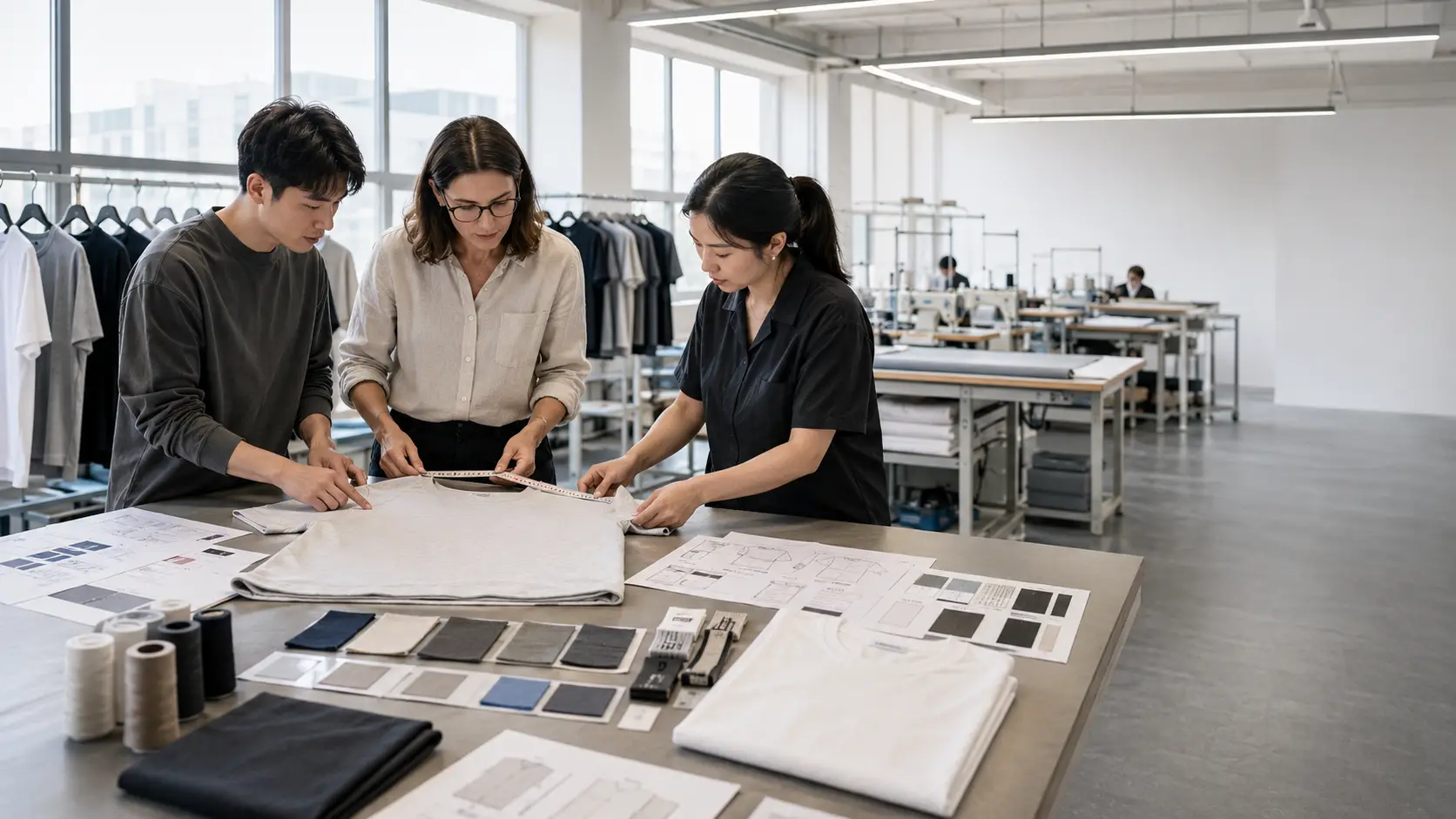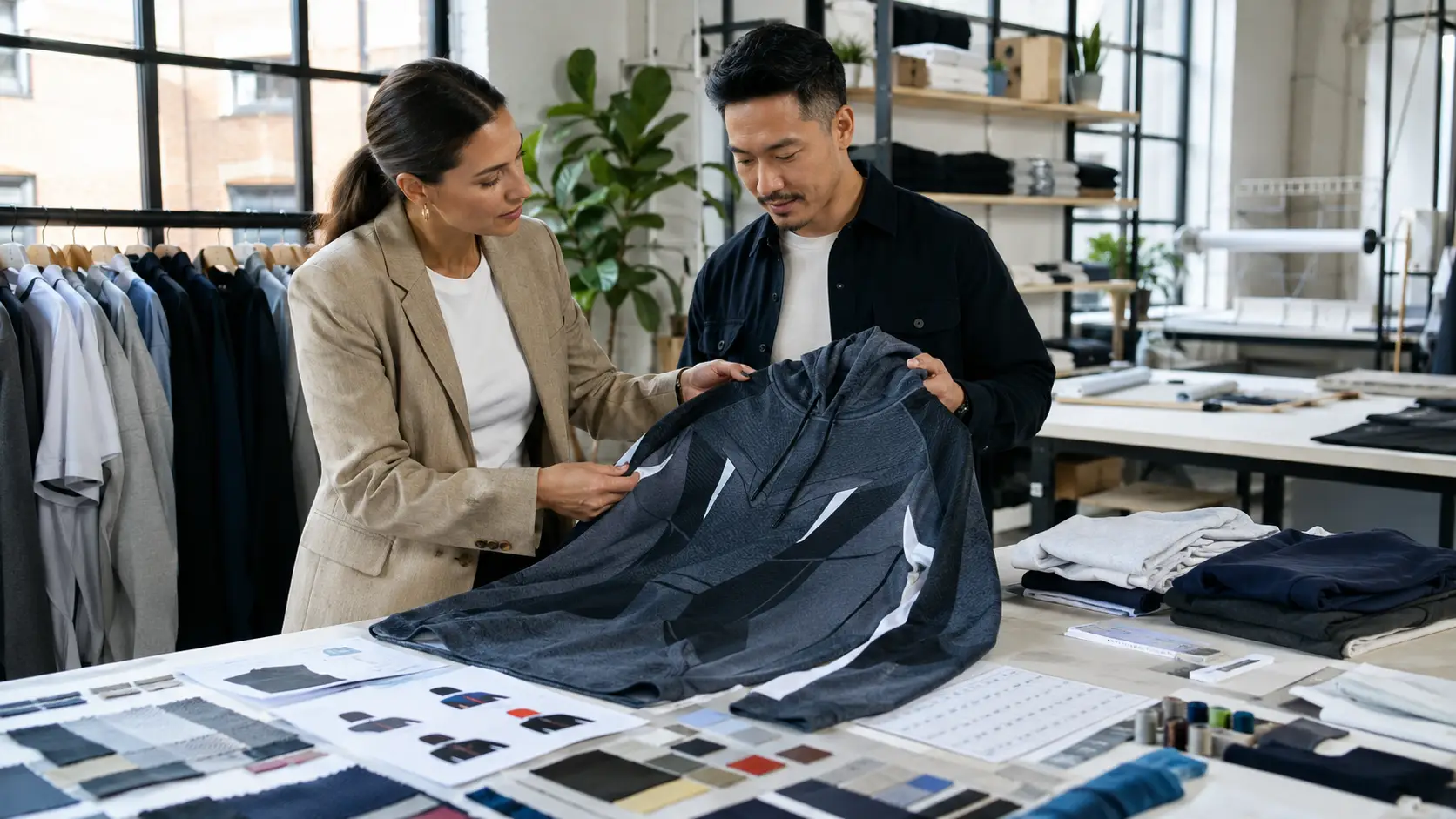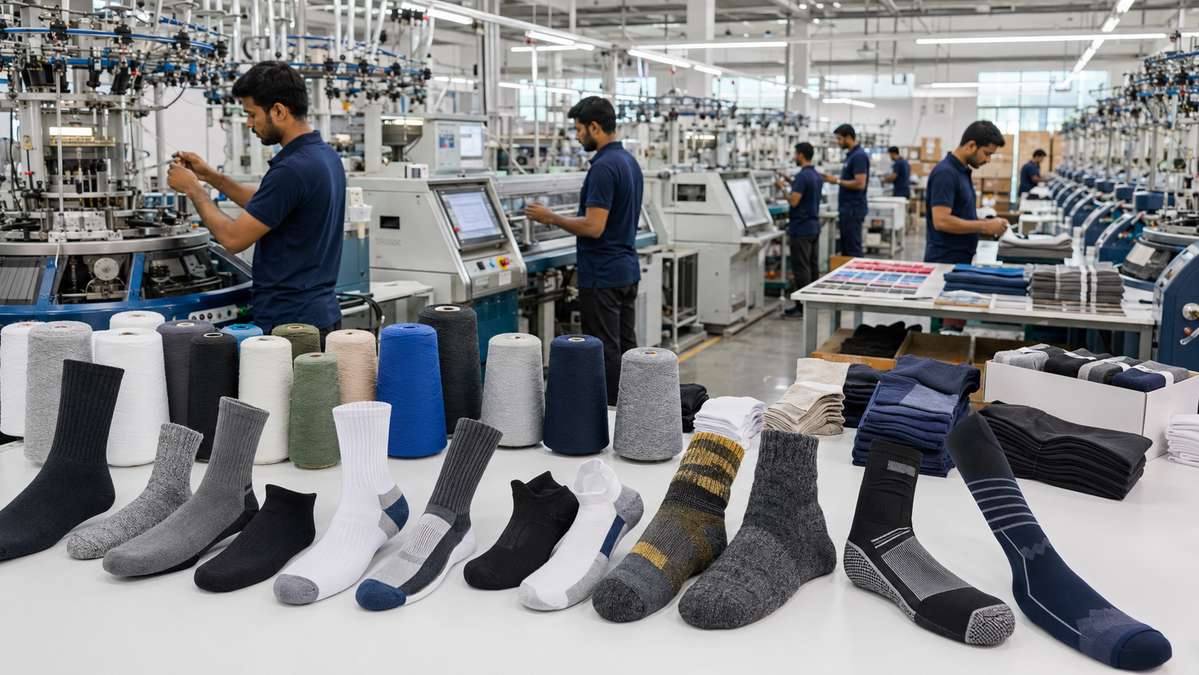
A sock manufacturer produces knitted socks in bulk for brands, retailers, and sportswear companies, handling yarn sourcing, knitting, seaming, dyeing, and packaging. Buyers typically choose between OEM manufacturing (fully custom design) or ODM manufacturing (customizing an existing knit pattern), depending on order volume, yarn preference, and target market.
Why Sourcing Socks Is More Involved Than People Expect
Socks look simple, but they’re actually one of the more technical items in an apparel line when you get into the details. Knit density, yarn blend, heel and toe construction, cushioning zones, and ribbing all affect how a sock fits, feels, and holds up after repeated wear and washing.
Many buyers assume socks are a low-effort add-on to a larger order. Then samples arrive, and the ribbing is too loose, the cushioning isn’t where it needs to be, or the colors don’t match the Pantone reference. Small details matter a lot to the end customer.
This guide covers what a socks manufacturer actually does, the materials and construction choices that shape sock performance, and how sourcing needs shift depending on where you’re selling, whether that’s wool-blend thermal socks for colder Canadian winters or breathable cotton crew socks built for Gulf heat.
What a Socks Manufacturer Does
A socks manufacturer is a production facility that specializes in knitting, finishing, and packaging socks at scale. Sock production uses different machinery than woven garment manufacturing, since socks are knitted as a continuous tube on circular knitting machines rather than cut and sewn from flat fabric.
Typical services include:
- Yarn sourcing and blending
- Circular knitting to shape and pattern
- Toe closing and seam finishing
- Dyeing and pattern application, including jacquard knitting
- Boarding and pressing for shape retention
- Quality control and pairing
- Packaging and export preparation
Some manufacturers offer full-package services, including design support and yarn development, while others focus on production based on buyer-supplied specs. Knowing which type of support you need before reaching out helps narrow down the right factory faster.
Types of Socks Manufacturers Produce
Sock categories vary quite a bit in construction, cushioning, and intended use. Common types include:
- Men’s crew socks – mid-calf length, versatile for casual and athletic use
- Men’s ankle socks – short length, common for casual and athletic wear
- Men’s no-show socks – designed to sit below the shoe line, popular for sneakers and loafers
- Men’s dress socks – thinner knit, often finer yarn, worn with formal or business attire
- Men’s casual socks – everyday comfort socks, typically cotton-blend
- Men’s sports socks – built with cushioning zones and moisture management for general athletic use
- Men’s athletic socks – similar to sports socks, often with reinforced heel and toe areas
- Men’s running socks – lightweight, moisture-wicking, sometimes seamless toe construction to reduce friction.
- Men’s football socks – longer length, often with grip elements and higher compression through the calf
- Men’s hiking socks – thicker cushioning, durable yarn blends, often wool-based for temperature regulation
- Men’s work socks – reinforced construction for durability under heavy use
- Men’s thermal socks – heavier knit and insulating yarn for cold weather
- Men’s compression socks – with graduated compression, often used to support circulation during long periods of standing or activity.
Custom logo socks and private label socks can be produced across any of these categories, depending on the brand’s target customer and price positioning.
Materials and Yarn Options for Sock Production
Yarn choice directly affects comfort, durability, warmth, and moisture management. Common materials include:
| Material | Key Characteristics | Common Use |
|---|---|---|
| Cotton | Breathable, soft, absorbent | Everyday and casual socks |
| Combed Cotton | Smoother, more refined finish than standard cotton | Dress and premium casual socks |
| Organic Cotton | Similar properties to cotton, grown without synthetic pesticides | Sustainability-focused lines |
| Polyester | Durable, quick-drying | Sports and athletic socks |
| Recycled Polyester | Performance similar to polyester | Sustainability-focused sports lines |
| Nylon | Adds strength and shape retention | Blended into most sock types |
| Wool | Naturally insulating, moisture-regulating | Thermal and outdoor socks |
| Merino Wool | Finer, softer wool fiber with good temperature regulation | Premium hiking and outdoor socks |
| Bamboo Blends | Soft handfeel, breathable | Comfort-focused casual socks |
| Acrylic | Lightweight, retains shape well | Blended for durability in casual socks |
| Elastane or Spandex | Adds stretch and recovery | Used in cuffs and arch bands |
| Moisture-Wicking Yarns | Designed to move moisture away from skin | Athletic and running socks |
Beyond fiber type, buyers should evaluate softness, breathability, moisture control, stretch and recovery, cushioning, warmth, durability, pilling resistance, shrinkage, and colorfastness. A yarn blend that performs well in a single sample can behave differently after repeated washing, so pre-production testing is worth the extra step.
Sock Sizing, Fit, Cushioning, and Construction
Fit and construction details make a bigger difference in socks than people expect. Key elements include:
- Length – no-show, ankle, crew, or knee-high, chosen based on intended footwear and use case
- Cuff and ribbing – ribbed cuffs help the sock stay in place without cutting off circulation
- Heel and toe construction – reinforced heel and toe areas improve durability in high-wear zones
- Cushioning zones – targeted cushioning at the ball and heel of the foot for sports and hiking socks
- Arch support bands – help the sock hold its shape and reduce slipping during movement
- Ventilation panels – mesh or looser knit zones placed over areas prone to sweating
- Toe seam type – flat or seamless toe closures reduce friction and irritation, particularly important for running socks
Sizing conventions vary by region and are usually based on shoe size ranges rather than standard small-medium-large labeling alone. Buyers sourcing across multiple regions should carefully review sizing charts, as shoe size systems differ across markets such as the US, the UK, and the EU.
Custom Designs and Private Label Services
Most sock brands want more than a generic factory design with a swapped label. Common customization options include:
- Custom colors and Pantone color matching
- Knitted logos and jacquard patterns
- Embroidery or printed designs
- Custom sock lengths and cushioning placement
- Reinforced heels and toes
- Arch support bands and mesh ventilation panels
- Anti-slip grip elements
- Custom size ranges
- Woven or printed labels, hang tags, and sock bands
- Custom boxes and retail-ready packaging
The right customization depends on your target customer, intended use, sales channel, target price point, and overall brand positioning. A premium dress sock line calls for different customization choices than a budget-friendly athletic sock program, and it’s worth thinking through these priorities before requesting samples.
OEM, ODM, and Wholesale Sock Manufacturing
OEM (Original Equipment Manufacturer): You provide the full design, including knit pattern, yarn blend, and construction details. The manufacturer builds exactly to your specifications, giving full creative control but requiring detailed specs upfront.
ODM (Original Design Manufacturer): The manufacturer has existing knit patterns that you customize with color, branding, or minor adjustments. This is typically faster and more accessible for brands without in-house knit development experience.
Wholesale manufacturing: You purchase existing stock designs in bulk, usually with limited customization, such as changes to labels or packaging. This is the fastest and generally most affordable route, though it offers less brand differentiation.
Manufacturers like Minmax Textile typically work across these models, adjusting their approach depending on whether a buyer is a private-label startup testing a small collection or an established retailer placing recurring bulk orders.
Step-by-Step Socks Production Process
- Design and spec development – finalizing length, cushioning zones, yarn blend, and color
- Yarn sourcing and testing – confirming softness, stretch recovery, and colorfastness
- Sampling – producing a prototype for approval before bulk production
- Knitting programming – setting up the circular knitting machine pattern for the approved design
- Circular knitting – socks are knitted as a continuous tube in the specified pattern
- Toe closing – seaming or linking the toe area, using flat or seamless techniques depending on the style
- Dyeing and pattern finishing – applying color and any jacquard or printed detailing
- Boarding – socks are shaped on boarding forms and pressed to set their final shape
- Quality control checks – inspecting knit consistency, sizing accuracy, and construction details
- Pairing and packing – matching socks into pairs, tagging, and preparing for shipment
Because socks are knitted rather than cut and sewn, machine calibration and yarn-tension consistency play a greater role in quality than in most other apparel categories.
How to Choose a Reliable Socks Manufacturer
- Request a physical sample before committing to bulk production, since knit density and cushioning can’t be fully judged from photos.
- Ask about their knitting machine capabilities, particularly for jacquard patterns or targeted cushioning zones.
- Check their experience with your specific product category, since athletic socks and dress socks require different construction expertise.
- Review their quality control process, especially around sizing consistency and pairing accuracy.
- Look for clear, specific communication about specs, timelines, and pricing rather than vague reassurances.
A manufacturer with genuine sock production experience will typically be comfortable discussing knit gauge, yarn blend ratios, and construction details in specific terms rather than giving generic answers.
MOQ, Pricing, Sampling, and Lead Times
MOQ (Minimum Order Quantity): This varies by manufacturer and depends on yarn type, customization level, and knitting machine setup requirements. Simpler private label orders may have more accessible MOQs than fully custom jacquard designs.
Pricing: Cost depends on yarn choice, order volume, customization complexity, and packaging requirements. Rather than requesting a flat price, it’s more accurate to get a quote based on your specific design and yarn preference.
Sampling: Sampling is important in sock production, since knit tension, cushioning placement, and color accuracy directly affect the final product. Most reliable manufacturers require sample approval before bulk production begins.
Lead times: Production timelines depend on order size, yarn availability, and knitting machine programming requirements. It’s best to confirm a specific timeline once your design and yarn details are finalized.
Quality Control and Product Testing
Quality control in sock manufacturing covers several checkpoints beyond a visual inspection.
- Yarn inspection for consistency and defects before knitting begins
- In-line checks during knitting to catch tension or pattern errors early
- Measurement verification for length, width, and cushioning placement against approved specs
- Toe seam inspection, since seam quality directly affects comfort
- Color consistency checks against approved Pantone references
- Pairing accuracy checks before packing
- Random sampling across the full production run, not just the first batch
Buyers should feel comfortable asking a manufacturer to explain their testing process in detail. A factory with an established QC system will typically describe specific checkpoints rather than offering a general assurance.
Sustainable and Responsible Manufacturing
Sustainability considerations are increasingly relevant in sock sourcing, particularly for brands selling into markets where retailers ask about yarn sourcing and production practices.
Relevant factors include:
- Use of organic cotton, recycled polyester, or responsibly sourced wool
- Water and energy use during dyeing and finishing
- Yarn waste reduction during knitting
- Ethical labor practices and safe working conditions
- Reduced or recyclable packaging materials
Sustainability claims should always be backed by verifiable practices rather than marketing language alone. Buyers sourcing for retailers in Europe, in particular, often need supporting documentation to meet their own compliance expectations.
Local Market Insights for Socks Sourcing
USA and Canada
Demand spans everyday cotton crew and ankle socks, athletic and running socks for sportswear brands, and thermal or wool-blend socks for colder regions and outdoor use. Canadian buyers in particular often show steady demand for thermal and hiking socks given colder seasonal conditions.
UK, Germany, and Netherlands
These markets show consistent demand for dress socks and casual crew socks, along with growing interest in sustainably sourced cotton-wool blends. Demand for outdoor and hiking socks is also notable in regions with strong hiking and cycling cultures. Retailers here often expect documentation around yarn sourcing and manufacturing practices.
Australia and South Africa
Warmer climates across much of both regions support strong demand for breathable, lightweight cotton and moisture-wicking athletic socks. Hiking and outdoor socks also see solid demand given strong outdoor recreation culture. South African buyers frequently look for a balance between durability and competitive pricing for both local retail and export.
UAE, Saudi Arabia, and Qatar
Buyers in the Gulf region typically prioritize breathable, moisture-managing socks suited to hot climates, with steady demand for everyday cotton basics and athletic socks from active-lifestyle brands. Private label opportunities are strong here, particularly for regional retailers building their own casualwear or sportswear lines. Consistent sizing and retail-ready packaging are commonly emphasized by buyers in this market.
Common Sourcing Mistakes to Avoid
- Skipping the sample stage, which often leads to sizing or cushioning issues discovered only after bulk production
- Not confirming yarn blend and Pantone color matching in writing before production
- Choosing a manufacturer based on price alone without checking knit quality and construction
- Failing to confirm sizing charts, especially when sourcing for regions with different shoe size systems
- Overlooking toe seam type until samples reveal comfort issues
- Underestimating lead times during high-demand or seasonal production periods
Most of these issues stem from rushing the early sourcing conversation. Taking time to confirm yarn, construction, and sizing details upfront tends to prevent costlier problems later in the process.
Information Buyers Should Provide When Requesting a Quote
- Design reference or spec sheet, including length, cushioning zones, and construction details
- Preferred yarn composition and blend ratio
- Size range based on shoe size or standard sock sizing
- Order quantity per style and color
- Customization details, including logos, patterns, or packaging
- Target price range, if applicable
- Preferred shipping destination and method
Having this information ready before reaching out typically results in a faster, more accurate quote, rather than a back-and-forth across multiple email threads.
Frequently Asked Questions
What is the difference between OEM and ODM socks manufacturing? OEM manufacturing follows your own complete design and yarn specifications, while ODM manufacturing customizes an existing knit pattern with your color, branding, or minor style adjustments.
What material is best for athletic socks? Moisture-wicking yarns, often blended with polyester or nylon for durability, are commonly used in athletic socks to help manage moisture during activity.
How important is sampling in sock production? Sampling is important because knit tension, cushioning placement, and color accuracy can only be properly evaluated through a physical sample rather than through specifications alone.
What should I check for quality control in sock manufacturing? Key checkpoints include yarn consistency, knit tension, sizing accuracy, toe seam quality, color matching against Pantone references, and correct pairing before packing.
What information do I need before requesting a quote? A design reference or spec sheet, yarn preference, size range, order quantity, and customization details help manufacturers provide an accurate and timely quote.
Finding a Socks Manufacturing Partner That Fits Your Brand
Sock sourcing rewards attention to the details that are easy to overlook on paper, things like knit tension, cushioning placement, and toe seam construction. Once you understand how yarn choice and construction work together, and know what to ask a potential manufacturer, the process becomes far more manageable.
Whether you’re launching a private label sock line or scaling up bulk orders for an established sportswear or retail brand, working with a manufacturer like Minmax Textile that understands both the technical knitting side and market-specific preferences across regions like the US, UK, Australia, Germany, UAE, and beyond can make a real difference in product quality and customer satisfaction.
If you’re ready to move forward, start by preparing your design reference, yarn preferences, and sizing requirements, then request a sample and a detailed quote before committing to bulk production.