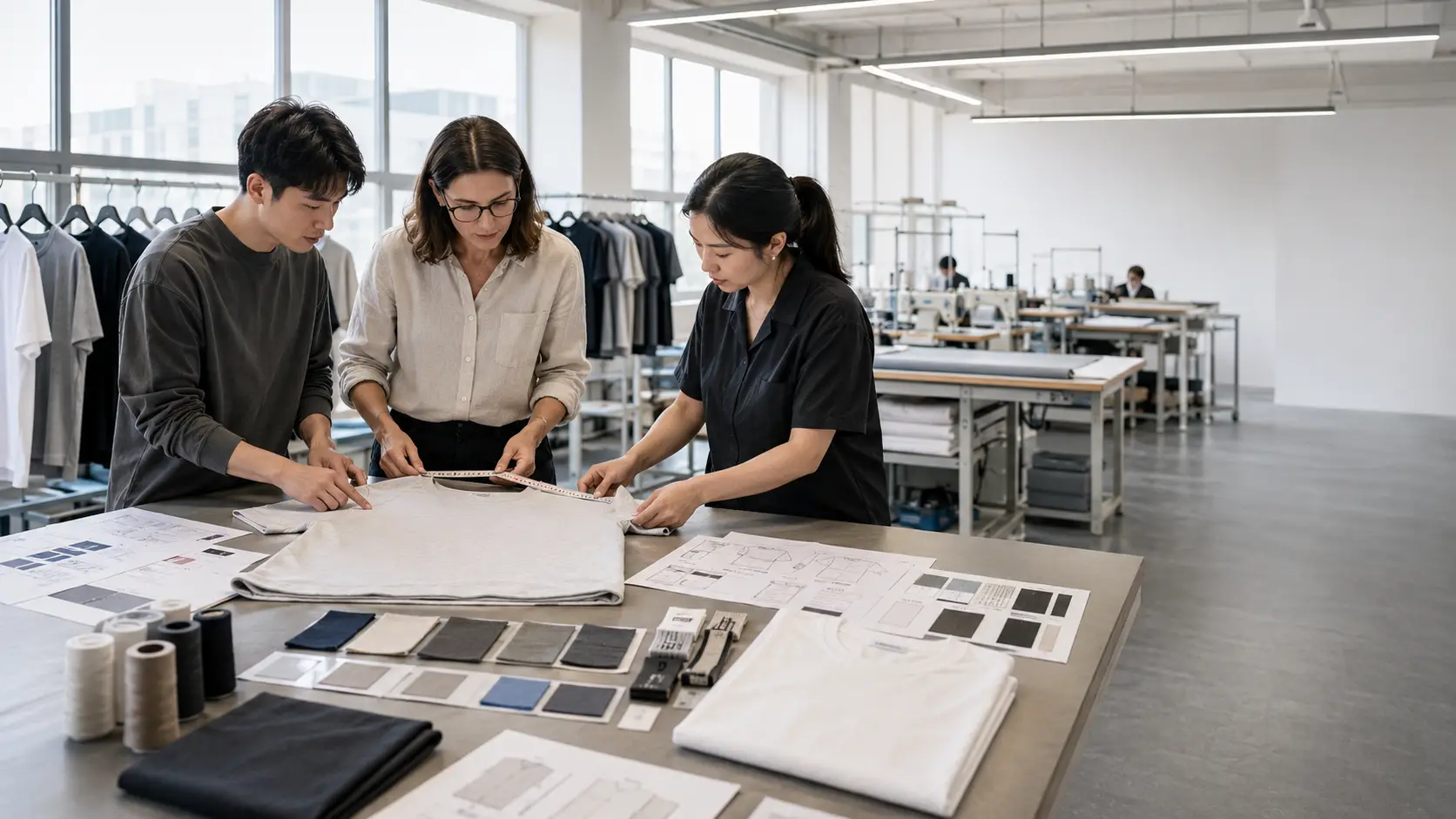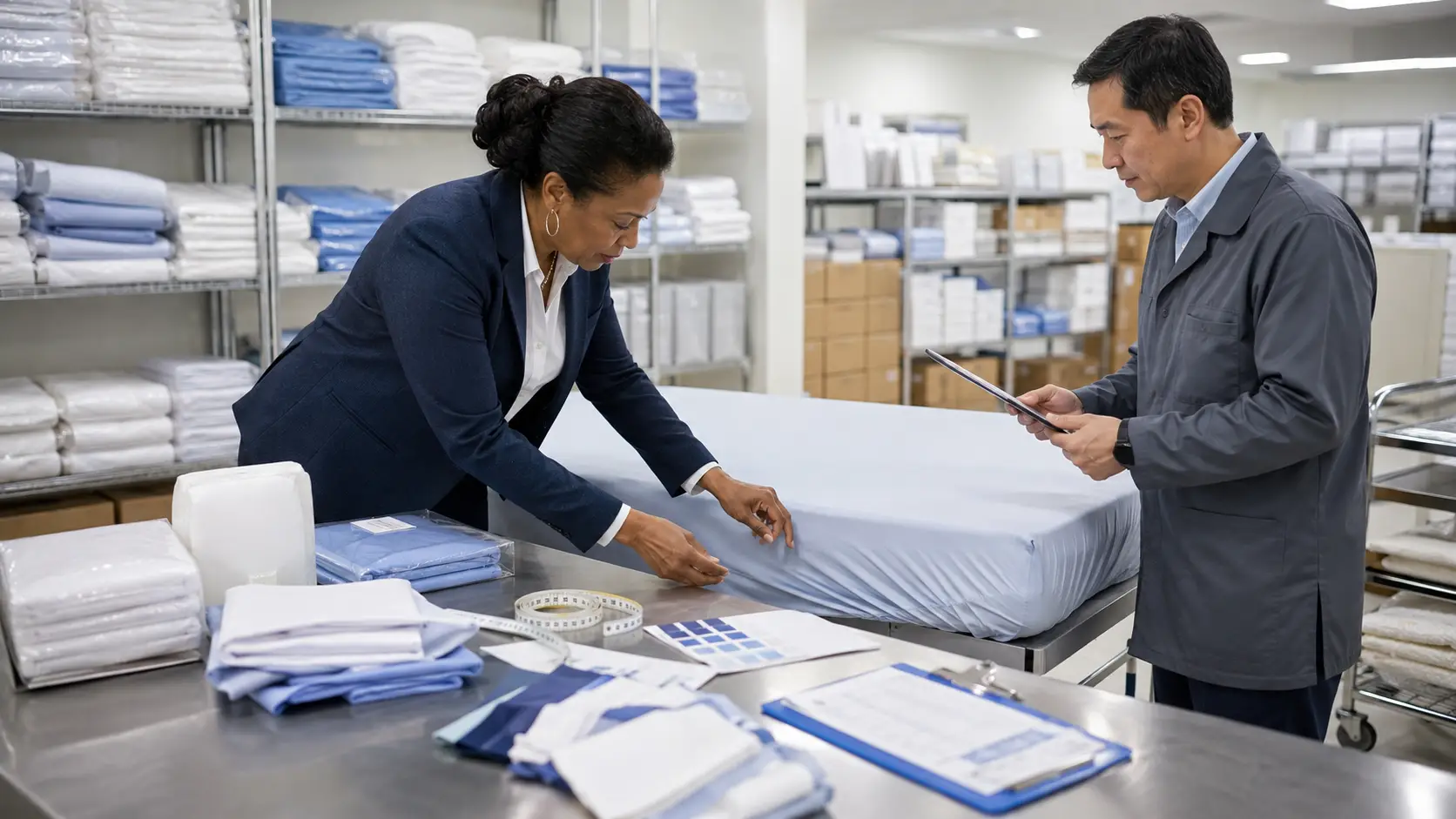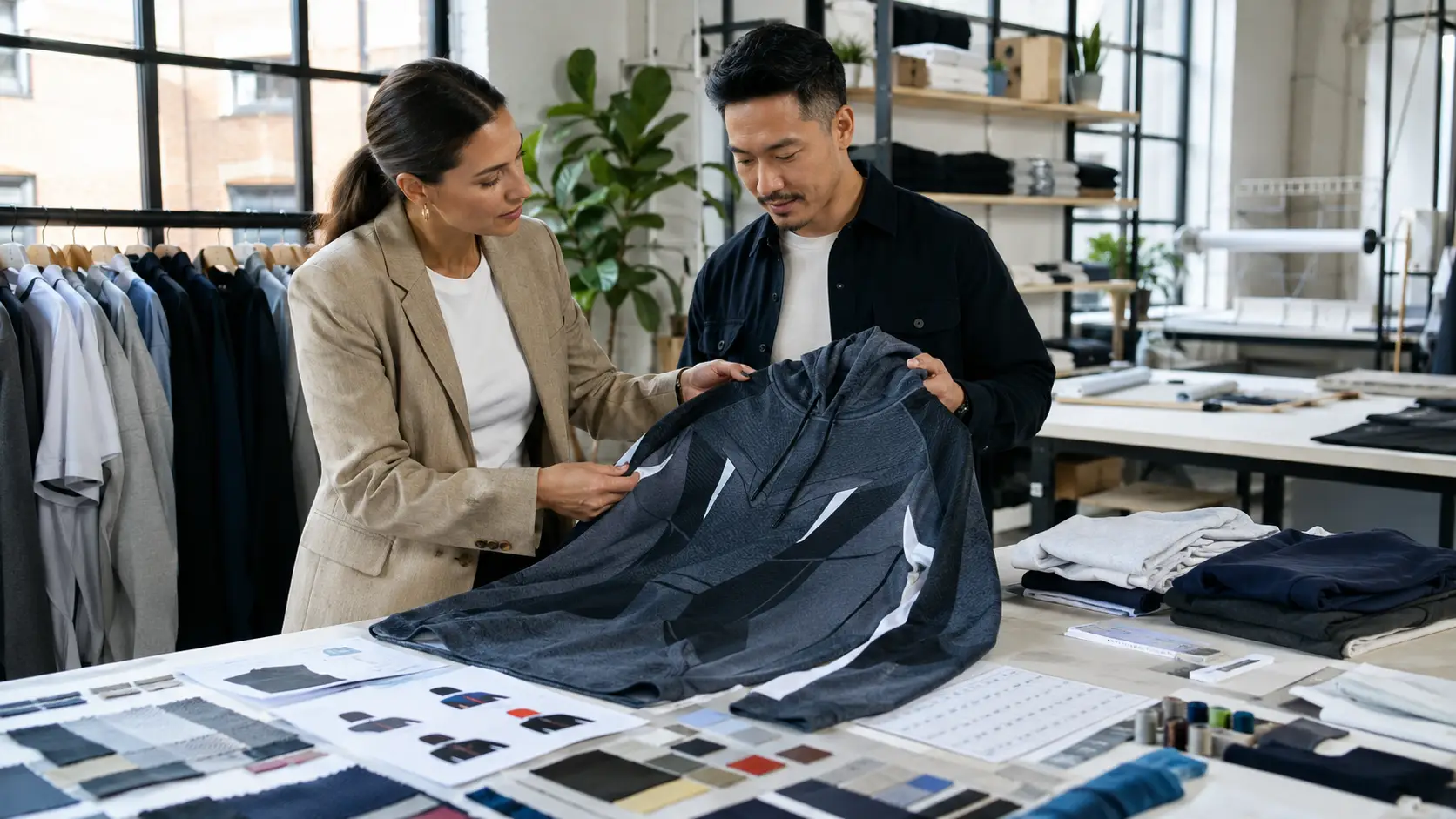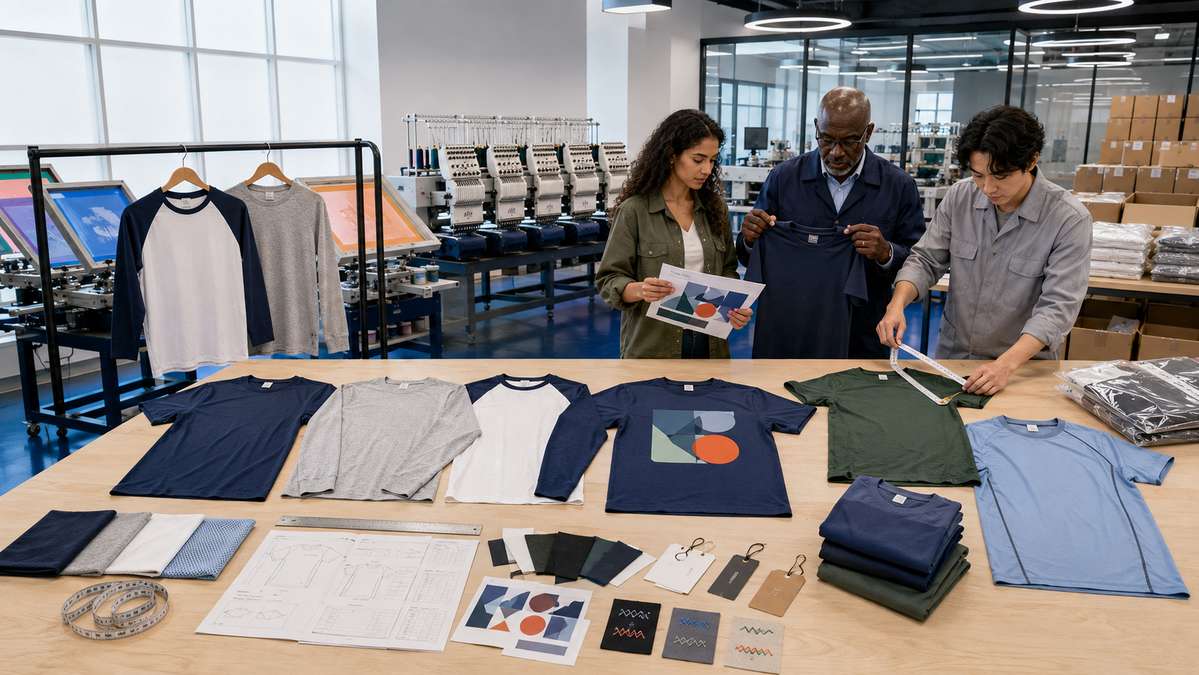
Boys’ T-shirt manufacturers produce custom, private-label, and wholesale garments for fashion brands, schools, retailers, importers, and promotional businesses. Buyers should compare suppliers based on fabric knowledge, pattern development, size grading, printing capabilities, sample quality, production capacity, quality control, pricing, and delivery reliability. A detailed technical pack and approved physical samples help reduce problems with fit, shrinkage, colors, construction, and artwork during bulk production.
Understanding Boys’ T-Shirt Manufacturing
Boys’ T-shirts are everyday garments, but producing them consistently requires careful control of fabric, sizing, neck construction, seams, artwork, labels, and finishing. Small differences in fabric weight, shrinkage, neckline stretch, or pattern grading can affect comfort and durability.
A capable manufacturer should understand the requirements of basic crew-neck T-shirts, printed fashion styles, school garments, sports shirts, long-sleeve designs, and performance products. Buyers can review a supplier’s boys’ clothing range to understand its broader product experience.
Common boys’ T-shirt styles include:
- Crew-neck T-shirts
- V-neck T-shirts
- Long-sleeve T-shirts
- Raglan T-shirts
- Pocket T-shirts
- Henley T-shirts
- Graphic T-shirts
- Striped T-shirts
- Oversized T-shirts
- Slim-fit T-shirts
- School T-shirts
- Sports T-shirts
- Performance T-shirts
- Promotional T-shirts
- Organic cotton T-shirts
The right design depends on the intended age group, season, activity, destination market, retail price, and brand identity.
What Do Boys’ T-Shirt Manufacturers Provide?
Boys’ T-shirt manufacturers may manage the entire production process from product development through final packaging. The available services depend on the supplier’s machinery, workforce, sourcing network, printing facilities, and order requirements.
Typical services include:
- Fabric sourcing
- Fabric development
- Pattern making
- Size grading
- Sample production
- Fabric spreading and cutting
- Sewing and assembly
- Screen printing
- Digital printing
- Heat-transfer printing
- Embroidery
- Garment dyeing or washing
- Label production
- Quality inspection
- Folding and packaging
- Export preparation
Some manufacturers customize existing products by changing colors, prints, labels, or packaging. Others develop original garments from technical packs, sketches, measurement charts, or reference samples.
Buyers reviewing a wholesale boys’ T-shirt collection should confirm whether the displayed products are ready-stock garments, manufacturing examples, or customizable styles. Website images do not confirm current fabrics, colors, sizes, minimum quantities, or prices.
Selecting Fabric for Boys’ T-Shirts
Fabric affects softness, breathability, stretch, durability, shrinkage, printing performance, and cost. Buyers should specify the fiber composition, construction, weight, color, finishing, and performance requirements.
Cotton Jersey
Cotton single jersey is widely used for boys’ casual T-shirts. It can provide softness, breathability, and a comfortable surface for printing.
The buyer should define whether the garment requires conventional, combed, ring-spun, or another specified cotton yarn. Fabric weight should be stated numerically because terms such as lightweight or heavyweight can be interpreted differently.
Cotton and Polyester Blends
Cotton-polyester blends may provide a balance of comfort, durability, shape retention, and drying performance. They are commonly used for school, promotional, casual, and active garments.
The exact fiber percentages should be documented. Different blend ratios can affect the fabric’s feel, shrinkage, color response, pilling, and compatibility with printing methods.
Polyester and Performance Fabrics
Polyester fabrics can support sports, training, teamwear, and quick-drying T-shirts. Mesh structures may improve airflow, while elastane can provide additional stretch.
Buyers should define the expected moisture-management, opacity, stretch, recovery, snag resistance, and colorfastness standards. Fabric performance should be verified through appropriate testing instead of relying only on marketing descriptions.
Organic and Certified Materials
Some brands request organic cotton, recycled polyester, or other materials supported by certification. Buyers should identify the required certification, transaction documentation, labeling language, and chain-of-custody expectations before requesting quotations.
A general claim about sustainable material is not a substitute for the specific documentation required by the buyer or destination market.
Rib Fabric
Rib fabric is frequently used for crew-neck and V-neck bands because it can stretch during dressing and recover afterward. The rib composition, width, stretch, color, and attachment method should match the body fabric and garment design.
Poor recovery may cause the neckline to become loose or wavy. Excessive tension can make dressing uncomfortable or distort the upper body.
Important T-Shirt Design Specifications
A complete product specification helps the manufacturer calculate fabric consumption, labor, printing requirements, sample costs, and unit pricing accurately.
Silhouette and Fit
Boys’ T-shirts may have a regular, slim, relaxed, oversized, athletic, or boxy fit. The technical pack should define the intended silhouette and provide measurements for every size.
Important measurements include:
- Chest width
- Body length
- Shoulder width
- Sleeve length
- Sleeve opening
- Armhole
- Neck width
- Front neck drop
- Back neck drop
- Bottom opening
- Bicep width
The manufacturer should grade the pattern according to the buyer’s approved size chart rather than increasing every measurement by the same amount.
Neckline Construction
Common neckline options include:
- Crew neck
- V-neck
- Henley neck
- Mock neck
- Bound neck
- Self-fabric neck
- Ribbed neck
The neckline should stretch enough for comfortable dressing while returning to its original shape. Buyers should specify the neckband width, rib composition, seam construction, topstitching, and internal finishing.
A shoulder-to-shoulder neck tape may improve stability and comfort. Its material, width, color, and placement should be documented.
Sleeve Construction
Set-in, raglan, short, long, and layered sleeves create different fits and production requirements. Sleeve length, opening, shape, and seam position should be included in the specification.
Long-sleeve styles may use open hems, ribbed cuffs, or elasticated finishes. Raglan designs require accurate seam alignment, particularly when contrasting colors or printed panels are used.
Seams and Stitching
T-shirt seams should be secure, flexible, and comfortable. The appropriate stitch type depends on the fabric, design, machinery, and intended use.
Buyers should define:
- Seam type
- Stitch density
- Seam allowance
- Thread color
- Hem width
- Reinforcement points
- Topstitching
- Neck-tape construction
Poor seam control may lead to puckering, skipped stitches, broken threads, twisting, or failure during wear and washing.
Hems
Sleeve and bottom hems should remain flat and consistent. Coverstitching is common for knitted T-shirts, but the exact construction should be confirmed in the technical pack.
Uneven feeding or incorrect tension can produce wavy hems. Hem performance should be evaluated after washing because shrinkage can expose construction problems that are not visible on a new sample.
Printing and Decoration Options
Artwork is often a central feature of boys’ T-shirts. The manufacturing method should match the fabric, artwork complexity, order quantity, performance needs, and target cost.
Screen Printing
Screen printing is commonly used for logos, text, and graphic artwork. It can be suitable for bulk production and designs with defined color separations.
Buyers should approve the artwork dimensions, placement, colors, print technique, surface feel, and curing quality. Each garment size may require a different print position or artwork scale.
Digital Printing
Direct-to-garment or other digital printing methods may support detailed, multicolor artwork. Suitability depends on the fabric composition, pretreatment, equipment, and required durability.
A physical printed sample should be reviewed because screen previews cannot accurately demonstrate the final color, texture, or wash performance.
Heat Transfers
Heat-transfer methods can reproduce logos, numbers, labels, and decorative artwork. The transfer must bond securely without cracking, peeling, or creating an uncomfortable surface.
Temperature, pressure, application time, fabric compatibility, and placement should be controlled during production.
Embroidery
Embroidery can create a raised and durable decoration, but stitch density and backing materials may affect comfort. Large or dense designs can make lightweight T-shirts feel stiff.
Embroidery artwork should include dimensions, thread colors, stitch information, placement, and backing requirements. The reverse side should be evaluated for skin comfort.
Appliqués, Patches, and Special Effects
Patches, appliqués, flock prints, foil effects, puff prints, reflective elements, and other treatments can create a distinctive appearance. These options may require additional testing and inspection.
Decorative elements should be appropriate for the intended age group and securely attached. Buyers should confirm any safety or labeling requirements that apply in the destination market.
Sizing and Fit Development
Children’s body proportions change significantly across age groups. Reliable boys’ T-shirt manufacturers should use buyer-approved size charts and grading rules.
A size range may be organized by age, height, body measurements, or a market-specific sizing system. Age labels alone may not provide enough precision because children of the same age can have different body proportions.
Fit testing should evaluate:
- Chest comfort
- Shoulder placement
- Neck opening
- Sleeve movement
- Body length
- Hem balance
- Ease of dressing
- Comfort while sitting and moving
The shirt should allow suitable movement without appearing unintentionally loose. Necklines should pass comfortably over the wearer’s head without losing their shape.
Samples should be evaluated before and after washing. Fabric shrinkage can reduce the body length, sleeve length, and chest width or create twisting and seam distortion.
Customization for Private-Label Brands
Private-label production allows buyers to create boys’ T-shirts that reflect their brand identity, customer needs, and retail positioning.
Customization may include:
- Original patterns
- Buyer-specific size charts
- Custom fabric compositions
- Exclusive colors
- Custom dyeing
- All-over prints
- Placement prints
- Embroidery
- Contrast sleeves
- Color-blocked panels
- Custom necklines
- Branded neck tape
- Woven labels
- Printed care labels
- Heat-transfer labels
- Hangtags
- Barcode stickers
- Individual polybags
- Retail-ready multipacks
- Custom carton markings
Every custom detail should be approved during sampling. Buyers should provide accurate artwork files, color references, dimensions, label positions, folding instructions, and packaging information.
When developing several garment categories, buyers can evaluate the supplier’s broader custom clothing services. Each T-shirt design should still have its own fabric, sizing, construction, artwork, labeling, and packaging specifications.
How to Source Boys’ T-Shirts Step by Step
1. Define the Target Customer
Identify the intended age range, season, activity, destination market, retail price, and expected product lifespan.
A basic school T-shirt, fashion graphic tee, sports shirt, and premium organic cotton garment require different materials, construction methods, performance standards, and pricing.
2. Prepare a Complete Technical Pack
The technical pack should include:
- Front and back garment drawings
- Size chart
- Grading rules
- Fabric composition
- Fabric construction and weight
- Color references
- Neckline construction
- Stitching instructions
- Sleeve and hem details
- Artwork files
- Print dimensions and placement
- Labels and hangtags
- Folding method
- Packaging requirements
Reference photographs can clarify the intended appearance, but they should not replace written measurements and construction instructions.
3. Review Manufacturing Experience
Ask the supplier for examples of similar boys’ T-shirts. Experience with basic blank garments does not automatically demonstrate the ability to produce detailed prints, performance fabrics, specialty washes, or complex constructions.
The factory should explain which processes are completed internally and which are handled by outside facilities. Subcontracted printing, embroidery, dyeing, or washing may require additional coordination and quality controls.
4. Request Fabric and Color Samples
Review fabric swatches for:
- Composition
- Weight
- Softness
- Stretch
- Recovery
- Opacity
- Surface appearance
- Color
- Shrinkage
- Printing compatibility
Custom colors should be compared with an approved physical color standard under controlled lighting. Screen colors are not reliable enough for final production approval.
5. Develop the First Sample
The first development sample allows the buyer to evaluate shape, measurements, fabric, neckline, sleeves, stitching, artwork, and overall appearance.
Every correction should be documented clearly. Provide measurement changes numerically, while annotated photographs or diagrams can explain placement and construction issues.
6. Conduct Fit and Wear Testing
Test the sample on an appropriate model or dress form. Check shoulder position, chest room, neckline comfort, sleeve movement, body length, and overall balance.
The wearer should be able to raise the arms, sit, bend, and move comfortably. The shirt should not twist, ride up excessively, restrict movement, or place pressure around the neckline.
7. Test Washing Performance
Wash testing can reveal:
- Fabric shrinkage
- Color fading
- Color bleeding
- Pilling
- Seam twisting
- Neckband distortion
- Print cracking
- Transfer peeling
- Embroidery puckering
- Label damage
The testing method should reflect the care instructions intended for the finished garment. Buyers should define acceptable results before approving bulk production.
8. Approve a Preproduction Sample
The preproduction sample should use the final approved fabric, colors, measurements, trims, labels, artwork, stitching, and finishing.
Bulk cutting should begin only after the buyer provides written approval and confirms acceptable measurement and workmanship tolerances.
9. Confirm Commercial Terms
Before placing a bulk order, confirm:
- Minimum order quantity
- Quantity per design and color
- Size ratio
- Sample charges
- Unit price
- Printing or embroidery costs
- Testing costs
- Payment terms
- Production lead time
- Inspection arrangements
- Packaging requirements
- Shipping terms
- Delivery responsibilities
Written confirmation helps reduce disagreements about pricing, quality, timing, and included services.
Quality Control for Boys’ T-Shirt Production
Quality control should begin with fabric inspection and continue through cutting, sewing, decoration, finishing, and packaging.
Fabric Inspection
Fabric should be checked for holes, stains, shade variation, width differences, knitting defects, contamination, and surface damage.
Fabric rolls from different dye lots should be controlled carefully. Mixing shades within one garment or order can produce visible color inconsistencies.
Relaxation and Shrinkage Control
Knitted fabric may need to relax before cutting so that tension from rolling and handling can settle. The production process should account for tested shrinkage.
If shrinkage is not considered during pattern development and cutting, finished garments may become smaller than the approved measurements after washing.
Cutting Inspection
Pattern pieces should be cut accurately according to the approved marker, grain direction, and size requirements. Cutting errors can affect garment balance, seam alignment, sleeve shape, and finished measurements.
Striped or patterned fabrics may require matching controls. Placement prints may also require careful coordination between cutting and printing.
In-Line Sewing Inspection
In-line inspection helps identify problems before large quantities are completed. Inspectors should review:
- Seam strength
- Stitch consistency
- Neckband attachment
- Shoulder alignment
- Sleeve setting
- Hem quality
- Reinforcement
- Label position
- Garment measurements
Correcting problems early is usually more efficient than repairing finished garments.
Printing and Embroidery Inspection
Decorations should be checked for color, dimensions, placement, registration, surface quality, adhesion, curing, and cleanliness.
Printed garments should be inspected for smudges, stains, cracking, incomplete coverage, or artwork distortion. Embroidery should be checked for skipped stitches, loose threads, puckering, and backing discomfort.
Measurement Inspection
Finished garments should be measured against the approved specification. Measurements should be checked across representative sizes, colors, and production batches.
The buyer and manufacturer should agree on tolerances for every important measurement point before production begins.
Final Appearance Inspection
Finished T-shirts should be checked for:
- Incorrect measurements
- Uneven shoulders
- Twisted side seams
- Wavy necklines
- Uneven hems
- Puckering
- Broken stitches
- Loose threads
- Fabric defects
- Shade variation
- Incorrect artwork
- Print stains
- Damaged decorations
- Incorrect labels
- Poor pressing or folding
Packaging Inspection
Sizes, colors, quantities, hangtags, barcodes, polybags, multipacks, carton assortments, and shipping marks should match the purchase order.
Packaging should protect garments from moisture, dirt, crushing, and unnecessary movement during storage and transportation.
Comparing Common Boys’ T-Shirt Styles
| T-Shirt Style | Typical Fabric | Main Fit Concern | Key Production Requirement |
|---|---|---|---|
| Basic crew neck | Cotton jersey | Neck opening and body fit | Stable rib neck and even seams |
| Graphic T-shirt | Cotton or blended jersey | Artwork scale and placement | Accurate printing and proper curing |
| Long-sleeve T-shirt | Cotton jersey or blend | Sleeve length and movement | Balanced sleeves and secure cuffs |
| Raglan T-shirt | Cotton or performance blend | Shoulder and arm mobility | Accurate raglan seam alignment |
| Sports T-shirt | Polyester performance knit | Movement and breathability | Stretch-compatible seams |
| School T-shirt | Cotton-polyester blend | Consistent sizing | Durable stitching and colorfast fabric |
| Pocket T-shirt | Cotton jersey | Pocket position | Stable and symmetrical attachment |
| Oversized T-shirt | Medium-weight jersey | Intentional proportions | Controlled grading and neckline shape |
Each style should have separate fabric, sizing, construction, artwork, testing, and packaging.
Factors That Affect Manufacturing Cost
There is no single standard price for boys’ T-shirt manufacturing. The final cost depends on the complete product specification.
Important pricing factors include:
- Fiber composition
- Fabric weight
- Yarn quality
- Fabric consumption
- Custom dyeing
- Number of colors
- Order quantity
- Quantity per color
- Size range
- Pattern complexity
- Neckline construction
- Sleeve design
- Printing method
- Number of print colors
- Artwork size
- Embroidery
- Special washes
- Branded labels
- Hangtags
- Testing requirements
- Packaging
- Inspection
- Shipping terms
A basic single-color crew-neck shirt usually costs less to develop and produce than a performance T-shirt with custom fabric, several printed colors, contrast panels, branded trims, and retail-ready packaging.
Buyers should compare quotations based on identical specifications. A lower quotation may exclude printing, labels, testing, packaging, inspection, or other services included by another supplier.
Questions to Ask Potential Manufacturers
Before choosing boys’ T-shirt manufacturers, ask:
- Have you produced similar boys’ T-shirts?
- Which knitted fabrics can you source?
- Can you develop custom fabric weights and colors?
- Can you create patterns from a technical pack?
- How do you grade patterns for different age groups?
- Which printing methods are available?
- Is printing completed internally or subcontracted?
- Can you provide embroidery and specialty finishes?
- What is the minimum quantity per design and color?
- How are sample charges and revisions managed?
- How do you test fabric shrinkage?
- Which inspections take place during sewing?
- How is print durability evaluated?
- Can independent testing and inspection be arranged?
- Which private-label services are available?
- What are the sampling and production lead times?
- What is included in the quotation?
- How are defects, shortages, and delays handled?
A supplier’s company profile may provide useful background information. Buyers should still verify capabilities through physical samples, specifications, test reports, quotations, and direct communication.
Common Sourcing Mistakes to Avoid
Requesting Cotton Without Complete Specifications
The word “cotton” does not define yarn quality, fabric construction, weight, shrinkage, or finishing. Buyers should provide measurable requirements and approve a physical swatch.
Using Age as the Only Size Reference
Children of the same age can have different heights and body proportions. A complete garment size chart and grading rules provide more reliable production guidance.
Ignoring Neckline Performance
A neckline may look acceptable before washing but become loose, twisted, or wavy afterward. Neckband stretch, recovery, attachment, and wash performance should be tested.
Approving Artwork Only on a Screen
Digital artwork cannot confirm the final print color, texture, dimensions, or durability. Buyers should approve a decorated physical sample before bulk production.
Using One Artwork Size for Every Garment
A print that looks balanced on a larger shirt may overwhelm a smaller size. Artwork dimensions and placement should be reviewed across the complete size range.
Skipping Wash Testing
Washing may reveal shrinkage, twisting, fading, pilling, print damage, or neckline distortion. Testing before production helps prevent large-scale quality problems.
Changing Requirements After Approval
Late changes can affect fabric availability, material consumption, production costs, lead times, and consistency. Specifications should be finalized before bulk cutting.
Comparing Unequal Quotations
Every manufacturer should quote against the same fabric, weight, construction, sizes, artwork, labels, packaging, inspection, and shipping terms. Otherwise, the prices do not represent equivalent products.
Building a Reliable Boys’ T-Shirt Supply Program
Reliable boys’ T-shirt manufacturers should combine fabric knowledge, pattern-development experience, accurate grading, suitable decoration capabilities, consistent quality control, and clear communication. They should understand how fabric construction, necklines, seams, artwork, and washing affect the final garment.
Buyers can reduce sourcing risks by preparing complete technical packs, reviewing physical fabric swatches, approving decorated samples, conducting fit and wash tests, and documenting quality standards. Production schedules, packaging instructions, payment terms, inspection requirements, and delivery responsibilities should also be confirmed in writing.
Careful preparation helps brands, schools, wholesalers, and retailers produce T-shirts that remain consistent across sizes, colors, designs, and repeat orders. Buyers with organized specifications, quantities, artwork, fabric requirements, and delivery information can request a manufacturing quotation to begin the sampling and bulk production process.