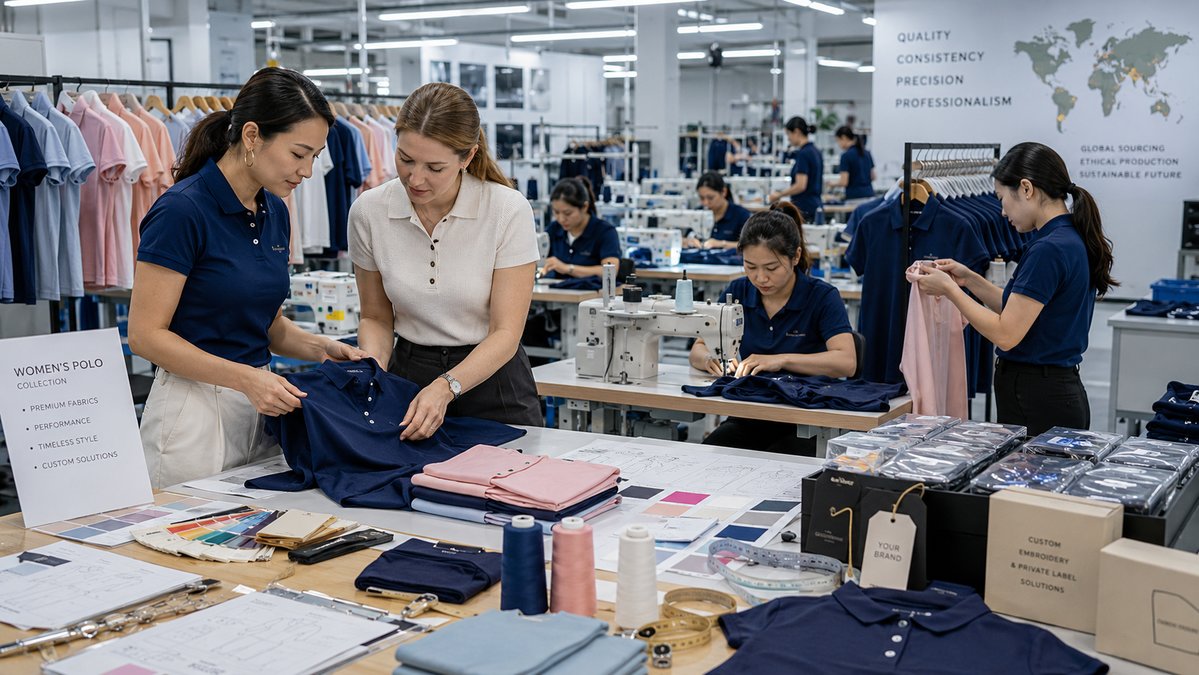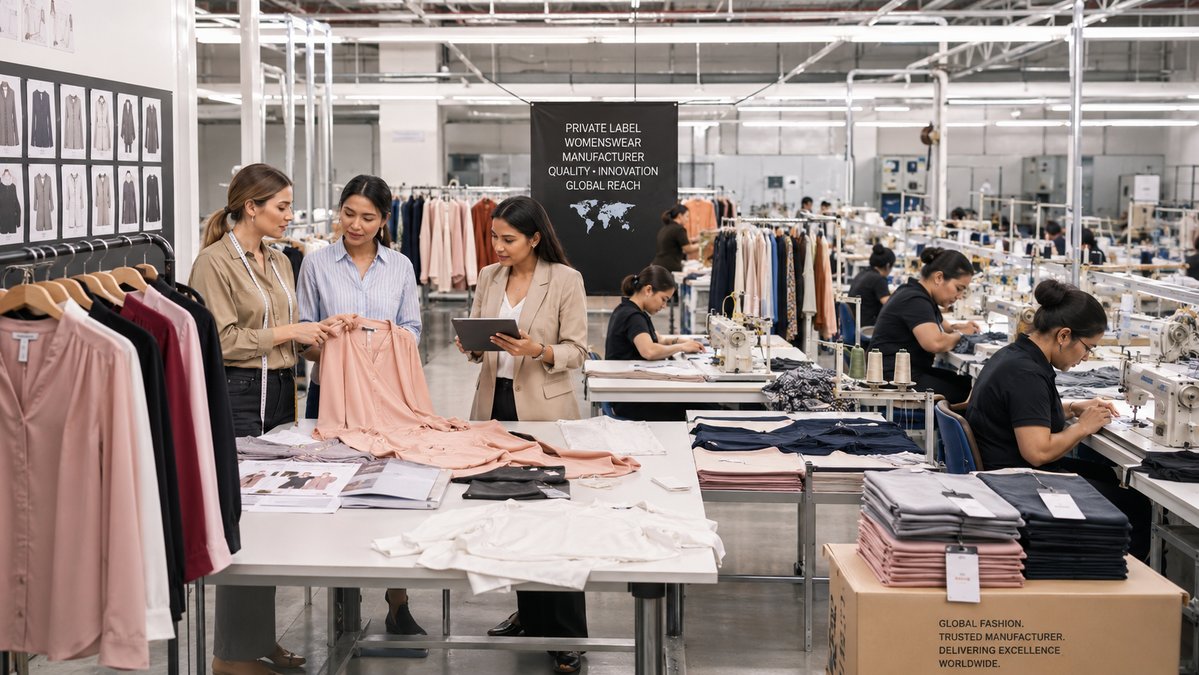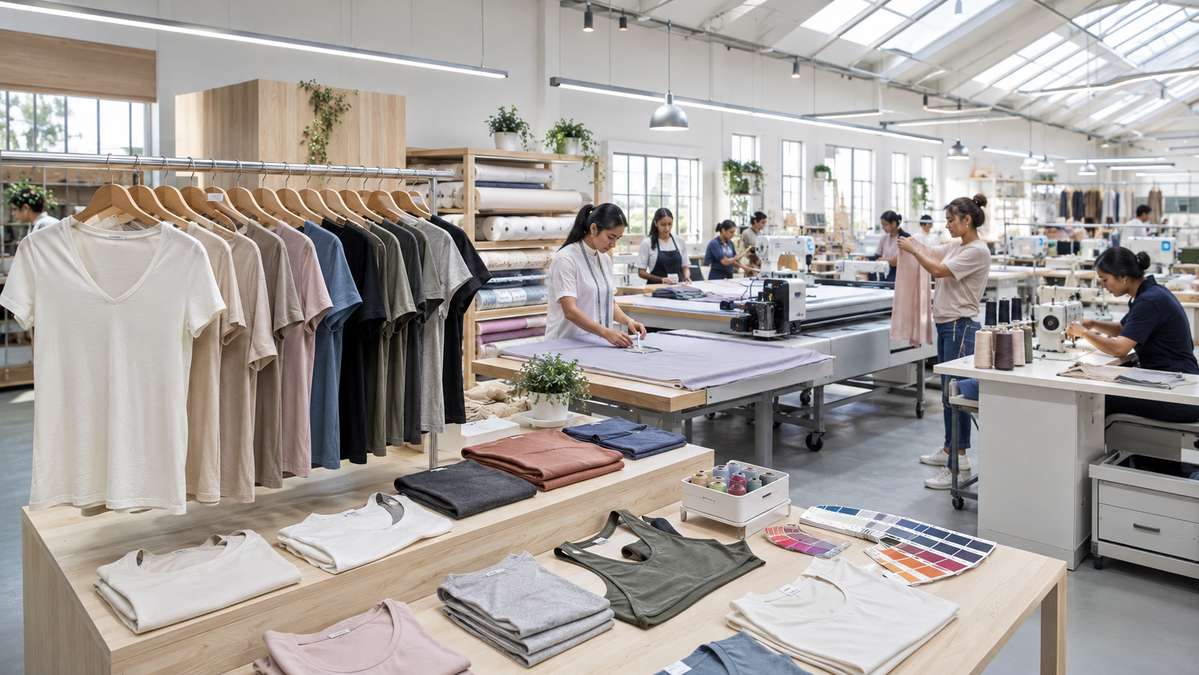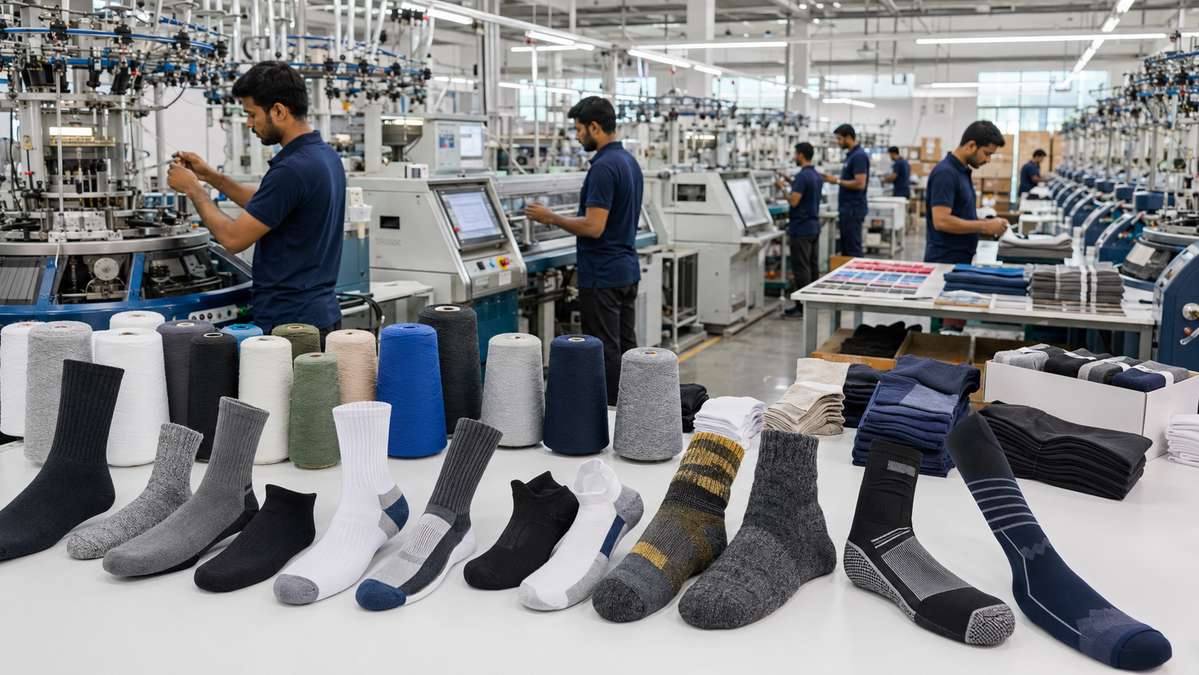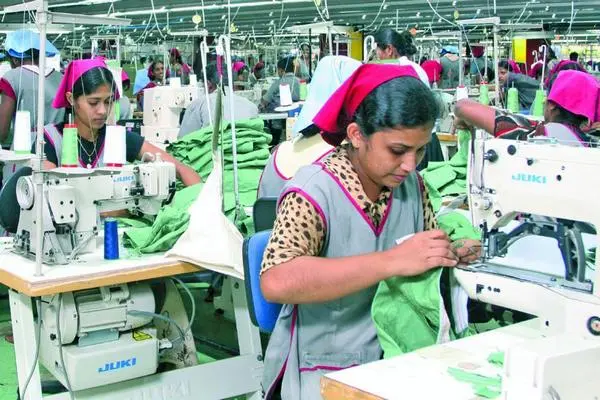
The garment manufacturing process in Bangladesh starts with a buyer inquiry, tech pack review, fabric sourcing, sampling, cutting, sewing, quality control, finishing, packing, and export shipment. For buyers in the USA, UK, Canada, France, and Germany, Bangladesh offers scale, skilled labor, competitive production, and a growing base of compliant, sustainable factories.
Why Global Buyers Still Look to Bangladesh
When a fashion brand in New York, Los Angeles, London, Toronto, Paris, or Berlin looks for reliable apparel production, Bangladesh is often on the shortlist. The reason is simple: the country has built one of the world’s strongest ready-made garment ecosystems.
Bangladesh is no longer just known for basic T-shirts. Today, buyers source knitwear, denim, outerwear, uniforms, activewear, kidswear, workwear, private-label fashion, and custom clothing from Bangladeshi factories.
According to BGMEA data compiled from Bangladesh Export Promotion Bureau figures, Bangladesh’s apparel exports reached about $39.35 billion in FY2024–25, growing 8.84% year over year. The United States alone accounted for about $7.54 billion, while the UK, Canada, Germany, and France remained important markets for Bangladeshi garments.
So, what actually happens inside the garment manufacturing process in Bangladesh?
This guide breaks it down step by step, in a practical way. Whether you are a USA-based clothing startup, a UK fashion label, a Canadian uniform buyer, or a European retailer, this article will help you understand how a company like Minmax Textile manages production from concept to shipment.
What Is Garment Manufacturing in Bangladesh?
Garment manufacturing in Bangladesh is the process of converting raw materials such as yarn, fabric, trims, buttons, zippers, labels, and packaging into finished clothing for local and international buyers.
In simple terms, it includes:
- Product development
- Fabric and trims sourcing
- Pattern making
- Sampling
- Cutting
- Sewing
- Washing or finishing
- Quality inspection
- Packing
- Export documentation
- Shipment
For international buyers, Bangladesh works mainly as a production hub. A buyer sends a design, a tech pack, a sample, or a reference product. The manufacturer then develops the garment, confirms costing, produces samples, runs bulk production, checks quality, packs the goods, and ships them to the buyer’s country.
Bangladesh has remained the world’s second-largest apparel exporter after China, according to WTO-based reporting for 2024. Its apparel exports were valued at about $38.48 billion in 2024, representing around 6.90% of the global apparel export market.
Why Bangladesh Is Important for the USA, UK, Canada, France, and Germany Buyers
Bangladesh has become a preferred apparel sourcing destination because it offers a combination of cost efficiency, skilled production, large capacity, and export experience.
For USA buyers, Bangladesh is especially relevant for:
- T-shirts and knitwear
- Denim jeans
- Hoodies and sweatshirts
- Polo shirts
- Workwear
- Private-label basics
- Promotional apparel
- Large-volume retail orders
For buyers in the UK, Canada, France, and Germany, Bangladesh is also attractive for casualwear, sustainable collections, uniforms, children’s wear, and value-driven fashion.
The European Union was Bangladesh’s largest RMG market in FY2024–25, accounting for about 50.10% of total RMG exports. Germany was the largest EU market for Bangladesh, followed by other major European destinations, including France.
That matters because it shows that Bangladesh is not serving only one market. It is already producing for highly demanding buyers across North America and Europe.
Step-by-Step: Inside the Garment Manufacturing Process in Bangladesh
1. Buyer Inquiry and Requirement Analysis
The process usually starts when a buyer contacts a manufacturer like Minmax Textile with a product idea.
The buyer may send:
- A tech pack
- A reference image
- A physical sample
- A size chart
- Fabric details
- Target price
- Order quantity
- Delivery deadline
- Compliance requirements
A good manufacturer does not rush into production. First, the team carefully studies the product.
For example, a USA streetwear brand may request an oversized hoodie in 420 GSM with custom embroidery. A German workwear buyer may need durable cargo pants with reinforced stitching. A Canadian company may need fleece jackets suitable for cold weather.
Each product has different fabric, stitching, washing, labeling, and packaging needs. This is why the first step is always requirement analysis.
2. Costing and Feasibility Check
After reviewing the product details, the manufacturer prepares a costing sheet.
This usually includes:
- Fabric cost
- Trims cost
- Printing or embroidery cost
- Washing cost
- Cutting and sewing cost
- Finishing cost
- Packing cost
- Testing cost
- Freight or shipment-related cost
- Factory overhead
- Margin
This step is very important for USA and European buyers because the final landed cost matters more than the factory price alone.
A low FOB price may look attractive, but if the product fails testing, gets delayed, or has poor quality, the buyer loses more money later.
That is why experienced sourcing teams compare price with quality, production capacity, compliance, lead time, and communication.
3. Fabric Sourcing
Fabric is the foundation of garment quality.
Bangladesh has a strong knit fabric capacity, especially for cotton T-shirts, polo shirts, sweatshirts, hoodies, and other jersey-based products. For woven items, denim, shirting, twill, poplin, canvas, and other fabrics may be sourced locally or imported, depending on buyer requirements.
Common fabrics used in Bangladesh garment manufacturing include:
| Fabric Type | Common Products |
|---|---|
| Single jersey | T-shirts, tank tops |
| Pique | Polo shirts |
| Fleece | Hoodies, sweatshirts |
| French terry | Joggers, casual wear |
| Denim | Jeans, jackets |
| Twill | Workwear, chinos |
| Poplin | Shirts, uniforms |
| Rib fabric | Necklines, cuffs, waistbands |
For premium buyers, fabric selection may also include organic cotton, recycled polyester, BCI cotton, modal, viscose, spandex blends, or performance materials.
A manufacturer should confirm fabric GSM, composition, shrinkage, color fastness, hand feel, stretch, and durability before bulk production.
4. Trims and Accessories Sourcing
Trims may look small, but they affect the final quality and buyer experience.
Common trims include:
- Buttons
- Zippers
- Drawcords
- Eyelets
- Elastic
- Main labels
- Care labels
- Hangtags
- Size stickers
- Polybags
- Cartons
- Barcode labels
For USA buyers, barcode accuracy and carton marking are especially important because retail warehouses often use strict receiving systems. An incorrect barcode or carton label can cause delays, chargebacks, or rejected shipments.
For UK, France, and Germany buyers, packaging, labeling, and sustainability expectations can be even more detailed. Recycled polybags, FSC paper tags, and reduced plastic packaging are increasingly common requests.
5. Pattern Making
Once fabric and product details are understood, the technical team creates the garment pattern.
A pattern is the blueprint of the garment. It controls the shape, fit, measurement, and construction.
For example, two hoodies may look similar in photos, but the pattern decides whether one feels premium and the other feels cheap. Shoulder slope, sleeve length, chest width, armhole shape, and body length all affect fit.
This step is especially important for USA brands because fit expectations vary by market. A relaxed-fit American T-shirt may not follow the same measurement logic as a slim-fit European T-shirt.
6. Sample Development
Before bulk production, the factory creates samples.
Common sample types include:
- Development sample
- Fit sample
- Size set sample
- Pre-production sample
- Photo shoot sample
- Salesman sample
- Shipment sample
The pre-production sample, often called the PP sample, is one of the most important. It becomes the approved standard for bulk production.
A buyer should never approve bulk production based only on a photo. For serious orders, a physical sample review is safer. Check the fit, fabric feel, stitching, trims, print placement, embroidery quality, shrinkage, and finishing.
7. Fabric Inspection
Before cutting, fabric must be inspected.
Factories often use fabric inspection systems to find defects such as:
- Holes
- Stains
- Color variation
- Knitting faults
- Weaving faults
- Shade differences
- Uneven dyeing
- GSM variation
This step saves money because once defective fabric is cut and sewn, the loss becomes much bigger.
For example, if a USA buyer orders 10,000 black T-shirts and the fabric has shade variation, the final shipment may look inconsistent under store lighting. That can damage the brand’s reputation.
8. Cutting
After fabric approval, the cutting team lays the fabric in layers and cuts it according to the marker plan.
A marker is a layout that helps reduce fabric waste. High marker efficiency can reduce costs and improve production sustainability.
The cutting process usually includes:
- Fabric relaxation
- Layer spreading
- Marker placement
- Cutting
- Numbering
- Bundling
- Sending cut panels to sewing lines
Fabric relaxation is important for knitwear and stretch fabrics. If fabric is cut too quickly after opening, it may shrink or distort later.
9. Printing, Embroidery, or Special Work
Some garments need decoration before sewing. Others need it after sewing.
Common value-added work includes:
- Screen printing
- Digital printing
- Sublimation printing
- Heat transfer
- Embroidery
- Appliqué
- Patchwork
- Wash effects
- Laser design
- Distressing
For USA streetwear brands, print quality is often a major selling point. A hoodie with a cracked print after two washes can lead to bad reviews and returns.
That is why print testing, color matching, placement checking, and wash testing should be part of the process.
10. Sewing Line Production
Sewing is where the garment really comes together.
A production line may include many operators, each handling a specific operation. For a T-shirt, one operator may join the shoulders, another may attach the sleeves, another may close the side seams, and another may attach the neck rib.
For more complex products like jackets, cargo pants, or workwear, production needs more machines and more skilled operators.
Common sewing machines include:
- Lockstitch machine
- Overlock machine
- Flatlock machine
- Coverstitch machine
- Buttonhole machine
- Bartack machine
- Feed-off-arm machine
- Kansai machine
The best factories use inline quality control during sewing. This means defects are caught early instead of waiting until the final inspection.
11. Washing and Finishing
Not every garment needs washing, but many do.
Denim, fleece, casualwear, and fashion items often go through washing or finishing to improve appearance, softness, shrinkage control, or style.
Common washing processes include:
- Enzyme wash
- Stone wash
- Silicon wash
- Garment wash
- Acid wash
- Bleach wash
- Softener wash
For premium casualwear, finishing can make a huge difference. A basic sweatshirt can feel ordinary before washing but soft, stable, and retail-ready after the right finish.
12. Quality Control and Inspection
Quality control is one of the most important parts of garment manufacturing in Bangladesh.
A strong QC system usually includes:
- Fabric inspection
- Trims inspection
- Cutting inspection
- Inline sewing inspection
- Measurement check
- Finishing inspection
- Needle detection, if required
- Final random inspection
- Carton audit
Buyers often use AQL inspection standards to decide whether a shipment is acceptable. The goal is not just to find defects but to prevent them.
Common garment defects include:
- Open seams
- Skipped stitches
- Uneven stitching
- Oil marks
- Poor print placement
- Wrong measurements
- Shade variation
- Loose threads
- Broken buttons
- Incorrect labels
- Poor ironing
- Wrong packing ratio
For Minmax Textile, the trust-building message should be clear: quality is not something checked only at the end. It should be controlled from fabric sourcing to final carton packing.
13. Compliance and Ethical Manufacturing
Modern buyers do not only ask, “Can you make it?”
They also ask:
- Is the factory safe?
- Are workers treated fairly?
- Are wages paid properly?
- Are working hours controlled?
- Are chemicals handled safely?
- Are social audits available?
- Is the supply chain traceable?
Bangladesh has made visible progress in compliance and workplace improvement. Better Work Bangladesh, a program connected with the ILO and IFC, works with about 488 factories, 50 brands and retailers, and around 1.4 million workers, according to its program data.
For buyers in the USA, UK, Canada, France, and Germany, this matters because compliance risk can quickly become brand risk.
A good buyer should ask for:
- Factory audit reports
- Compliance certificates
- Fire and building safety documents
- Product testing records
- Chemical management policy
- Social compliance documents
- Previous buyer references
- Production photos or videos
- Quality inspection reports
14. Sustainability and Green Manufacturing
Sustainability is no longer a “nice to have.” It is becoming part of serious apparel sourcing.
Bangladesh has become known for green garment factories. In 2025, Bangladesh added 38 new LEED-certified green garment factories, including 22 Platinum, 11 Gold, and 5 Silver factories. BSS reported that Bangladesh had reached 270 LEED-certified green garment factories at that point.
In March 2026, Dhaka Tribune reported that Bangladesh had 52 of the world’s top 100 LEED-certified factories and a total of 280 LEED-certified green factories.
For USA and European buyers, this can support:
- Lower environmental impact
- Better brand storytelling
- Stronger ESG reporting
- Better supplier credibility
- More responsible sourcing decisions
Still, buyers should avoid vague claims. Always ask for actual certificates, audit documents, and factory-level proof.
15. Packing and Carton Preparation
Once garments pass finishing and final checking, they move to packing.
Packing may include:
- Folding
- Size stickers
- Hangtags
- Polybags
- Assortment packing
- Ratio packing
- Carton marking
- Barcode labeling
- Metal detection, if needed
- Final carton audit
For e-commerce brands in the USA, packaging matters a lot. A customer opening a direct-to-consumer order expects the garment to look clean, folded, and premium.
For wholesale buyers, carton accuracy is even more important. Wrong size ratios or incorrect carton labels can create warehouse problems.
16. Export Documentation and Shipment
The final stage is export.
Common documents include:
- Commercial invoice
- Packing list
- Bill of lading or air waybill
- Certificate of origin
- Inspection certificate, if required
- Test reports
- Export documents
- Buyer-specific compliance documents
Shipments may move by sea or air. Sea freight is cheaper but slower. Air freight is faster but much more expensive.
Most apparel shipments from Bangladesh move through Chattogram Port or air cargo from Dhaka, depending on urgency and product value.
USA buyers should carefully plan production calendars. If the brand needs goods before Black Friday, back-to-school season, or a holiday launch, the order timeline must include sampling, approvals, production, inspection, shipping, customs, and warehouse receiving.
Typical Garment Manufacturing Timeline in Bangladesh
Here is a practical timeline for buyers:
| Stage | Typical Time |
|---|---|
| Inquiry and costing | 2–7 days |
| Fabric and trims sourcing | 7–21 days |
| Sample development | 7–14 days |
| Sample approval | 3–10 days |
| Bulk fabric production | 15–35 days |
| Cutting and sewing | 10–30 days |
| Washing and finishing | 5–15 days |
| Final inspection | 1–3 days |
| Packing and shipment handover | 2–5 days |
For simple knitwear, the process may be faster. For custom denim, outerwear, workwear, or heavily decorated products, it may take longer.
What USA Buyers Should Check Before Choosing a Bangladesh Garment Manufacturer
A USA buyer should not choose a factory only because the price is low.
Check these points first:
Product Experience
Ask whether the manufacturer has made similar products before. A factory that is excellent at T-shirts may not be the right choice for technical outerwear.
Minimum Order Quantity
Some factories prefer large-volume orders. Others work with smaller brands. Confirm MOQ early.
Communication Speed
Good communication prevents costly mistakes. If a supplier takes too long to answer during sampling, production may become stressful later.
Quality Control System
Ask how quality is checked at each stage. A serious manufacturer should explain fabric inspection, inline QC, measurement checking, and final inspection.
Compliance Documents
Request updated audit reports and certificates. Do not rely on verbal claims.
Sample Accuracy
The sample should match your tech pack, measurement chart, fabric quality, and finishing expectations.
Export Experience
A supplier that already exports to the USA, UK, Canada, France, or Germany will usually understand labeling, packing, documentation, and buyer communication better.
For a manufacturer like Minmax Textile, online trust is also important. International buyers often research a supplier before sending an inquiry.
To build stronger trust in the USA, UK, Canada, France, and Germany markets, Minmax Textile should focus on:
Google Business Profile
If the company has a verified office, showroom, or representative location, a complete Google Business Profile can help buyers confirm legitimacy. Add business hours, photos, services, website link, and contact details.
Local and Industry Directories
Minmax Textile can build visibility through relevant textile, sourcing, export, and B2B directories. The goal is not spammy link building. The goal is credibility.
Useful listing types include:
- Textile industry directories
- Exporter directories
- Chamber of commerce listings
- LinkedIn company page
- Apparel sourcing platforms
- Trade fair exhibitor profiles
Reviews and Buyer Feedback
Reviews matter in B2B, too. A buyer may not expect thousands of reviews, but they will look for signs of real experience.
Helpful trust signals include:
- Client testimonials
- Case studies
- Product photos
- Factory videos
- Buyer references
- Inspection reports
- Before-and-after production examples
- Clear team information
Website Content
Minmax Textile should publish helpful content around garment manufacturing, sourcing from Bangladesh, fabric types, quality control, compliance, and export processes.
This improves SEO and also helps buyers feel informed before contacting the company.
Best Practices for Buyers Working With Bangladesh Manufacturers
Here are practical tips that can save money and stress:
- Send a clear tech pack
- Include measurements, fabric details, trims, labels, color codes, artwork files, and packing instructions.
- Confirm fabric before sampling
- Do not approve a sample if the fabric is not final or close to final.
- Approve physical samples
- Photos can hide fit issues, hand feel problems, and stitching problems.
- Set quality expectations early
- Share acceptable tolerance, inspection method, and defect classification.
- Plan enough lead time
- Rushing production often increases errors and air freight costs.
- Ask for production updates
- Weekly updates with photos can help catch issues early.
- Use third-party inspection for large orders
- For big shipments, independent inspection adds another layer of protection.
- Keep communication simple and documented
- Use clear written approvals. Avoid changing too many details after production starts.
Common Mistakes Buyers Make
Many new buyers make the same mistakes when sourcing garments from Bangladesh.
They chase the lowest price, but forget quality. They approve samples too quickly. They send incomplete tech packs. They change the artwork after the fabric is already cut. They do not check the packaging rules. They ignore inspection until the final day.
The best sourcing relationships are built on clarity. A manufacturer like Minmax Textile can do much better work when the buyer provides clear instructions and responds quickly during approval stages.
FAQ: Inside the Garment Manufacturing Process in Bangladesh
What is the garment manufacturing process in Bangladesh?
The garment manufacturing process in Bangladesh includes buyer inquiry, costing, fabric sourcing, sampling, pattern making, cutting, sewing, washing, finishing, quality inspection, packing, and export shipment.
Why do USA brands source garments from Bangladesh?
USA brands source from Bangladesh because the country offers large production capacity, competitive pricing, skilled workers, export experience, and strong capability in knitwear, denim, casualwear, and private-label apparel.
How long does garment production take in Bangladesh?
A typical garment order may take 45 to 90 days after sample approval, depending on fabric, order quantity, decoration, washing, compliance testing, and shipment method.
Is Bangladesh good for sustainable garment manufacturing?
Yes. Bangladesh has a growing number of LEED-certified green garment factories and has become a major destination for buyers looking for more responsible apparel production. Buyers should still verify sustainability claims using supporting documentation.
How can I choose the right Bangladesh garment manufacturer?
Choose a manufacturer based on product experience, sample quality, communication, compliance, export history, production capacity, and quality control systems. Do not choose based only on the lowest price.
Conclusion: Bangladesh Is More Than a Low-Cost Manufacturing Hub
Inside the Garment Manufacturing Process in Bangladesh, there is much more than cutting and sewing. A strong production system includes planning, sourcing, sampling, technical development, compliance, quality control, finishing, packing, and export management.
For buyers in the USA, UK, Canada, France, and Germany, Bangladesh remains one of the most important apparel sourcing destinations worldwide. The country offers scale, experience, and a growing focus on sustainability and compliance.
For brands that want reliable production, the smartest approach is to work with a manufacturer that understands both factory operations and international buyer expectations.
That is where Minmax Textile can position itself strongly: not just as a garment supplier, but as a sourcing partner that helps buyers turn ideas into export-ready apparel through better planning, higher quality, and greater trust.