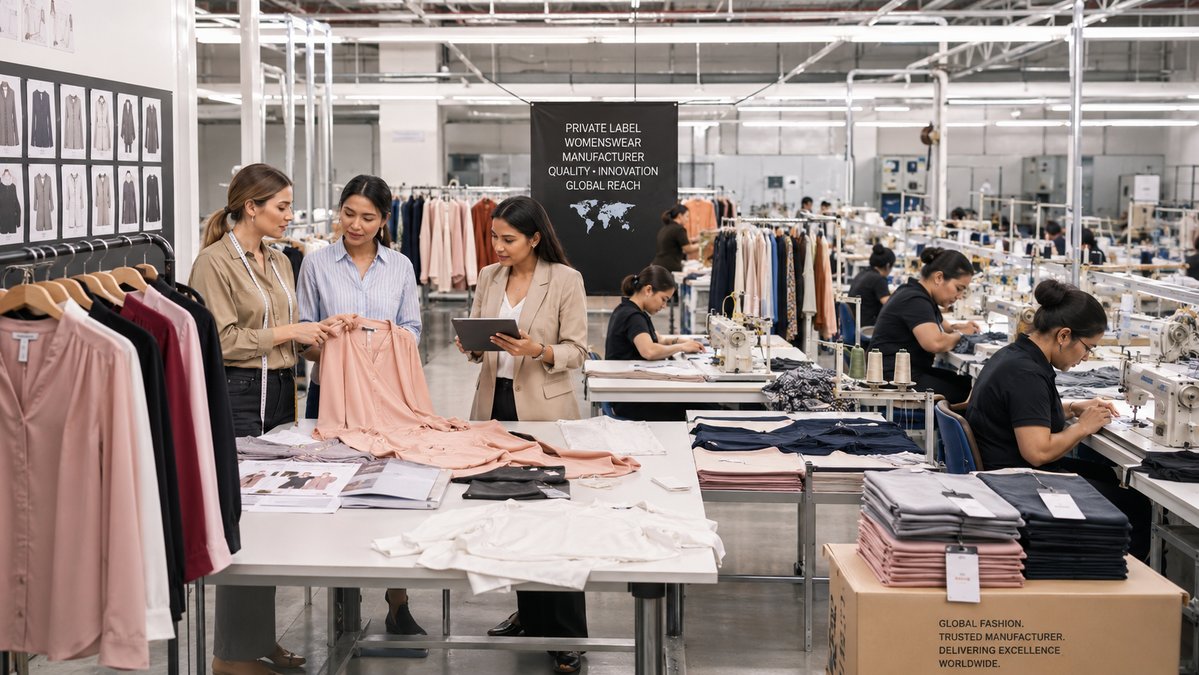
Ladies’ top manufacturers design, cut, sew, and finish women’s tops for brands, retailers, and wholesalers, often offering private label and OEM services. Buyers in the USA, UK, Australia, UAE, and beyond should evaluate manufacturers based on production capacity, fabric sourcing, quality control, minimum order quantities, and verified customer reviews before signing a contract.
Introduction: Why the Right Manufacturing Partner Matters
If you’ve ever tried to launch a clothing line or restock a wholesale catalog, you already know the truth: finding a dependable manufacturer is harder than it sounds. Anyone can promise “high quality” and “fast turnaround.” Fewer can actually deliver on both, order after order.
Ladies’ top manufacturers sit at the center of the women’s apparel supply chain. They turn a sketch, a tech pack, or even a simple reference photo into finished garments ready for retail shelves or e-commerce shipping boxes. Whether you’re a boutique owner in Sydney, a startup founder in Toronto, or a wholesale buyer in Dubai, the manufacturer you choose directly affects your product quality, your margins, and how quickly you can get inventory into customers’ hands.
This guide walks through what these manufacturers actually do, how the production process works, what to look for before signing a purchase order, and how sourcing decisions differ depending on which market you’re selling into. Along the way, we’ll flag common mistakes that cost buyers time and money — and how to avoid them.
What Are Ladies’ Top Manufacturers?
A ladies’ top manufacturer is a garment production company that specializes in cutting, sewing, and finishing women’s upper-body clothing — blouses, t-shirts, tunics, crop tops, camisoles, knitwear, and more. Some manufacturers focus on a narrow niche, like activewear tops or formal blouses. Others run full-service factories that handle everything from fabric sourcing to packaging.
Most manufacturers fall into one of these categories:
- Full-package (CMT+) manufacturers – handle fabric sourcing, cutting, sewing, trims, and finishing under one roof.
- CMT (Cut-Make-Trim) manufacturers – you supply the fabric and design; they handle production only.
- Private label manufacturers – produce garments using their own base patterns, which you can brand with your own labels and packaging.
- OEM clothing manufacturers – build garments to your exact specifications, tech packs, and branding from the ground up.
Understanding which type of manufacturer you’re dealing with matters a lot. A brand wanting full creative control usually needs an OEM or full-package partner. A reseller who wants a quick private-label product can often move faster with a manufacturer that already has base styles ready to customize.
Benefits of Working With Professional Clothing Manufacturers
Cutting corners on manufacturing almost always shows up later — in returns, bad reviews, or inconsistent sizing. Working with an established women’s clothing manufacturer gives you:
- Consistent quality across bulk orders. A well-run factory follows standardized cutting and stitching processes, so your 500th unit looks like your 1st.
- Access to better fabric sourcing. Manufacturers with strong relationships in the textile industry get better rates and more fabric options than most independent buyers could negotiate on their own.
- Faster production timelines. Established garment factories have streamlined workflows, reducing the guesswork and delays common with inexperienced suppliers.
- Compliance and labeling support. Reputable manufacturers understand the labeling laws, fiber content disclosure requirements, and care instructions required in markets like the USA, the UK, and the EU.
- Scalability. As your orders grow from a 100-piece trial run to a 5,000-piece reorder, a capable manufacturer can scale production without a drop in quality.
For growing fashion brands, this reliability is often more valuable than shaving a few cents off the unit price.
How to Choose the Right Ladies’ Top Manufacturer
This is where most buyers either set themselves up for success or walk into months of frustration. Here’s a practical framework.
1. Define Your Production Needs First
Before contacting any manufacturer, get clear on:
- Your target minimum order quantity (MOQ)
- Fabric type (cotton, viscose, polyester blends, knits, linen, etc.)
- Whether you need private label or fully custom OEM production
- Your budget per unit
- Your delivery timeline
Manufacturers respond much faster — and more accurately — when you approach them with specifics rather than vague requests.
2. Check Manufacturing Experience and Specialization
A factory that’s produced women’s knitwear for 10 years will likely outperform a generalist shop trying its hand at tops for the first time. Ask directly:
- How many years have you produced women’s tops specifically?
- Can you share past production samples or case studies?
- What’s your monthly production capacity?
3. Request Samples Before Committing
Never place a bulk order without a pre-production sample. This single step catches sizing issues, fabric problems, and stitching defects before they multiply across hundreds of units.
4. Verify Quality Control Processes
Ask what quality control checkpoints exist during production — fabric inspection, mid-line checks, and final inspection before shipping. Manufacturers that skip these steps tend to have higher defect rates.
5. Read Reviews and Verify the Supplier Independently
- Check Google Business Profile listings for ratings and reviews.
- Look them up on B2B marketplaces and industry directories.
- Ask for references from existing clients, especially ones in your target market.
- Search for the company on LinkedIn to confirm they’re an active, established business.
A manufacturer with a verified Google Business Profile, consistent reviews, and a real production facility address is generally a safer bet than one operating only through anonymous online storefronts.
6. Compare Communication and Responsiveness
Time zones and language differences are real, but a good manufacturer responds within a reasonable window and answers questions clearly. If getting a straight answer during the sales process feels difficult, production communication will likely be worse.
The Manufacturing Process for Women’s Tops
Understanding the production journey helps you ask better questions and set realistic timelines.
Step 1: Design and Tech Pack Development
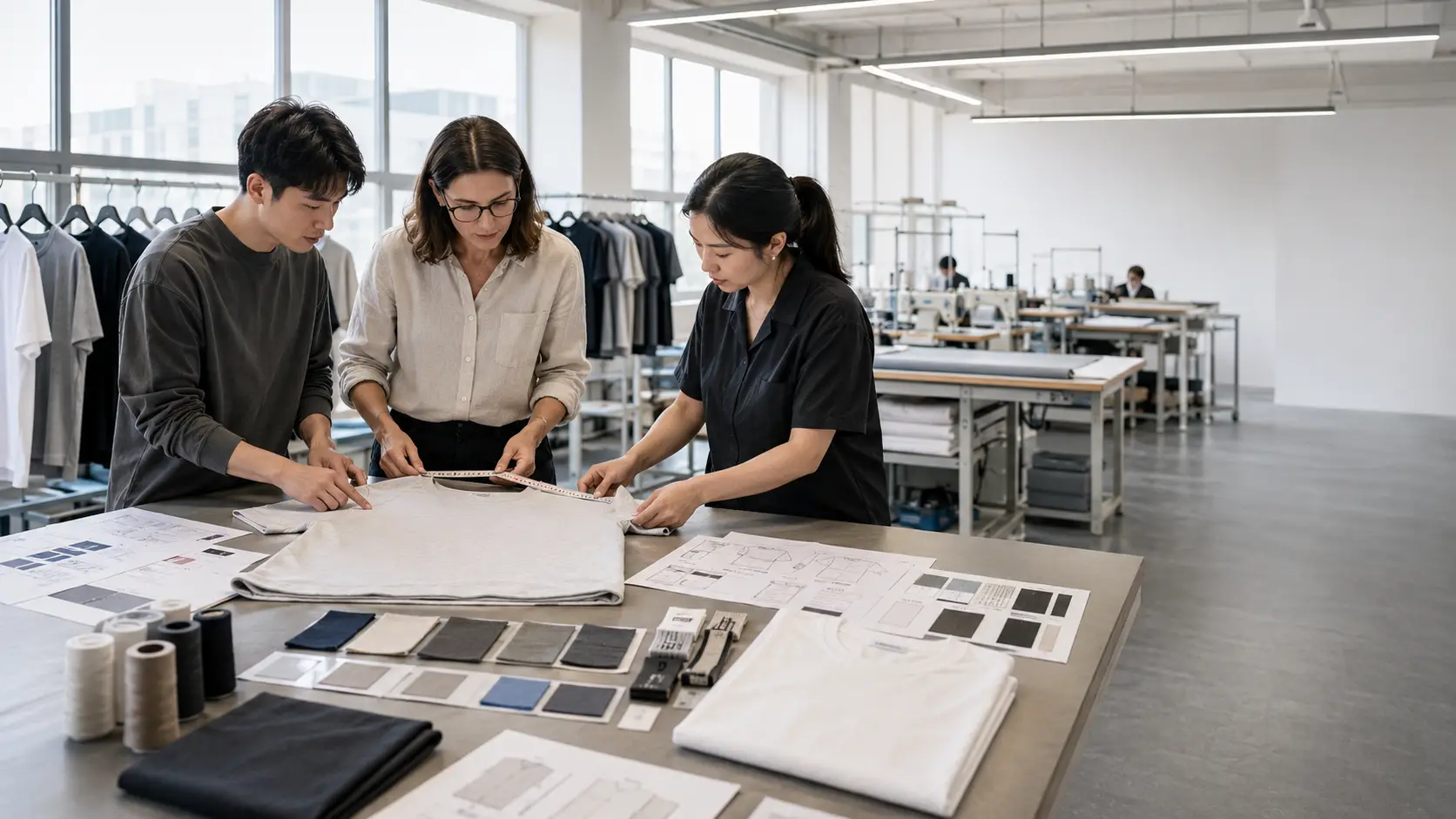
Everything starts with a design — either your own sketch and tech pack, or a base style the manufacturer already produces. A tech pack includes measurements, fabric specs, stitch types, and construction details.
Step 2: Fabric Sourcing and Selection
The manufacturer sources or confirms fabric — cotton jersey, viscose, rayon blends, polyester, linen, or specialty textiles. This stage also covers trims such as buttons, zippers, labels, and packaging materials.
Step 3: Pattern Making and Sample Production
A pattern is created (digitally or manually), and a sample garment is sewn. This is your chance to review fit, fabric hand feel, and finish before mass production begins.
Step 4: Cutting and Bulk Production
Once the sample is approved, fabric is laid out and cut in bulk, often using automated cutting machines to ensure accuracy and reduce waste.
Step 5: Sewing and Assembly
Garments move through sewing lines, where trained operators assemble each piece according to the approved specifications.
Step 6: Quality Control Inspection
Finished garments are checked for stitching defects, sizing accuracy, and fabric flaws. Reputable factories conduct inspections at multiple stages, not just at the end.
Step 7: Finishing, Packing, and Shipping
Garments are pressed, tagged, folded or hung, and packed according to your specifications, then prepared for shipping — whether that’s air freight for smaller orders or sea freight for bulk wholesale shipments.
Fabric and Customization Options
Fabric choice shapes how a top feels, drapes, and performs — and it’s often where buyers make their biggest mistakes by focusing only on price.
Common fabric categories for ladies’ tops include:
- Cotton and cotton blends – breathable, popular for casual and everyday wear.
- Viscose and rayon – soft drape, often used for blouses and dressy tops.
- Polyester and performance blends – durable, wrinkle-resistant, common in activewear.
- Linen – lightweight and breathable, popular in warmer climates like the UAE, Saudi Arabia, and Qatar.
- Knit fabrics – used for t-shirts, bodysuits, and fitted tops.
Customization options typically include fabric weight and composition, print and embroidery, trims and hardware, neckline and sleeve variations, and custom labeling with your brand’s tags, care labels, and packaging.
A manufacturer that offers strong customization support makes it much easier to build a distinct product line rather than a generic one that looks like everyone else’s.
Private Label and OEM Clothing Production Explained
These two models often get confused, so here’s the simple version.
Private label manufacturing means the factory already has base styles developed. You choose a style, customize the fabric, colors, and labeling, and sell it under your own brand. This is faster and usually has lower MOQs, making it a good entry point for newer brands.
OEM clothing manufacturing means the factory builds your product from your original design and specifications. You control everything — cut, fit, fabric, construction details. This route takes longer and often requires higher MOQs, but it produces a genuinely unique product.
Many established manufacturers, including companies like Minmax Textile, offer both pathways, allowing buyers to start with private-label production and transition to full OEM development as their brand and order volumes grow. This flexibility is worth asking about upfront, since switching manufacturers mid-growth can be disruptive.
Wholesale Clothing Manufacturing: What Buyers Should Know
Wholesale buyers have different priorities than single-brand founders. Volume, consistency, and pricing tiers matter more than heavy customization.
Key things to clarify with a bulk clothing supplier:
- Pricing breaks at different order volumes
- Lead times for reorders versus first-time orders
- Packing specifications for retail versus wholesale distribution
- Payment terms and deposit structures
- Shipping and customs documentation support for international orders
Buyers sourcing for markets with import regulations — such as the UAE, Saudi Arabia, and the EU — should also confirm the manufacturer can provide accurate commercial invoices, fabric composition certificates, and country-of-origin documentation.
Quality Control and Supplier Verification Checklist
Before finalizing any manufacturing partnership, run through this checklist:
- Request and review physical samples, not just photos
- Confirm the factory’s production capacity matches your order size
- Ask about their in-house quality control process
- Verify their Google Business Profile and check review authenticity
- Request references from past or current clients
- Confirm fabric sourcing transparency
- Clarify defect and return policies before production begins
- Visit the factory in person or request a video tour if possible
Suppliers who welcome these questions and provide clear answers are generally more trustworthy than those who deflect or rush you toward a deposit.
Common Mistakes Buyers Should Avoid
- Choosing based on price alone. The cheapest quote often means cut corners on fabric quality or labor standards.
- Skipping the sample stage. This is the single most common cause of bulk order disasters.
- Not clarifying MOQs upfront. Some manufacturers require far higher minimums than buyers expect, especially for OEM work.
- Ignoring communication red flags. Slow, vague, or inconsistent responses during sourcing usually predict bigger problems during production.
- Overlooking shipping and customs requirements. Especially important for buyers in the UAE, Saudi Arabia, and Qatar, where import documentation requirements can be strict.
- Failing to verify the supplier independently. Relying solely on a manufacturer’s own website claims, without checking reviews or business registration, significantly increases risk.
Local Market Insights for Global Buyers
United States – Buyers increasingly look for manufacturers offering shorter lead times and smaller MOQs to support faster fashion cycles and frequent SKU turnover.
United Kingdom – Sustainability and fabric transparency are growing priorities, with many retailers requesting certifications alongside standard quality checks.
Australia – Distance from major manufacturing hubs makes reliable shipping timelines and clear communication especially important for Australian buyers.
UAE and Qatar – Demand for lightweight, breathable fabrics is high given the climate, and buyers often prioritize manufacturers experienced with modest and layered clothing styles.
Saudi Arabia – Growing local fashion retail and e-commerce sectors are driving demand for both private label basics and higher-end custom production.
Germany and the Netherlands – European buyers frequently prioritize compliance documentation, accurate fabric composition, and eco-conscious production practices.
Canada – Similar to the US market, Canadian buyers value manufacturers who can handle smaller trial orders before committing to large-scale production.
South Africa – A growing wholesale and retail sector is increasing demand for cost-effective bulk clothing suppliers with dependable shipping logistics.
Across all these markets, the fundamentals stay the same: verified quality, transparent communication, and consistent production standards matter more than location alone.
Frequently Asked Questions
What is the typical minimum order quantity for ladies’ tops? MOQs vary widely by manufacturer and production type. Private label orders often start at 100–300 pieces per style, while full-custom OEM production may require 500 or more pieces per style, depending on the factory.
How long does production usually take? Sample development typically takes one to three weeks, and bulk production generally takes four to eight weeks depending on order size, fabric availability, and customization complexity.
What’s the difference between private label and OEM manufacturing? Private label uses the manufacturer’s existing base styles that you customize and brand. OEM production builds garments entirely from your own designs and specifications, offering more control but usually requiring longer lead times.
How can I verify a manufacturer before placing a large order? Check their Google Business Profile and reviews, request client references, ask for a sample before bulk production, and confirm their production capacity and quality control process directly.
Do manufacturers handle shipping to international markets? Many established manufacturers support international shipping and can provide the documentation needed for customs clearance, though it’s important to confirm this and any related costs before finalizing your order.
Final Thoughts and Next Steps
Choosing a ladies’ top manufacturer isn’t just a procurement decision — it’s a partnership that shapes your product quality, your customer experience, and ultimately your brand’s reputation. Whether you’re sourcing private-label basics for a growing boutique or developing a fully custom OEM collection for wholesale distribution, the fundamentals remain consistent: verify experience, request samples, confirm quality-control practices, and communicate clearly from the first conversation.
Manufacturers like Minmax Textile and similar experienced apparel producers illustrate what buyers should look for — transparent processes, flexible production options, and a track record that can be independently verified. Take the time to vet your options properly, and you’ll save yourself far more than money down the line.
If you’re ready to move forward, start by requesting samples from two or three shortlisted manufacturers, compare fabric quality and communication firsthand, and build your sourcing decision on real evidence rather than promises alone.