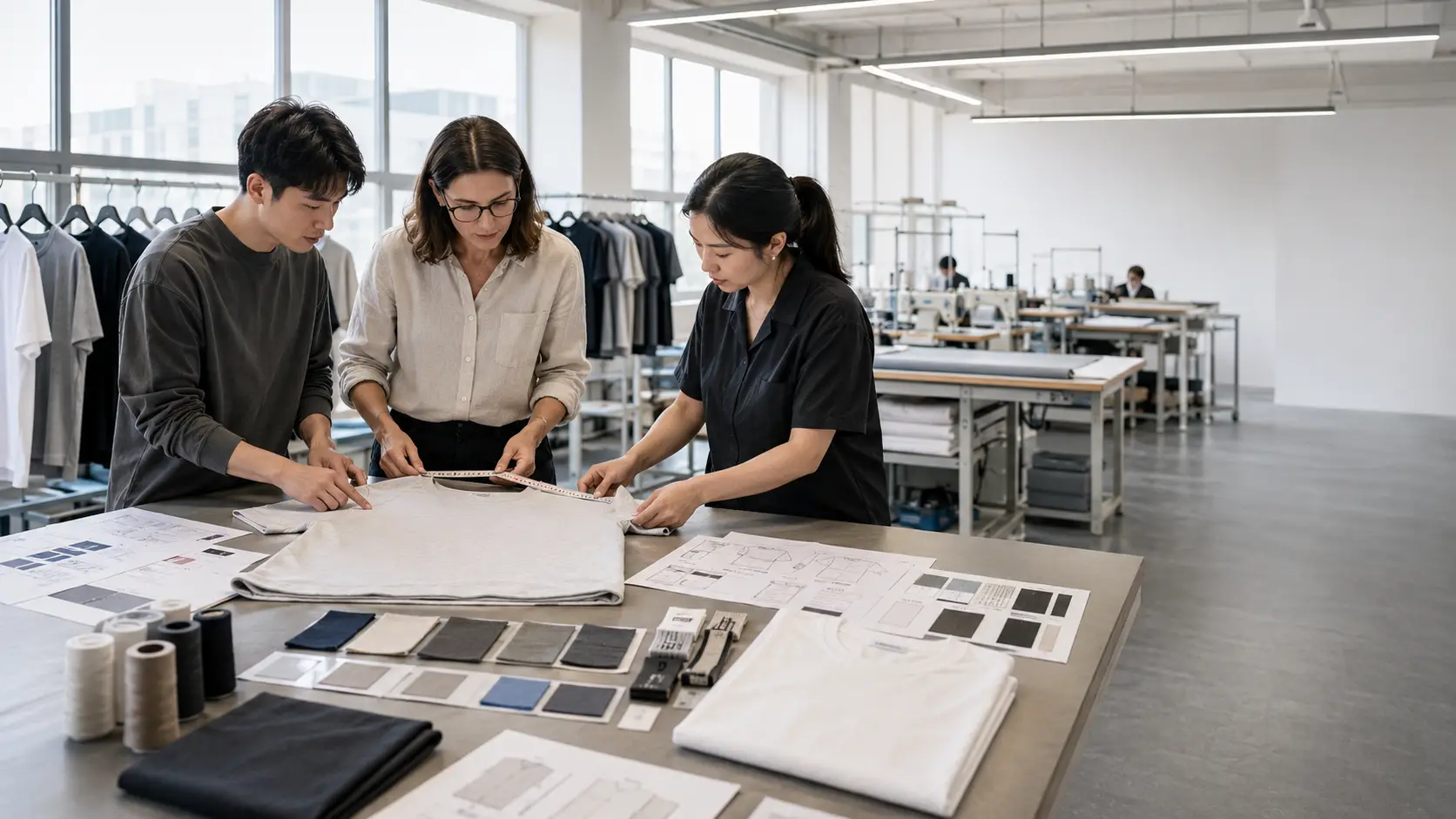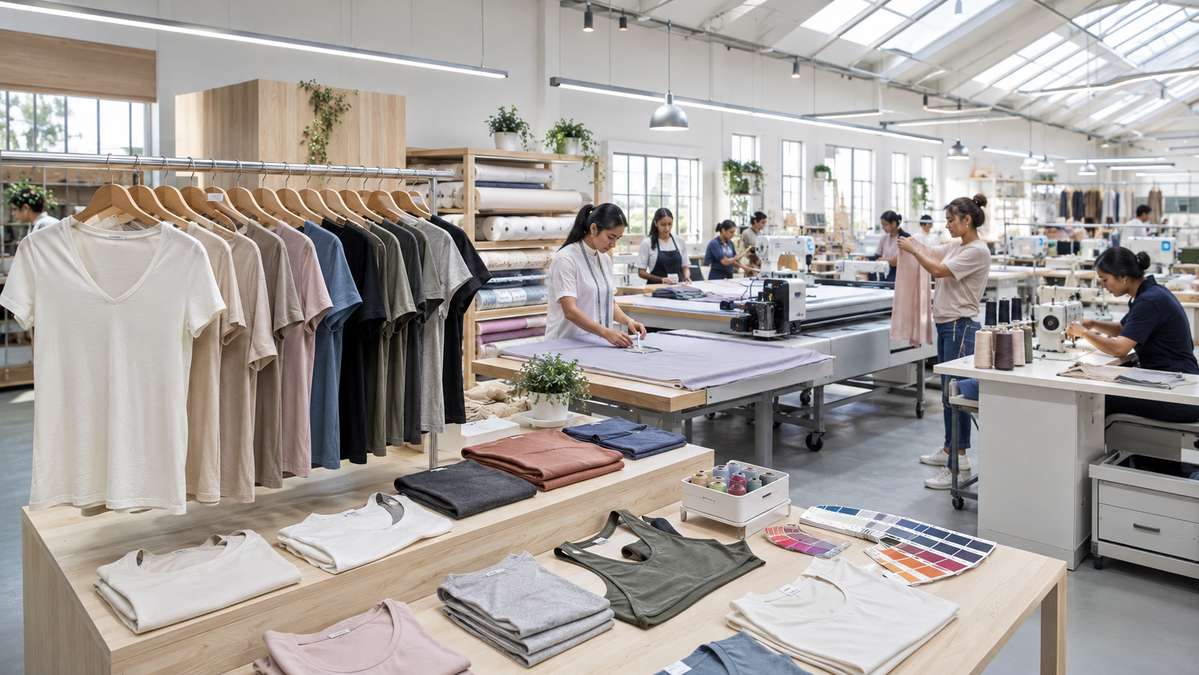
Women’s T-shirt manufacturers produce T-shirts in bulk for fashion brands, retailers, and private label businesses, managing fabric sourcing, pattern cutting, sewing, printing, and quality control. Buyers usually choose between OEM manufacturing (fully custom design) or ODM manufacturing (customizing an existing fit and pattern), depending on order volume, fabric preference, and target market.
Why Sourcing Women’s T-Shirts Is More Nuanced Than It Looks
A T-shirt seems like the easiest garment to source. It’s not a suit, not a technical jacket, just a simple top. But women’s T-shirts actually involve more fit variation than almost any other basic garment category. Crop length versus longline, fitted versus oversized, ribbed crew neck versus a soft V-neck that drapes differently depending on fabric weight- these choices all shape how the finished product looks and sells.
This is where many new fashion brands run into trouble. They approve a sample that looks fine on a hanger, but when it arrives on real bodies, the fit doesn’t match what they pictured. Or the fabric feels different after the first wash. These are avoidable problems once you understand what actually goes into manufacturing women’s T-shirts at scale.
This guide walks through what women’s T-shirt manufacturers do, the fabric and fit decisions that shape a finished garment, and how sourcing considerations shift across different markets, from lightweight breathable cotton for warmer climates to heavier jersey for layering in cooler regions.
What Women’s T-Shirt Manufacturers Do
A women’s T-shirt manufacturer is a garment production facility that specializes in cutting, sewing, and finishing T-shirts at scale for brands, retailers, and wholesalers. Because women’s fits involve more variation in shaping, seaming, and body-conscious tailoring than standard unisex tees, manufacturers in this category typically have more experience with pattern grading across different body types and fit preferences.
Core services usually include:
- Fabric sourcing and testing
- Pattern development and grading across size ranges
- Cutting and sewing
- Printing, embroidery, and labeling
- Quality control and finishing
- Packing and export documentation
Some manufacturers offer full-package production, including design support and fabric development, while others focus purely on manufacturing based on the specs a buyer provides. Knowing which type of support you need helps you find the right manufacturing partner faster.
Types of Women’s T-Shirts Manufacturers Produce
Fit and silhouette vary widely across women’s T-shirt styles, and each one calls for slightly different construction and fabric choices.
- Women’s crew neck T-shirts – classic round neckline, versatile for casual and layering wear
- Women’s V-neck T-shirts – softer neckline that tends to suit a range of body types
- Women’s fitted T-shirts – closer-fitting, often made with cotton-spandex blends for stretch and shape retention.
- Women’s relaxed-fit T-shirts – looser through the body without being fully oversized
- Women’s oversized T-shirts – dropped shoulders and extra room through the body, popular in streetwear-influenced collections
- Women’s crop T-shirts – shortened body length, often paired with high-rise bottoms
- Women’s longline T-shirts – extended body length, sometimes with side slits for movement
- Women’s sports T-shirts – built for movement, often with moisture-wicking or performance fabric
- Women’s activewear T-shirts – similar to sports tees, frequently made with stretch and breathable fabric blends.
- Women’s performance T-shirts – engineered for moisture management and mobility during activity
- Women’s organic cotton T-shirts – made with organic cotton for brands prioritizing that fiber sourcing
- Women’s promotional T-shirts – simple, cost-effective styles designed for branding and giveaways
- Women’s corporate uniform T-shirts – consistent sizing and durable fabric for workplace use
Custom-branded and private-label women’s T-shirts can be developed across any of these categories, depending on your target customer and brand positioning.
Fabric Options for Women’s T-Shirt Production
Fabric choice affects softness, drape, breathability, and how well a T-shirt holds its shape over time. Common options include:
| Fabric Type | Key Characteristics | Common Use |
|---|---|---|
| Combed Cotton | Smooth finish, fewer loose fibers than standard cotton | Everyday basics, premium tees |
| Ring-Spun Cotton | Soft handfeel, strong yarn structure | Fashion basics, fitted styles |
| Organic Cotton | Same core properties as cotton, grown without synthetic pesticides | Sustainability-focused lines |
| Cotton Jersey | Standard knit structure, breathable and soft | Classic T-shirt styles |
| Cotton-Spandex Blend | Adds stretch and recovery to cotton’s softness | Fitted and body-conscious styles |
| Polyester | Durable, holds print well, quick-drying | Sports and performance tees |
| Recycled Polyester | Performance similar to polyester | Sustainability-focused activewear |
| Cotton-Polyester Blend | Balances softness with durability | Everyday and promotional tees |
| Modal | Soft handfeel, good drape | Premium fashion tees |
| Micro Modal | Finer fiber than standard modal, smooth finish | Elevated basics |
| Bamboo Blends | Soft handfeel, breathable | Comfort-focused casual tees |
| Viscose or Rayon | Fluid drape, lightweight feel | Fashion-forward, flowy styles |
Key fabric factors to evaluate include softness, breathability, stretch and recovery, fabric weight, drape, shrinkage, colorfastness, pilling resistance, and print compatibility. Fabric weight, in particular, affects how a T-shirt drapes; lighter weights drape closer to the body, while heavier jersey holds more structure.
Fit, Sizing, Neckline, Sleeve, and Length Options
Women’s T-shirts have more fit variables than most basic garments, and getting these details right up front saves many rounds of revisions during sampling.
- Neckline style – crew, V-neck, scoop, or boat neck, each changing the overall look and how the garment sits
- Sleeve length – short sleeve, cap sleeve, three-quarter sleeve, or sleeveless
- Body length – crop, standard, or longline, affecting how the tee pairs with different bottoms
- Fit type – fitted, relaxed, or oversized, shaping the overall silhouette
- Contrast panels and side slits – design details that affect both look and construction complexity
- Ribbed necklines – add structure and shape retention around the collar area
Sizing conventions also vary by region. US sizing typically uses a numeric or S-XL system; UK and European sizing often follow different numeric ranges, and grading rules for fit across the bust, waist, and hip can vary between manufacturers. Buyers sourcing across multiple regions should carefully confirm size charts and grading rather than assuming one chart applies directly to another market.
Custom Design and Private Label Services
Most fashion brands want a T-shirt that reflects their own identity rather than a generic factory design with a swapped label. Common customization options include:
- Custom fabric, colors, and Pantone color matching
- Custom sizing and fit adjustments
- Neckline and sleeve length options
- Custom body length, contrast panels, and side slits
- Screen printing, direct-to-garment printing, heat transfer printing, and sublimation printing
- Embroidery
- Woven labels, printed neck labels, care labels, and size labels
- Hang tags, barcode stickers, and custom polybags
- Retail-ready packaging
The right mix of customizations depends on your target customer, intended use, sales channel, target price point, order volume, and overall brand positioning. A premium fashion label calls for different customization choices than a promotional or corporate uniform program, so it helps to define these priorities before requesting samples.
OEM, ODM, and Wholesale Manufacturing
OEM (Original Equipment Manufacturer): You provide the full design, tech pack, and construction specs. The manufacturer builds exactly to your specifications, giving full creative control but requiring detailed, accurate specs upfront.
ODM (Original Design Manufacturer): The manufacturer has existing base patterns and fits that you customize with fabric, color, or minor style adjustments. This route is typically faster and more accessible for brands without an in-house design team.
Wholesale manufacturing: You purchase existing stock designs in bulk, usually with limited customization, such as changes to labels or packaging. This is the fastest and generally most affordable route, though it offers less brand differentiation.
Manufacturers like Minmax Textile typically work across these models, adjusting their approach depending on whether a buyer is a private label startup testing a small collection or an established retailer placing recurring bulk orders.
Step-by-Step Women’s T-Shirt Production Process
- Design and tech pack development – finalizing fit, measurements, neckline, and fabric specs
- Fabric sourcing and testing – confirming fabric weight, shrinkage, drape, and colorfastness
- Sampling – producing a prototype for fit and quality approval
- Pattern grading – adjusting the approved sample pattern across the full size range
- Cutting – fabric is cut according to graded patterns, often using automated cutting for accuracy
- Sewing and assembly – stitching panels, necklines, sleeves, and hems
- Printing or embroidery – applying branding, graphics, or design elements
- Quality control checks – inspecting stitching, measurements, and fabric consistency
- Finishing and pressing – trimming loose threads and pressing for a clean final look
- Packing and export prep – folding, tagging, and preparing shipment documentation
Each stage carries its own potential bottleneck, which is why lead times can shift if fabric delivery is delayed or sample approval takes longer than expected.
How to Choose a Reliable Manufacturer
- Request a physical sample before committing to bulk production, since fit and fabric feel can’t be fully judged from photos.
- Ask about their experience with women’s-specific fits, since grading for female body shapes differs from unisex or men’s patterns.
- Check their printing and embroidery capabilities if your designs rely heavily on graphics or branding.
- Review their quality control process, particularly regarding measurement consistency across a full-size run.
- Look for clear, specific communication about specs, timelines, and pricing rather than vague reassurances.
A manufacturer with genuine experience in women’s apparel will usually be comfortable discussing fit grading, seam construction, and fabric behavior in specific terms rather than offering generic answers.
MOQ, Pricing, Samples, and Lead Times
MOQ (Minimum Order Quantity): This varies by manufacturer and depends on fabric type, customization level, and factory setup. Simpler private label orders may have more accessible MOQs than fully custom fabric development or complex print work.
Pricing: Cost depends on fabric choice, order volume, customization complexity, and finishing details. Rather than asking for a flat price upfront, it’s more useful to request a quote based on your specific tech pack and fabric preference.
Samples: Sampling is essential in women’s T-shirt production, since fit, drape, and fabric feel directly affect how the final garment looks and sells. Most reliable manufacturers require a sample approval stage before bulk production begins.
Lead times: Production timelines depend on order size, fabric availability, and factory capacity. It’s reasonable to ask for a specific timeline estimate once your order details are finalized rather than relying on general industry averages.
Quality-Control Standards
Quality control should happen at multiple stages of production, not just at the end.
- Fabric inspection before cutting begins, checking for weave consistency and defects
- In-line checks during sewing to catch stitching or seam errors early
- Measurement verification against the approved tech pack across the full size range
- Print and embroidery quality checks for placement, color accuracy, and durability
- Final inspection before packing, checking for defects, loose threads, or color inconsistency
- Random sampling across the full order, not just the first batch
Buyers should feel comfortable asking a manufacturer to walk through their QC process step by step. A factory with a genuine quality system in place will usually describe specific checkpoints rather than a vague general assurance.
Sustainable and Responsible Manufacturing
Sustainability expectations have grown across the fashion industry, particularly among buyers sourcing for markets where retailers and consumers ask directly about fabric origin and labor practices.
Relevant considerations include:
- Use of organic cotton, recycled polyester, or lower-impact fabric blends
- Water and energy usage during dyeing and finishing
- Fabric waste reduction during the cutting process
- Ethical labor practices and safe working conditions
- Reduced or recyclable packaging materials
Sustainability claims should always be backed by verifiable practices rather than marketing language alone. Buyers working with retailers in Europe, in particular, often need documentation to support these claims for their own compliance requirements.
Local Market Insights for Women’s T-Shirt Sourcing
USA and Canada
Demand spans a wide range, from everyday cotton basics and oversized streetwear-influenced tees to activewear and performance styles for athleisure brands. Canadian buyers often source similar categories, with additional interest in slightly heavier jersey weights and long-sleeve or layering styles suited to a longer cold season.
UK, Germany, and Netherlands
These markets show steady demand for fitted and relaxed-fit basics, along with growing interest in organic cotton and sustainably produced fabric blends. Sizing conventions differ somewhat from US standards, so confirming size charts is important for buyers sourcing across both regions. Retailers in this region increasingly expect documentation around fabric sourcing and labor practices.
Australia and South Africa
Warmer climates across much of both regions support strong demand for lightweight, breathable cotton tees, as well as crop and relaxed-fit styles suited to casualwear trends. Activewear demand is also notable, given the strong outdoor and fitness cultures in both markets. South African buyers often look for a balance between quality and competitive pricing for local retail and export.
UAE, Saudi Arabia, and Qatar
Buyers in the Gulf region typically look for breathable, lightweight fabrics suited to hot climates, along with modest fit options like longline and relaxed-fit styles. Private label opportunities are strong here, particularly for regional retailers building their own casualwear or activewear lines. Consistent sizing and retail-ready packaging are commonly emphasized by buyers in this market.
Common Sourcing Mistakes to Avoid
- Skipping the sample stage, which often leads to fit issues discovered only after bulk production
- Not confirming fabric weight and drape in writing before production, especially for flowy or fitted styles
- Choosing a manufacturer based on price alone without checking construction and fit quality
- Failing to confirm size charts and grading rules, especially for cross-border orders
- Overlooking print or embroidery placement details until after samples arrive
- Underestimating lead times, especially during peak seasonal production periods
Most of these mistakes trace back to rushing the early sourcing conversation. Taking time to confirm fit, fabric, and construction details upfront tends to prevent costlier problems later.
Information Buyers Should Provide When Requesting a Quote
- Tech pack or detailed design reference, including measurements and fit type
- Preferred fabric composition and weight
- Size range and grading requirements
- Order quantity per style and color
- Customization details, including printing, embroidery, or packaging
- Target price range, if applicable
- Preferred shipping destination and method
Having this information ready before reaching out typically results in a faster, more accurate quote, rather than a back-and-forth across multiple email threads.
Frequently Asked Questions
What is the difference between OEM and ODM women’s T-shirt manufacturing? OEM manufacturing follows your own complete design and specifications, while ODM manufacturing customizes an existing fit and pattern with your fabric, color, or branding choices.
What fabric is best for women’s fitted T-shirts? Cotton-spandex blends are commonly used for fitted styles since they combine cotton’s softness with added stretch and shape retention.
How long does the production of women’s T-shirts usually take? Production timelines depend on order size, fabric availability, and customization complexity, so it’s best to confirm a specific timeline with your manufacturer once order details are finalized.
Can I get a sample before placing a bulk order? Yes, most reliable manufacturers offer sampling before bulk production so buyers can confirm fit, fabric quality, and construction details before committing to a full order.
What information do I need before requesting a quote? A tech pack or design reference, fabric preference, size range, order quantity, and customization details help manufacturers provide an accurate quote quickly.
Finding a Women’s T-Shirt Manufacturing Partner That Fits Your Brand
Sourcing women’s T-shirts doesn’t have to involve trial and error once you understand the fit variables, fabric choices, and production steps involved. Knowing what questions to ask and what information to prepare in advance makes the entire process far more manageable, whether you’re launching your first small collection or scaling up a recurring seasonal order.
Whether you’re a private-label startup or an established retailer, working with a manufacturer like Minmax Textile that understands both the technical side of production and market-specific preferences across regions such as the US, UK, Australia, Germany, the UAE, and beyond can make a meaningful difference in fit accuracy and finished-product quality.
If you’re ready to move forward, start by putting together your tech pack, fabric preferences, and sizing requirements, then reach out for a sample and a detailed quote before committing to bulk production.