When choosing safe fabric for children’s clothing in the USA, UK, Canada, France, and Germany, always prioritize natural, breathable, and certified materials. Look for labels like GOTS and OEKO-TEX Standard 100, avoid synthetic fabrics like polyester for direct skin contact, and ensure the garment meets the flammability standards of your country (e.g., 16 CFR 1610 in the USA). Washing all new clothes before wearing is a simple, crucial step to remove potential chemical residues.
Why Fabric Choice Matters for Your Child
Every parent knows the feeling. You pull a brand-new, brightly colored onesie or a soft, fleece jacket off the store shelf. You can already picture your little one wearing it, looking adorable. But before you get lost in the cuteness, there’s a more important question to ask: Is this fabric actually safe for my child’s skin?
As a parent myself, I’ve been there, standing in the middle of a bustling baby boutique in New York City or scrolling through an online shop from my home in London, wondering what all those labels really mean. My child’s comfort and safety are my top priority, and I know yours are too. The truth is, not all fabrics are created equal. Children’s skin is thinner and more permeable than adults‘, making it far more susceptible to absorbing chemicals and experiencing irritation from harsh textiles. Choosing the wrong material can lead to anything from mild discomfort to full-blown allergic reactions.
This comprehensive guide is designed to be your trusted companion. Whether you’re shopping in a high-end boutique in Los Angeles, California, a department store in Manchester, UK, a local shop in Toronto, Canada, a children‘s store in Paris, France, or an eco-friendly brand in Berlin, Germany, this article will give you the knowledge to make informed, safe, and confident decisions for your child’s wardrobe.
Understanding the Bedrock of Safety: Key Certifications and Regulations
Before we even touch on fabric types, the first and most critical step is to understand the safety certifications and legal regulations that separate a safe garment from a risky one. This is the due diligence that protects your child.
The Gold Standard: GOTS and OEKO-TEX Explained
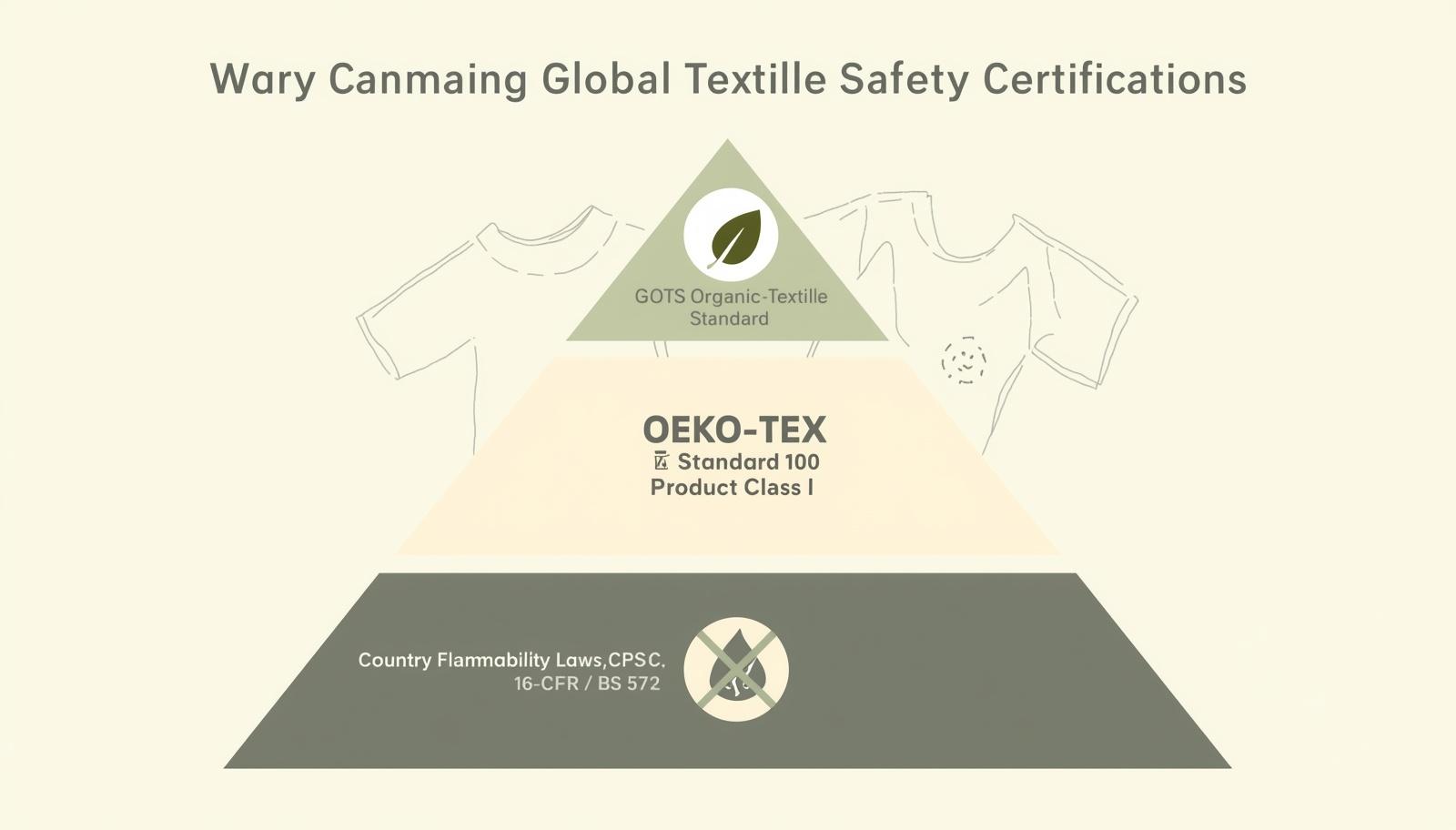
Two certifications dominate the conversation around safe children‘s textiles: GOTS (Global Organic Textile Standard) and OEKO-TEX Standard 100.
- OEKO-TEX Standard 100: This is one of the world’s best-known labels for textiles tested for harmful substances. If you see this label, it means every component of the item—from the thread and fabric to the buttons and zippers—has been tested for a long list of harmful chemicals. For parents, the most important detail is that the strictest Product Class I criteria apply specifically to baby and toddler items (ages 0-3). This ensures that the fabric is safe enough for a baby to chew on and that no harmful dyes or chemicals will be absorbed through their sensitive skin.
- GOTS (Global Organic Textile Standard): While OEKO-TEX focuses on the final product’s safety, GOTS goes several steps further. It certifies that the fabric is not only safe but also organic and ethically produced. A GOTS label ensures the textile is made from a minimum of 70% organic fibers (with a stricter “organic” grade for 95%+), and it prohibits the use of harsh chemicals throughout the entire manufacturing process. It also mandates fair labor practices, ensuring the people making the clothes are treated ethically. In the USA and Europe, GOTS is the ultimate symbol of a safe, sustainable, and ethically made garment.
A Global Look at Safety: Regulations in the USA, UK, Canada, France, and Germany
Your location matters when it comes to safety regulations. Here’s a quick reference for the major standards in each target country.
| Country | Key Regulations & Certifications for Children‘s Clothing |
|---|---|
| USA | Flammability: 16 CFR Part 1610 (general wear), 16 CFR 1615/1616 (sleepwear). Chemical Safety: CPSIA (lead, phthalates). |
| UK | Flammability: BS 5722 (nightwear), BS EN 14878 (general). Chemical Safety: UK REACH. Look for: GOTS, OEKO-TEX, and the UKCA/CE mark. |
| Canada | Flammability: Hazardous Products Act (HPA), Textile Flammability Regulations. Chemical Safety: Canada Consumer Product Safety Act (CCPSA). |
| France | Flammability: NF EN 14878. Chemical Safety: EU REACH regulation. Look for: GOTS, OEKO-TEX, and the CE mark. |
| Germany | Flammability: DIN EN 14878. Chemical Safety: EU REACH regulation. Look for: GOTS, OEKO-TEX, and the CE mark. |
The USA’s Strict Flammability Rules
For parents in the United States, the rules set by the U.S. Consumer Product Safety Commission (CPSC) are non-negotiable. The Flammable Fabrics Act (FFA) is the law of the land. Most everyday clothing must pass a flammability test under 16 CFR Part 1610 and be classified as Class 1 (normal flammability). However, the rules for children‘s sleepwear are far more stringent. Sleepwear for sizes 0-14 must meet the strict requirements of 16 CFR Parts 1615 and 1616. These items must either be made of inherently flame-resistant fabric or be “tight-fitting” as defined by specific dimensions. You can verify a product’s compliance by checking for a Children‘s Product Certificate (CPC) on the manufacturer’s website.
The European and UK Approach
In the UK, France, and Germany, the approach is similar but with different standards. Instead of a CPSC, these countries follow the stringent EU REACH regulation, which restricts a vast number of hazardous chemicals in consumer products. Nightwear flammability is a major concern in the UK, governed by BS 5722, while general children‘s clothing flammability across Europe follows BS EN 14878 or similar national implementations. Regardless, the trusted GOTS and OEKO-TEX labels are your best friends worldwide.
The Great Fabric Face-Off: Natural vs. Synthetic Materials
With safety certifications in mind, let’s move to the fabrics themselves. This is where you‘ll make the daily choices that affect your child’s comfort and health.
Best-in-Class: Natural and Breathable Fabrics
When it comes to children‘s clothing, you almost can’t go wrong with high-quality, natural fibers. They are the foundation of a safe and comfortable wardrobe.
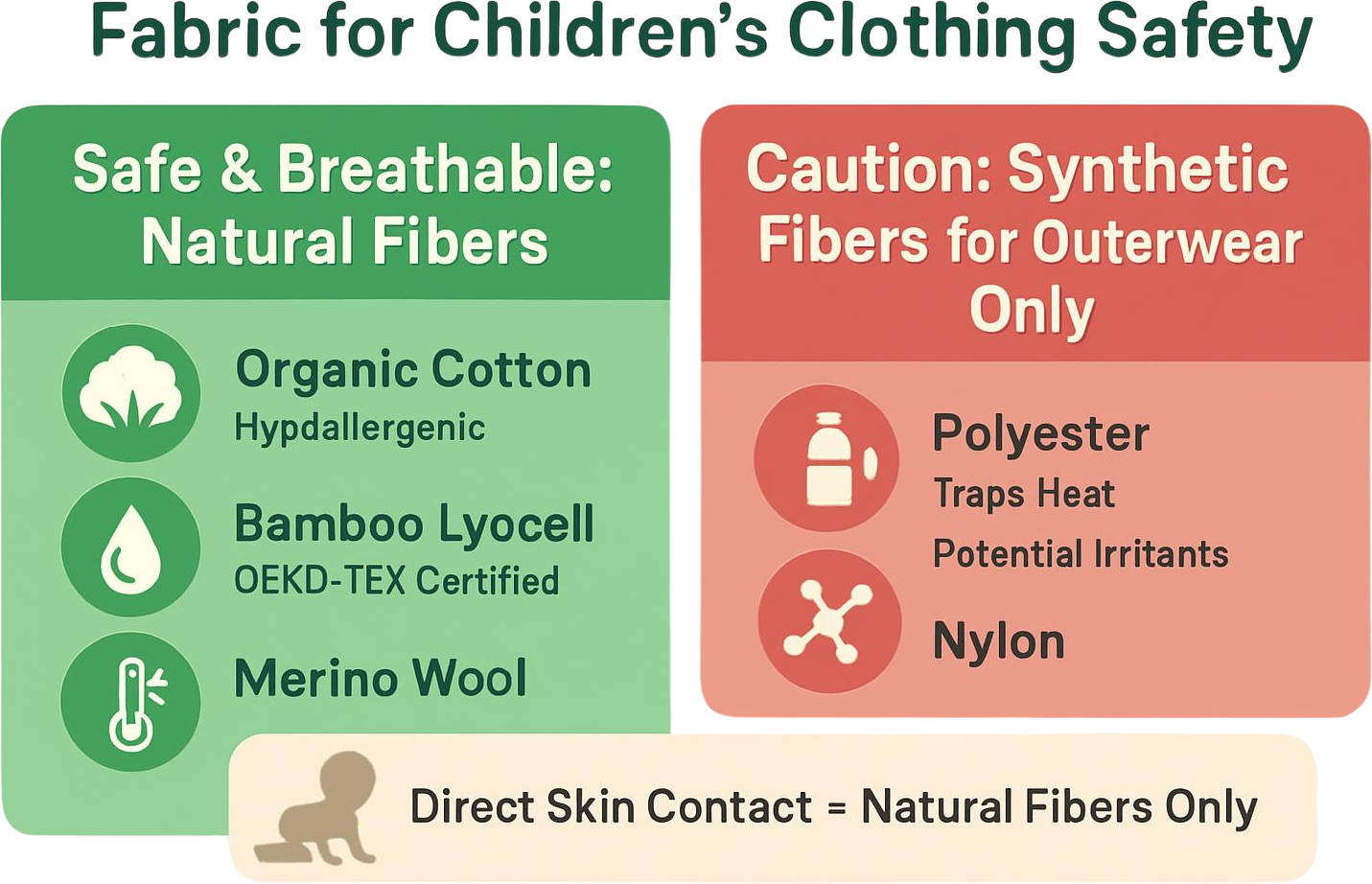
- Cotton (Especially Organic Cotton): The undisputed champion of children‘s fabrics. It’s soft, breathable, and hypoallergenic, making it ideal for sensitive skin. Organic cotton takes it a step further by being grown without synthetic pesticides and fertilizers, dramatically reducing the risk of chemical residue. It’s the perfect choice for everything from everyday basics and underwear to pajamas and baby onesies.
- Bamboo Viscose/Lyocell: This fabric has surged in popularity for good reason. It‘s incredibly soft, often described as feeling like silk or cashmere. It’s naturally moisture-wicking and antibacterial, which can be a boon for kids who run hot or have eczema. However, be mindful that the process of turning bamboo into viscose may involve chemicals. To ensure safety, always look for bamboo lyocell (TENCEL) or bamboo viscose that is OEKO-TEX certified. This guarantees the final product is free from harmful processing chemicals.
- Linen and Hemp: These are the unsung heroes for warmer weather. Linen is exceptionally lightweight and breathable, allowing for maximum airflow. Hemp is a super-fiber—it’s strong, durable, and gets softer with every wash. Both are highly sustainable and naturally resistant to mold and mildew.
- Merino Wool: For cooler climates like those in Canada or northern Germany, Merino wool is a top-tier choice. Unlike traditional wool, Merino fibers are incredibly fine and soft so that they won’t itch. It’s a natural temperature regulator, keeping kids warm in winter and cool in summer, and it‘s excellent at wicking away moisture.
Proceed with Caution: Synthetic Fabrics and When to Use Them
Synthetics have their place, but they require careful consideration, especially for everyday wear.
- Polyester and Nylon: These are durable, wrinkle-resistant, and inexpensive, which is why they’re found in so many kids‘ clothes. The downside is that they are not very breathable and can trap heat and sweat against the skin, creating a perfect environment for irritation and heat rash. They are also derived from fossil fuels and may involve a host of chemicals in their production. For this reason, it’s best to avoid polyester for items worn directly against the skin for extended periods, such as underwear, pajamas, and onesies. Where they excel is in outerwear—a polyester fleece jacket or a nylon snowsuit is practical and safe because it‘s not in constant contact with skin.
- Acrylic: Often used as a cheap wool substitute, acrylic can feel soft at first but tends to pill and become scratchy. Like polyester, it’s not very breathable and is generally best avoided for direct skin contact.
A Fabric Cheat Sheet for Every Occasion
Here is a quick-reference table to help you match the right fabric to the right purpose:
| Clothing Item / Occasion | Recommended Fabrics | Fabrics to Avoid | Key Safety Consideration |
|---|---|---|---|
| Everyday Play (T-shirts, Leggings) | Organic cotton, cotton blends with a bit of spandex | 100% polyester, stiff denim | Look for GOTS or OEKO-TEX certification. |
| Sleepwear & Pajamas | USA: Tight-fitting cotton or inherently flame-resistant (FR) polyester. UK/EU: Cotton, bamboo, Merino wool. | Loose-fitting, non-FR synthetics (USA) | USA: Must meet 16 CFR 1615/1616. UK: Must meet BS 5722. |
| Underwear & Base Layers | Organic cotton, bamboo lyocell (TENCEL), Merino wool | Polyester, nylon, non-breathable synthetics | Softness and breathability are paramount to prevent moisture buildup. |
| Outerwear (Jackets, Snowsuits) | Polyester fleece, nylon, recycled synthetics | Uncoated cotton (absorbs water) | Synthetic materials are acceptable here as they are not in direct, constant skin contact. |
| Special Occasion / Formal Wear | Cotton blends, linen, soft tulle | Stiff taffeta, itchy sequined fabrics | Check for any decorative elements that could be choking hazards. |
Top 5 Non-Negotiable Tips for Buying Safe Children‘s Clothes
Beyond just the fabric type, here are actionable, real-world tips to implement on your next shopping trip, whether you’re at a Target in Texas or a Primark in London.
- Always Wash Before Wearing. This is the single most effective tip. New clothes are often treated with finishes like formaldehyde to prevent wrinkles and mildew during shipping. A 2024 test on baby clothing found one sample with formaldehyde levels exceeding the infant safety limit by over 50%. A simple wash can remove a significant amount of these surface chemicals and any loose dye that could cause an allergic reaction.
- Embrace the “Sniff Test.” When you open a new package of clothing, take a whiff. A strong, chemical or “plastic-y” smell is a major red flag. It often indicates the presence of volatile organic compounds (VOCs) or excess dyes and finishing agents that could be irritating.
- Check for Choking Hazards. This is more about design than fabric, but it‘s a critical safety step. Gently tug on any buttons, bows, sequins, or other attachments. If they feel loose or can be pulled off with moderate force, they are a choking hazard for young children.
- Simplify Your Laundry Routine. You don’t need special “baby” detergent. A gentle, fragrance-free, and dye-free detergent is all you need for the whole family‘s laundry. Heavy fragrances can be a major trigger for skin irritation and respiratory issues in sensitive children.
- Trust Reputable Brands and Stores. In the USA, buying from well-known retailers or directly from brands that are transparent about their sourcing and manufacturing practices offers an extra layer of security. Brands like Minmax Textile are a good example of companies that often provide detailed information about their fabric sourcing and safety standards. Look for this transparency. For local shopping, reading reviews on a store’s Google Business Profile can also give you valuable insights into other parents’ experiences with the quality and safety of a store’s children’s clothing line.
Common Questions Parents Ask (FAQ)
Q: Is it safe to buy second-hand children‘s clothing?
A: Yes, buying second-hand is a fantastic and sustainable option. The key is to wash the items thoroughly in hot water before use. You should also be more vigilant about checking for wear and tear, such as loose buttons, broken zippers, or thinning fabric that could pose a safety risk. Be cautious with older sleepwear, as it may not meet current flammability standards.
Q: What is the safest fabric for a newborn baby?
A: Without a doubt, 100% GOTS-certified organic cotton is the gold standard. It is soft, breathable, hypoallergenic, and guaranteed to be free from the harsh chemicals and pesticides that can irritate a newborn’s ultra-sensitive skin.
Q: Are fabric softeners and dryer sheets safe for children’s clothes?
A: Generally, it’s best to avoid them. Fabric softeners work by coating fibers with a thin layer of chemicals, which can reduce the breathability and absorbency of fabrics like cotton and bamboo. This coating can also irritate sensitive skin. The fragrance in many softeners and dryer sheets is a common allergen. Wool dryer balls are an excellent, chemical-free alternative for reducing static and softening clothes naturally.
Q: Is polyester safe for a toddler‘s pajamas in the USA?
A: Yes, but only if it’s specifically designed for sleepwear. In the USA, polyester pajamas must meet strict flammability standards (16 CFR 1615/1616). They achieve this either by being chemically treated for flame resistance or by being “tight-fitting.” Never use loose-fitting, non-FR polyester clothing as pajamas, as it can be a fire hazard. In Europe, standards differ, and tight-fitting cotton is the most common and safest choice for sleepwear.
Q: How can I verify if a certification label like OEKO-TEX is real?
A: This is a smart question. The best practice is to go to the official OEKO-TEX website and use their “Label Check” tool. You can enter the certificate number printed on the label to verify its authenticity and see the exact product it was issued for. This helps you avoid counterfeit labels.
Your Child‘s Safety is in Your Hands
Navigating the world of children’s clothing can feel overwhelming, but it doesn‘t have to be. By arming yourself with knowledge of certifications like GOTS and OEKO-TEX, understanding the strengths and weaknesses of different fabrics, and familiarizing yourself with the key safety regulations in your country, you can make choices with confidence. Remember the simple, actionable tips: prioritize natural, breathable fibers; always wash before wearing; and perform a quick check for loose parts.
Choosing the right fabric is more than just a style decision. It’s a fundamental act of care that protects your child’s delicate skin and contributes to their overall well-being. Whether you are in a bustling American city, a quiet British suburb, or anywhere else in the world, these principles remain the same. Trust your instincts, do your research, and support brands that are transparent about their commitment to safety and quality. Your little one deserves nothing less.