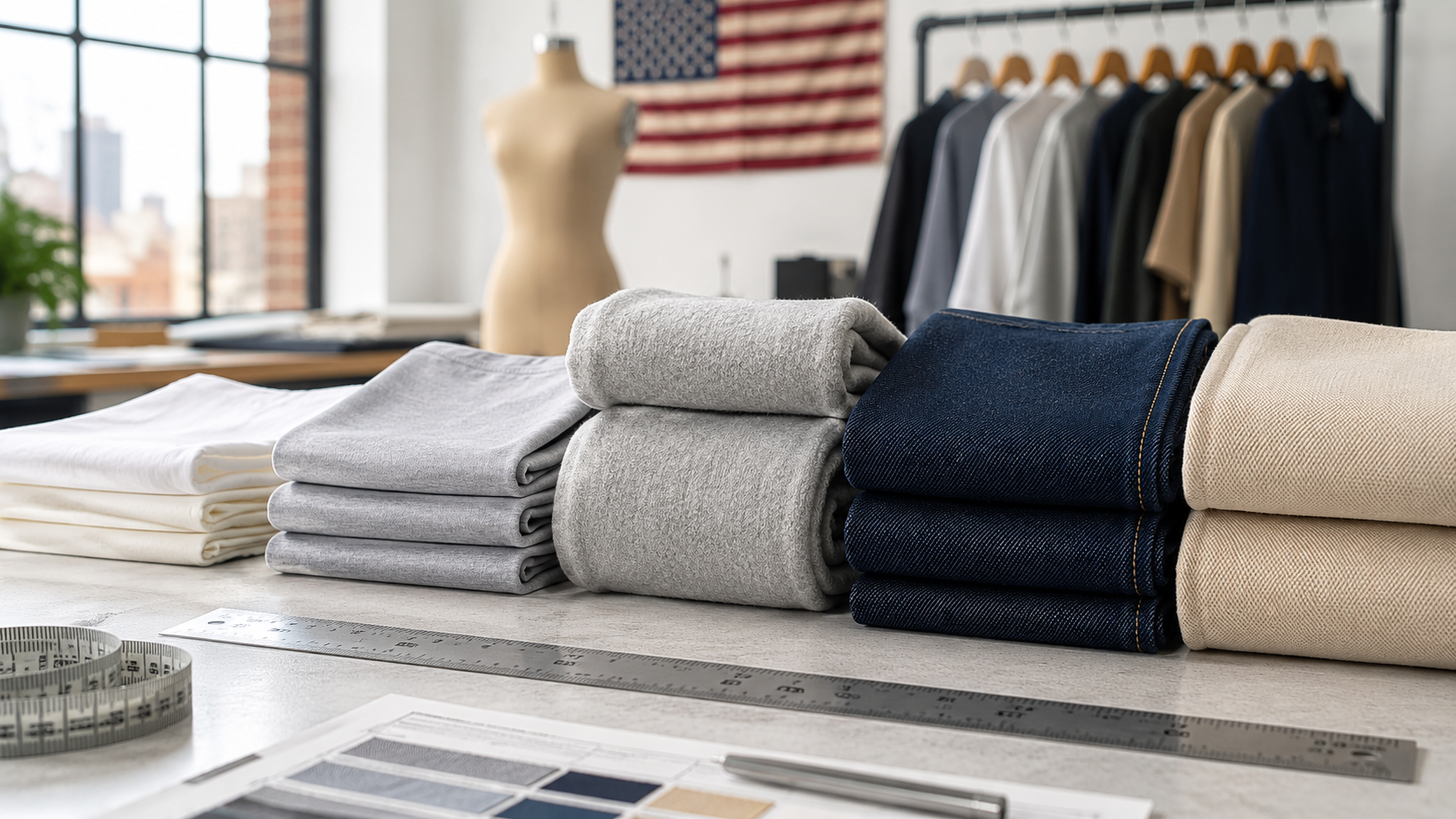
GSM means grams per square meter. It tells you how heavy a fabric is, not always how thick or soft it feels. Lower GSM fabrics are lighter and more breathable. Higher GSM fabrics are heavier, warmer, and often more durable. The right GSM depends on the garment type, season, fit, fiber, and end use.
Why GSM Matters More Than Most Buyers Think
If you have ever bought a T-shirt online that looked premium in photos but felt thin in person, GSM was probably part of the problem.
Fabric weight affects how a garment feels, hangs, lasts, prints, washes, and performs in real life. A 140 GSM T-shirt may feel airy and light for summer. A 220 GSM T-shirt may feel structured, premium, and streetwear-ready. A 320 GSM hoodie can be cozy enough for fall in Chicago or Toronto, while a lighter sweatshirt may work better for mild UK weather.
That is why understanding GSM is useful for clothing brands, merch sellers, fashion startups, uniform buyers, print shops, and everyday shoppers.
At Minmax Textile, fabric weight is one of the first details we look at when helping buyers choose materials for garments. GSM is not the only quality marker, but it is one of the clearest ways to compare fabric options before production.
This guide explains GSM in plain English, with practical garment examples for the USA, UK, Canada, France, and Germany.
What Does GSM Mean in Fabric?
GSM stands for grams per square meter. It measures the weight of one square meter of fabric.
A higher GSM means the fabric weighs more. A lower GSM means the fabric weighs less.
For example:
- 120 GSM fabric is lightweight.
- 180 GSM fabric is medium-weight.
- 300 GSM fabric is heavy.
- 400+ GSM fabric is very heavy and often used for outerwear, canvas, or thick fleece.
Think of GSM like the “weight class” of fabric. It gives you a quick clue about how the material may feel and perform.
But here is the important part: GSM does not tell the full story.
Two fabrics can have the same GSM but feel very different. A 180 GSM cotton jersey may feel soft and breathable. A 180 GSM polyester knit may feel smoother, stretchier, or warmer. Fiber, yarn quality, knit or weave type, finishing, and construction all matter.
Still, GSM is one of the best starting points when choosing fabric for garments.
Quick GSM Fabric Weight Chart
Use this chart as a simple starting guide.
| GSM Range | Fabric Weight Category | Common Uses |
|---|---|---|
| Under 100 GSM | Very lightweight | Chiffon, voile, sheer linings |
| 100–150 GSM | Lightweight | Summer T-shirts, blouses, light shirts |
| 150–200 GSM | Standard to medium | Everyday T-shirts, polos, casual tops |
| 200–280 GSM | Medium-heavy | Premium tees, rugby shirts, joggers |
| 280–350 GSM | Heavyweight | Sweatshirts, hoodies, workwear |
| 350–500 GSM | Very heavyweight | Thick hoodies, denim, canvas, jackets |
| 500+ GSM | Extra heavy | Coats, upholstery, technical heavy fabric |
This is not a strict rule for every fabric. Woven denim and knitted fleece can behave differently even when their GSM is similar.
Why GSM Is Important When Choosing Garments
GSM affects the way a garment performs after it leaves the sample room.
1. Comfort
Lighter GSM fabrics usually feel cooler and easier to wear in warm weather. That is useful for summer T-shirts, gym wear, resort shirts, and promotional apparel.
Heavier GSM fabrics feel more substantial. They can offer warmth, structure, and a premium hand feel.
2. Durability
Higher GSM fabrics often handle wear and washing better, especially when the yarn and construction are also good. For uniforms, workwear, hoodies, and streetwear, a heavier GSM can help the garment keep its shape.
3. Drape and Fit
Light fabrics drape closer to the body. Heavy fabrics hold shape better.
For example, a 150 GSM oversized T-shirt may look loose and flowy. A 240 GSM oversized T-shirt may look boxier and more structured.
4. Print and Embroidery Quality
Screen printing, DTG printing, heat transfer, and embroidery all respond differently to fabric weight.
A very thin T-shirt may not hold a heavy print well. A thicker cotton jersey usually gives a cleaner print surface. For embroidery, medium- to heavy-GSM fabrics often perform better because they reduce puckering.
5. Price and Shipping Cost
More GSM usually means more raw material. That can raise production costs. It may also increase shipping weight, which matters for eCommerce brands in the USA, UK, Canada, France, and Germany.
A hoodie brand shipping across the United States should consider GSM not only a quality choice but also a fulfillment cost factor.
Is Higher GSM Always Better?
No. Higher GSM does not always mean better fabric.
It only means heavier fabric.
A 260 GSM T-shirt may feel premium, but it might be too warm for summer in Texas, Florida, or Southern California. A 140 GSM T-shirt may feel light, but it can be perfect for outdoor events, layering, or hot weather.
The best GSM depends on the job.
Choose a higher GSM when you need:
- More structure
- More warmth
- Better opacity
- Longer wear
- A premium or heavyweight look
Choose a lower GSM when you need:
- Breathability
- Lightweight comfort
- Lower bulk
- Faster drying
- Lower cost for large orders
For most brands, the goal is not to pick the heaviest fabric. The goal is to pick the right fabric.
GSM vs Fabric Thickness: Are They the Same?
GSM and thickness are related, but they are not the same.
GSM measures weight. Thickness measures the physical depth of the fabric.
A dense, compact fabric can have a high GSM without feeling very thick. A brushed fleece may feel thick and fluffy even if the GSM is not extremely high.
This is why buyers should not judge fabric by GSM alone. Ask for:
- GSM
- Fiber content
- Knit or weave type
- Yarn count
- Shrinkage rate
- Stretch and recovery
- Fabric finish
- Sample swatch
A smart buyer checks both the numbers and the hand feel.
Best GSM for T-Shirts
T-shirts are among the most common garments in which GSM matters.
Lightweight T-Shirts: 120–150 GSM
These are best for:
- Summer wear
- Promotional giveaways
- Running events
- Beachwear
- Budget-friendly bulk orders
They feel light and breathable. The downside is that they may be slightly sheer, especially in white or light colors.
Standard T-Shirts: 160–180 GSM
This is a safe range for everyday T-shirts.
It works well for:
- Retail basics
- Corporate merch
- School shirts
- Local brand apparel
- Casual everyday wear
For many USA clothing brands, 160–180 GSM is the sweet spot. It feels comfortable without being too heavy.
Premium T-Shirts: 190–220 GSM
This range feels more substantial. It is popular for fashion brands, private labels, and premium merch.
Good for:
- Streetwear basics
- Oversized T-shirts
- High-quality screen printing
- Retail collections
- Brand uniforms
Heavyweight T-Shirts: 230–280 GSM
Heavyweight tees are trending in streetwear and premium basics.
They offer:
- A boxier shape
- Better opacity
- A luxury feel
- Longer-lasting structure
But they are not ideal for every climate. A 260 GSM tee may feel great in New York in spring, but too warm for Phoenix in July.
Best GSM for Hoodies and Sweatshirts
For hoodies, GSM is a major buying factor.
Light Sweatshirts: 220–280 GSM
These are good for layering, mild weather, and budget-friendly apparel.
Best for:
- Spring collections
- Lightweight crewnecks
- Gym warmups
- Promotional hoodies
Standard Hoodies: 280–350 GSM
This is the most common range for everyday hoodies.
Best for:
- School apparel
- Corporate merch
- Retail hoodies
- Fall and winter basics
A 320 GSM fleece hoodie is often a good middle ground. It feels warm but not overly bulky.
Heavyweight Hoodies: 350–450 GSM
This range is popular for premium streetwear.
Best for:
- Oversized hoodies
- Luxury loungewear
- Cold-weather markets
- Limited-edition drops
For Canada, Germany, the northern USA, and parts of the UK, heavyweight hoodies often make sense. For warmer U.S. states, they may be too hot for year-round wear.
Best GSM for Polo Shirts
Polo shirts usually fall between 180 and 240 GSM.
A lighter polo feels better for outdoor work, golf, and warm climates. A heavier polo feels more structured and professional.
Recommended ranges:
- 160–180 GSM: Lightweight performance polos
- 180–220 GSM: Everyday cotton or cotton-blend polos
- 220–240 GSM: Premium polos and uniforms
For business uniforms in the USA, 200–220 GSM is often a practical choice. It gives a neat look without feeling too heavy.
Best GSM for Shirts and Blouses
Woven shirts and blouses often use lighter fabric than T-shirts or hoodies.
Common ranges:
- 80–120 GSM: Light blouses, voile, dress shirts
- 120–160 GSM: Casual shirts, Oxford-style shirts, linen blends
- 160–220 GSM: Heavy flannel, overshirts, work shirts
For office shirts, GSM should strike a balance between comfort and opacity. Too light, and the shirt may look see-through. Too heavy, and it may feel stiff.
Best GSM for Denim
Denim is often measured in ounces per square yard, but GSM is also useful.
Approximate denim ranges:
- 200–300 GSM: Lightweight denim shirts and summer jeans
- 300–400 GSM: Standard jeans
- 400–500 GSM: Heavy denim
- 500+ GSM: Very heavy raw denim and specialty denim
For everyday jeans, medium GSM denim is usually the most wearable. Very heavy denim can last longer, but it takes time to break in.
Best GSM for Activewear
Activewear is more complicated because performance depends on fiber, stretch, moisture control, and construction.
Common ranges:
- 120–160 GSM: Running tops, lightweight gym shirts
- 160–220 GSM: Leggings, training tops, compression wear
- 220–300 GSM: Thick leggings, yoga pants, warmup gear
For USA activewear brands, the right GSM depends on the activity. A light running shirt for summer in California is not the same as a brushed winter legging for Colorado.
Look for breathability, stretch recovery, and sweat performance, not only GSM.
GSM by Season and Climate
The target market matters. A garment sold in Miami may need a different GSM than one sold in Montreal or Berlin.
Warm Weather
Best GSM range:
- T-shirts: 120–170 GSM
- Shirts: 80–140 GSM
- Activewear tops: 120–160 GSM
Good for:
- Southern USA
- Summer in France
- Resort wear
- Outdoor events
- Travel apparel
Mild Weather
Best GSM range:
- T-shirts: 160–200 GSM
- Polos: 180–220 GSM
- Sweatshirts: 240–320 GSM
Good for:
- UK
- Northern California
- Spring and fall collections
- Everyday casualwear
Cold Weather
Best GSM range:
- Hoodies: 320–450 GSM
- Sweatpants: 280–400 GSM
- Jackets and outerwear: 350+ GSM
Good for:
- Canada
- Germany
- Northern USA
- Winter collections
- Premium fleece apparel
USA-Focused Examples: Choosing GSM in Real Life
Let’s make this practical.
Example 1: A New York Streetwear Brand
A streetwear brand wants oversized tees with a boxy fit. A 150 GSM jersey may feel too soft and loose. A 220–260 GSM cotton jersey will hold the shape better and feel more premium.
Best choice: 220–260 GSM
Example 2: A Florida Event Company
The company needs 2,000 printed T-shirts for an outdoor summer event. The shirts must be affordable, breathable, and easy to wear.
Best choice: 140–160 GSM
Example 3: A Canadian Hoodie Brand
The brand sells winter hoodies online. Customers expect warmth and weight.
Best choice: 350–450 GSM fleece
Example 4: A Corporate Uniform Buyer in Texas
The company needs polos for staff who move between indoor and outdoor spaces.
Best choice: 180–210 GSM breathable cotton blend or performance fabric
Example 5: A Print Shop in California
The shop prints premium merch for creators. The fabric must hold ink well and feel retail-ready.
Best choice: 180–220 GSM cotton jersey
How to Choose the Right GSM for Your Garments
Follow these steps before placing an order.
Step 1: Define the Garment Type
Start with the product.
Is it a T-shirt, hoodie, polo, jogger, denim jacket, uniform, or activewear item?
Each garment has a normal GSM range. Do not choose 300 GSM for a summer tee unless you want a very heavy look.
Step 2: Know the Customer
Think about who will wear it.
Ask:
- Are they in a hot or cold climate?
- Do they prefer soft and light or thick and structured?
- Will they wear it daily?
- Is it for fashion, work, sports, or events?
A construction uniform needs a different GSM than a music festival T-shirt.
Step 3: Match GSM to the Season
For summer, go lighter. For winter, go heavier.
For year-round basics, choose a middle range.
Step 4: Consider Printing or Decoration
For screen printing, DTG, embroidery, and heat transfers, fabric stability matters.
In general:
- Thin fabric works for light prints.
- Medium GSM works for most prints.
- Heavy GSM works well for bold prints and premium merch.
- Embroidery usually needs enough body to prevent puckering.
Always test decoration before bulk production.
Step 5: Check Shrinkage
Cotton fabrics can shrink if not properly controlled. Pre-shrunk or compacted fabric helps reduce this risk.
Before bulk production, ask for shrinkage test results after washing.
Step 6: Order a Sample
Never rely on GSM alone.
A sample lets you check:
- Hand feel
- Opacity
- Stretch
- Drape
- Print surface
- Color appearance
- Wash behavior
At Minmax Textile, we always recommend reviewing a physical sample before confirming bulk fabric or garment production.
Common GSM Mistakes to Avoid
Mistake 1: Thinking Higher GSM Means Higher Quality
A heavy fabric made with poor yarn is still a poor fabric. Quality depends on fiber, yarn, construction, dyeing, finishing, and stitching.
Mistake 2: Choosing GSM Without Considering Climate
A thick hoodie may sell well in Canada but struggle in a warm U.S. market. Know where your customers live.
Mistake 3: Ignoring Fabric Type
A 180 GSM cotton jersey and a 180 GSM woven polyester fabric will not feel the same.
Mistake 4: Forgetting About Shipping
Heavy garments cost more to ship for eCommerce brands, which affects profit.
Mistake 5: Not Testing Wash Performance
A fabric can feel perfect at first and still shrink, twist, fade, or lose shape after washing. Test before bulk orders.
GSM, Fabric Quality, and Compliance
For U.S. apparel buyers, fabric quality is not only about comfort. Labels and product claims also matter.
Most apparel sold in the United States needs proper labeling, including fiber content, country of origin, and business identity. If you make claims such as “Made in USA,” “organic cotton,” or “recycled polyester,” those claims should be accurate and supported.
For commercial buyers, this matters because mistakes can lead to returns, customer complaints, or compliance issues.
A good supplier should help you understand:
- Fabric composition
- GSM tolerance
- Shrinkage
- Color fastness
- Care instructions
- Labeling requirements
- Production consistency
This is where working with an experienced textile partner like Minmax Textile can save time and reduce risk.
Minmax Textile’s Practical GSM Recommendations
Here is a simple buyer-friendly guide from Minmax Textile.
| Garment Type | Recommended GSM | Best For |
|---|---|---|
| Summer T-shirt | 120–160 GSM | Hot weather, events, giveaways |
| Everyday T-shirt | 160–180 GSM | Retail basics, casual wear |
| Premium T-shirt | 190–220 GSM | Brand apparel, print shops |
| Heavyweight T-shirt | 230–280 GSM | Streetwear, oversized fits |
| Polo shirt | 180–240 GSM | Uniforms, business casual |
| Hoodie | 280–450 GSM | Merch, winter wear, streetwear |
| Sweatpants | 250–400 GSM | Loungewear, sportswear |
| Dress shirt | 80–160 GSM | Formal and casual shirts |
| Denim jeans | 300–500 GSM | Casualwear, workwear |
Use this as a starting point, then adjust based on fiber, finish, market, and price target.
Final Buying Checklist
Before choosing GSM, ask these questions:
- What garment am I making?
- Who is the target customer?
- What climate will they wear it in?
- Does the fabric need to be breathable, warm, structured, or soft?
- Will the garment be printed or embroidered?
- What is the expected retail price?
- What is the target market: USA, UK, Canada, France, Germany, or another region?
- Have I tested shrinkage and wash performance?
- Have I checked a physical sample?
- Does the final product meet labeling and quality expectations?
If you can answer these questions, you are much closer to choosing the right GSM.
FAQ: GSM Fabric Weight Guide
What is GSM in fabric?
GSM means grams per square meter. It measures how much one square meter of fabric weighs. Higher GSM means heavier fabric. Lower GSM means lighter fabric.
What GSM is best for T-shirts?
For everyday T-shirts, 160–180 GSM is a good standard range. For premium or heavyweight T-shirts, 190–260 GSM is common. For summer or event T-shirts, 120–160 GSM works well.
Is 180 GSM good quality?
Yes, 180 GSM can be a good weight for everyday T-shirts. But quality also depends on the type of cotton, yarn, knitting, finishing, stitching, and wash performance.
What GSM is best for hoodies?
A standard hoodie is usually 280–350 GSM. Premium heavyweight hoodies often range from 350–450 GSM. Lighter hoodies may be around 220–280 GSM.
Does higher GSM mean thicker fabric?
Not always. GSM measures weight, not thickness. A fabric can be heavy and compact, or thick and fluffy. Always check a sample before ordering.
Conclusion: Choose GSM Based on Purpose, Not Guesswork
GSM is one of the easiest ways to understand fabric weight, but it should never be the only factor in your decision.
For light summer garments, lower GSM makes sense. For premium T-shirts, hoodies, uniforms, and cold-weather apparel, a medium-to-heavy GSM often performs better. The right choice depends on comfort, climate, durability, print method, price, and customer expectations.
If you are developing garments for the USA, UK, Canada, France, or Germany, take time to match GSM with the real way your customers will wear the product.
Minmax Textile helps buyers choose the right fabric weight, quality, and construction for their garment goals. Whether you are building a new clothing line, sourcing bulk uniforms, or planning premium merch, the right GSM can make your product feel better, last longer, and sell with more confidence.