OEKO-TEX and GOTS certifications are the two most recognized safety and sustainability standards for baby clothing worldwide. OEKO-TEX STANDARD 100 tests finished textiles for harmful substances, while GOTS (Global Organic Textile Standard) certifies the entire organic supply chain — from raw fiber to final label. For brands sourcing from an OEKO-TEX-certified baby clothing manufacturer in the USA or globally, these certifications signal product safety, supply chain transparency, and strong market credibility.
If you’ve ever shopped for baby clothing — or tried to sell it — you’ve probably seen those little green or brown certification logos on the tags. OEKO-TEX. GOTS. They look official. They sound important. But what do they actually mean for your brand, your manufacturer, and the parents buying your product?
Here’s the honest answer: a lot.
In a market flooded with vague claims like ‘natural,’ ‘eco-friendly,’ and ‘chemical-free,’ certifications from OEKO-TEX and GOTS have become the gold standard for parents who want proof, not promises. And in countries like the USA, UK, Canada, France, and Germany, where consumer awareness of textile safety has never been higher, brands that skip these certifications are quietly leaving money—and trust—on the table.
This guide breaks down everything your brand needs to know: what these certifications cover, why they matter more than ever in 2024, and how to find a reliable OEKO-TEX certified baby clothing manufacturer that can help you compete in today’s safety-conscious market.
What Is OEKO-TEX Certification, and Why Does It Matter for Baby Clothing?
The OEKO-TEX STANDARD 100 Explained
OEKO-TEX STANDARD 100 is an independent testing and certification system for textiles. Every component of a certified product — including threads, buttons, zippers, and dyes — is tested against a list of more than 100 harmful substances. These include pesticides, heavy metals, formaldehyde, and pH levels outside safe skin-contact ranges.
What makes this especially significant for baby clothing is that OEKO-TEX divides its product classes by proximity to skin and age of the wearer. Baby clothing and textiles fall into Product Class I — the most stringent category in the entire OEKO-TEX framework. The permissible limits for babies are considerably stricter than those applied to adult garments.
Key Fact: OEKO-TEX Product Class I covers all items for babies and toddlers up to 3 years old, including clothing, bedding, blankets, and plush toys. The testing criteria are significantly tighter than any other product class.
Other OEKO-TEX Certifications Worth Knowing
OEKO-TEX has expanded beyond its original standard. Here are the certifications brands most commonly encounter:
- STANDARD 100 by OEKO-TEX
Tests finished products for harmful substances. It is product-focused, not process-focused.
- OEKO-TEX MADE IN GREEN
A traceable product label for items made in verified, environmentally friendly, and socially responsible facilities.
- OEKO-TEX STeP (Sustainable Textile and Leather Production)
A factory certification covering chemical management, environmental performance, and social responsibility.
What Is GOTS Certification and How Is It Different from OEKO-TEX?
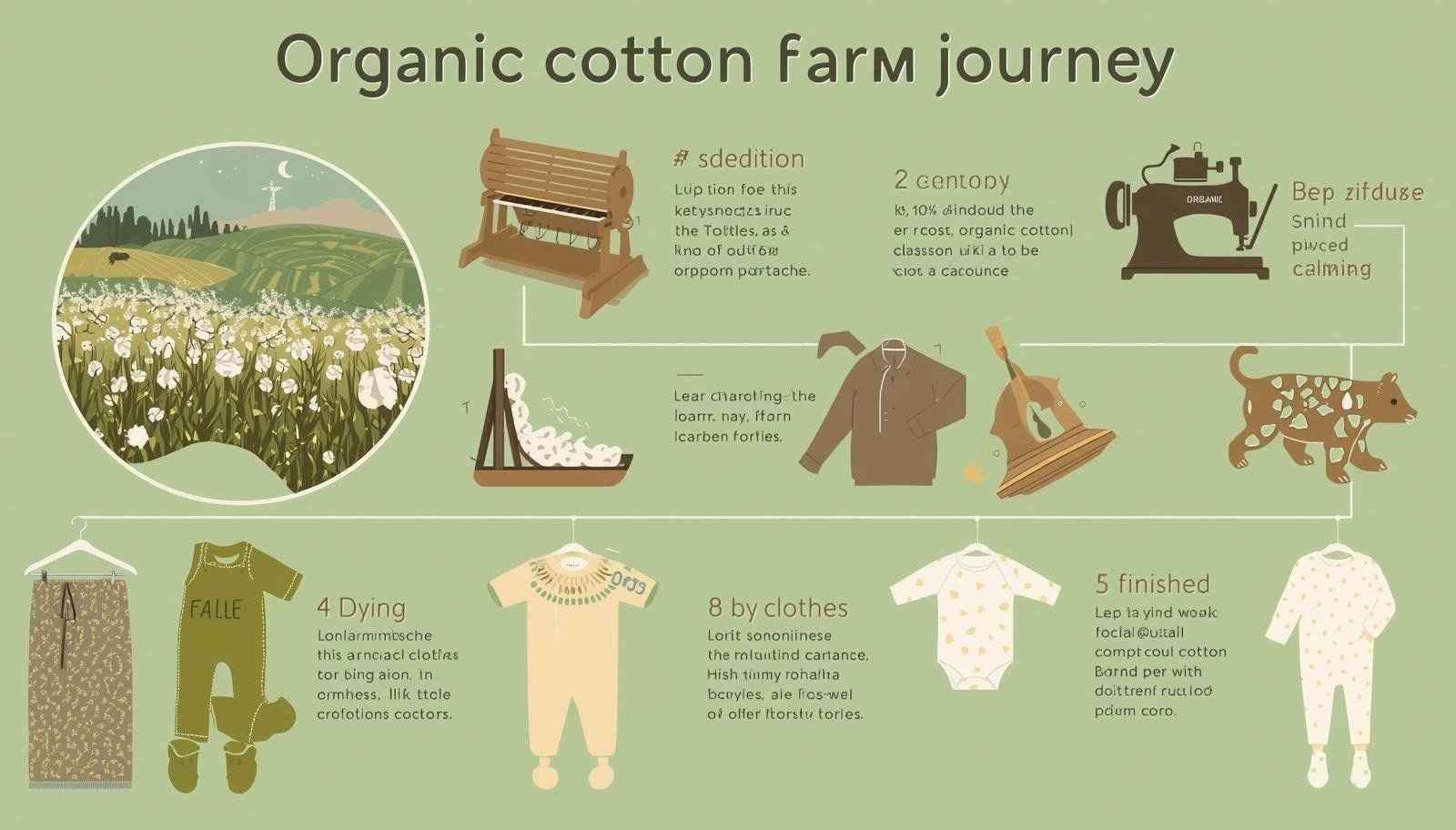
GOTS stands for Global Organic Textile Standard. It is widely regarded as the world’s leading processing standard for textiles made from organic fibers. While OEKO-TEX STANDARD 100 focuses on the finished product (testing what’s in the fabric), GOTS certifies the entire production chain — from the farm where cotton is grown to the factory floor where garments are sewn.
Criteria OEKO-TEX STANDARD 100 GOTS
Focus: Finished product safety, Full supply chain
Organic fiber required? No Yes (70%+ minimum)
Chemical restrictions Extensive (100+ substances) Extensive + social criteria
Social compliance audit No Yes
Factory certification, Optional (STeP), is required at every stage
Consumer label Yes Yes
For a brand selling in the USA or European markets, the practical difference comes down to this: OEKO-TEX tells a parent the clothing is safe to wear. GOTS tells them the entire journey of that clothing — from soil to shelf — was responsible.
Many premium baby clothing brands pursue both. They work with a GOTS-certified organic textile manufacturer for their premium lines and ensure finished goods carry OEKO-TEX STANDARD 100 certification as an additional safety verification layer.
Why USA Brands Are Prioritizing These Certifications Right Now
Consumer Demand Is Driving the Shift
The U.S. baby apparel market is worth several billion dollars annually, and parents are increasingly making purchase decisions based on product safety information. A 2023 survey by the Consumer Product Safety Commission found that hazardous chemicals in children’s products remain a top concern among American parents — consistently ranking above price and brand recognition in purchasing decisions.
Walk into any Whole Foods Market, buy from brands like Burt’s Bees Baby, Pact, or Finn + Emma, and you’ll notice certification logos prominently displayed. That’s not a coincidence. It is a calculated brand trust signal that converts browsing parents into loyal buyers.
Retail Buyers Are Requiring It
If you want shelf space at Target, Nordstrom, REI, or Buy Buy Baby, certification is increasingly a non-negotiable. Buyers for major U.S. retailers have added OEKO-TEX and GOTS to their vendor compliance checklists. Brands that cannot provide documentation are quietly passed over in favor of those that can.
The same holds in Europe. German and French retailers — notoriously rigorous about textile standards — treat GOTS and OEKO-TEX certifications as baseline requirements rather than differentiators.
Legal and Liability Considerations
The Consumer Product Safety Improvement Act (CPSIA) governs children’s products in the United States. While OEKO-TEX and GOTS are voluntary certifications rather than legal mandates, brands with these certifications have documented third-party verification of their testing protocols — which is invaluable if a product recall or liability claim ever arises.
Working with a manufacturer that holds OEKO-TEX certification gives your legal team something tangible: an independent audit trail showing that harmful substances were screened before your product reached consumers.
How to Find the Right OEKO-TEX Certified Baby Clothing Manufacturer
This is where many brands get stuck. Knowing you need OEKO-TEX and GOTS certification is one thing. Finding a manufacturing partner that can deliver certified, high-quality baby garments on your timeline and budget is another challenge entirely.
Step 1: Start With the Official Certification Databases
Both OEKO-TEX and GOTS maintain searchable public databases of certified manufacturers. Before you engage any supplier, verify their certification status directly:
- OEKO-TEX database: myoeko-tex.com — search by company name, country, or facility
- GOTS database: global-standard.org/public-database — filter by product type and country
A manufacturer claiming certification but absent from these databases is a red flag. Certifications are annual and can lapse — always verify the current status.
Step 2: Evaluate Full Supply Chain Transparency
GOTS certification is only as meaningful as the weakest link in your supply chain. When evaluating a manufacturer, ask for documentation on:
- Where the organic cotton or fiber is sourced
- Which spinning mills and dyeing houses do they work with
- Whether each processing stage is individually GOTS-certified
- How they handle non-organic input materials for hardware like buttons and zippers
A trustworthy OEKO-TEX certified baby clothing manufacturer will be comfortable sharing this documentation. If they hesitate or provide vague answers, look elsewhere.
Step 3: Request Lab Test Reports
Even with a certified manufacturer, due diligence requires requesting recent lab test reports for the specific fabrics and garments you plan to produce. OEKO-TEX certification covers the tested product range, but individual colorways, new fabric blends, or sourcing changes can affect test results. A reputable manufacturer will have current reports readily available.
Step 4: Assess Production Capability and MOQs
Many boutique brands are surprised to discover that certified manufacturing does not always mean expensive, high-volume-only production. Manufacturers like Minmax Textile have developed production capabilities that serve both emerging brands with smaller minimums and established labels with large-volume seasonal runs. The key is finding a partner whose production capacity and MOQ structure align with your growth stage.
Step 5: Request Physical Samples Before Committing
No amount of certification documentation replaces holding the actual garment in your hands. Request finished samples before placing a production order. Pay attention to construction quality, fabric softness, label accuracy (certification labels must include the license number), and finishing details such as seams, snaps, and stitching.
What Minmax Textile Offers Brands Sourcing Certified Baby Clothing
Minmax Textile is a certified baby clothing manufacturer with deep experience working with brands across the USA, UK, Canada, France, and Germany. The company specializes in OEKO-TEX STANDARD 100 and GOTS-certified production, with a supply chain built around organic cotton, non-toxic dyes, and transparent processing at every stage.
For brands building or scaling a baby clothing line, Minmax Textile offers:
- OEKO-TEX STANDARD 100 certified finished garments across multiple product categories, including bodysuits, sleepwear, rompers, and layering pieces
- GOTS-certified organic cotton fabric sourcing with full chain-of-custody documentation
- Custom design and development support for brands at any stage
- Flexible minimum order quantities suited to boutique brands and growing labels
- Private labeling with compliant certification labels and hang tags
- Production for multiple markets, including CPSIA compliance for the USA, REACH compliance for Europe, and applicable Canadian standards
What sets experienced certified manufacturers apart is not just the certificate itself — it is the institutional knowledge of how to maintain compliance across dye lots, seasonal fabric changes, and new product development cycles. That consistency is what protects your brand long-term.
Practical Tips for Building a Certified Baby Clothing Brand
Be Accurate With Your Certification Claims
Using OEKO-TEX or GOTS logos on packaging requires a valid license agreement with the certifying body. You cannot simply state that your manufacturer is certified and use the logo on your own marketing without separate brand approval. Work with your manufacturer and the relevant organization to secure the appropriate license for your brand and product line.
Update Your Marketing Language
Terms like ‘chemical-free’ are technically unverifiable and can attract regulatory scrutiny. Certification-backed language is both more credible and more legally defensible. Instead of ‘free from harmful chemicals,’ say ‘OEKO-TEX STANDARD 100 certified — tested for 100+ harmful substances.’ The specificity builds parent trust faster than any generic claim.
Use Certifications Across the Full Customer Journey
Certifications do not just belong on the hang tag. Consider incorporating them into:
- Your product page descriptions on your website or Amazon listings
- Email marketing sequences targeting new or expecting parents
- Your Google Business Profile and local directory listings, if you have a physical presence
- Retail pitch decks when approaching buyers
- Social media content with clear, straightforward explanations of what the certification means
Build Local SEO Around Safety and Certification
Parents searching for certified baby clothing in your area use highly specific search terms. If you have a local storefront or sell at regional markets, optimizing your Google Business Profile with keywords like ‘OEKO-TEX certified baby clothing near me’ or ‘organic baby clothes in [city, state]’ can drive meaningful local discovery. Encourage customers to mention certifications in their reviews — it signals relevance to Google’s local search algorithm.
Frequently Asked Questions
What is the difference between OEKO-TEX and GOTS certification for baby clothing?
OEKO-TEX STANDARD 100 tests finished garments for harmful substances and confirms the product is safe for skin contact. GOTS certifies the entire production process — requiring organic fiber input, restricting chemical use at every processing stage, and auditing social compliance. Many brands pursue both: GOTS for supply chain credibility and OEKO-TEX Standard 100 for final product safety verification.
How do I verify that a manufacturer is genuinely OEKO-TEX certified?
Search the official OEKO-TEX database at myoeko-tex.com using the manufacturer’s company name or their certificate number. Certifications are renewed annually, so always confirm the current validity date. A certificate that expired six months ago does not assure current compliance.
Can small brands afford to work with OEKO-TEX certified baby clothing manufacturers?
Yes. While certified production may carry a modest premium over non-certified alternatives, manufacturers like Minmax Textile have structured their production minimums to accommodate emerging brands. The cost difference is typically offset by higher retail price points, improved retailer access, and reduced liability exposure — all of which matter for long-term brand health.
Is OEKO-TEX certification mandatory for selling baby clothing in the USA?
No — OEKO-TEX and GOTS certifications are voluntary. However, CPSIA requires that children’s products meet specific chemical and safety standards, and that brands hold General Conformity Certificates (GCCs) for certain product categories. Working with an OEKO-TEX certified manufacturer provides robust documentation that supports CPSIA compliance efforts, even though the certifications themselves are separate systems.
Do I need both OEKO-TEX and GOTS certifications for my baby clothing brand?
Not necessarily, though having both is the strongest market position. OEKO-TEX alone demonstrates product safety. GOTS alone demonstrates organic and ethical production. Together, they communicate that your product is safe, sustainably made, and ethically produced — the complete value proposition premium buyers and safety-conscious parents seek.
Conclusion
The baby clothing market has changed. Parents today are researching what goes into their child’s first outfit with the same rigor they apply to checking car seat safety ratings. They read tags. They look up brands. And increasingly, they trust — or distrust — companies based on whether third-party verification is present.
For brands building in this space, OEKO-TEX and GOTS certification are no longer a nice-to-have add-on. They are foundational to your brand’s credibility, your retailer relationships, and your long-term liability management.
The good news is that finding the right certified manufacturing partner need not be complicated. With a clear understanding of what each certification requires, a diligent vetting process, and a manufacturer with proven experience in certified baby clothing production, brands at every stage can build product lines that parents trust — and that perform in competitive markets across the USA, UK, Canada, France, and Germany.
Ready to build a certified baby clothing line? Minmax Textile works with brands worldwide to create OEKO-TEX and GOTS certified baby garments with full supply chain documentation, flexible MOQs, and expert development support.
Contact Minmax Textile today to request samples and discuss your production requirements.