
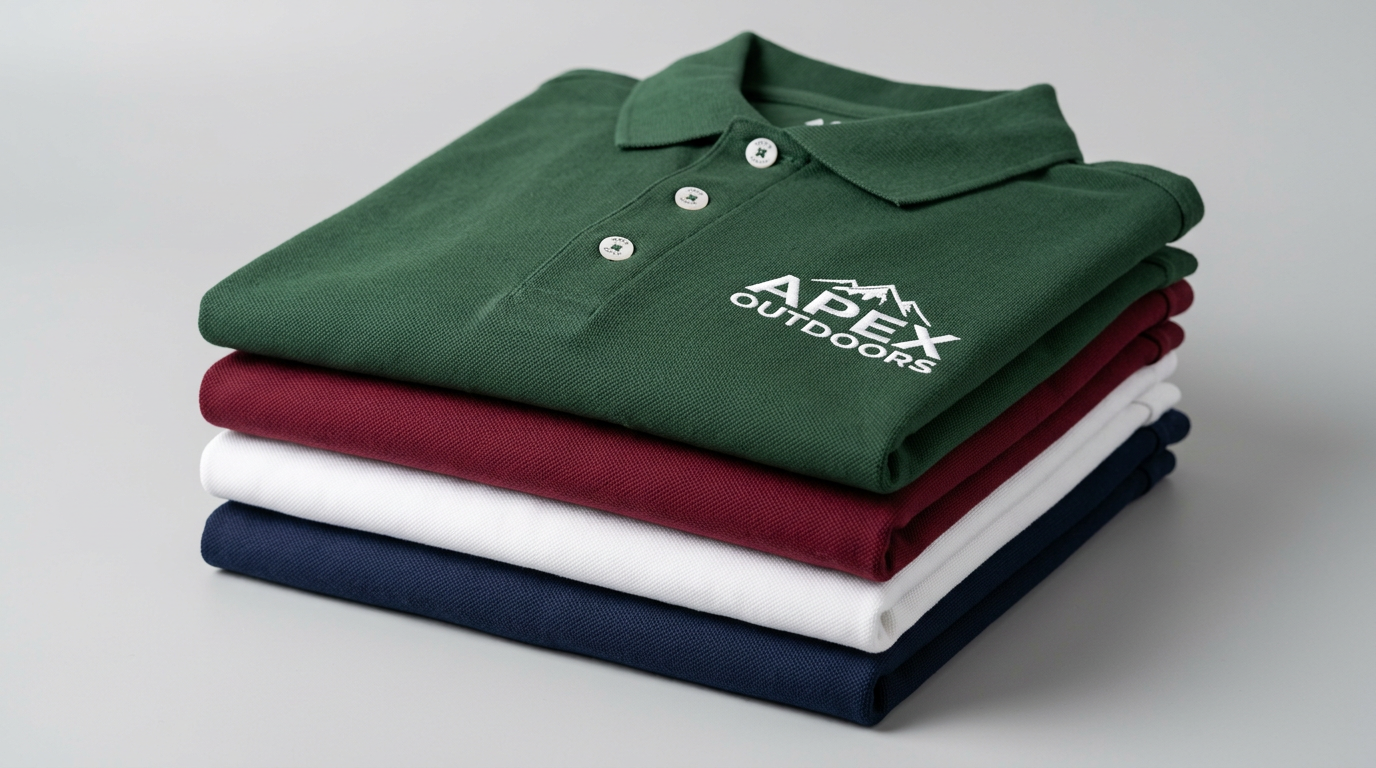
A custom polo shirt manufacturer guide helps retailers and brands source wholesale polos by comparing fabric (cotton pique vs. performance blends), MOQs (typically 50–500 pieces), pricing tiers, decoration methods (embroidery vs. screen print), and lead times (4–8 weeks). The right manufacturer balances quality, compliance, and communication—not just the lowest unit price.
Introduction: Why “Just Find a Cheap Factory” Never Works
If you’ve typed “custom polo shirts wholesale” into Google at 11 p.m., bleary-eyed, scrolling through fifteen browser tabs of suppliers who all claim to be “the best manufacturer in the industry”—you’re not alone. I’ve talked to retailers in Texas who got burned by a supplier that shipped polos with collars that curled up after one wash. I’ve seen a Toronto-based streetwear brand wait twelve weeks for an order that was quoted at four. This stuff happens constantly, and it’s rarely because the buyer didn’t try hard enough. It’s because nobody handed them a real framework for evaluating manufacturers before money changed hands.
This guide is that framework. Whether you’re a boutique in Ohio building a private label line, a corporate gifting company in London, or a startup brand in Toronto trying to launch a uniform program, you’ll walk away knowing exactly what questions to ask, what numbers are normal, and what red flags should make you close the laptop and look elsewhere.
We’ll also talk about where Minmax Textile fits into this picture—not as a sales pitch, but as a real example of what a transparent, export-ready garment manufacturer actually does differently.
What Is a Custom Polo Shirt Manufacturer, Exactly?
A custom polo shirt manufacturer is a factory (or factory-aligned supplier) that produces polo shirts to a buyer’s specifications—fabric, color, fit, logo placement, packaging—at wholesale volume, rather than selling finished retail stock off a shelf.
There’s a real difference between the three types of suppliers, and confusing them is the single most common mistake new buyers make:
- Manufacturers: Own or directly control production lines. They cut, sew, and finish garments themselves. This is where Minmax Textile and similar factories operate.
- Trading companies/sourcing agents: don’t own factories. They place your order with a manufacturer and add a margin. Not inherently bad, but you lose direct quality control.
- Print-on-demand / blank suppliers: Buy plain polos from a mill and decorate them locally. Great for small runs, weak for true private-label branding at scale.
If you want your own label sewn into the collar, your own fabric blend, and full control over fit specs, you need a manufacturer—not a decorator.
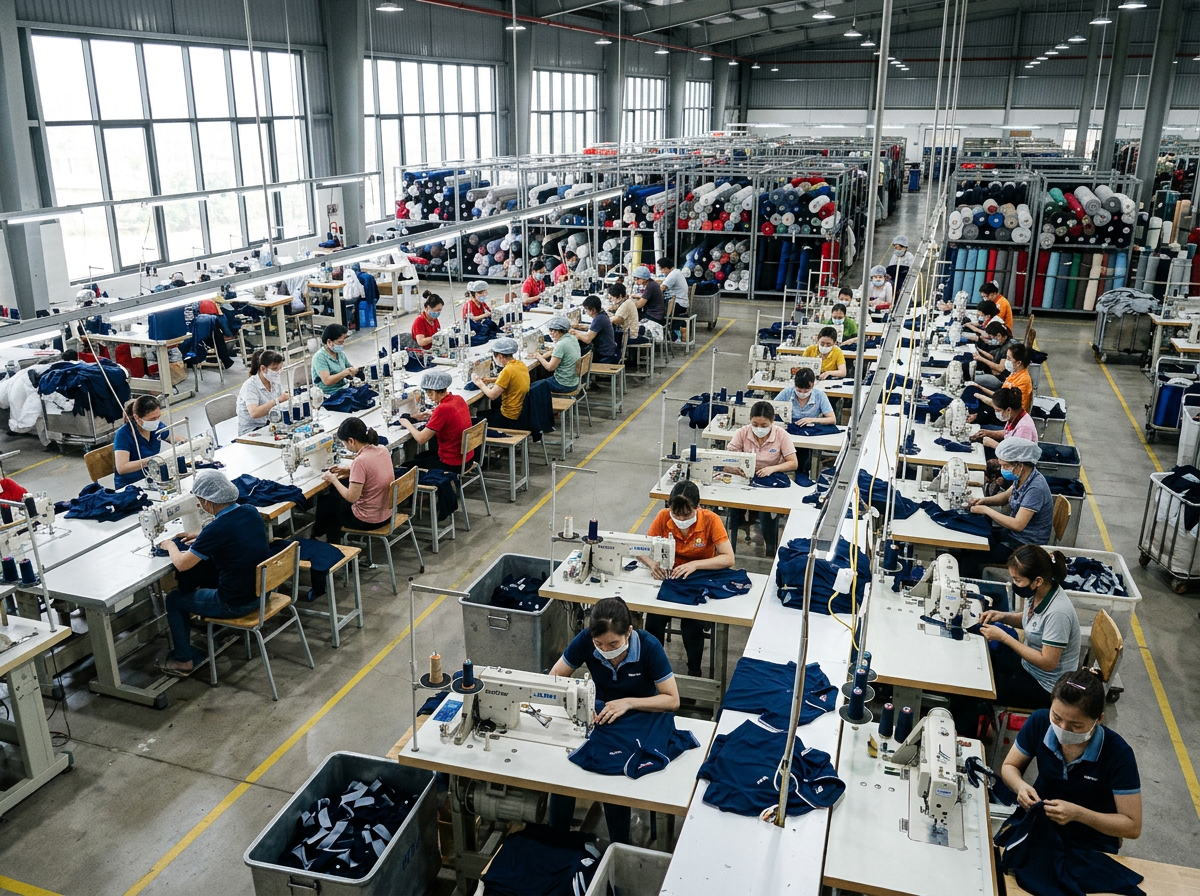
How Custom Polo Shirts Are Actually Made: The Production Process
Understanding the production flow helps you ask smarter questions and spot a factory that’s cutting corners.
- Fabric sourcing – Cotton pique, cotton-poly blends, or moisture-wicking performance knits are knitted or sourced first.
- Pattern and grading – The factory builds a size grading chart (typically S to 3XL) based on your fit reference.
- Cutting – Fabric is laid and cut, often via CAD-guided cutting tables for accuracy.
- Sewing – Side seams, collar attachment, placket, and sleeve hems are sewn. Polo collars, in particular, are a quality tell; loose or uneven collars usually mean rushed sewing.
- Decoration – Embroidery, screen printing, or heat transfer is applied, usually after assembly but sometimes on panels before sewing.
- Quality control (QC) – Inspected against AQL (Acceptable Quality Limit) standards, usually AQL 2.5 for apparel.
- Finishing and packing – Tagging, folding, polybagging, and carton packing per your specifications.
A factory that can’t clearly explain this sequence to you, or skips straight to “send payment and we’ll start,” is worth a second look.
Fabric Choices That Actually Matter
Most buyers focus on color and logo first. Fabric is where the real quality—and the real cost—lives.
| Fabric Type | Best For | Typical Weight | Notes |
|---|---|---|---|
| 100% Cotton Pique | Classic retail polos, corporate apparel | 180–220 GSM | Breathable, shrinks slightly if not pre-treated |
| Cotton-Polyester Blend (65/35) | Workwear, uniforms | 200–230 GSM | Less shrinkage, more durable, slightly less breathable |
| Performance Polyester (moisture-wicking) | Golf, sports, and outdoor brands | 150–180 GSM | Dries fast, holds dye well, ideal for athletic branding |
| Pima/Supima Cotton | Premium retail, boutique brands | 200–240 GSM | Softer hand-feel, higher price point, strong E-E-A-T story for “premium” positioning |
A quick gut check: if a quote feels suspiciously low compared to others, ask for the exact GSM (grams per square meter) and fiber content in writing. Cheap polos often use 160 GSM cotton-poly blends marketed as “premium cotton.”
MOQs, Pricing, and What’s Actually Normal
This is the section most buyers want to skip to, so let’s not bury it.
Typical MOQs (Minimum Order Quantities):
- Small factories / sample-friendly suppliers: 50–100 pieces per design/color
- Mid-size manufacturers: 200–500 pieces
- Large-scale export factories: 1,000+ pieces, often required for custom fabric dyeing
Typical wholesale pricing ranges (USD, FOB, before shipping and duties):
- Basic cotton pique polo, screen-printed logo: $3.50–$6.00 per piece
- Cotton-poly blend, embroidered logo: $4.50–$7.50 per piece
- Premium pima cotton or performance fabric: $7.00–$12.00 per piece
These ranges shift with order volume, fabric sourcing region, and decoration complexity. A buyer ordering 5,000 pieces will see meaningfully better per-unit pricing than one ordering 150—this is just how bulk manufacturing economics work, not a sign anyone’s being shortchanged at lower volumes.
Hidden costs people forget to ask about:
- Sample fees (usually $15–$40 per sample, sometimes credited back on bulk orders)
- Screen/embroidery setup fees (one-time, $20–$60 per design)
- Shipping and customs duties (can add 10–25% depending on destination country)
- Packaging customization (poly bags, hang tags, branded boxes)
Decoration Methods: Embroidery vs. Screen Print vs. Heat Transfer
| Method | Best For | Durability | Cost |
|---|---|---|---|
| Embroidery | Corporate logos, polos, and durability-focused brands | Very high, lasts for years | Higher per-unit cost |
| Screen Printing | Large logos, bold colors, retail fashion | Good, fades over many washes | Lower per-unit cost at volume |
| Heat Transfer / DTF | Complex multi-color designs, small runs | Moderate | Mid-range, fast turnaround |
For polo shirts specifically, embroidery on the chest is the industry standard for corporate and golf-style polos because it survives commercial laundering far better than print. If your brand is more streetwear or fashion-forward, screen printing on the back or sleeve is common and cost-effective.
Local Insights: How This Plays Out for USA, UK, and Canadian Buyers
United States: Retailers in states like Texas, California, and North Carolina often import polos for corporate uniforms, golf apparel, and private-label retail. US Customs requires accurate country-of-origin labeling, and many buyers also request OEKO-TEX or similar certifications to meet big-box retail compliance requirements.
United Kingdom: UK buyers frequently deal with post-Brexit customs documentation, so a manufacturer experienced with UK import paperwork (commercial invoices, HS codes) saves significant friction. VAT and duty calculations should be confirmed before committing to a bulk order.
Canada: Canadian importers should confirm CBSA (Canada Border Services Agency) tariff classifications up front and factor in CAD/USD exchange rate fluctuations when locking in pricing for large orders.
France and Germany: Both markets place a heavy weight on sustainability credentials—GOTS organic cotton certification and transparent supply chain documentation are increasingly expected, not optional, especially for brands selling into EU retail channels.
Step-by-Step: How to Vet a Custom Polo Shirt Manufacturer
- Request a physical sample before any bulk commitment. Photos and fabric swatches lie more often than people expect.
- Ask for GSM, fiber content, and shrinkage rate in writing.
- Confirm the AQL inspection standards the factory uses for QC.
- Check production capacity against your timeline. A factory promising 5,000 pieces in 10 days when their stated capacity is 2,000/month is a red flag.
- Verify export documentation experience for your destination country.
- Ask about minimum order flexibility for repeat vs. first-time orders.
- Review their communication speed and clarity during the sampling stage—this is usually a preview of how production communication will go.
Where Minmax Textile Fits In
Minmax Textile is a Bangladesh-based garment manufacturer working directly with retailers and brands across the US, UK, Canada, France, and Germany on custom polo shirt programs—from cotton pique basics to performance blends with embroidered branding. The team handles fabric sourcing, grading, sampling, and export compliance in-house, which is exactly the kind of direct-manufacturer relationship this guide has been describing, rather than a layered trading arrangement. For buyers comparing quotes, requesting a sample run alongside GSM and compliance documentation is the fastest way to see how a factory actually operates before committing to a full order.
Building Trust Before You Place a Bulk Order
A few practical trust signals worth checking, regardless of which manufacturer you’re evaluating:
- Reviews and references: Ask for at least two references from past clients in your industry, not just generic testimonials.
- Business registration and export license: Legitimate factories should provide this without hesitation.
- Google Business Profile and online presence: A factory with verifiable reviews, real photos of production floors, and consistent contact information is generally more reliable than one with only a contact form.
- Sample-to-bulk consistency: The biggest test of trust isn’t the sample—it’s whether the bulk order matches the sample exactly.
Frequently Asked Questions
What is a good MOQ for wholesale custom polo shirts? Most manufacturers set MOQs between 50 and 500 pieces per design, depending on factory size. Smaller, sample-friendly suppliers may go as low as 50; large export factories often require 500 or more.
How much does a custom polo shirt cost wholesale? Wholesale pricing typically ranges from $3.50 to $12.00 per piece, depending on fabric quality, decoration method, and order volume.
What’s the difference between a manufacturer and a sourcing agent? A manufacturer owns the production line and directly controls quality. A sourcing agent places your order with a manufacturer and adds a margin, which can mean less direct quality control.
How long does custom polo shirt production take? Standard lead times run 4 to 8 weeks from sample approval to shipment, depending on order size and fabric availability.
Should I order samples before placing a bulk order? Yes, always. A physical sample confirms fabric weight, fit, and decoration quality in ways photos and spec sheets cannot.
Conclusion: Choose the Manufacturer, Not Just the Price
The cheapest quote rarely turns out to be the most cost-effective once you factor in returns, reorders, and brand reputation damage from a bad batch. A solid custom polo shirt manufacturer guide isn’t really about chasing the lowest number on a spreadsheet—it’s about finding a factory that’s transparent about fabric, realistic about timelines, and willing to back up claims with samples and documentation.
If you’re currently sourcing custom polo shirts wholesale for your retail line, uniform program, or branded merchandise, start with a sample order, ask the questions above, and treat the first interaction as a preview of the working relationship to come. That’s a far more reliable signal than any price-per-piece number on its own.
1 thought on “Custom Polo Shirts Wholesale: The Manufacturer Guide Retailers and Brands Actually Need”
Great content! Keep up the good work!