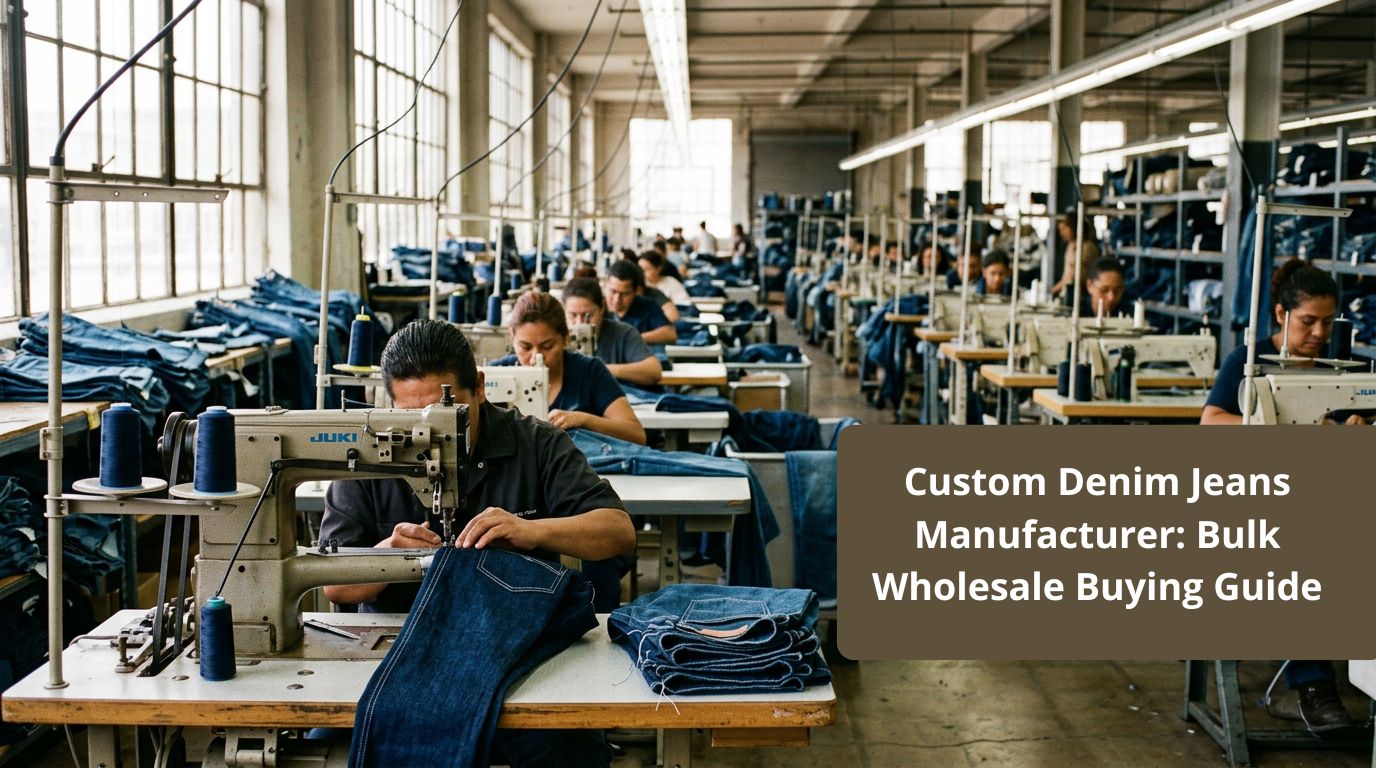
A custom denim jeans manufacturer is a factory that produces jeans to a brand’s own specifications — fabric, wash, fit, and trims — rather than selling pre-made stock. For bulk wholesale orders, most factories require a minimum order quantity (MOQ) of 300 to 1,000 pieces per style, with production taking 30 to 60 days and per-unit FOB costs ranging from $6 to $26 depending on fabric weight and finishing.
If you’ve ever tried searching “custom denim jeans manufacturer” at 1 a.m. with a half-finished mood board and a Shopify store that isn’t live yet, you already know how messy this process can get. There are hundreds of factories claiming to be the best, MOQs that swing wildly between suppliers, and pricing sheets that never quite add up the way you expect. I’ve watched brand owners — from a two-person streetwear startup in Austin to a mid-size retailer restocking for fall — make the same mistakes early on. Usually, it’s not bad taste in denim. It’s not knowing what questions to ask before money changes hands.
This guide walks through everything a buyer actually needs before placing a bulk order with a custom denim jeans manufacturer: how MOQs work, what fair pricing looks like, how to vet a factory without flying overseas, what a typical production timeline looks like, and the contract details that quietly save (or cost) thousands of dollars. We’ll also point out where US, UK, Canadian, and European buyers tend to hit different snags — import duties, fabric sourcing rules, sizing conventions — because “custom” denim sourcing isn’t identical across markets.
What Does a Custom Denim Jeans Manufacturer Actually Do?
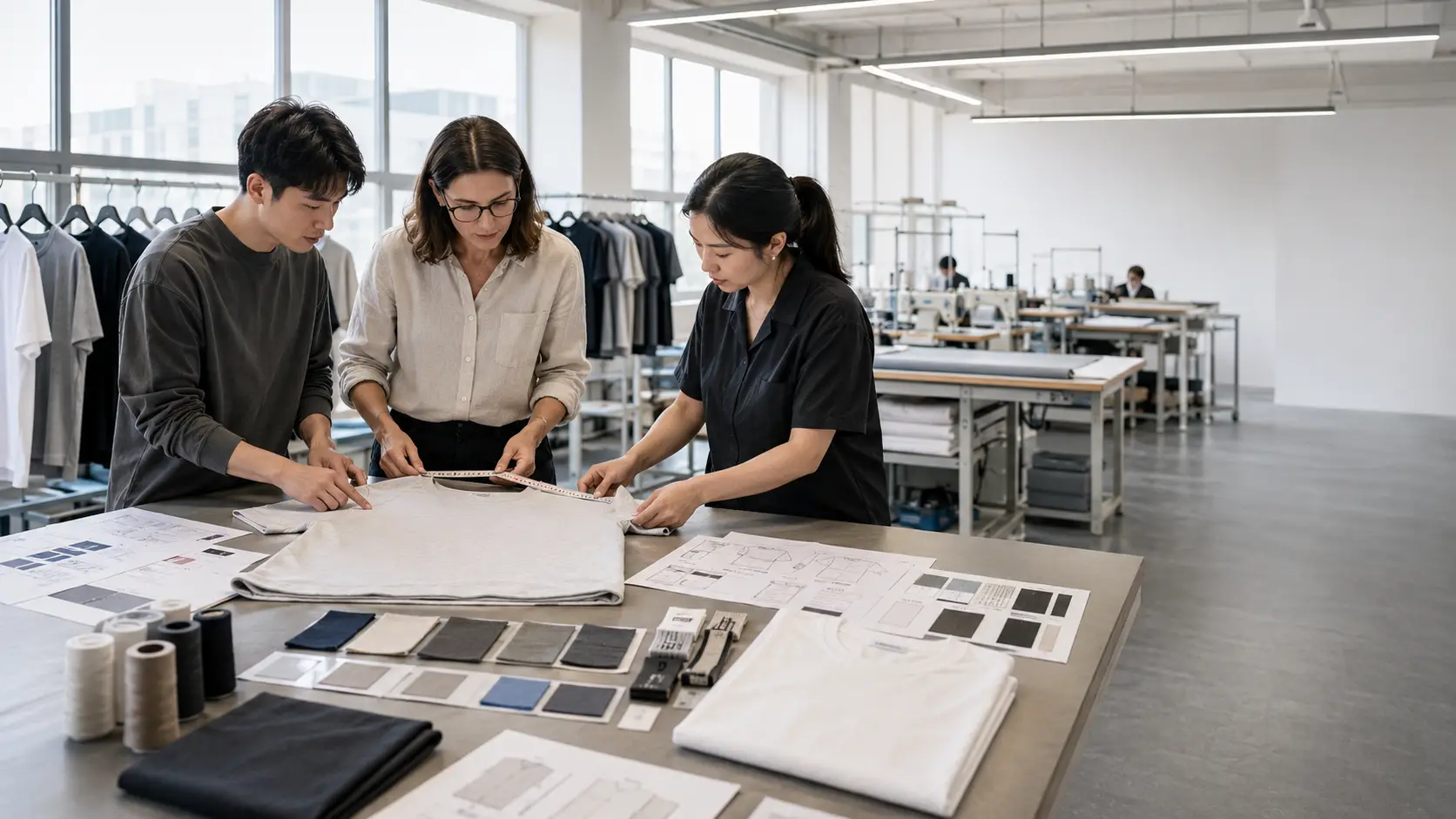
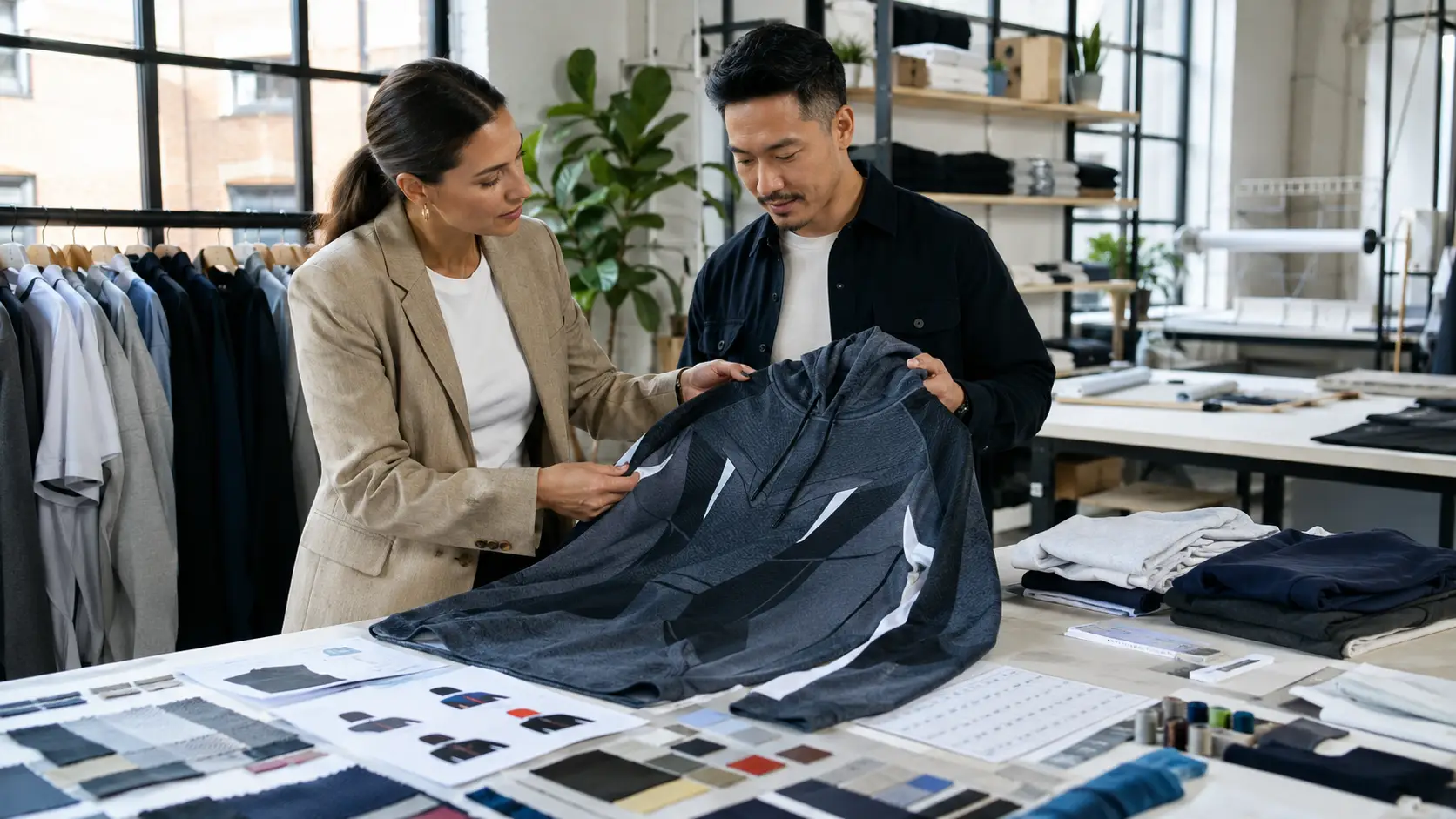
A custom denim jeans manufacturer takes a brand through the full production process — from fabric selection and pattern-making to cutting, sewing, washing, and finishing — based on that brand’s specific design rather than an existing template. This is different from buying “private label” jeans, where a factory swaps your tag onto a jean it already makes for everyone else.
Three sourcing models are common, and mixing them up is where a lot of first-time buyers lose money:
- OEM (Original Equipment Manufacturer): You bring the complete tech pack — pattern, fabric spec, wash recipe — and the factory builds exactly that. Highest control, highest cost, longest lead time.
- ODM (Original Design Manufacturer): The factory has its own design library and adjusts an existing pattern to your fit and wash preferences. Faster and cheaper, less unique.
- Private Label: The factory’s standard jean, your woven label and packaging. Fastest route to market, but you’re selling what everyone else can also buy.
Most growing denim brands start with ODM to control cost while testing demand, then graduate to full OEM once a style proves itself and volume justifies the investment.
Why Bulk Wholesale Buying Changes the Equation
Buying one sample jean and buying 500 identical pairs are two completely different exercises. Bulk wholesale introduces variables that don’t show up at the sample stage — fabric roll consistency, wash batch variation, grading across a full size run, and the simple math of cash flow tied up in inventory sitting on a container ship for six weeks.
According to the US Census Bureau’s apparel import data, the United States imported roughly $4.5 billion worth of cotton trousers and jeans in a recent 12-month period, with Bangladesh, Vietnam, and Pakistan among the top five denim-producing countries supplying that demand. That scale exists because manufacturing denim at volume genuinely is cheaper per unit — but only when the buyer understands how to negotiate and quality-check at that scale.
Minimum Order Quantities (MOQ): What’s Realistic
MOQ is usually the first wall new buyers hit. A factory quoting “50 pieces” and one quoting “1,000 pieces” for what looks like the same jean are usually offering very different services underneath.
| Order Type | Typical MOQ | Best For |
| Stock/blank denim (existing wash, your label) | 50–100 pcs per style | New brands testing the market |
| Custom pattern, your fabric choice | 300–500 pcs per style | Established brands, retail rollouts |
| Fully custom wash, hardware, trims | 500–1,000+ pcs per style | Private label brands, chains |
A useful rule of thumb: MOQ tends to scale with the number of variables you’re customizing. Changing the wash on an existing pattern is cheap for a factory to set up. Changing the fabric, the pattern, the hardware, and the wash all at once means new cutting dies, new wash formulas, and new trim orders — and the factory needs volume to make that setup worthwhile.
Minmax Textile note: We typically work with brands starting at 300 pieces per style for semi-custom builds, scaling down setup costs as order volume grows across a season’s full collection.
Realistic Pricing: What Should You Actually Pay?
Pricing for custom denim is quoted FOB (Free On Board) — the cost per unit once it’s loaded onto the shipping vessel at the origin port, before freight, duties, and your own markup. Here’s a realistic range based on current Bangladesh and South Asian production benchmarks for US-bound orders:
| Denim Quality | Approx. FOB Cost (per pc) | Typical Retail Range (USA) |
| Basic stretch denim, simple wash | $6 – $9 | $35 – $55 |
| Mid-weight selvedge-style, garment dye | $10 – $15 | $60 – $95 |
| Premium Japanese-style selvedge, hand finishing | $16 – $26 | $110 – $190 |
A few cost drivers worth knowing before you negotiate:
- Fabric weight: denim is priced by GSM (grams per square meter) or by ounce. A 12oz denim costs noticeably more than an 8oz denim, both in raw materials and in cutting waste.
- Wash complexity: a simple rinse wash adds pennies; hand-sanding, whiskering, or laser distressing can add $1–$3 per unit and several days to the timeline.
- Hardware: branded rivets, embossed buttons, and custom leather patches each carry tooling costs that get amortized into your unit price.
- Order size: per-unit cost typically drops by 8–15% once you cross the 1,000-unit mark per style, as fixed setup costs spread more widely.
How to Vet a Custom Denim Manufacturer (Without Visiting in Person)
Most US, UK, and European buyers never set foot in the factory before their first order. That’s normal — but it means due diligence has to happen on paper and on video call instead.
- Ask for verifiable certifications. Look for OEKO-TEX Standard 100 (chemical safety), WRAP or BSCI/amfori (social compliance), and, if sustainability is part of your brand story, GOTS for organic cotton or Bluesign for water/chemical management. Ask for the certificate number and verify it directly on the certifying body’s site — not just a PDF the factory emails you.
- Request a video walkthrough of the actual production floor. Not a polished sales reel — a live call where you can ask to see the cutting tables, sewing lines, and wash facility in real time. Hesitation here is a red flag.
- Check their existing client list carefully. Reputable factories aren’t shy about general categories of brands they’ve worked with, even if specific names are confidential. Vague answers about “international brands” with zero specifics deserve more questions.
- Order a paid sample before any bulk commitment. A $30–$80 sample fee tells you more about fit, stitching quality, and wash consistency than any spec sheet. If a factory won’t do paid samples, that’s worth noting.
- Confirm Incoterms and payment structure in writing. A standard, buyer-protective structure is 30% deposit, 70% before shipment, against FOB or CIF terms — agreed and documented before production starts, not adjusted after the fact.
Production Timeline: What to Expect
A realistic bulk denim production timeline, from confirmed tech pack to factory-ready cargo, generally runs 45 to 75 days depending on complexity:
- Sampling & approval (7–14 days): pattern development, fit sample, and wash trial.
- Fabric & trim sourcing (10–20 days): denim fabric mills often have their own lead times, especially for custom dye lots.
- Cutting & sewing (15–25 days): scales directly with order volume and number of styles/sizes.
- Washing & finishing (5–10 days): includes quality-control checkpoints after washing to catch shrinkage or color inconsistencies.
- Final QC & packing (3–5 days): full AQL inspection before the order is cleared for shipment.
Building in a buffer of 1–2 weeks beyond the factory’s quoted timeline is standard practice — fabric delays and wash-trial revisions are the most common causes of slippage, and almost every experienced buyer has been caught once by assuming the first quote was the final date.
Local Market Considerations: USA, UK, Canada, France & Germany
United States
US buyers should factor in Section 301 and standard duty rates on cotton trousers, which generally fall in the 16.6% range under the HTS code for cotton denim trousers, though exact rates depend on fabric composition and country of origin. Buyers sourcing from countries with preferential trade status may see reduced rates — worth confirming with a customs broker before finalizing landed cost projections. US sizing also runs on its own numeric waist/inseam system, so factories used to EU or UK sizing need a clear US size chart, not just a generic one.
United Kingdom
Post-Brexit, UK importers handle customs separately from the EU, with their own VAT and duty structure on apparel imports. UK buyers often request UK sizing labels (numeric, similar to US but not identical at every size point) and increasingly ask for traceability documentation, since UK retailers have tightened sustainability disclosure expectations in recent seasons.
Canada
Canadian buyers benefit from CUSMA/USMCA-adjacent trade considerations when goods transit through the US, but direct imports from Asia are assessed under Canada’s own tariff schedule. CAD/USD exchange rate swings can meaningfully shift landed cost between the quote date and the payment date, so locking pricing in USD with a clear validity window is common practice.
France & Germany
EU buyers generally face a standard EU external tariff on cotton denim apparel, alongside import VAT, and increasingly need to comply with EU textile labeling regulations (fiber content, care instructions in the local language) and with growing due diligence requirements tied to the EU’s broader sustainability and supply chain disclosure rules. French and German buyers also tend to specify EU sizing conventions explicitly, since fit expectations differ from those of both the UK and the US.
Practical Tips Before You Sign a Wholesale Agreement
- Get the tech pack reviewed by the factory’s pattern team before quoting — vague specs lead to vague quotes that change later.
- Always request a pre-shipment AQL inspection report (2.5 AQL is standard for apparel) rather than relying solely on the factory’s internal QC.
- Lock the fabric composition and GSM in writing — “similar quality” is not a spec; it’s an invitation to substitute.
- Clarify who owns the pattern and the wash recipe if you ever want to move production to a different factory.
- Ask about shrinkage testing after wash — denim can shrink 3–7% depending on fabric blend, and that needs to be accounted for in your size grading, not discovered after delivery.
Building Trust With a Manufacturer: What Experienced Buyers Look For
Brands that have ordered bulk denim multiple times tend to judge a manufacturer less on price and more on communication consistency — how quickly questions are answered, whether the factory flags problems proactively rather than waiting to be asked, and whether sample approvals are actually reflected in the bulk run. Minmax Textile works directly with B2B buyers across the US, UK, Canada, France, and Germany on exactly this kind of long-term, specification-driven denim production, with transparent costing and documented QC at every stage — because repeat orders, not one-off sales, are what make a manufacturing relationship worth having.
Frequently Asked Questions
What is the minimum order quantity for custom denim jeans?
Most factories require 300–500 pieces per style for semi-custom orders, and 500–1,000+ for fully custom fabric, wash, and hardware combinations. Some factories accept 50–100 pieces for stock denim with custom branding only.
How much does it cost to manufacture custom denim jeans in bulk?
FOB pricing typically ranges from $6–$9 per piece for basic stretch denim, $10–$15 per piece for mid-weight garment-dyed denim, and $16–$26 per piece for premium selvage-style denim with hand finishing, before freight and duties.
How long does bulk denim production take?
A typical timeline runs 45–75 days from approved tech pack to shipment-ready cargo, covering sampling, fabric sourcing, cutting and sewing, washing, and final quality inspection.
Do I need to visit the factory in person before ordering?
Not necessarily. Most international buyers vet factories through certifications (OEKO-TEX, BSCI, WRAP), live video walkthroughs, and paid samples before placing a first bulk order, rather than an in-person visit.
What import duties apply to custom denim jeans in the USA?
Cotton denim trousers generally fall under HTS duty rates around 16.6%, though the exact rate depends on fabric composition and country of origin. A customs broker can confirm the precise landed cost before you finalize pricing.
Final Thoughts
Sourcing from a custom denim jeans manufacturer for bulk wholesale isn’t complicated once you know which questions actually matter — MOQ structure, fair FOB pricing, realistic timelines, and verifiable compliance. The brands that get burned are almost always the ones that skipped a paid sample or signed off on a tech pack nobody on the factory floor actually reviewed.
If you’re putting together a bulk denim order for the US, UK, Canadian, or European market and want a manufacturing partner who’ll walk you through specs, costing, and timelines before you commit to anything, Minmax Textile is glad to talk through your project and send real samples — not just a price list.